
Safety Handrails Logan: A Practical Buyer’s Guide
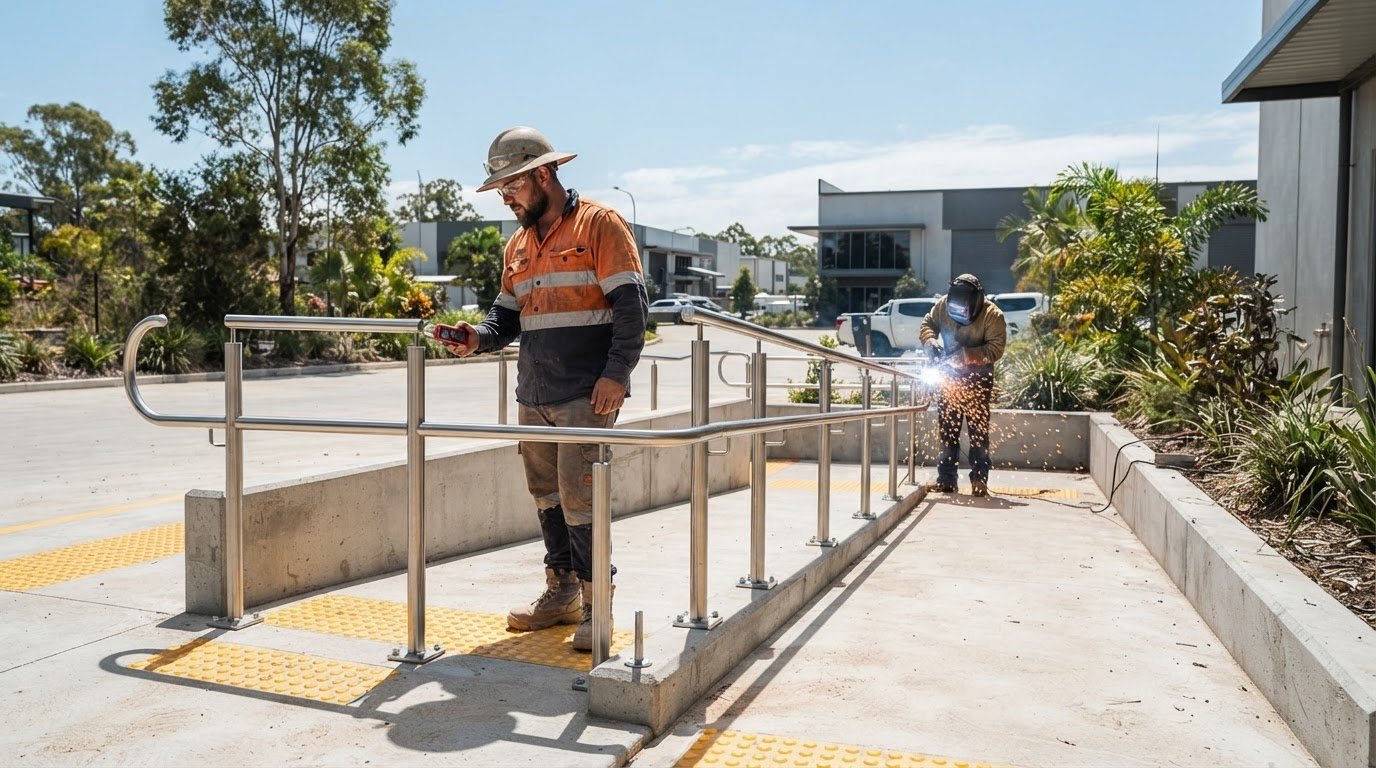
The handrail that looks right in a catalogue may not suit your site. If you’re researching safety handrails Logan, you’ll want clear answers about design, compliance and who can manage the work. A standard product may not account for the people using the route, the surface it needs to attach to, exposure to weather or how the area operates.
Start by recording the site conditions and intended use. This guide explains how to assess users and risks, distinguish a handrail from a protective barrier, compare suitable options and check which current Australian Standards and National Construction Code (NCC) provisions may apply. It also covers what to include in a practical project brief, from measurements and fixing details to installation access. Donewright Stainless designs, fabricates and installs stainless steel handrails and safety protection systems, serving Logan from its Brisbane-based operation. Its local coverage also includes the Gold Coast and Ipswich. The aim is to help you plan the work methodically and discuss design, fabrication and installation as connected stages.
Key Takeaways
- For safety handrails Logan projects, assess the site and intended use before settling on a design.
- Check which NCC provisions and Australian Standards apply to your building and project scope. Don’t assume one set of requirements fits every job.
- Compare standard and custom fabrication by site fit, material needs, maintenance and installation coordination.
- Help a fabricator assess the work by preparing measurements, photos, access details, drawings and a project contact where available.
- Donewright Stainless designs, fabricates and installs stainless steel handrails, serving Logan from its Brisbane-based operation.
Safety Handrails Logan: Start With the Site, Users and Risks
Handrail requirements depend on the layout, the people using the area and the risks the system needs to address. A rail beside a stair may provide a steady grip between levels. An open edge or restricted access point may need a protective barrier instead. These functions can overlap, but they aren’t interchangeable. A general overview of the term handrail can help with basic terminology; the project’s specific needs still depend on the site.
For safety handrails Logan projects, begin with what happens in the space, not a preferred catalogue design. Note the access route, nearby surfaces, exposure to weather or operating conditions, and how people use the area. A site review won’t confirm compliance by itself, but it gives a designer, fabricator or relevant adviser useful details to assess.
What should a Logan site assessment record?
Build a useful brief by recording:
- Location and layout: Is the work beside stairs, a ramp, walkway, platform or another access area? Note where people enter, exit and change direction.
- Users and use: Describe who uses the route, how often and under what operating conditions. Include regular equipment or material traffic where relevant.
- Surroundings: Identify adjacent surfaces, possible fixing areas, exposure and obstructions that could affect the route or installation.
- Visual records: Photograph the route, connection points and obstructions. Add measurements or drawings where available, and flag details that still need checking.
These observations help separate known site conditions from questions that need professional assessment. For example, a photograph may show an obstruction, but it won’t establish whether a particular fixing or design is suitable.
When might a custom safety handrail be appropriate?
A standard product may not suit an area with unusual dimensions, awkward connection points, nearby services or operating conditions that affect access and installation. Custom stainless steel fabrication may be worth discussing when the handrail needs to be tailored to confirmed site requirements. Record what’s known, then flag assumptions, such as the suitability of a fixing surface, for the appropriate professional to assess.
Choose a handrail by starting with the site and intended use, then assess which design can meet the requirements. This keeps the brief grounded in real conditions and gives a fabricator a clearer basis for discussing design, fabrication and installation.
Safety Handrail Requirements: Check Design, Standards and Responsibilities
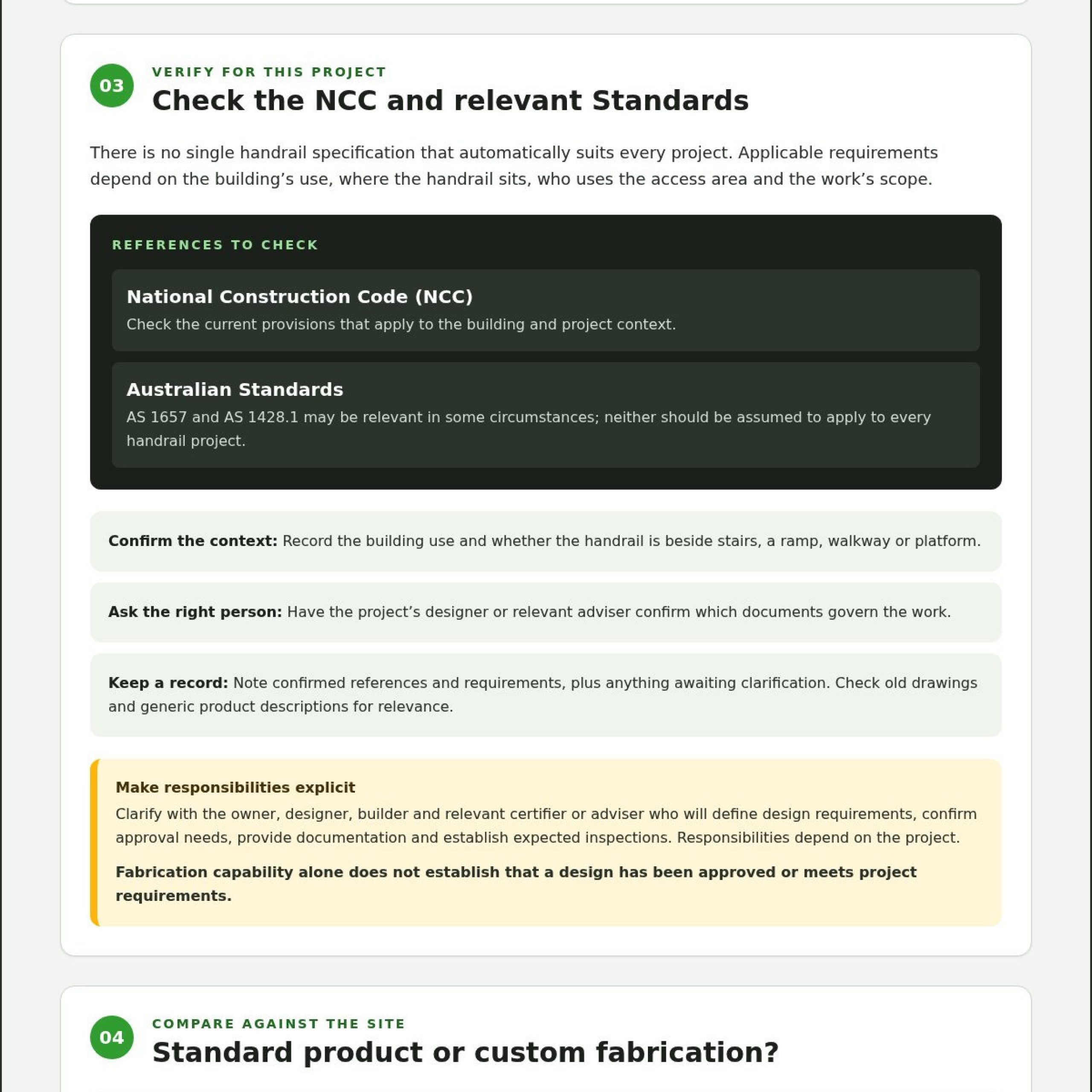
There isn’t one handrail specification that automatically suits every project. Applicable requirements depend on the building’s use, where the handrail sits, who uses the access area and the scope of the work. A stair in an existing workplace, for example, may raise different design and approval questions from a new access route in another type of building.
For safety handrails Logan projects, treat the NCC and relevant Australian Standards as references to check, not as a shortcut to a compliance decision. Confirm the requirements for the particular site and project.
How do you confirm which standards apply?
Start by recording the building use and the handrail’s location, such as beside stairs, a ramp, a walkway or a platform. Then verify the current NCC provisions and relevant Standards Australia documents for that context. AS 1657 and AS 1428.1 may be relevant in some circumstances, but neither should be assumed to apply to every handrail project. Ask the project’s designer or relevant adviser to confirm which documents govern the work.
Keep a record of the references and requirements that have been confirmed, including any matters awaiting clarification. Don’t rely on an old drawing, a generic product description or a standard cited for a different building area without checking its relevance.
Who should confirm design and compliance responsibilities?
Clarify responsibilities with the owner, designer, builder and relevant certifier or adviser before the work is scoped. Ask who will define the design requirements, confirm whether approvals are needed, provide any required documentation and establish what inspections are expected. Responsibilities depend on the project, so make them clear rather than assuming one party will manage every step.
Fabrication capability alone doesn’t establish that a design has been approved or meets the project’s requirements. A fabricator can discuss the proposed scope and how design, fabrication and installation connect. The appropriate project professionals should confirm technical and approval matters.
Confirm project-specific requirements and responsibilities before fabrication begins. This gives everyone a shared basis for discussing drawings, materials, fixing details and installation scope, and helps identify questions before they become changes on site.
Once the requirements are clear, brief a local fabricator against the confirmed scope. Donewright Stainless designs, fabricates and installs stainless steel handrails and safety protection systems, serving Logan as part of its local coverage across Brisbane, the Gold Coast, Logan and Ipswich. You can review its stainless steel handrail services when considering who to speak with about fabrication and installation.
Compare Safety Handrails Logan Options Against Real Site Conditions
Once you understand the site requirements, compare options against the brief rather than appearance alone. A standard product may suit a straightforward layout. Custom fabrication may be worth discussing if dimensions, fixing locations or adjoining structures create constraints. Neither option is automatically suitable or compliant. The project team still needs to verify the design against confirmed requirements.
Standard product or custom fabrication: what fits the brief?
Use these questions to guide the comparison and identify what needs checking before a decision:
| Consideration | Standard product | Custom fabrication |
|---|---|---|
| Fit to the site | Could suit a simple, predictable route if its dimensions align with the site. | Can be considered where the layout or dimensions call for a tailored solution. |
| Interfaces | Check that proposed fixing locations and adjoining structures can accommodate it. | Confirm how connection points and nearby structures will be measured and addressed. |
| Material needs | Check available materials against the project’s exposure and intended use. | Discuss material selection in relation to documented site conditions. |
| Maintenance | Consider access for cleaning and expected upkeep. | Include cleaning methods, wear and maintenance expectations in the fabrication brief. |
| Installation coordination | Confirm what site preparation and installation work are included. | Discuss fabrication and installation as connected stages, including access and site interfaces. |
Before fabrication, establish how dimensions, fixing locations and adjoining structures will be confirmed. Record details that remain assumptions and ask the relevant project professional to assess them. The stainless steel handrail fabrication and compliance guide offers more context for planning that discussion.
Which material and finish considerations matter?
Ask the project team to consider exposure, cleaning methods, expected wear and maintenance needs. A finish that suits one environment may not suit another. Base the selection on actual conditions and upkeep requirements rather than preference alone.
Stainless steel is one option. Donewright Stainless designs, fabricates and installs stainless steel handrails, but stainless steel isn’t automatically the right material for every site. Discuss its suitability against the project brief and confirmed requirements. For broader material and fabrication context, see the guide to custom stainless steel fabrication.
Plan a Safety Handrail Project in Logan From Brief to Installation
A clear project brief helps a fabricator understand the site and identify what needs confirming before work proceeds. For safety handrails Logan projects, document the site, confirm project requirements and responsibilities, request a defined scope, review the proposal, then coordinate the work. The process depends on the job, so confirm timing, approvals and installation arrangements rather than assuming them.
What information should you send with an enquiry?
Start with the Logan site address, the intended handrail location and a concise explanation of the need. Attach available drawings, photographs and measurements. Describe adjoining structures or surfaces that could affect the proposed work. If details are preliminary, label them clearly so they can be checked rather than treated as confirmed dimensions.
Also flag access restrictions, relevant site safety procedures and any operating hours or work constraints for discussion. Existing structures, site access and ongoing operations can affect planning, but their impact needs to be assessed for each project. Include the best project contact for follow-up questions.
How can you compare fabrication proposals?
Review each proposal for a clear description of the work, materials, assumptions and exclusions. Check who is responsible for confirming site measurements and design decisions, and whether fabrication and installation are both included or need separate coordination. Ask how unresolved site conditions will be handled before work starts.
A proposal should give you enough detail to compare scope, not just a general description of the intended outcome. Confirm approval and inspection expectations with the relevant project professionals. Don’t assume a proposal or fabrication scope establishes compliance.
Before agreeing to the work, confirm practical arrangements with the relevant parties. Discuss site access, the condition of existing structures, operating constraints and who will coordinate the work on site. Record what has been agreed and what still needs checking. Donewright Stainless designs, fabricates and installs stainless steel handrails and safety protection systems, serving Logan as part of its local coverage. Its handrail design and installation information provides related service context.
If your brief is ready, discuss your Logan handrail project with Donewright Stainless and clarify the proposed scope, site requirements and installation coordination.
Work With a Local Safety Handrail Fabricator Serving Logan
By this stage, you should have a clearer picture of the site need, the requirements to verify and the questions that will shape the fabrication scope. Keep the steps in order: define the intended use, confirm applicable requirements with the relevant project professionals, then discuss how the handrail will be designed, fabricated and installed. This gives a fabricator a practical brief without assuming the design or compliance outcome before the project has been reviewed.
Donewright Stainless is a Brisbane-based fabricator serving Logan, the Gold Coast and Ipswich. Its services include stainless steel handrail design, fabrication and installation, along with safety handrails and protection systems. Confirm the specific scope, site access arrangements and availability for each project.
What can Donewright Stainless discuss with Logan customers?
A project discussion can cover the handrail’s intended use, site conditions and the work you’re looking to have completed. Share known constraints, such as adjoining structures, access limitations or operational requirements, and identify details that still need assessment. This helps establish whether a tailored fabrication approach may suit the site and what information is needed to define the scope.
Design, fabrication and installation can be discussed as connected stages. However, a discussion doesn’t replace project-specific assessment. Design recommendations depend on the site and brief, while applicable standards, approvals and compliance outcomes must be confirmed by the appropriate project professionals.
What are the next steps for a handrail enquiry?
Before making contact, prepare a short description of the job and gather any site photographs, drawings and measurements you have. Note the handrail location, who uses the area and any access or installation questions. If you’re still confirming which standards apply, raise that early so responsibilities can be clarified before the fabrication scope is settled.
For safety handrails Logan projects, a well-prepared enquiry makes it easier to discuss the actual site rather than rely on assumptions. You don’t need to resolve every technical detail before starting the conversation. Be clear about what’s known, what’s provisional and what needs professional confirmation.
Discuss your Logan handrail project with Donewright Stainless and share your site details, drawings and requirements to begin a conversation about the project scope.
Take the Next Step Towards a Handrail That Fits
A suitable handrail project starts with the site. Consider who will use the area, what risks need addressing and how the proposed system will connect with surrounding structures. Then confirm which requirements apply with the relevant project professionals before settling the fabrication scope. This helps you compare options on practical fit, material needs and installation coordination, rather than appearance alone.
If you’re planning safety handrails Logan, Donewright Stainless offers stainless steel handrail design, fabrication and installation, with Logan included in its local coverage across Brisbane, the Gold Coast, Logan and Ipswich. Share your site details, drawings and known requirements to start a practical discussion. Confirm project scope and any compliance questions for your particular site.
Discuss your Logan safety handrail requirements with Donewright Stainless and take the next step with a clear project brief.
Frequently Asked Questions
How do I choose safety handrails for a property in Logan?
For safety handrails Logan projects, start by identifying where support or protection is needed, who will use the area and what risks the rail must address. Record dimensions, access conditions and nearby structures, then confirm applicable design requirements with the relevant project professionals. A local fabricator can discuss whether a standard product or custom fabrication may suit the brief. Treat site details and assumptions as information to verify, not a substitute for professional assessment.
Do safety handrails in Logan need to meet Australian Standards?
Requirements depend on the building, handrail location and intended use, so there isn’t a universal answer for every project. Ask a qualified designer, certifier or other appropriate professional to confirm the current NCC provisions and relevant Australian Standards for your site. Don’t treat a general online dimension or a supplier’s broad statement as proof of compliance. Keep a record of which requirements have been confirmed and who is responsible for checking them.
Is stainless steel suitable for outdoor safety handrails?
Stainless steel may be considered for an outdoor handrail, but suitability depends on the site and project specification. Ask the project team to assess exposure, cleaning methods, expected wear and maintenance needs before choosing a material and finish. Stainless steel handrails are among Donewright Stainless’ services, but that doesn’t mean stainless steel is automatically right for every application. A fabricator can discuss fabrication options; project-specific material selection should be confirmed by the appropriate professionals.
Can safety handrails be custom-made for an existing site?
Yes, custom fabrication can be considered where an existing site has unusual dimensions, fixing locations or interfaces with surrounding structures. Provide reliable measurements and photographs, and identify details that still need checking. A site assessment may be needed to verify conditions before the scope is settled. Confirm who is responsible for design decisions and which requirements apply before fabrication proceeds. Custom work can address site constraints, but it doesn’t by itself establish approval or compliance.
What information should I provide when requesting a handrail quote?
Provide the site location, intended handrail area, available measurements, photographs and any drawings. Describe who uses the area and note adjoining structures, access restrictions, operating hours or relevant site procedures. Include a project contact and explain whether you’re asking about fabrication only or installation as well. A clear brief helps the provider understand the proposed scope, identify assumptions and ask useful follow-up questions. Mark provisional measurements clearly so they can be confirmed before work proceeds.
How long does safety handrail fabrication and installation take?
Timing depends on project details, including design decisions, site access, material requirements, fabrication scope and installation conditions. Ask the provider to confirm an expected programme after reviewing the brief; a general timeframe may not reflect your site or work requirements. Share access windows or operating constraints at the enquiry stage so they can be considered. Confirm the proposed sequence and responsibilities directly, as timing and installation arrangements need to be assessed case by case.
Can Donewright Stainless install safety handrails in Logan?
Donewright Stainless lists stainless steel handrail design, fabrication and installation among its services, and Logan is included in its local coverage across Brisbane, the Gold Coast, Logan and Ipswich. Confirm the specific scope, site requirements and availability for each project. For an enquiry, share the site location, relevant drawings or photographs and a short description of the handrail need. You can also raise access, installation and standards questions early in the discussion.
