
On-site Fabrication for Factory Shutdowns: Buying Guide
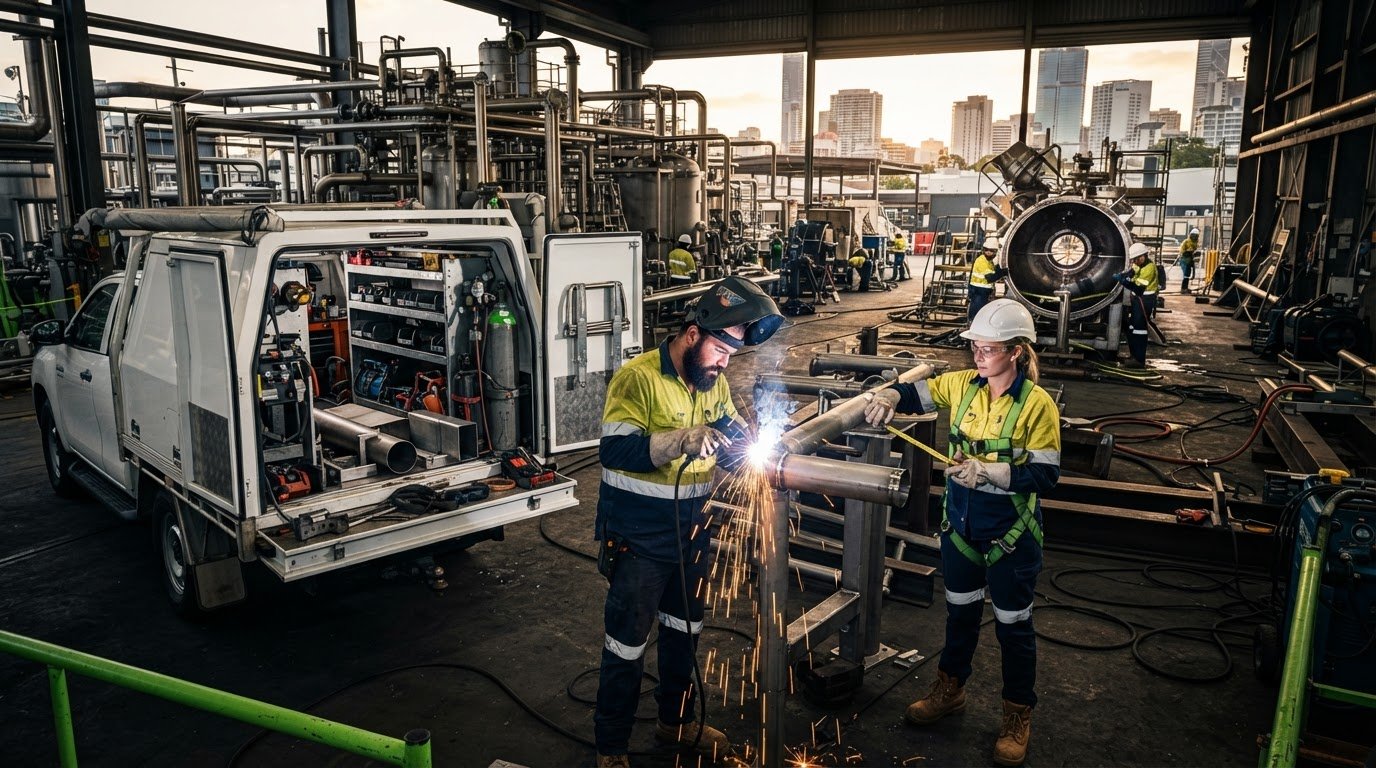
A shutdown can lose valuable time before the first weld is made. On-site fabrication for factory shutdown work depends on more than having a welder at the gate: unclear dimensions, restricted access, permit requirements and trade sequencing can all affect whether the work fits the shutdown window. With restart dates fixed, plan the fabrication approach alongside the wider job.
If you’re deciding whether to fabricate at the plant or prepare components off-site, start with the installation requirements. Some work needs to happen beside fixed equipment or depends on final site measurements. Other tasks suit workshop preparation before mobilisation. Combining the two can keep shutdown work focused on installation and essential adjustments.
This guide explains how to assess scope, access and fit-up requirements, what to prepare before mobilisation, and how to coordinate fabrication with permits and other trades. It includes a checklist for aligning measurements, materials, work areas and sequencing. Donewright Stainless supports industrial projects across Brisbane, the Gold Coast, Logan and Ipswich with mobile welding, a fully equipped mobile workshop, industrial pipework, maintenance and custom metal fabrication in stainless steel, mild steel and aluminium.
Key Takeaways
- Define each fabrication task, required materials and installation outcome before finalising the shutdown scope.
- Prepare drawings, measurements, equipment details and work-area information to reduce uncertainty before mobilisation.
- Choose on-site fabrication for factory shutdown work by weighing up workpiece size, transport options, site access and installation needs.
- Include trade interfaces, site contacts, inductions, access arrangements and permit processes in the shutdown plan.
- A combined workshop and on-site approach can suit jobs that need both advance preparation and final adjustments at the facility.
On-site fabrication for factory shutdowns: what it covers and why planning matters
On-site fabrication is custom metal work carried out at an industrial facility rather than completed entirely in a fabrication workshop. A factory shutdown can provide access to equipment, pipework and work areas that are difficult to reach while the plant is operating. This creates a practical window for repairs, modifications and maintenance that need to happen in place.
Shutdown fabrication is custom metal work planned and carried out at a facility during a scheduled shutdown, with the scope and method shaped by the equipment, access and installation requirements on site. This differs from workshop fabrication, where a component is made in a separate workspace and delivered for installation. Mobile welding and fabrication bring tools and work to the facility, but they don’t mean every part has to be made on site.
Which factory shutdown tasks may suit on-site fabrication?
Depending on the project, on-site work may include repairing a metal component that can’t readily be removed, modifying a bracket or support to suit existing equipment, or fabricating a bespoke item for a particular work area. Industrial pipework repairs and related maintenance can also form part of a shutdown scope. Donewright Stainless provides mobile welding, industrial pipework, maintenance and custom fabrication in stainless steel, mild steel and aluminium.
The right method depends on the job. A large or fixed item may be difficult to transport, while restricted access can limit where a mobile workshop can be positioned or how materials move through the facility. The work area, nearby equipment and installation sequence all affect whether fabrication should happen on site, in a workshop or through a combination of both.
Why shutdown scope needs to be clear before work starts
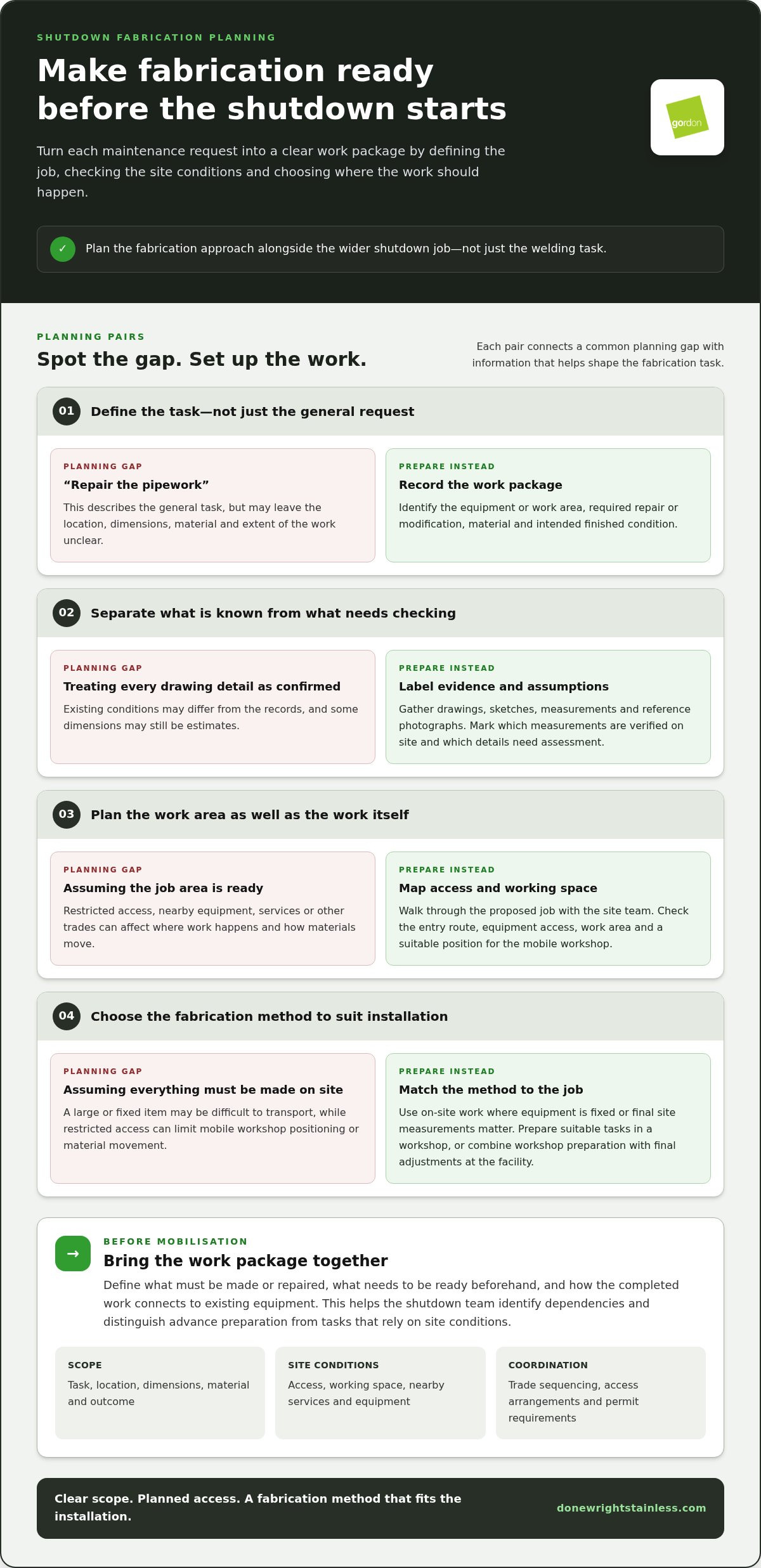
A description such as “repair the pipework” identifies the general task, but may not specify the location, dimensions, material or extent of the work. These gaps make it harder to plan materials, work steps and how the task fits with other shutdown activities. A clear scope gives everyone the same starting point before mobilisation.
Record the available information for each task, including:
- The equipment or work-area location, including access routes and working-space constraints.
- Dimensions, material and the required repair, modification or fabricated outcome.
- Current drawings, sketches or reference photographs showing the existing arrangement.
- Site constraints that could affect the work, such as nearby services, equipment or other trades.
Separate confirmed details from assumptions. Mark dimensions taken from a drawing separately from measurements verified on site, and note where the existing condition may differ from the records. Resolve these points during planning so the fabrication approach reflects the facility as it is, not just as it appears on paper. This gives the shutdown team a clearer basis for sequencing work and preparing for site conditions.
How to prepare on-site fabrication before a factory shutdown
Good preparation turns a broad maintenance request into work that can be scheduled, resourced and coordinated at the facility. For on-site fabrication for factory shutdown projects, the site team and fabricator should define the scope together, then work through access, work-area and sequencing details before the shutdown begins. A mobile workshop supports site-based work, but it still needs a suitable place to operate and a clear route to the job.
Turn each task into a practical work package. Note what needs to be made or repaired, what must be ready beforehand, and how the completed work will connect to existing equipment. This helps the shutdown coordinator identify dependencies and separate work that can be prepared in advance from tasks that depend on conditions at the facility.
What information helps define the fabrication scope?
Gather records that show what needs attention and how it connects to the surrounding plant. Drawings, measurements and photographs describe the equipment or area, while a written task description explains the required repair, modification or new component. Note material requirements and existing conditions, including nearby services or equipment that could affect the work.
- Identify the equipment, location and intended finished condition.
- Share available drawings, dimensions and photographs, noting when measurements are estimates.
- Describe the material and interfaces with surrounding plant, including connections or fixing points.
- Mark details that need assessment at the facility rather than treating them as settled.
Keep confirmed information separate from assumptions. A drawing may show the intended arrangement, while site measurements reveal that clearances or connection points differ. This distinction helps the fabricator plan what can be prepared in advance and what needs to be assessed in person. It also gives the shutdown team a clear record of decisions still to be made, rather than leaving unresolved details buried in general notes.
How should access, work areas and sequencing be planned?
Walk through the proposed job with the site team. Map the entry route, equipment access and position for the mobile workshop, then identify obstructions and shared work areas. Agree how materials and tools will reach the task location, and where the work can take place without clashing with other shutdown activities.
Core pre-shutdown planning inputs are a defined scope, current drawings and measurements, material requirements, site constraints, access arrangements, work-area details and an agreed sequence.
- Define and prioritise the fabrication tasks, recording dependencies such as equipment isolation or removal by another trade.
- Review the site layout with the facility team and identify access routes, work zones and points where trades may overlap.
- Set the proposed task order and clarify who coordinates interfaces if conditions differ from the information supplied.
- Include the facility’s arrangements for induction, access and permits in the shutdown plan.
Sequencing matters. If a fabrication task depends on another activity, show that connection in the shutdown plan instead of leaving it to be resolved on the day. For example, record whether a component can be measured before shutdown or whether its final dimensions depend on equipment being exposed or removed. This helps the team plan trade handovers and identify where a site assessment could affect the sequence.
With the scope and site arrangements set out, the team can develop a practical fabrication plan. Discuss your shutdown fabrication requirements with Donewright Stainless, a Brisbane-based provider of mobile welding, fabrication and industrial maintenance.
On-site fabrication or workshop fabrication: which suits your shutdown?
Choosing where fabrication happens is a project decision, not a rule that applies to every shutdown. Workpiece size and transportability matter, along with site access, the accuracy of existing information, installation requirements and interfaces with other work. Choose the method that suits the component and facility, then plan the handover between fabrication and installation.
On-site fabrication for factory shutdown work can address conditions that are difficult to reproduce elsewhere. Workshop preparation can suit components that can be made and transported to site. A combined method uses both: prepare what can be made off-site, then complete installation or fit-up at the facility.
| Approach | Suitable conditions | Planning considerations | Limitations |
|---|---|---|---|
| Fabrication at the facility | Large, fixed or difficult-to-remove items; repairs or modifications that depend on existing plant dimensions. | Work area, access, equipment interfaces, site arrangements and the order of other shutdown activities. | Space, access and site conditions may constrain how and where work can be carried out. |
| Workshop preparation | Components that can be fabricated separately and transported to the facility. | Reliable dimensions, transport route, delivery timing and how the component will be installed. | Differences between recorded dimensions and actual site conditions may affect fit-up. |
| Combined approach | Work where off-site preparation is practical but installation or final adjustment needs to happen at the plant. | Clear handover between preparation, delivery and site installation, including any dependencies. | Requires coordination across fabrication, transport and installation stages. |
When can fabrication at the facility be a practical fit?
On-site work may suit an item that is difficult to remove or transport, or a repair that must connect with existing equipment in place. Site dimensions and interfaces can be central, particularly where drawings don’t fully reflect the current arrangement. However, site fabrication doesn’t automatically reduce downtime. Access, work sequencing and equipment condition still shape the job.
When might workshop preparation or a combined method suit better?
If a component can be made away from the plant and transported safely, workshop preparation may keep some fabrication tasks separate from the shutdown work area. A combined approach can reserve site work for installation, fit-up or adjustments to actual conditions. Choose the method based on transport, access and installation constraints, not on an assumption that one approach is always quicker or less costly.
Before settling on an approach, consider whether the component can be moved, whether dimensions are dependable, how it connects to surrounding plant, and what must happen before installation can begin. These factors help define a realistic sequence and clarify which work belongs at the facility. The best-fit method accommodates the job’s physical requirements and the shutdown plan.
Shutdown fabrication checklist: coordinate safety, trades and handover
A shutdown plan needs to connect fabrication with the people, work areas and operating decisions around it. For on-site fabrication for factory shutdown work, record who is responsible for each interface, what must happen before work begins and how the area will be handed back. This helps prevent assumptions between the facility team and contractors from becoming last-minute issues.
What should the shutdown coordinator align before mobilisation?
Agree the work area and site access arrangements with the facility team, including who manages site entry and who is the day-to-day contact for the task. The facility manages its own induction, access arrangements and permit processes, so align the work plan with those site-specific requirements rather than assuming a standard process.
Use this checklist to bring the key interfaces together:
- Confirm the agreed scope, work location and boundaries of the fabrication area.
- Record site contacts for operations, maintenance, shutdown coordination and contractor liaison.
- Map access routes for workers, tools and materials, and note restrictions affecting the work area.
- Identify site-specific safety requirements and permit processes with the facility team.
- Coordinate the task sequence with other trades, including work that must be completed first or shares the same area.
- Agree how changes to the scope or work conditions will be raised and communicated during the shutdown.
Include operational representatives where the work could affect equipment, nearby activities or the planned return to service. A coordination check before work starts clarifies responsibilities and gives the shutdown lead a chance to resolve schedule clashes. Keep the current plan accessible to the people coordinating the work, and update it when agreed details change.
What should the project handover capture?
Close-out is part of the job, not an afterthought. Allow time to inspect the completed work with the relevant facility representative, remove tools and leftover materials, and leave the work area in the agreed condition. Record what was completed, any outstanding items and who is responsible for each agreed follow-up action.
Handover notes should identify the work area and task, summarise completion status, and record observations or agreed next steps for the facility team. If an item remains incomplete, state its status clearly so it isn’t mistaken for finished work. The facility’s representative can then manage the next operational steps under its own procedures.
For maintenance planning that includes pipework, on-site industrial pipework repair in Brisbane is a related part of shutdown work to consider alongside fabrication. Donewright Stainless provides mobile welding, industrial pipework and maintenance services for industrial projects.
To plan the fabrication scope, site interfaces and handover as one coordinated task, discuss your shutdown fabrication requirements with Donewright Stainless.
Plan your factory shutdown fabrication with Donewright Stainless
A sound shutdown fabrication plan brings four decisions together: define the work scope, understand site access, sequence tasks around facility operations, and select a fabrication method that suits the component. This gives the shutdown team a practical basis for deciding what needs to happen at the plant and what can be prepared elsewhere.
Donewright Stainless is a Brisbane-based provider of mobile welding, custom metal fabrication and industrial maintenance. Its fully equipped mobile workshop supports on-site industrial and commercial projects, with fabrication capabilities across stainless steel, mild steel and aluminium. Service coverage includes Brisbane, the Gold Coast, Logan and Ipswich.
How Donewright Stainless supports on-site industrial work
Donewright Stainless provides mobile workshop services for fabrication and maintenance at industrial facilities. Industrial pipework and maintenance tasks can be planned alongside custom metal work, with the approach shaped by the shutdown scope, access and installation requirements. This lets the team consider fabrication as part of the wider maintenance work rather than as a separate task.
For broader context on material-specific work, explore custom stainless steel fabrication in Brisbane. The same planning discipline applies to shutdown jobs: define what the component must do, how it connects with existing equipment and which site conditions will influence fit-up.
What to include in a shutdown fabrication enquiry
A useful enquiry gives the project team a clear starting point. Share the facility location and shutdown dates, then describe the work and its place in the shutdown sequence. Include available drawings, measurements and photographs, even if some details still need assessment at the facility. Identify access conditions, work-area restrictions and interfaces with nearby equipment or other trades.
- Facility location and the relevant shutdown dates.
- A description of each repair, modification or custom fabrication task.
- Drawings, dimensions, photographs and material details currently available.
- Access arrangements, work-area constraints and relevant site contacts.
- Dependencies, sequencing considerations and details that remain to be resolved.
For on-site fabrication for factory shutdown projects, separate confirmed details from open questions. This gives the planning discussion a practical focus: the fabricator can understand the intended work, while the shutdown team can identify what needs assessment or coordination before mobilisation.
Share the scope and site requirements with Donewright Stainless to discuss how mobile welding, fabrication and industrial maintenance can fit your shutdown plan. Talk to Donewright Stainless about your project.
Make fabrication part of shutdown readiness
A shutdown plan is more useful when fabrication decisions shape the work sequence instead of being added as a last-minute task. Treat fabrication as a defined part of project readiness: identify what must be completed, what information is still needed and how the work fits with the facility’s priorities. This gives the shutdown team a practical basis for moving from planning to action.
For on-site fabrication for factory shutdown work, turn the job details into a clear project conversation. Bring together the intended outcome, available site information and any constraints that could affect access or timing. Clear communication helps keep expectations aligned as the plan develops.
Donewright Stainless works with industrial and commercial clients on mobile fabrication and maintenance requirements. If you’re ready to discuss the scope and site conditions for your shutdown, start planning your fabrication project.
A considered plan gives your team a sound starting point. Take the next step with Donewright Stainless.
Frequently Asked Questions
How early should on-site fabrication be planned before a factory shutdown?
Start planning as soon as fabrication work is identified in the shutdown scope. Early planning gives the team time to assess site conditions, resolve drawing or measurement gaps, decide what can be prepared off-site, and account for materials and installation logistics. If the work depends on another task, such as equipment removal, identify that dependency while developing the schedule rather than leaving the sequence to be settled during the shutdown.
Can fabrication work be completed while other shutdown contractors are on site?
Yes. Fabrication can be coordinated with other contractors when work areas, task sequence and site arrangements are planned together. A fabrication task may need to follow equipment removal or avoid a shared access route during another trade’s work. Give the shutdown coordinator clear task boundaries and a named point of contact so changes, clashes or revised sequencing can be communicated to the relevant teams.
What information should I provide for a factory shutdown fabrication enquiry?
Provide the facility location, shutdown dates and a description of the required work, including the equipment or area involved and the intended outcome. Add an equipment identifier if one is used on site, along with available drawings, drawing revisions, dimensions and photographs. Note the material, known site constraints and dependencies on other tasks. Clearly label estimated measurements or details that still need to be assessed at the facility.
Is on-site fabrication suitable for industrial pipework repairs?
It can be suitable, depending on the condition and location of the pipework, the repair scope and access to the affected area. Repairs involving existing connections may need assessment against the actual installation, while other work may allow components to be prepared separately. Donewright Stainless provides industrial pipework, maintenance and mobile welding services, so pipework requirements can be considered as part of an industrial shutdown scope.
Can components be fabricated in a workshop and installed during a shutdown?
Yes. A component that can be made away from the facility may be prepared in a workshop and brought in for installation during the shutdown. This approach relies on dependable dimensions and a clear understanding of how the component connects to existing plant. Plan transport, delivery timing and any required site fit-up. If conditions differ from the drawings, allow for assessment or adjustment on site in the project plan.
What site access details matter for a mobile fabrication workshop?
Share the vehicle entry route, access controls and proposed position for the mobile workshop. Consider turning space, overhead or doorway clearance, distance to the work area and a suitable place for tools and materials. Note restricted routes, shared loading areas or obstacles that could affect movement around the facility. These details help the site team plan access and avoid conflicts with other shutdown traffic or work zones.
How is on-site fabrication coordinated with factory safety and permit processes?
The facility’s site team sets its induction, access and permit processes, and the fabrication plan needs to align with them. Before work starts, identify the relevant site contact, explain the task and work area, and follow the facility’s arrangements for required permits and coordination with nearby activities. For on-site fabrication for factory shutdown work, include safety and permit interfaces in the task sequence rather than treating them as separate assumptions.
