
Custom Metal Fabrication Gold Coast: From Project Brief to Finished Work
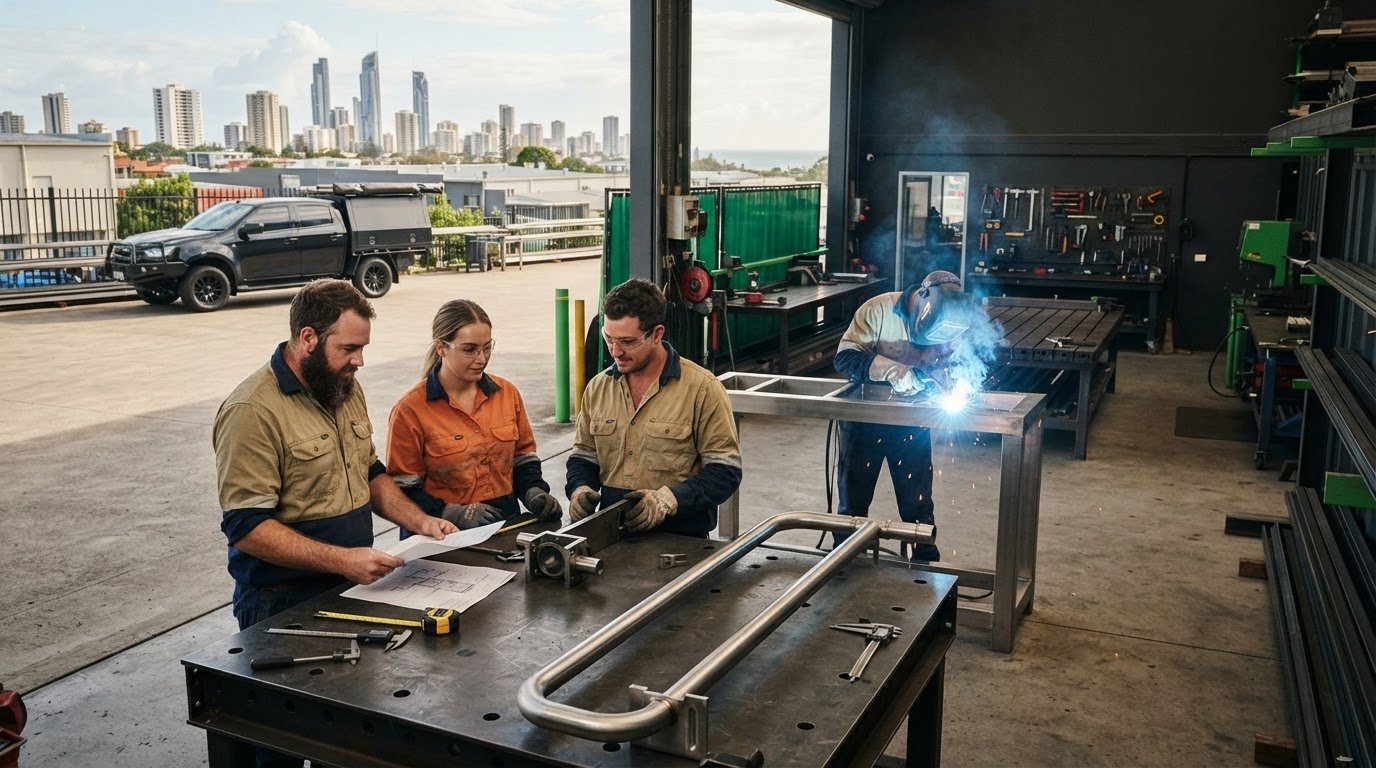
What should come first in a custom metal fabrication Gold Coast project: the material or the job the finished work needs to do? Start with the job. A handrail, safety barrier, bench or section of pipework must suit its setting and the way people use the site. Defining those needs early helps reduce the risk of rework and keeps workshop and on-site work aligned.
Before fabrication begins, consider what the item needs to do, where it will go, how it will be installed and what conditions the work area presents. Those details help guide material selection, dimensions and the balance between workshop fabrication and site work.
This article explains how a fabrication project moves from brief to finished work, including practical considerations for stainless steel, mild steel and aluminium. It also covers how Donewright Stainless supports commercial and industrial projects across the Gold Coast with workshop fabrication, installation and a fully equipped mobile workshop for on-site work.
Key Takeaways
- Start with the task the finished metalwork must perform, then shape the brief around its function, dimensions and site conditions.
- Compare stainless steel, mild steel and aluminium in the context of the application, environment and fabrication requirements.
- Record access, work areas and operational constraints early to help coordinate workshop fabrication with site-based work.
- For custom metal fabrication Gold Coast projects, a clear project journey connects the initial requirement with fabrication and installation.
- Donewright Stainless supports commercial and industrial work across the Gold Coast with metal fabrication capabilities and a mobile workshop.
Custom metal fabrication on the Gold Coast: what does a project involve?
An off-the-shelf item may be the wrong size, obstruct access or fail to suit the way a commercial or industrial space is used. A handrail, for example, may need to follow an existing stair layout, while a bench may need to fit a defined work area. Custom metal fabrication Gold Coast projects start with the task and the site, then shape the metalwork around them.
Custom metal fabrication is the design and manufacture of metalwork for a particular application, based on its required function, dimensions and site conditions. The work may involve cutting, bending and assembling metal to create a finished item. These are among the metal fabrication processes used to turn material into a practical component.
That differs from general metal supply, where material is sold without being made into a site-specific item. It is also distinct from high-rise structural steel work. Commercial and industrial fabrication can instead involve individual components such as safety handrails, custom benches or sections of industrial pipework.
What can custom metal fabrication produce?
The finished item depends on its purpose and where it will be used. Examples include stainless steel handrails and safety protection, custom stainless benches and trolleys, and stainless bench tops. A food production work area, for instance, may need a bench shaped to fit the available space. A site access route may need a handrail that follows the existing layout.
Size and shape are only part of the brief. Nearby equipment, clearance and the way staff move through the area can all affect the design. One job may involve replacing a component; another may need a made-to-measure item that fits an existing installation. Define those differences early, because one fabrication approach will not suit every job.
When does a project need bespoke metalwork?
Bespoke fabrication can be useful when standard dimensions do not fit, access is restricted, a component needs to work with an existing installation, or an item must support a particular workflow. A clear brief translates that practical need into requirements the fabrication team can use.
Include the item’s purpose, measurements, installation location, connection points and any access constraints. Photos, sketches or existing drawings can help explain the setting. Also describe how the area is used, as this can clarify the item’s function and any operational constraints. If dimensions or site conditions need to be assessed in person, that information can be gathered before fabrication begins.
The aim is not to add unnecessary complexity. Define what the finished work must do, where it must fit and how it relates to the surrounding space. That gives the project a practical starting point and helps align the fabricated item with its intended use.
How a custom metal fabrication project moves from brief to installation
A clear sequence helps connect the finished item to the original site requirement. For a custom metal fabrication Gold Coast project, the steps may include clarifying the task, documenting the site, selecting an approach, fabricating components and fitting them in place. The level of design and site work depends on the item and its installation conditions.
Useful project details include the item’s purpose, approximate dimensions, operating environment and how it must fit with nearby equipment or structures. Photos, sketches, existing drawings and measurements can help explain the requirement when available. They provide a useful starting point, but access and installation conditions also need to be considered.
What information helps define the fabrication brief?
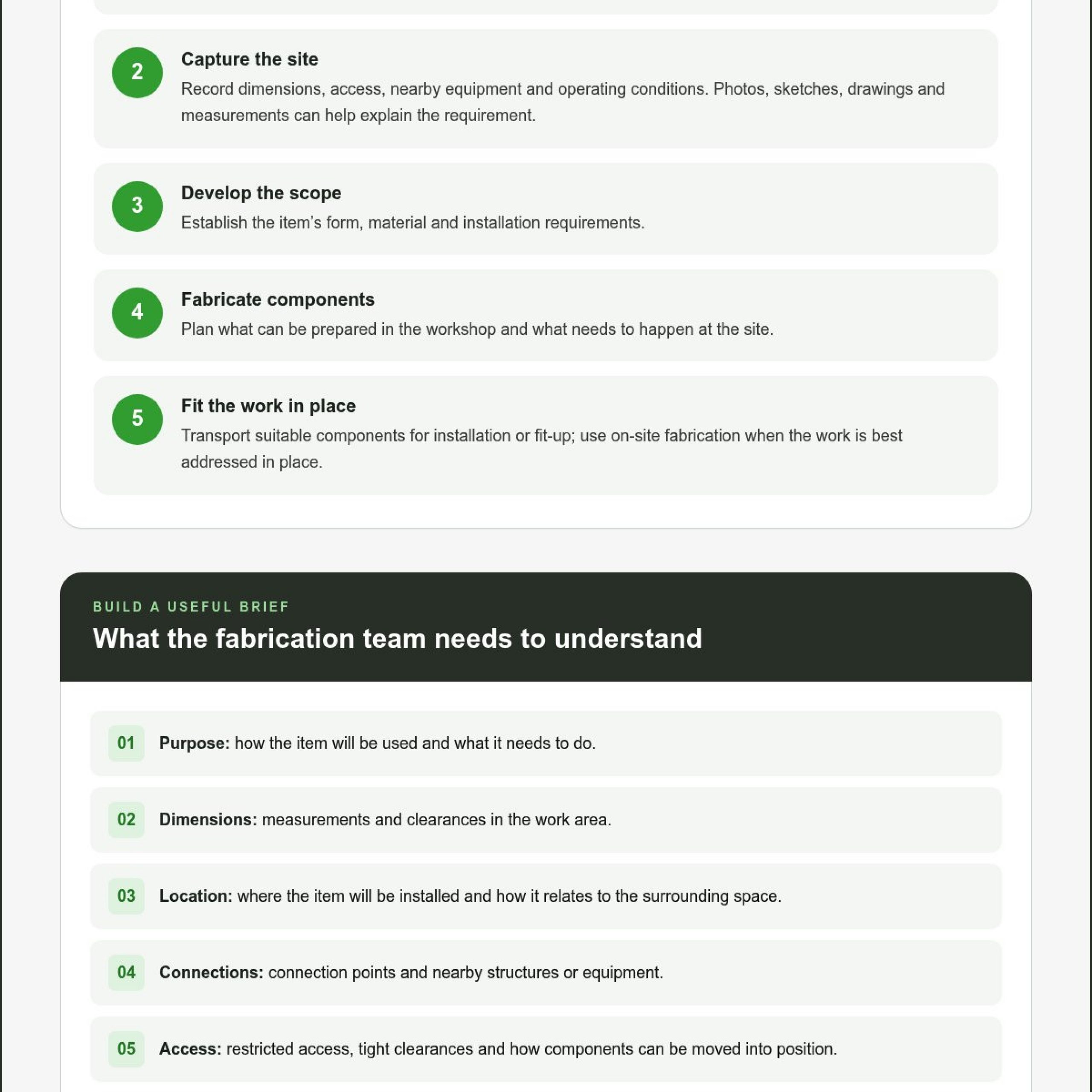
Start with the practical task. Describe how the item will be used, where it will sit and what it needs to connect to or work around. Note tight clearances, restricted access, nearby equipment and whether the area needs to remain in operation during the work. These details can influence dimensions, material choice, fabrication methods and how components will be moved into position.
Include material considerations in the brief, while recognising that the right choice depends on the application and site environment. For example, the characteristics of mild steel can inform an early comparison, while the project’s full requirements guide the final selection. Donewright’s custom stainless steel fabrication guide provides further context for stainless steel projects.
How do workshop fabrication and site work fit together?
Once the requirements are clear, plan what can be prepared in the workshop and what needs to happen at the site. Suitable components can be fabricated in the workshop, then transported for installation or fit-up. This approach can work well when an item needs to be positioned alongside existing equipment or fitted to a particular part of a building.
Some jobs also need welding or other fabrication work on site. Mobile welding is useful when the work relates to an existing installation or the component is best addressed in place. Donewright Stainless supports on-site projects with a fully equipped mobile workshop, alongside workshop fabrication and installation.
A clear sequence can help coordinate these stages:
- Define the task: set out the item’s purpose and the problem it needs to solve.
- Capture the site: record dimensions, access, nearby equipment and operating conditions.
- Develop the scope: establish the item’s form, material and installation requirements.
- Fabricate components: prepare suitable work in the workshop.
- Plan site work: coordinate delivery, fit-up, installation or mobile welding around site conditions.
- Complete the fit-up: position the work and address the agreed installation requirements.
Donewright supports commercial and industrial fabrication projects across the Gold Coast, from workshop-made items to on-site work. Explore Donewright’s fabrication support to see how its services can fit your project requirements.
Stainless steel, mild steel, or aluminium: choosing for the application
Material selection is a practical decision, not a contest to find one metal that suits every job. The intended use, operating environment, dimensions, fabrication requirements and installation context all help shape the choice. For a commercial or industrial project, consider how the finished item will be used, what it will be exposed to and how it needs to fit with surrounding equipment or surfaces.
Use the project requirements to compare materials rather than choosing by name alone.
The table below is a starting point for discussion, not a substitute for project-specific assessment.
| Material | Considerations for the project |
|---|---|
| Stainless steel | Consider the item’s function, operating environment, finish requirements and how it will be fabricated and installed. |
| Mild steel | Consider the intended use, site exposure, any required finish or protection, and how the item will connect to existing work. |
| Aluminium | Consider the component’s form, how it will be fabricated and joined, and how it needs to integrate with the wider project. |
When might stainless steel suit a fabrication project?
Donewright uses stainless steel for commercial and industrial fabrication, including custom benches, bench tops, handrails and pipework. It may suit a project when the item’s function, operating environment and finish requirements align with the material’s properties. The right specification depends on the conditions the finished work will face, not just the name of the metal.
For a food production area, for example, the brief could describe what a bench needs to accommodate, where it will sit and how it will be used. Those details help inform the design and material discussion. Do not assume a particular grade or compliance outcome without assessing the project requirements.
How do mild steel and aluminium differ in project planning?
Mild steel and aluminium bring different considerations to fabrication, so the choice should reflect the component and its setting. A mild steel item may need planning around its intended finish and exposure, as well as its connection points and installation. For custom handrails, safety protection or other site-specific items, include those details alongside dimensions and function. Donewright’s custom mild steel fabrication guide provides further context for this material.
Aluminium fabrication also needs to be planned around the item’s shape, joining requirements and relationship to other components. A cover or fabricated component that must fit existing equipment, for instance, calls for careful attention to measurements and fit-up. Compare the job’s practical demands and how each option can be fabricated for the intended application, rather than choosing by material name alone.
For custom metal fabrication Gold Coast projects, this comparison helps frame the material discussion before the design is settled. A clear brief gives the fabrication team useful context to assess the options and develop an approach suited to the work.
Planning Gold Coast fabrication around site access and operations
A well-made component can still be difficult to install if the site has not been considered in the work plan. Access routes, available work space, existing equipment and day-to-day operations all affect whether fabrication should happen mainly in a workshop, on site or through a combination of both. For custom metal fabrication Gold Coast projects, recording these conditions early helps align the scope with the realities of the job.
Consider how people, materials and equipment will move through the area, and whether the item can pass through doors, corridors or other access points. Existing pipework, production equipment or nearby work areas may affect where installers can position components and carry out fit-up. Site personnel can provide useful context about operating routines, access arrangements and areas that need to remain clear.
What should a site manager consider before fabrication work?
Gather accurate information about the proposed work area and how it is used. Note access routes, available space, nearby operations and the position of existing equipment or services. Measurements and clear photographs can help explain the setting, while drawings may show how the new work relates to surrounding structures.
Good site information supports decisions about component dimensions, transport, installation and work sequence. It also helps the fabrication team coordinate with site personnel. Discussing access arrangements and operational constraints early can surface practical issues before work begins, while recognising that each project will affect the site differently.
Safety planning should reflect the particular task and work environment. Site procedures, access controls and coordination requirements can vary, so the plan needs to account for the actual location and activities involved rather than rely on generic assumptions.
When can mobile welding support a project?
Workshop fabrication suits components that can be made off site and transported for installation. Site work may be needed when a repair, maintenance task or fit-up relates directly to an existing installation, or when work needs to be completed at the project location. The choice depends on the item, access and installation requirements.
Donewright Stainless provides mobile welding and supports on-site projects with a fully equipped mobile workshop. This lets commercial and industrial projects plan fabrication and site work around the physical setting, with the sequence shaped to the job. For pipework tasks, the on-site industrial pipework repair guide offers related context on site-based work.
Before work starts, align the proposed work area, access arrangements and timing with the relevant site personnel. Clear coordination helps everyone understand where the work will take place and how it fits alongside other activity, without assuming the same effect on every site.
For a site-based fabrication or welding project, discuss your on-site metalwork requirements with Donewright Stainless.
Custom metal fabrication Gold Coast projects with Donewright Stainless
A project brief is a starting point, not a one-size-fits-all recipe. Donewright Stainless is a Brisbane-based fabricator serving commercial and industrial projects on the Gold Coast, with capabilities across stainless steel, mild steel and aluminium. The work is shaped around what the item needs to do, the site it must fit and how it will be installed.
This project-led approach connects the requirement to the material, fabrication plan and site conditions. An item may be made in the workshop and installed at the project location, while a repair or fit-up may need mobile support. The scope depends on the job and the work required.
What fabrication and site services can Donewright provide?
Donewright fabricates stainless steel handrails, safety protection, custom benches, trolleys and bench tops, alongside mild steel and aluminium work. The form and material depend on the intended use, dimensions and operating environment. Installation helps connect the fabricated item with its site requirements.
Donewright also provides industrial pipework, maintenance and mobile welding. These are distinct capabilities, not automatic parts of every fabrication job. A made-to-measure bench may focus on workshop fabrication and installation, while an existing pipework issue may call for maintenance or site-based welding.
How to take the next step with a Gold Coast project
Start an enquiry with a short description of the task. Share what the item needs to do, its approximate dimensions, the project location and any known access or site constraints. Drawings, measurements or photographs can help explain the setting, but the key is to describe the practical requirement and how the work area is used.
That information gives the project discussion a clear starting point. The scope can then be considered in relation to material, fabrication, installation and any mobile support the site needs. If some details are still developing, explain what is known and which decisions remain open.
Whether you’re planning custom metal fabrication Gold Coast work for a new installation or addressing an industrial requirement, a clear discussion about the job helps establish the next steps. Contact Donewright Stainless to discuss your fabrication needs.
Turn the requirement into a clear project brief
For custom metal fabrication Gold Coast projects, turn the practical need into a brief that can guide the project discussion. Note what the item must do, its approximate dimensions, where it will be installed and any existing equipment or access constraints. If some details are still being worked out, identify what is known and what remains open. A starting brief does not need to answer every technical question; it needs to make the job clear enough to discuss.
Donewright Stainless is based in Brisbane and serves commercial and industrial projects across the Gold Coast, Brisbane, Logan and Ipswich. Its fabrication work covers stainless steel, mild steel and aluminium, with a fully equipped mobile workshop supporting on-site projects. The right combination of material, workshop fabrication, installation and site support can be considered in relation to your requirements.
Share the details you have and start a conversation about the work ahead. Discuss your custom metal fabrication project with Donewright Stainless.
Frequently Asked Questions
What does custom metal fabrication include?
Custom metal fabrication can include developing a design, making metal components and installing the finished work for a particular commercial or industrial use. The scope might be a single item, such as a trolley, or several connected components that need to fit together. It can also include modifications or maintenance work on existing metalwork. The required function and how the item connects to its surroundings determine what the project needs.
Which metal is best for custom fabrication: stainless steel, mild steel, or aluminium?
There is no single best metal for every project. The choice depends on what the item needs to do, the conditions it will face and how it must be made and fitted. A custom bench and a component that joins existing equipment, for example, can have different design and fabrication priorities. Describe the intended use and site context so the options can be considered against the actual job.
Can a metal fabricator complete welding at the project site?
Yes. Mobile welding can be used when work needs to happen at the project site, such as a repair, maintenance task or fit-up involving an existing installation. Donewright Stainless provides mobile welding supported by a fully equipped mobile workshop. For a useful project discussion, describe the work location, what the metalwork connects to and any access conditions that may affect the job.
What information should I provide for a custom fabrication project?
Start with the item’s purpose, approximate size and intended location. Include known details about what it must connect to, surrounding equipment and constraints on access or installation. Existing drawings, measurements and photographs can help explain the site, but they are supporting information rather than a requirement for starting a discussion. If the scope is still taking shape, say which details are confirmed and which are undecided.
Does Donewright Stainless serve custom metal fabrication projects on the Gold Coast?
Yes. Donewright Stainless serves commercial and industrial custom metal fabrication Gold Coast projects as part of its regional work across the Gold Coast, Brisbane, Logan and Ipswich. Its fabrication covers stainless steel, mild steel and aluminium, with installation and mobile support for site-based requirements. The project scope can be discussed around the item’s function, location and installation needs, whether the work is planned for a new project or an existing site.
What is the difference between workshop fabrication and mobile welding?
Workshop fabrication is the off-site making of components, which can then be transported to the project for installation. Mobile welding is welding carried out at the site, often when a component must be joined to existing metalwork or a repair needs to be completed in place. The two approaches can form parts of the same job. The item’s size, access and fit-up requirements help determine a practical sequence.
