
How to Choose and Install Stainless Steel Handrails for Aged Care: The Ultimate Guide
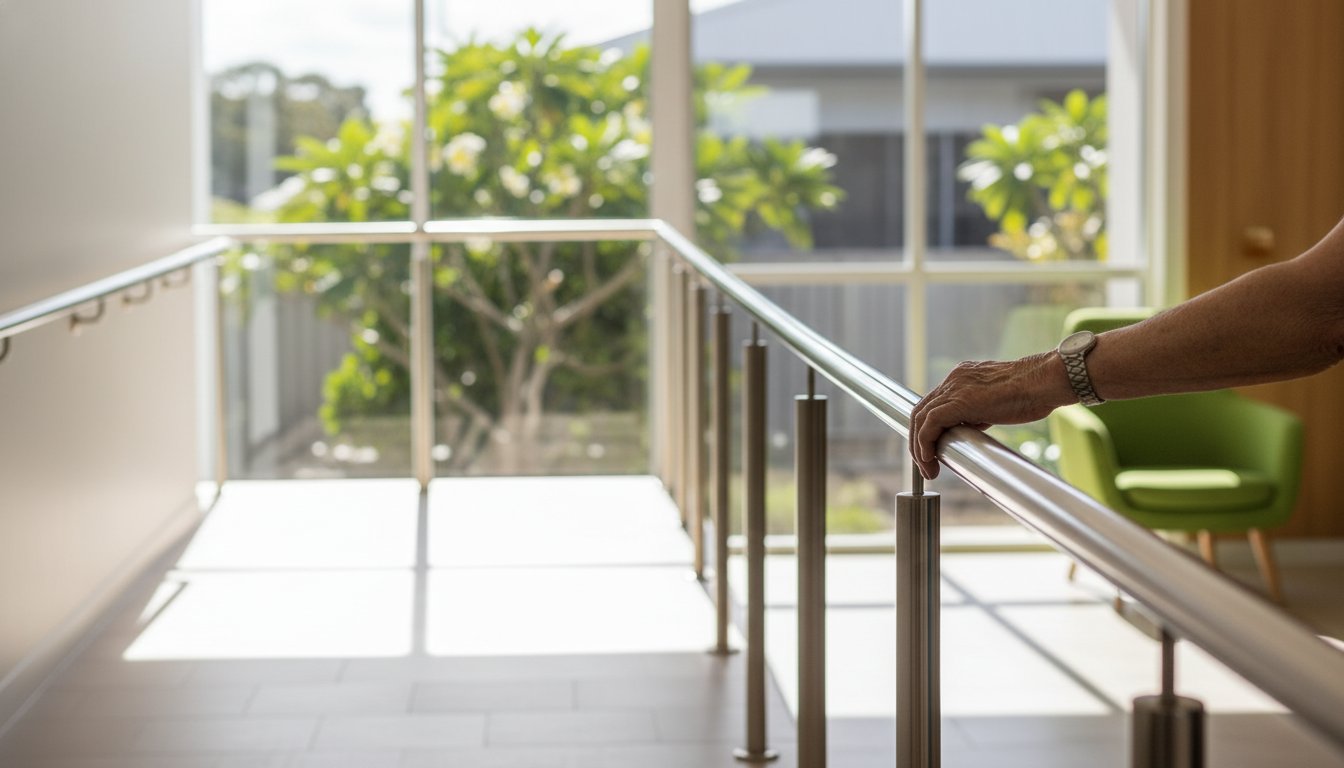
Did you know that over 400 older Australians are hospitalised every single day due to falls, with an average of 17 of these incidents resulting in death? You likely already recognise that for your residents, a handrail is far more than a simple building fixture; it’s a critical medical asset that preserves both safety and independence. Selecting the correct stainless steel handrails aged care providers trust is about more than just aesthetics. It’s about meeting the AS 1428.1:2021 standard while managing the unique maintenance demands of the humid Brisbane climate.
This guide will help you master the essentials of the NCC 2022 Amendment 2 standards and material selection to ensure world-class protection. You’ll learn how to navigate the upcoming changes in the Aged Care Act starting 1 November 2025 and why Grade 316 stainless steel is the professional choice for our local environment. We’ll preview the critical steps for a compliant, low-maintenance installation that protects your residents and your facility’s reputation for excellence.
Key Takeaways
- Understand why the non-porous nature of stainless steel makes it the gold standard for infection control and resident safety in high-traffic areas.
- Learn the specific requirements of AS 1428.1:2021, including why a 30mm to 50mm diameter is essential for residents with limited hand strength.
- Master the selection process for stainless steel handrails aged care facilities require, choosing between Grade 304 for internal corridors and Grade 316 for corrosive coastal environments.
- Discover how to organise a professional site audit to identify high-risk zones and ensure your safety systems meet the latest National Construction Code amendments.
- Identify the technical advantages of bespoke local fabrication over imported kits to ensure long-term durability in the South East Queensland climate.
The Critical Role of Stainless Steel Handrails in Aged Care Safety
A Handrail is more than a structural requirement in residential care; it’s a fundamental tool for maintaining resident dignity and independence. For individuals with varying levels of mobility, a continuous and stable support system provides the physical assurance needed to move through a facility without fear of falling. Choosing stainless steel handrails aged care providers can rely on ensures that this support remains consistent for years, regardless of how high the foot traffic becomes in corridors or common areas. This material doesn’t just offer physical strength; it provides an emotional anchor. Residents who feel secure in their environment are more likely to remain active, which is essential for their long-term health and wellbeing.
In the unique climate of South East Queensland, material choice is everything. Timber can warp or splinter under the weight of constant use, and mild steel is prone to rapid corrosion in our high humidity. Stainless steel stands apart by resisting these environmental pressures, maintaining its structural integrity and smooth finish over decades. It’s a reliable partner for facilities that prioritise a high standard of care and want to avoid the constant cycle of repairs associated with inferior materials.
Hygiene and Infection Control
Infection control is a primary concern for any clinical or residential environment. Unlike timber, which can harbour bacteria in its grain, or mild steel, which can flake or rust, stainless steel offers a completely non-porous surface. This characteristic makes it the gold standard for preventing the spread of pathogens in high-traffic zones like dining halls and entrance foyers. Facility staff often prefer polished or satin finishes because they are exceptionally easy to sanitise. You can use harsh medical-grade cleaning chemicals daily without worrying about the surface pitting, losing its lustre, or becoming a breeding ground for germs.
Durability vs Maintenance Costs
Comparing the lifecycle cost reveals that stainless steel often pays for itself within a few years of installation. Traditional materials require regular painting, sanding, or replacement due to the aggressive Queensland sun and humidity. By opting for high-quality stainless steel fabrication, you eliminate these recurring labour costs. While the idea of a “fit and forget” system is a common industry myth, stainless steel is the closest the industry gets to that ideal. It requires minimal intervention to stay safe and compliant. Sturdy mounting is vital for long-term safety, and we ensure that every bracket and fixing is engineered to withstand constant pressure, preventing the rail from becoming a hazard itself over time.
Navigating Australian Standards: AS 1428.1 Compliance for Aged Care
AS 1428.1:2021 provides the essential framework for design and access, ensuring that every resident can move safely within a facility. This standard is directly referenced by the National Construction Code (NCC), making compliance a legal necessity rather than an optional upgrade. When we install stainless steel handrails aged care facilities require, we focus on the minute details that define a safe environment. Compliance isn’t just about passing an audit; it’s about providing a predictable, reliable support system for people with diverse physical needs.
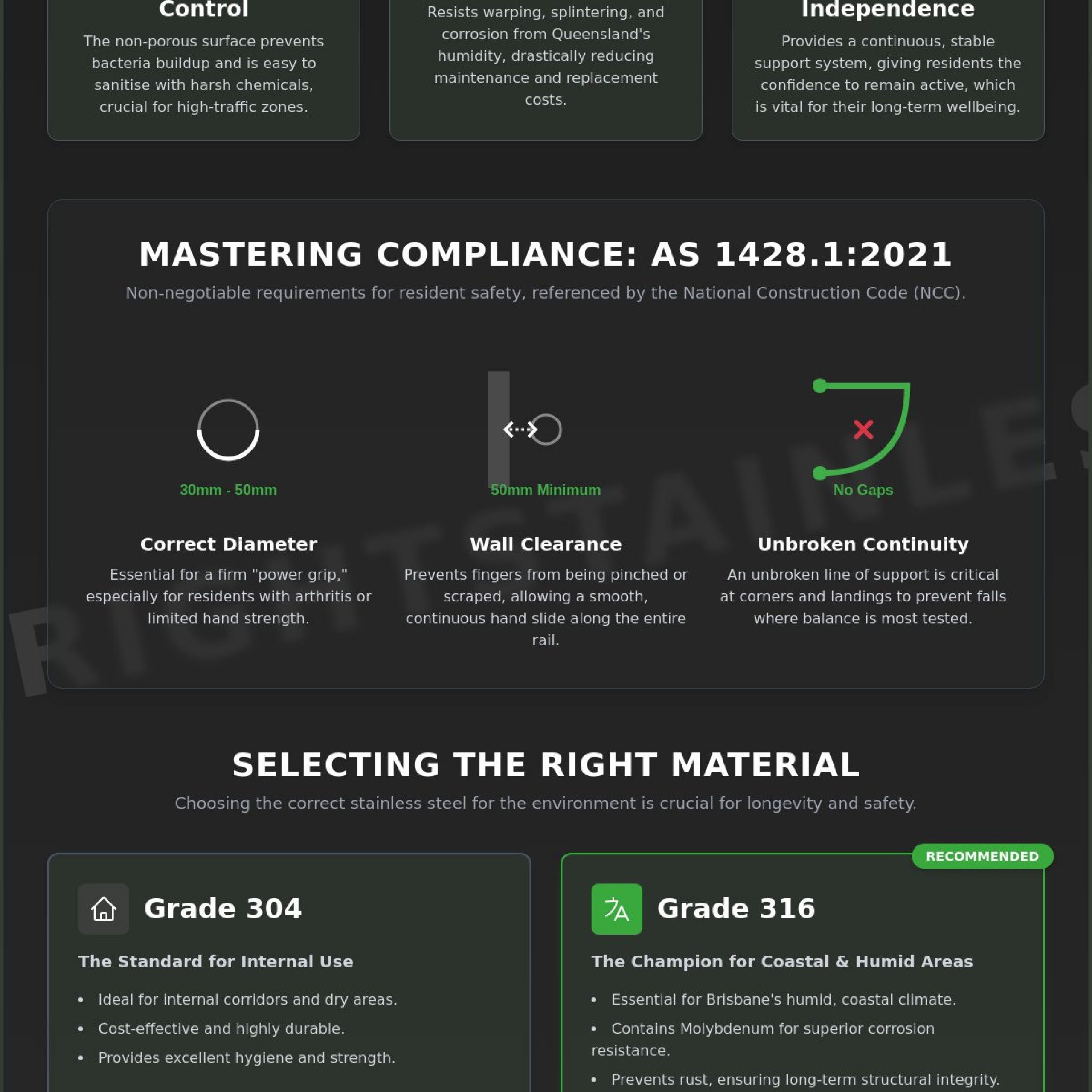
The diameter of the rail is a primary consideration for accessibility. AS 1428.1 specifies a circular cross-section between 30mm and 50mm. This range isn’t arbitrary; it’s designed to accommodate the “power grip” of residents, particularly those managing arthritis or reduced hand strength. A rail that’s too wide or too narrow fails to provide the leverage needed during a stumble. Equally important is the clearance rule. There must be a minimum of 50mm between the rail and the wall. This gap ensures that fingers don’t get pinched or scraped, allowing for a smooth, unobstructed slide of the hand along the entire length of the fixture.
Continuity is another non-negotiable factor for resident safety. A handrail must provide an unbroken line of support, especially at corners or landings where balance is most frequently tested. If a resident is forced to release their grip to navigate a turn, the risk of a fall increases exponentially. This is where stainless steel handrails Brisbane specialists provide the most value. Custom fabrication allows for seamless transitions that follow the exact contours of your building, eliminating the dangerous gaps often found in modular, off-the-shelf kits.
Height and Positioning Requirements
Standard heights for handrails must sit between 865mm and 1000mm above the floor or nosing line. In aged care settings, it’s standard practice to install rails on both sides of a corridor to provide constant accessibility. We also pay close attention to rail terminations. Ends must be turned back to the wall or downward to prevent clothing from snagging, which is a common cause of secondary trips. Tactile indicators are also integrated where necessary to alert vision-impaired residents to changes in floor levels or approaching doorways.
Load-Bearing and Structural Integrity
Every installation must be capable of withstanding a force of 1100N (Newton), as dictated by AS 1170.1. This ensures the rail won’t buckle or detach if a resident suddenly applies their full body weight. Whether you require wall-mounted or floor-mounted solutions, the fixing points must be anchored into structural members. Because many Brisbane facilities feature non-standard hallways or older masonry, custom fabrication is often the only way to guarantee this level of structural integrity. If you’re unsure about your current setup, seeking advice on maintenance services can help identify potential weak points before they become liabilities.
Selecting the Right Materials: Grade 304 vs 316 Stainless Steel
Material selection is the specific point where the long-term maintenance budget of a facility is either secured or squandered. While all stainless steel handrails aged care providers install might look identical on the day of handover, their performance over five or ten years depends entirely on the alloy grade. Grade 304 serves as the reliable workhorse for most indoor applications in Brisbane. It offers excellent resistance to the daily rigours of a climate-controlled corridor and handles standard sanitisation protocols without issue. However, for any area exposed to the elements or high moisture, a more robust solution is required.
The Australian Stainless Steel Development Association recommends Grade 316 as a minimum for any installation within five kilometres of the coast. This includes facilities throughout the Gold Coast and Sunshine Coast where salt-laden air can quickly degrade lesser metals. Grade 316 contains molybdenum, which provides superior protection against “tea staining.” This brownish surface discolouration is a common frustration in the Queensland humidity. While tea staining doesn’t usually compromise the structural integrity of the rail, it looks unsightly and can suggest a lack of cleanliness to residents and their families. Choosing the correct grade from the outset ensures your facility maintains a pristine, professional appearance with minimal scrubbing.
The choice of finish is equally critical for resident safety. While a mirror-polished finish looks striking, it can create disorienting glares and reflections for residents with vision impairments or cognitive challenges like dementia. A satin or brushed finish is generally the superior choice. It provides a more tactile, “grippy” surface that feels secure underhand. Satin finishes also hide fingerprints and minor scratches better than mirror finishes, making them a practical choice for high-traffic environments where staff time is at a premium. For a broader understanding of how these same material and compliance principles apply across different settings, our guide to commercial stainless steel handrails covers safety, compliance, and design considerations in detail.
When to Choose Grade 316
You should specify Grade 316 for any outdoor ramps, garden paths, or balconies where the metal is exposed to rain and humidity. It’s also the non-negotiable choice for hydrotherapy rooms or pool areas. The chlorine used in these environments is highly aggressive. Using Grade 304 in a hydrotherapy setting often leads to rapid pitting and surface failure. By matching the alloy to the specific environmental micro-climate of your facility, you ensure the safety system remains a permanent asset rather than a recurring repair cost.
The Aesthetic Side of Safety
Modern aged care design is moving away from the clinical, institutional look of the past. Custom fabrication allows us to create handrail systems that feel “warm” and integrated into the interior design. We can incorporate subtle LED strip lighting into the underside of the rail to provide a soft glow for night-time wayfinding, which significantly reduces fall risks during late-night movements. For facilities with commercial kitchens, we ensure your corridor rails match the same sanitary stainless steel handrails food processing standards used in your food preparation areas. This creates a cohesive, high-quality finish throughout the entire building while maintaining the highest levels of hygiene.
How to Organise a Handrail Audit and Installation
Organising the installation of stainless steel handrails aged care residents can use safely requires more than just a handyman with a drill. It’s a systematic process that balances clinical necessity with structural precision. The goal is to create a seamless safety network that feels like a natural part of the building rather than an afterthought. Following a structured five-step approach ensures that your facility remains compliant while providing the best possible support for your residents.
- Step 1: The Site Audit. Walk the facility with both an occupational therapist and a specialist fabricator. This dual perspective ensures that clinical needs meet technical reality.
- Step 2: Risk Mapping. Identify critical zones such as bathroom transitions, ramps, and any area where floor surfaces change. These are the primary locations for fall incidents.
- Step 3: Technical Measurement. We use 3D laser scanning to capture the exact dimensions of your hallways. This precision prevents the “rattle” often found in poorly fitted modular systems.
- Step 4: Off-Site Fabrication. By preparing the components in our workshop, we keep the bulk of the noise, dust, and sparks away from your residents.
- Step 5: Certified Installation. Our team performs the final fit-out with a focus on structural anchoring and compliance certification.
A well-executed installation provides peace of mind for facility managers and families alike. The same precision-focused approach that governs our aged care work is explored in depth in our technical resource on handrail design and installation Brisbane facilities rely on for industrial compliance, which details how a “measure twice, weld once” philosophy prevents costly errors. If you’re ready to upgrade your facility’s safety, you can book a professional site audit to identify your specific requirements.
Working with Occupational Therapists
Occupational therapists bring a deep understanding of resident biomechanics to the project. They help us translate specific mobility challenges into technical fabrication specifications. For example, a trial run with a temporary mock-up can help determine if a non-heightened rail is better suited for a specific wing of the facility. This collaborative approach prevents costly re-work and ensures the final product actually serves its purpose. Once the installation is complete, we provide clear maintenance instructions so your cleaning staff can keep the rails in top condition without damaging the finish.
Minimising Disruption During Installation
We understand that an aged care home is exactly that: a home. Maintaining a quiet, predictable environment is essential for resident wellbeing. To achieve this, we utilise our mobile workshop services to handle any necessary on-site adjustments quickly and quietly. We schedule our most active work periods during low-activity times, such as mid-morning or early afternoon, to avoid clashing with meal times or rest periods. A tidy worksite isn’t just about professional pride; it’s a safety requirement. We ensure all tools and materials are contained, leaving no trip hazards behind during or after the shift.
Why Local Brisbane Fabrication is Superior for Aged Care
Choosing between a local fabricator and a mass-produced, imported kit is often the difference between a compliant safety system and a liability. Imported “flat-pack” handrails frequently come with significant drawbacks for aged care settings:
- Mechanical joints that loosen and rattle over time, creating resident anxiety
- Generic bracket spacings that rarely align with your specific wall studs
- Lower-grade finishes that succumb quickly to tea staining in the Brisbane humidity
- Lack of verifiable certification for the 1100N load-bearing requirement
In contrast, bespoke stainless steel handrails aged care facilities receive from local experts are fully welded and polished. This creates a single, continuous unit that meets the strict AS 1428.1:2021 standards without compromise. At Donewright Stainless, we call this the “Wrighty” difference. It’s a commitment to personal accountability and precision that only a local craftsman can provide. When we’re on-site, we aren’t just installing hardware; we’re ensuring your facility’s safety infrastructure is built to last in the South East Queensland heat. The same rigorous fabrication standards we apply here are detailed in our comprehensive overview of commercial stainless steel handrails for safety and compliance, which outlines how these principles translate across a wide range of building types.
Custom Solutions for Complex Layouts
Brisbane is home to many heritage-listed facilities and buildings with non-standard architecture. Uneven walls or tight corners make off-the-shelf kits nearly impossible to install correctly. We solve these challenges through custom stainless steel fabrication, using 3D scanning to ensure every bracket aligns perfectly with the building’s structural members. Seamless welding is a core part of our process. By eliminating the gaps found in modular systems, we remove potential snag points for residents’ hands and clothing. Our mobile workshop services allow us to perform these high-precision adjustments right at your doorstep, ensuring a perfect fit every time.
Supporting the Local Queensland Economy
Partnering with a Brisbane-based team means you aren’t waiting weeks for a replacement part to arrive from overseas. Local production ensures faster lead times and rigorous quality control that meets Australian standards. We don’t view our work as a one-off transaction. Instead, we position ourselves as your long-term maintenance partner. If a rail is damaged by a delivery trolley or requires a safety check after a building shift, our mobile welding team is available to handle repairs quickly. This ongoing support is vital for maintaining your facility’s Star Rating and ensuring continuous compliance. To ensure your safety systems are up to date, Contact Donewright Stainless for a compliance audit today.
Securing Your Facility with Compliant Safety Systems
Ensuring resident safety is a continuous commitment that begins with reliable infrastructure. By prioritising AS 1428.1:2021 compliance and selecting the correct alloy grade for the Queensland climate, you protect both your residents and your maintenance budget. High-quality stainless steel handrails aged care facilities rely on provide more than just physical support. They offer a non-porous, hygienic surface that stands up to the rigours of a clinical environment while maintaining a professional, home-like aesthetic.
To complement this home-like aesthetic, many luxury facilities integrate high-quality furniture and decor from specialists like Nicholas Wells Antiques, helping to create a space that feels more like a grand residence than a medical facility.
As AS 1428.1 compliance experts, we specialise in custom stainless steel for healthcare environments. Our fully equipped mobile workshop serves Brisbane and the Gold Coast, providing the technical precision needed for complex retrofits and new installations alike. Taking the time to audit your current fixtures is a proactive step toward a safer, more compliant facility that meets the latest National Construction Code requirements.
Get a Professional Handrail Audit for Your Facility
Investing in bespoke, locally fabricated safety systems today ensures your residents enjoy a secure and independent lifestyle for many years to come.
Frequently Asked Questions
What is the standard height for handrails in Australian aged care facilities?
Under AS 1428.1:2021, the standard height for handrails must be between 865mm and 1000mm above the floor level or stair nosing. This specific range ensures that residents of varying heights can maintain an ergonomic grip while moving through the facility. We use precision measuring tools to ensure every rail sits exactly within these parameters to maintain full compliance with the National Construction Code.
Do aged care handrails need to be on both sides of the corridor?
Yes, it’s a requirement to have handrails on both sides of corridors in aged care settings to provide continuous and accessible support. This design ensures that a resident always has a stable point of contact within reach, regardless of their direction of travel or any one-sided physical weakness. It’s a fundamental safety feature that significantly reduces the risk of falls in high-traffic transition zones.
What is the difference between a handrail and a grab rail in aged care?
A handrail provides continuous support for balance and stability as a resident moves along corridors, ramps, or stairs. In contrast, a grab rail is a shorter, specialised fixture designed to assist with specific tasks like sitting, standing, or transferring in bathrooms. While both are essential for safety, they serve different functional purposes and must meet different structural load requirements under Australian Standards.
Is Grade 304 stainless steel sufficient for a facility in Brisbane?
Grade 304 is usually sufficient for internal corridors and climate-controlled areas within Brisbane facilities. However, if your site is within five kilometres of the coast or includes outdoor walkways, Grade 316 is the professional recommendation to prevent tea staining and corrosion. We evaluate the local micro-climate for all stainless steel handrails aged care projects to ensure the material choice matches the environmental demands.
How often should handrails in an aged care facility be inspected for safety?
You should schedule a professional inspection of your handrails every six to twelve months to check for loose fixings or surface degradation. Regular audits are part of a proactive maintenance service strategy that prevents minor wear from becoming a significant liability. Ensuring that every bracket remains structurally sound is a key component of meeting the Aged Care Quality Standards and protecting your facility’s Star Rating.
Can stainless steel handrails be powder-coated to match our interior design?
Stainless steel can be powder-coated to achieve specific colours that provide a high visual contrast for residents with vision impairments. While this allows the safety system to blend with your interior design, it’s vital to choose a coating that maintains a secure, non-slip grip. Many providers prefer a natural satin finish because it offers superior durability and withstands frequent sanitisation with medical-grade cleaners without chipping.
What are the AS 1428.1 requirements for handrail terminations?
AS 1428.1 requires that handrail ends are turned back to the wall or downward toward the floor or a post. This termination design is critical because it prevents the rail from snagging a resident’s clothing or medical equipment, which could lead to a stumble. Properly finished ends also act as a tactile indicator, alerting residents that the support rail is coming to an end or changing direction.
How long does a typical handrail installation take in an active facility?
A standard corridor installation usually takes between one and three days, depending on the length of the run and the wall type. We utilise off-site fabrication and 3D laser scanning to ensure the components arrive ready for a precise fit. This approach minimises the time our team spends on-site, allowing us to complete the work with very little disruption to your residents’ daily routines and care schedules.