
Custom Mild Steel Fabrication Brisbane: Industrial Strength & Mobile Solutions
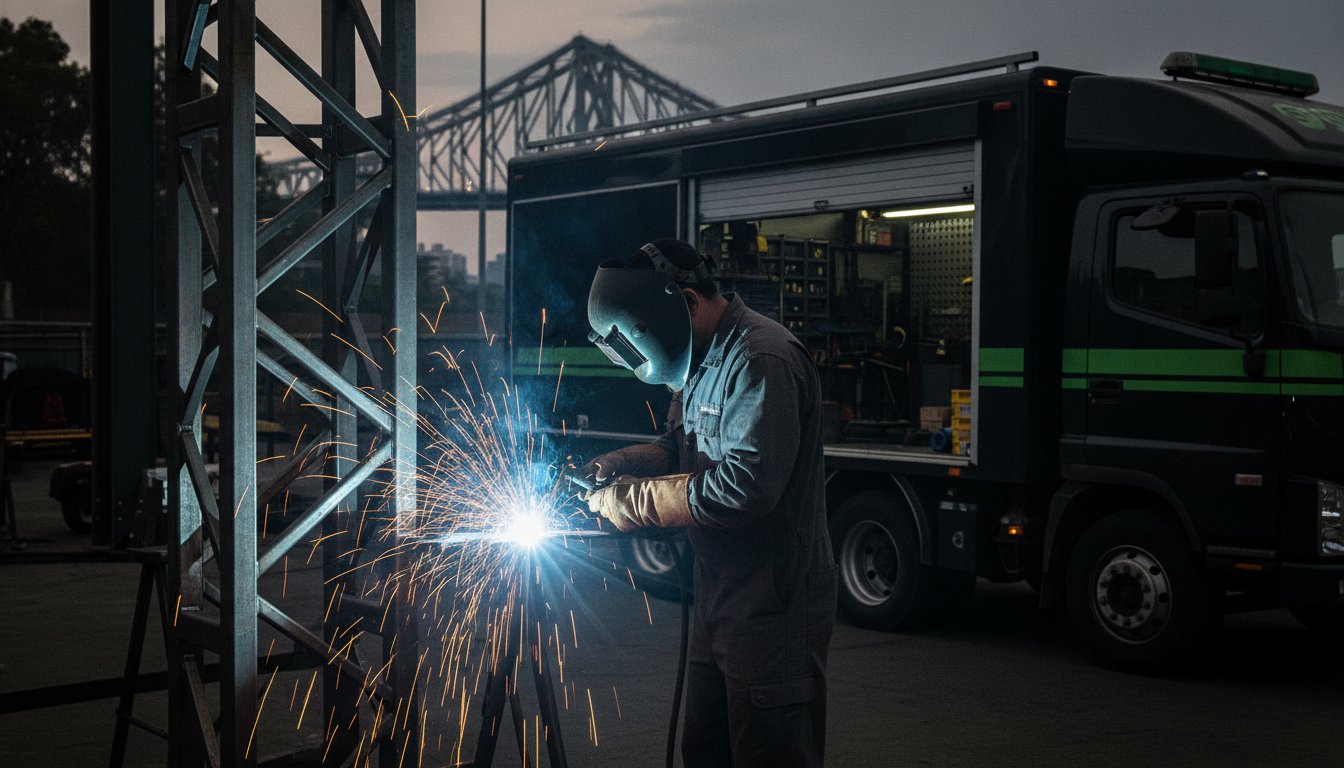
Choosing the wrong protective coating for mild steel in South East Queensland’s humidity can turn a cost-effective industrial asset into a maintenance liability in less than three seasons. You likely understand that while mild steel provides the heavy-duty structural integrity your facility needs, the logistical lag of sending components off-site for repairs often costs more in lost productivity than the fabrication itself. It’s a common frustration for site managers who need precision mild steel fabrication Brisbane workshops can deliver without the typical operational delays.
In this article, you’ll learn how to specify durable steel solutions that withstand harsh local conditions while meeting the latest safety regulations. We’ll cover the technical requirements of AS 4100:2020, the importance of compliant welding under AS/NZS 1554, and the practical benefits of utilising a mobile workshop for on-site repairs. By understanding the intersection of material grades and modern protective coatings, you can secure a long-term solution that balances industrial strength with cost efficiency and minimal downtime.
Key Takeaways
- Learn when mild steel provides the superior return on investment for heavy-duty industrial framing compared to stainless steel or aluminium.
- Discover how to protect your assets against South East Queensland’s humidity using the correct application of hot-dip galvanising and industrial coatings.
- Understand the compliance requirements for AS 1554 and AS 1657 to ensure your fixed platforms and walkways meet Australian safety standards.
- See how expert mild steel fabrication Brisbane solutions can be delivered directly to your facility via mobile workshops to eliminate transport delays.
- Identify the specific material grades and design choices that maximise the longevity of your industrial pipework and safety handrails.
The Role of Mild Steel Fabrication in Brisbane’s Industrial Sector
Mild steel fabrication involves the cutting, bending, and assembling of carbon steel with a relatively low carbon content. These metal fabrication processes create the essential infrastructure for modern industrial facilities. While stainless steel is often prioritised for hygiene in food processing, mild steel remains the preferred choice for high-load environments. It offers a superior cost-to-strength ratio, making it the most logical selection for heavy-duty framing, equipment supports, and safety structures where structural mass is the priority. For Brisbane’s manufacturing sector, using mild steel ensures that bespoke equipment is both robust and economically viable.
The preference for mild steel in heavy industry stems from its predictable mechanical properties and excellent weldability. Unlike aluminium, which can suffer from fatigue under constant vibration, or stainless steel, which can be prone to work-hardening, mild steel provides a dependable foundation for plant equipment. It’s the workhorse material that supports the platforms, walkways, and pipe racks that keep a facility operational. When you’re managing a high-load environment, the ROI on mild steel is often unbeatable, provided the material is correctly specified and protected for the local environment.
Strength and Versatility for Heavy Industry
In a heavy industrial setting, the structural integrity of custom plant stands and access platforms isn’t negotiable. Mild steel provides the necessary rigidity to support vibrating machinery and heavy plant components that would cause lighter materials to fail. It’s specifically suited for custom solutions where high weight-bearing capacity is essential for safety. One of the greatest advantages for facility managers is the ease of modification. As industrial layouts evolve, mild steel structures can be cut, extended, or reinforced on-site with far more flexibility than other alloys. This adaptability ensures that your infrastructure grows alongside your production needs without requiring complete replacements or lengthy shutdowns. For facility managers looking to refresh staff amenities or site offices in tandem with these upgrades, you can visit CutByBEES for custom cabinetry that offers a precise fit at trade prices.
Custom Mild Steel for South East Queensland
Facilities across Brisbane, Logan, and Ipswich face unique challenges, from the high humidity of the river city to the specific operational demands of regional manufacturing hubs. Finding reliable custom mild steel fabrication Brisbane specialists means you get equipment designed specifically for local site constraints. Local fabrication isn’t just about proximity; it’s about a quick-turnaround response that keeps your floor running. Whether it’s a bespoke trolley for a Logan warehouse or a complex safety walkway for an Ipswich processing plant, the focus remains on no-fuss, reliable engineering. By keeping fabrication local, you eliminate the logistical risks of interstate shipping and ensure the finished product adheres strictly to Australian standards for the specific environment it will inhabit.
Durability and Corrosion Protection for the Brisbane Climate
Brisbane’s subtropical climate is notoriously hard on raw metals. High humidity combined with salt-laden air from Moreton Bay creates a corrosive environment that can degrade unprotected steel surprisingly quickly. However, the common industry myth that stainless steel is the only viable option for South East Queensland doesn’t hold up under technical scrutiny. With the right protective strategy, mild steel fabrication Brisbane projects can offer decades of service life while maintaining their structural integrity. The key lies in selecting a coating system that matches the specific atmospheric conditions of your site.
For commercial and industrial operators, the choice between galvanising and painting often depends on the level of physical abrasion the asset will face. While aesthetics matter for street-facing commercial sites, industrial plant equipment prioritises longevity and ease of maintenance. Regular inspection schedules are essential for extending the life of these assets, as catching a minor breach in a coating early can prevent the onset of deep-seated structural rust.
Hot-Dip Galvanising vs. Zinc Plating
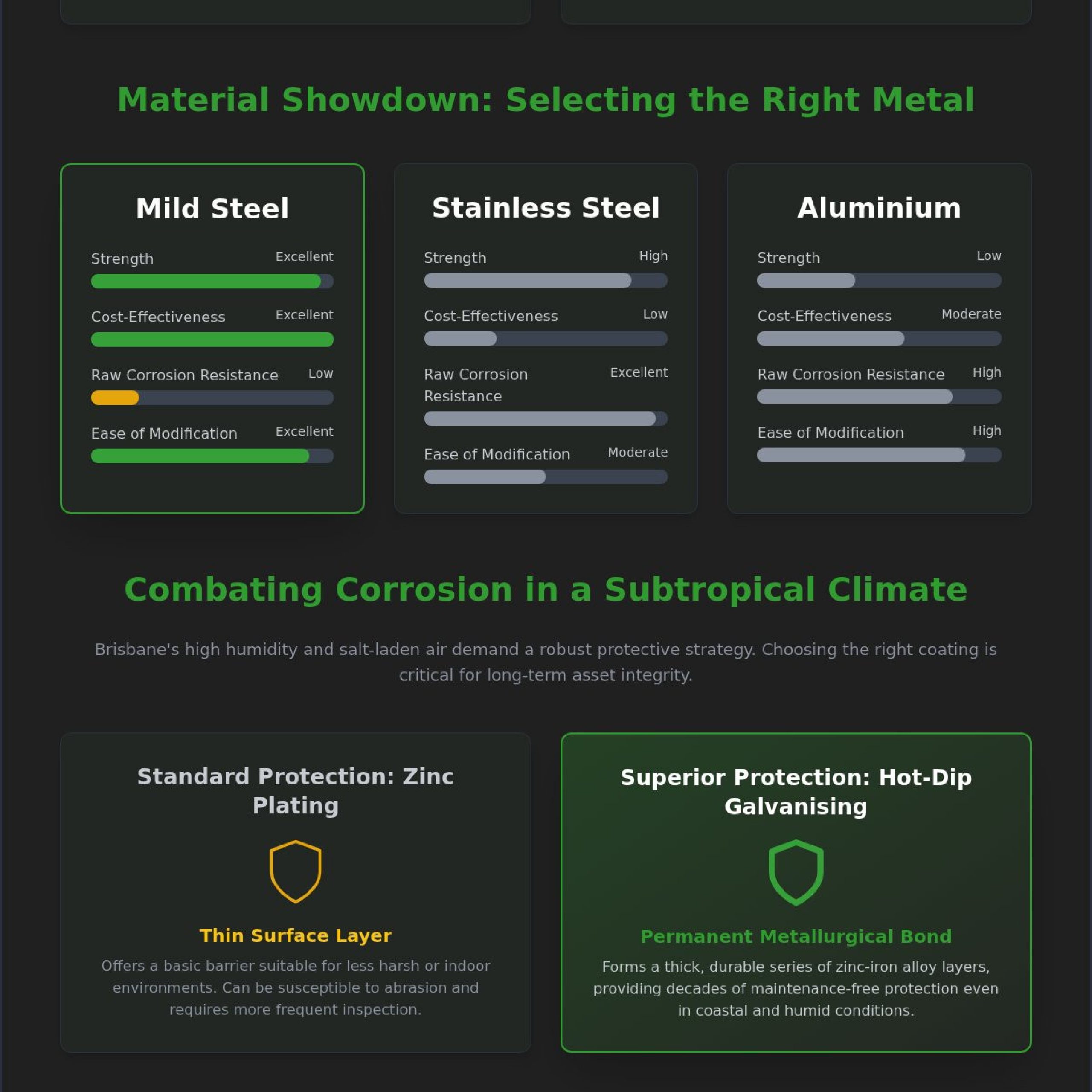
Hot-dip galvanising is the superior choice for outdoor industrial structures in Brisbane compared to standard zinc plating. While plating offers a thin surface layer, hot-dip galvanising involves submerging the steel in molten zinc to create a permanent metallurgical bond. This process forms a series of zinc-iron alloy layers that are often tougher than the base steel itself. If the surface is accidentally gouged, the surrounding zinc provides sacrificial protection, preventing the “under-film” corrosion that typically causes paint to peel and bubble. For facilities dealing with chemical exposure or frequent wash-downs, a heavy-duty galvanised finish remains the most reliable defence.
These principles of durability are widely applicable to critical outdoor infrastructure; for instance, Wombat Cages specialises in hot-dip galvanised security enclosures for air conditioning condensers, demonstrating how robust steel fabrication protects assets from both environmental corrosion and tampering.
Industrial Coatings and Painting
Certain commercial zones require the specific functional benefits of industrial painting or powder coating over a galvanised finish. High-traffic areas benefit from high-build epoxy primers and polyurethane topcoats that provide excellent abrasion resistance and chemical stability. Powder coating provides a hard-wearing barrier that is particularly effective for safety handrails and trolleys where a smooth, non-abrasive finish is required. AS/NZS 2312.2:2023 mandates the use of duplex coatings, such as galvanising combined with epoxy, for high-corrosion environments from 2025 onwards.
Safety is a core priority in any plant environment, and colour-coded coatings play a vital role in identifying hazards or demarcating specific work zones. When our team performs on-site fabrication and emergency repairs, ensuring the coating system is restored to its original specification is a critical step in the process. Maintaining these protective layers through routine maintenance services ensures your facility remains compliant and your infrastructure stays sound for the long haul.
Mild Steel vs. Stainless Steel vs. Aluminium: Selecting the Right Material
Selecting the right material for an industrial project isn’t just about the initial purchase price. It’s about the long-term operational efficiency and structural requirements of your facility. While we’ve discussed how protective coatings can shield steel from the Brisbane climate, the core mechanical properties of the metal itself must align with the intended application. For many heavy-duty industrial projects, the high tensile strength and lower raw material cost of mild steel make it the most logical choice for the bulk of the structural work.
When you’re evaluating material options, consider the specific environment of your site. If your project involves food processing, pharmaceutical production, or highly corrosive chemical zones, hygiene and chemical resistance become the non-negotiable factors. In these instances, stainless steel handrails Brisbane installations are the industry standard due to their non-porous surface and resistance to aggressive cleaning agents. Conversely, for weight-sensitive applications such as transport equipment or roof-mounted platforms, aluminium fabrication Brisbane offers a high strength-to-weight ratio that reduces the load on supporting structures.
When to Choose Mild Steel
Mild steel is the definitive choice for applications where high tensile strength is required but food-grade hygiene isn’t a priority. It’s the primary material used for internal structural supports, heavy machinery frames, and safety barriers that must withstand significant physical impact. Because mild steel is easier to weld and manipulate than many high-grade alloys, it allows for more complex, budget-friendly solutions for large-scale industrial mezzanines and storage systems. If your facility needs a robust, high-load foundation that doesn’t require the specialised properties of stainless steel, mild steel provides the best return on investment.
The Limitations of Mild Steel
There are specific environments where mild steel should be avoided regardless of the coating used. Highly acidic food processing zones or facilities dealing with harsh salt-brine solutions can cause mild steel to fail prematurely. When you’re comparing maintenance requirements over a 10-year lifecycle, the cost of re-coating mild steel in these aggressive environments can eventually exceed the higher upfront cost of stainless steel. A common strategy for balancing cost and performance is to utilise a hybrid approach. This involves using a mild steel frame for structural mass while integrating stainless steel for high-touch or high-exposure components. This ensures your facility remains durable and compliant without unnecessary expenditure on premium alloys where they aren’t strictly required.
Design and Compliance: Meeting Australian Standards
Compliance is the foundation of industrial safety in South East Queensland. When you’re commissioning new infrastructure, the structural integrity of the build depends entirely on adherence to established Australian Standards. For any facility manager, a failed safety audit can lead to significant operational delays and costly retrofits. Our approach to mild steel fabrication Brisbane projects prioritises these regulations from the initial drafting phase. We focus on AS 1554 for structural welding and AS 1657 for the design of fixed platforms and walkways to ensure every installation is legally compliant and physically sound.
Precise engineering is what separates a reliable industrial asset from a safety hazard. This process begins with detailed drafting that accounts for the specific environmental stressors of your site. Whether it’s a new set of access stairs or a complex pipe rack, the design must reflect the real-world loads it will carry. By integrating these standards early, we provide a clear trail of quality assurance that satisfies both internal safety officers and external regulators during site inspections.
Welding Standards and Quality Assurance
The technical distinction between welding categories is often overlooked but remains critical for safety. AS 1554.1 defines the requirements for structural steel welding, specifically distinguishing between General Purpose (GP) and Special Purpose (SP) welds. GP welds are suitable for non-critical components where the failure of the weld wouldn’t lead to a structural collapse. However, for load-bearing assets or equipment subject to constant vibration, SP welding is mandatory. This requires a higher level of penetration and stricter inspection criteria. Utilising certified welders is essential for these tasks, particularly when developing safety handrail fabrication Brisbane solutions that must withstand specific force requirements under AS 1657.
Load Ratings and Structural Stability
Every custom trolley, workbench, or mezzanine must be designed with a specific load rating in mind. Calculating these requirements prevents structural deformation and ensures the long-term stability of the equipment. Beyond weight capacity, site safety also depends on ergonomic design. This includes the elimination of sharp edges, the inclusion of kick-plates on walkways, and ensuring that handle heights on mobile units are optimised for staff safety. We utilise 3D laser scanning technology to capture precise site dimensions, ensuring every custom component fits perfectly into existing infrastructure without the need for on-site modifications. If you need to ensure your facility meets current safety benchmarks, contact the team at Donewright Stainless to discuss a compliant fabrication plan.
Mobile Workshop: On-Site Fabrication and Emergency Repairs
Operational downtime is the primary enemy of industrial productivity. When a critical component fails or a plant upgrade is required, the traditional model of transporting assets to an off-site facility often introduces unacceptable delays. Donewright Stainless addresses this challenge by bringing a fully equipped mobile workshop directly to your facility. This capability ensures that mild steel fabrication Brisbane projects are completed with the same precision as a factory-based build, but without the logistical lag of haulage and off-site scheduling.
Having a seasoned professional on-site allows for immediate adjustments that simply aren’t possible in a remote workshop. Whether it’s a cracked weld on a structural support or the need for a custom machinery modification, our team provides no-fuss, reliable engineering where you need it most. This “Wrighty” approach prioritises practical solutions that keep your floor running while maintaining strict adherence to safety standards. Our mobile units are self-contained, allowing us to perform high-level technical work without drawing excessively on your site’s resources.
Minimising Downtime with Mobile Engineering
The efficiency of on-site measurement and fabrication cannot be overstated. When fitting custom steel around existing machinery or complex infrastructure, even a few millimetres of error can cause significant installation issues. Our mobile workshop allows us to measure, fabricate, and install components in a single continuous workflow. This is particularly valuable for on-site industrial pipework repair Brisbane services, where precision fitment is required to maintain system pressure and integrity. We regularly support facilities throughout Logan, Ipswich, and the Gold Coast, ensuring that regional sites receive the same level of technical expertise as those in the Brisbane city centre.
Industrial Maintenance and Site Support
Beyond new installations, our mobile workshop provides essential support for emergency repairs and scheduled maintenance. Structural steel failures or cracked welds in high-vibration environments require immediate attention to prevent safety incidents. Our team is equipped to perform on-site welding for heavy machinery and structural supports, restoring your assets to full operational capacity quickly. We also provide professional cleaning and re-coating of existing mild steel assets, ensuring that the protective barriers discussed earlier in this article remain effective against the Brisbane humidity. This proactive maintenance extends the life of your safety handrails, trolleys, and platforms, protecting your long-term infrastructure investment.
Securing Your Industrial Infrastructure with Expert Fabrication
Managing an industrial facility requires a constant balance between structural mass and operational agility. Mild steel remains the definitive choice for high-load framing and safety systems, provided the fabrication process adheres strictly to Australian Standards. By prioritising AS 1554 welding quality and AS 1657 design compliance, you ensure that your site assets are both safe for your team and durable enough for long-term use. The combination of local expertise and advanced protective coatings allows these structures to thrive in the specific humidity of South East Queensland.
Donewright Stainless brings over 20 years of custom engineering experience to every project. Our fully equipped mobile workshop eliminates the logistical delays of traditional off-site work, providing on-site welding and installation that keeps your facility moving. Whether you’re planning a plant upgrade or need an urgent structural repair, our team delivers no-fuss, reliable results. Get a custom quote for your Brisbane mild steel fabrication project to see how we can support your site’s specific requirements. We look forward to helping you build a safer, more efficient industrial environment.
Frequently Asked Questions
What is the most common use for mild steel fabrication in Brisbane?
The most common applications for mild steel fabrication Brisbane wide involve structural framing, support platforms, and safety barriers for heavy industry. It’s the preferred material for high-load assets like custom plant stands and mezzanines where structural mass is the priority. Because it’s easier to modify on-site than other materials, it’s also frequently used for bespoke trolleys and equipment racks that must evolve with a facility’s changing operational requirements.
How do you prevent mild steel from rusting in the South East Queensland climate?
Preventing corrosion in South East Queensland requires the application of high-quality protective coatings, most notably hot-dip galvanising or industrial-grade paint systems. Hot-dip galvanising creates a metallurgical bond that provides sacrificial protection against the region’s high humidity. For assets in high-traffic or indoor zones, a combination of epoxy primers and polyurethane topcoats offers a durable barrier that resists both moisture and chemical exposure while maintaining the metal’s structural integrity.
Can Donewright perform mild steel welding on-site at my factory?
Yes, our team utilises a fully equipped mobile workshop to perform on-site welding and fabrication directly at your facility. This service is designed to reduce operational downtime by allowing for immediate modifications or repairs without the need to transport heavy equipment off-site. Our mobile units are self-contained and capable of handling complex industrial tasks, from structural repairs to fitting custom components around existing machinery in Brisbane, Logan, and Ipswich.
Is mild steel cheaper than stainless steel for industrial benches?
Mild steel generally has a lower upfront material cost compared to stainless steel, making it a budget-friendly option for large-scale industrial benches and supports. However, it’s essential to factor in the cost of protective coatings and long-term maintenance. While mild steel is highly cost-effective for high-load structural components, stainless steel may offer a better return on investment in food-processing or highly corrosive environments where hygiene and chemical resistance are mandatory.
What Australian Standards apply to mild steel welding and fabrication?
Industrial mild steel fabrication is governed by several critical Australian Standards, including AS 1554 for structural steel welding and AS 4100:2020 for the design of steel structures. For access systems like walkways, ladders, and platforms, compliance with AS 1657 is mandatory to ensure site safety. Adhering to these standards ensures that every component is engineered to withstand specific load requirements and meets the rigorous safety audits required for Brisbane industrial sites.
How long does it take to get a custom mild steel project fabricated?
The lead time for a custom project typically ranges from one to three weeks, depending on the complexity of the design and the required protective coatings. Simple structural supports or trolleys can often be turned around quickly, while projects requiring hot-dip galvanising may take longer due to the specialised treatment process. We prioritise clear communication regarding timelines to help facility managers plan their upgrades around scheduled maintenance windows or production cycles.
Does mild steel need to be galvanised for indoor use?
Mild steel doesn’t always require hot-dip galvanising for indoor use, but a protective finish is still necessary to prevent surface oxidation. In climate-controlled environments, a high-quality industrial paint or powder coating is often sufficient to protect the steel. However, for facilities in Brisbane with poor ventilation or those subject to wash-down procedures, galvanising provides a more robust, long-term solution that prevents rust from forming in the presence of high ambient humidity.
Can you repair existing mild steel structures that have started to corrode?
We can often repair existing mild steel structures provided the underlying metal hasn’t suffered significant structural thinning. The process involves removing the existing corrosion, reinforcing the affected areas with new steel, and reapplying a protective coating system. For many Brisbane facilities, on-site repairs are a cost-effective alternative to complete replacement, especially for fixed assets like safety handrails or equipment supports that have only suffered localised surface degradation.