
Custom Aluminium Fabrication Ipswich: Industrial Solutions Built Around Your Project
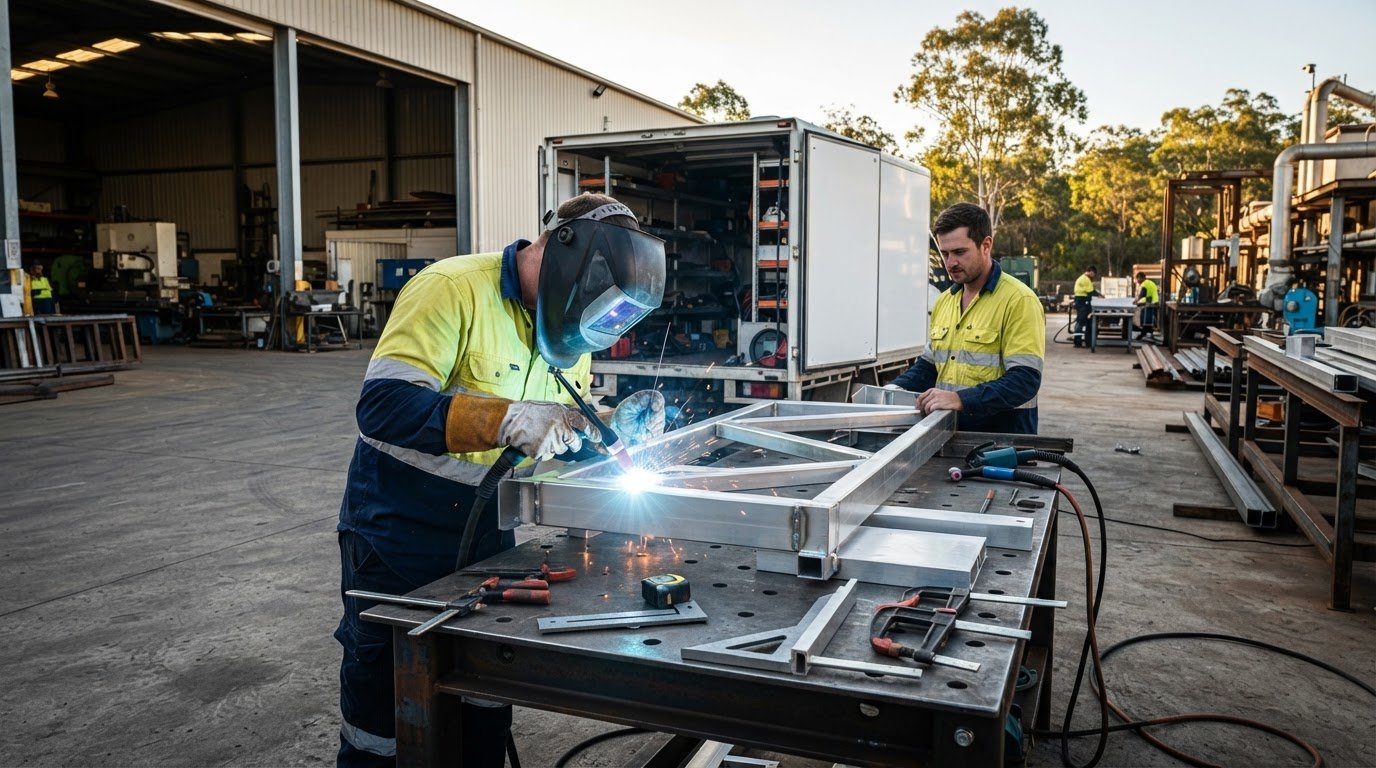
What if the right aluminium solution starts with the way your site operates, not with a standard product? For businesses seeking custom aluminium fabrication Ipswich, the first challenge is often turning a practical need into a clear brief that accounts for the application, site conditions and installation.
A fabricated component needs to suit its intended purpose and the setting where it will be used. A tailored project discussion helps bring those requirements into focus early, so the work can be considered in relation to the site and its operations.
Donewright Stainless provides aluminium fabrication for industrial and commercial projects in Ipswich, bringing advisory support, fabrication and installation together around the project. Its fully mobile workshop also supports on-site work. Donewright serves Ipswich, Brisbane, the Gold Coast and Logan.
This guide explains what to include in a fabrication brief, how to assess site and operating requirements, and how to consider the project from initial advice through to installation. The aim is a clear scope shaped around the work your site needs to do.
Key Takeaways
- Custom aluminium fabrication Ipswich means defining the work around the task and operating site, rather than starting with a standard product.
- Build a clearer project brief by explaining what the item needs to do, describing its intended location and sharing useful reference material.
- Compare workshop fabrication, on-site capability and advisory support against the project scope and operating requirements.
- Discuss access, the work area and site operations early, so these conditions are part of fabrication and installation planning.
- Donewright Stainless provides advice, aluminium fabrication and installation, with a fully mobile workshop supporting on-site work across Ipswich, Brisbane, the Gold Coast and Logan.
What custom aluminium fabrication in Ipswich means for an industrial project
Custom aluminium fabrication is made-to-project work. The item is planned around a defined task and the conditions where it will be used, rather than selected as a ready-made product. Donewright Stainless provides aluminium fabrication for industrial and commercial projects in Ipswich, with advisory support and installation as part of its project services.
The fabricated item is only one part of the solution. It may need to fit a particular area, work alongside existing equipment or support a routine task on site. These requirements shape the project brief and the discussion that follows. A useful starting question is: what does the item need to do, and where will it operate?
Aluminium fabrication sits downstream of industrial aluminium production, but project planning starts with the end use. Understanding the operation helps define the work, while site and installation planning connect the fabricated item to the place it needs to serve.
What kinds of Ipswich projects can require custom aluminium fabrication?
Industrial and commercial requirements vary with the task and the site. A business may need a made-to-project item to support a process, suit a particular work area or fit into an existing operating environment. These are examples of needs to describe in a brief, rather than claims about particular completed projects. Donewright provides aluminium fabrication as part of its broader metal fabrication capability.
Start by describing the function. What needs to be supported, accessed, moved or accommodated? Then explain where the item will be used and how it relates to the surrounding operation. This keeps the project discussion practical and helps separate essential requirements from preferences to consider as the scope develops.
How does a custom job differ from choosing a standard item?
A custom brief begins with your operational requirement. Instead of adapting the task to an off-the-shelf item, explain what the fabricated work needs to achieve and how the site affects its use. Existing equipment, available space, access and the work area can all inform the discussion, without settling on a design or specification before the project is understood.
This approach is useful when the application or site does not suit a standard solution. Share the conditions that shape day-to-day use, along with any drawings, photographs or other references you have. Advisory support can help develop the scope, while fabrication and installation carry the work forward from the initial idea.
In practical terms, custom aluminium fabrication Ipswich is a way to turn an operating need into a considered fabrication brief. Identify the job, describe the environment and explain how the item fits into the wider process. That context gives the project a sound basis for discussion, from early advice through to installation.
How to turn an aluminium fabrication need into a workable project brief
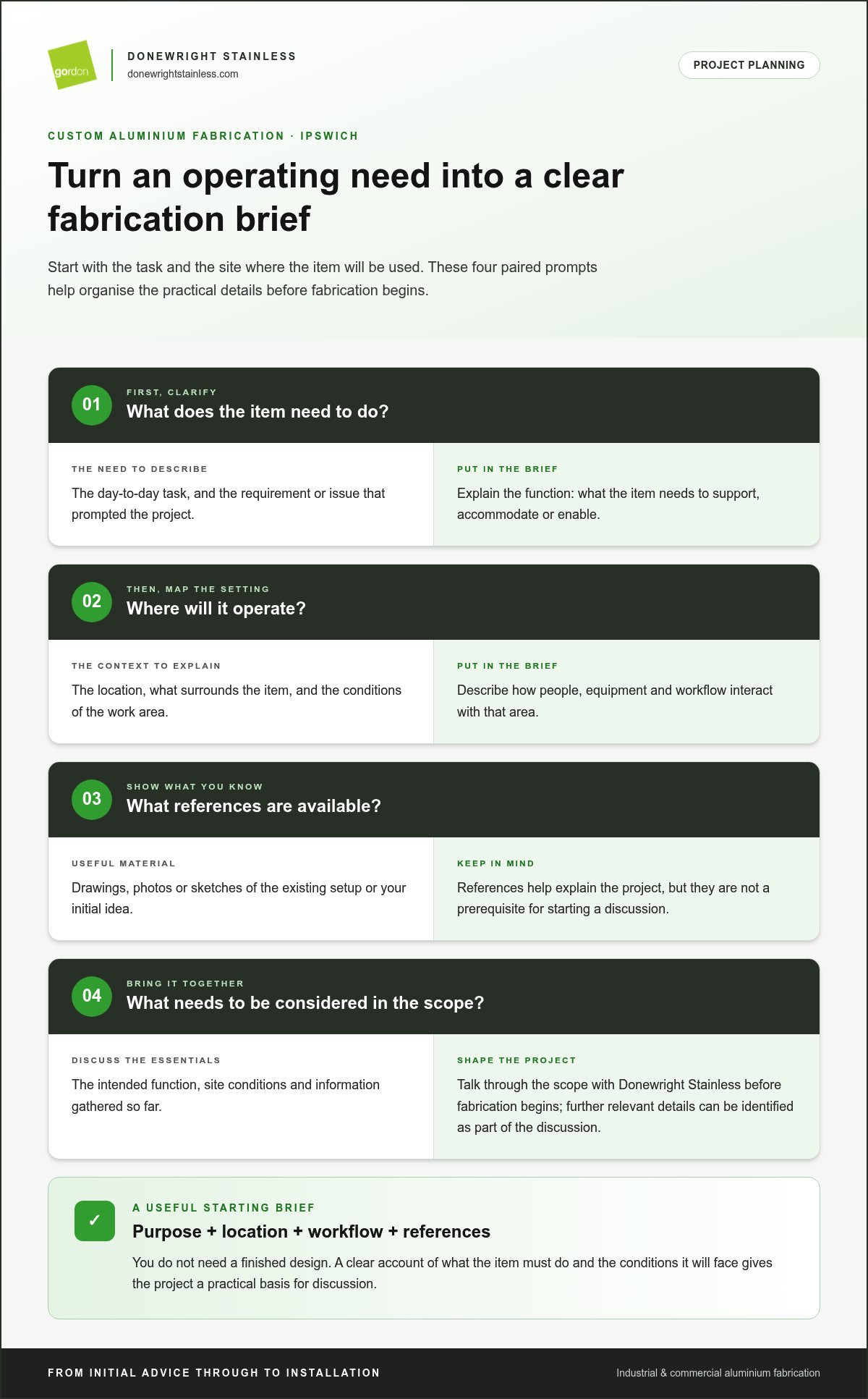
A useful fabrication brief does not need to begin with a finished design. It needs to explain what the item must do and the conditions it will face. For a custom aluminium fabrication Ipswich project, organise the practical details before the discussion to clarify the requirement and identify what needs to be considered next.
Use this sequence to shape your brief:
- Describe the task. Explain what the item needs to do in day-to-day operations and what requirement or issue has prompted the project.
- Explain the site context. Describe where the item will be used, what surrounds it and how people, equipment or workflow interact with that area.
- Share what you have. Drawings, photos or sketches can show the existing setup or your initial idea. They are useful references, not a prerequisite for starting a discussion.
- Discuss the scope. Talk through the intended function, site conditions and available information with Donewright Stainless before fabrication begins.
A useful fabrication discussion starts with the item’s purpose, where it will operate, the workflow around it and any relevant drawings, photos or sketches.
What information helps explain the fabrication requirement?
Focus on function, location and workflow. Describe what the proposed item needs to support or accommodate, where it will sit, and how the surrounding operation works during normal use. Explain the practical need behind the request, such as a task the item must enable or a site condition the solution needs to account for. Keep measurements and technical specifications specific to your project. Any available measurements or references can be discussed as part of the brief.
How can advisory support shape the project discussion?
Advisory support gives you a way to discuss the requirement before fabrication begins. Donewright Stainless can talk through the intended function, site context and information you have gathered, helping bring the scope into clearer focus. The discussion can identify what the project needs to address and which further details are relevant, without requiring you to arrive with a complete design or predetermined technical specification.
Once you have outlined the task and gathered useful references, you can discuss your aluminium fabrication project with Donewright Stainless. A clear starting brief connects your operational need with the next stage, including fabrication and installation planning.
Comparing aluminium fabrication options for Ipswich site requirements
The right project arrangement depends on the work and conditions at your site. The scope may involve fabrication away from the operating area, on-site work, advice to clarify the requirement, or a combination of these. Compare the options to identify what needs coordination and where the work will take place.
| Project option | What it can involve | Useful scope consideration |
|---|---|---|
| Workshop fabrication | Fabrication is carried out away from the operating site as part of the project arrangement. | Consider how the work connects with site access, installation and the surrounding operation. |
| On-site capability | Fabrication work is carried out at the site using mobile workshop capability. | Describe the work area, access and operating conditions relevant to the job. |
| Advisory support | Discussion helps clarify the requirement and project scope. | Bring the intended function and any useful references to the conversation. |
| Combined project scope | Advice, fabrication and installation are considered together. | Explain how the fabricated item fits into the wider site requirement. |
When does on-site fabrication matter to an Ipswich project?
On-site capability is relevant when work needs to be carried out at the operating location rather than handled solely as a separate workshop stage. Site access, the position of the work area and ongoing operations all shape the project discussion. Donewright Stainless has a fully mobile workshop to support on-site fabrication. Include the conditions at your site in the scope so the work can be planned around the actual setting.
How should buyers think about material and service scope?
Start with the project requirement, then consider which material and service arrangement fits the work. Donewright provides aluminium fabrication, alongside stainless steel and mild steel fabrication. Material choice should follow the needs of the application, rather than an assumption that one option suits every site. For related considerations, see this guide to custom mild steel fabrication and the guide to custom stainless steel fabrication.
For custom aluminium fabrication Ipswich projects, compare the options against practical requirements: where the work needs to happen, what advice will help define the scope, and how installation fits the site. Donewright Stainless brings advisory support, aluminium fabrication and installation together, with a mobile workshop for on-site work. This gives industrial and commercial clients a practical basis for discussing the project and its setting.
Planning aluminium fabrication around an operating Ipswich site
Fabrication at an active site needs to account for more than the item itself. The location, surrounding work area and day-to-day operations can all affect how the project is discussed and how fabrication and installation are considered together. Share these details early so the project conversation reflects the place where the finished work will be used.
What site context should be included in the project brief?
Describe where the item will be used and what is around that area. Explain how people, equipment or routine tasks move through the space, and note any practical access considerations that could shape the work. Outline what happens there during normal operations and what the fabricated item needs to accommodate. You do not need to settle technical specifications or solve site constraints before beginning the discussion.
For example, if relevant to your project, explain whether the work area is beside an active process, within a shared space or near existing equipment. These details help distinguish the fabrication requirement from conditions that may affect how the work is carried out. Photos, drawings or sketches can help illustrate the setting, but they are supporting material rather than a prerequisite.
How can fabrication and installation be considered together?
Donewright Stainless provides fabrication and installation, so the intended site can be part of the project conversation from the outset. Discussing the location and operating context alongside the fabrication requirement connects what is being made with where it needs to be installed. Donewright’s fully mobile workshop also supports on-site fabrication, so site work can be included in the scope where appropriate.
You do not need to predict every detail. Start with what the item needs to do, where it will go and what the surrounding operation is like. The project scope can then consider fabrication and installation as related parts of the same job, with site conditions addressed from the beginning.
Project-readiness checklist: Before discussing custom aluminium fabrication Ipswich requirements, consider whether you can describe:
- Function: What the item needs to do in normal use.
- Site: Where it will be used, how the work area is accessed and what surrounds it.
- References: Any relevant drawings, photos or sketches you already have.
- Desired outcome: The operational need the project is intended to address.
You do not need a complete design to start. A clear account of the site and the job gives Donewright Stainless a practical basis for discussing the requirement, fabrication and installation together. Discuss your site-specific aluminium fabrication project with the team.
Custom aluminium fabrication Ipswich: working with Donewright Stainless
Industrial fabrication needs a clear connection between the operational requirement, the material and the site where the work will be used. Donewright Stainless provides custom aluminium fabrication in Ipswich, with advisory support, fabrication and installation, backed by a fully mobile workshop for on-site work. This brings the key parts of the project discussion together, from clarifying the need to considering how the finished work fits its intended setting.
Donewright serves Ipswich, Brisbane, the Gold Coast and Logan. Food and dairy processing are a primary focus, alongside broader industrial and commercial fabrication requirements. That focus can inform discussions about operational needs, while each project’s material and scope are considered in relation to its specific application.
What does Donewright bring to a custom aluminium project?
Donewright works across aluminium, stainless steel and mild steel fabrication. Advisory support gives clients a place to discuss what the work needs to achieve and how the site may shape the scope. Fabrication and installation can then be considered as connected parts of the project, with the fully mobile workshop supporting on-site work where required.
This joined-up approach is useful when a brief needs to account for both the item and its operating context. A project discussion can cover the intended function, surrounding workflow and whether the work involves workshop or on-site fabrication. Donewright’s named client references include Australian Country Choice and Sunny Queen.
What is the next step for an Ipswich fabrication project?
Start with the job the fabricated item needs to do. Explain where it will be used, what happens around that area and what outcome the project needs to support. If you have drawings, photos or sketches, share them as useful references. You do not need every technical detail settled before starting; advisory support can help shape the discussion around the requirement and the site.
Donewright offers a “wright” price for any project size. To discuss a project, outline its purpose, location and any available references. These details provide a practical starting point for talking through aluminium fabrication and installation in Ipswich.
For an industrial or commercial requirement, discuss your aluminium fabrication project with Donewright Stainless. Share the operational need and site context, then start a project conversation focused on what the work needs to do.
Take the next step towards a tailored solution
A strong fabrication project starts with a shared understanding of the required outcome. Before moving ahead, align the people involved on the main operational priority, which requirements are essential and what decisions still need discussion. This keeps the brief focused on the result your business needs, rather than a list of disconnected details.
For custom aluminium fabrication Ipswich, bring that priority into a practical project conversation. You do not need every answer in place. A clear view of the outcome you are working towards gives the discussion direction and helps shape a solution around the purpose of the work.
Start planning your project with Donewright Stainless. Discuss your aluminium fabrication project with Donewright Stainless, or call (07) 3807 9349 to talk through the operational need and site context.
