
Commercial Stainless Steel Handrails: The Ultimate Guide to Compliance and Quality in Brisbane
Commercial Stainless Steel Handrails: The Ultimate Guide to Compliance and Quality in Brisbane
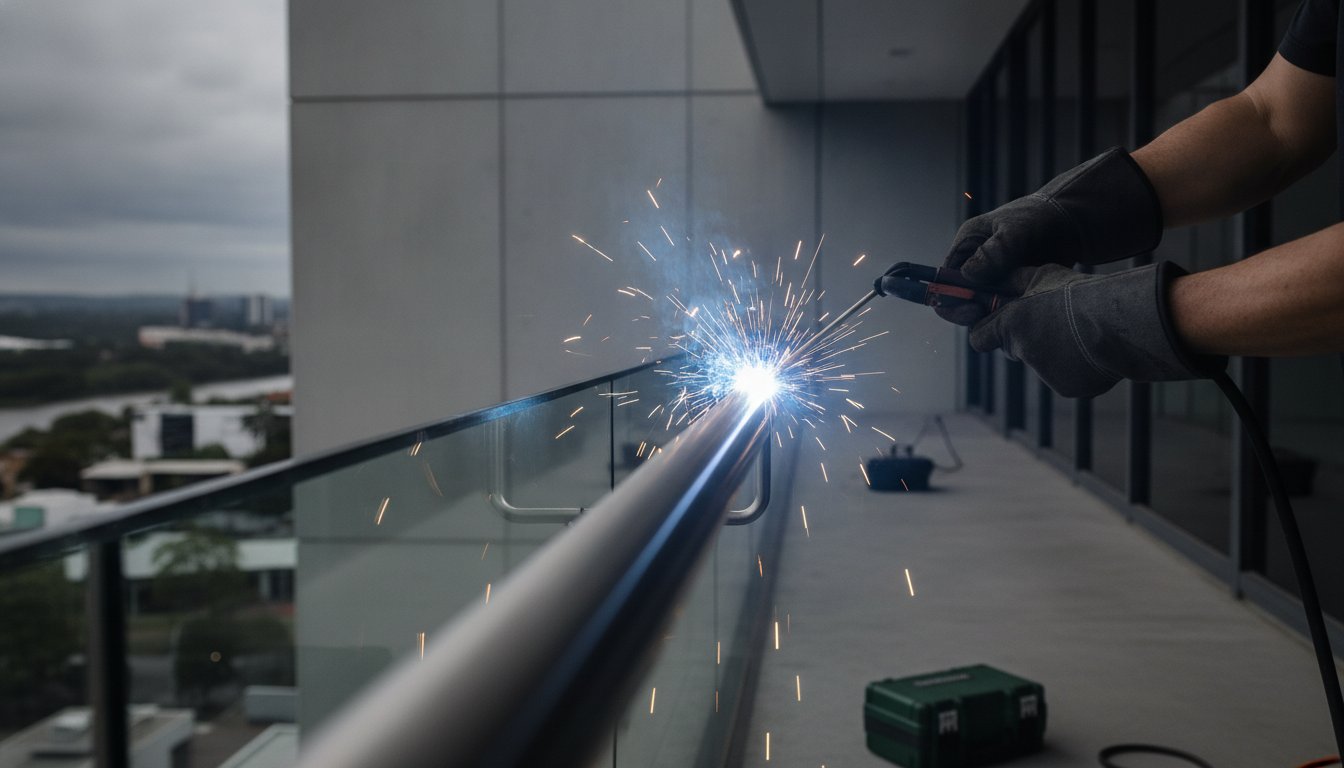
Would your current safety barriers withstand a snap compliance audit or another humid summer on the Brisbane coast? For many local site managers, the risk of non-compliance with Australian Standards is a constant concern that can lead to significant project delays. You likely already know that commercial stainless steel handrails are the gold standard for safety and durability, but these are safety-critical infrastructure components that require local precision to guarantee long-term performance.
This guide provides the clarity you need to specify and install handrail systems that meet the strict requirements of AS 1657 and AS 1428.1:2021. We will examine why grade 316 stainless steel is essential for coastal South East Queensland and how the NCC 2025 updates affect your specific site requirements. From understanding exact height specifications to avoiding the long lead times of offshore manufacturing, you will discover how to achieve a professional finish that reflects your brand’s commitment to quality.
Key Takeaways
- Navigate the complexities of AS 1657 and AS 1428.1 to ensure your safety systems are fully compliant with the latest Australian Standards and NCC 2025 requirements.
- Learn why specifying the right grade of commercial stainless steel handrails is the only way to guarantee a maintenance-free finish in Brisbane’s humid and coastal environments.
- Compare the performance of Grade 304 versus Grade 316 to make an informed material choice based on your site’s proximity to the Brisbane River or the coast.
- Understand the structural risks associated with off-the-shelf hardware kits and why bespoke local fabrication is essential for long-term site safety.
- Discover how on-site mobile welding and custom workshop fabrication streamline the installation process, ensuring a precise fit that reflects your brand’s quality.
What Defines High-Quality Commercial Stainless Steel Handrails?
Commercial handrails are not merely architectural accents. They are purpose-built safety systems designed to withstand heavy use in high-traffic or industrial environments. High-quality handrail safety and support requires a focus on structural integrity and material selection that exceeds standard residential requirements. In Brisbane, where humidity and salt air are constant factors, the standard of your installation directly impacts the longevity and safety of the asset.
We primarily utilise Grade 304 and Grade 316 stainless steel to ensure maximum service life. Grade 304 is suitable for most internal commercial applications, while Grade 316 is the non-negotiable choice for any site near the river or the coast. Unlike modular ‘kit’ systems that often rely on mechanical joiners and adhesives, high-quality commercial stainless steel handrails feature fully welded joints. This custom approach eliminates the small gaps where corrosion typically begins and ensures the system remains rigid under heavy structural loads.
The Role of Durability in Commercial Spaces
In industrial loading docks and warehouses, handrails must survive more than just foot traffic. They need to resist impact and the daily rigours of a working environment. Stainless steel is the superior choice for South East Queensland because it requires almost zero maintenance compared to timber that rots or galvanised steel that eventually rusts. While the initial investment is higher, the cost-benefit analysis over a ten-year period clearly favours stainless steel. You won’t be dealing with repainting or structural replacements every few seasons.
Aesthetics Meets Functionality
The finish of your handrails should reflect the purpose of the space. A mirror-polished finish provides a high-end look for commercial foyers, whereas a brushed or satin finish is often more practical for hiding fingerprints in public areas. Modern offices often integrate stainless steel with glass or aluminium to create a contemporary, open feel.
Using custom stainless steel fabrication Brisbane allows you to achieve a seamless architectural fit that off-the-shelf components simply cannot match. Every weld is ground smooth and polished to ensure the finish is consistent across the entire run. This attention to detail creates a professional environment that reflects your brand’s commitment to quality. It’s about getting the job done right the first time so the infrastructure serves your business for decades.
Navigating Australian Standards: AS 1657 and DDA Compliance
Compliance isn’t just a box-ticking exercise for your building certification. It’s a fundamental part of site safety and risk management. When you install commercial stainless steel handrails, you’re meeting a legal duty of care to employees, contractors, and the general public. Property managers who overlook these details face significant legal liabilities if an injury occurs due to non-compliant infrastructure. Ensuring your rails are fit for purpose means understanding which specific code applies to your environment.
One of the most critical technical aspects involves load-bearing requirements. According to AS 1657, guardrails must be designed to sustain a single horizontal or downward force of 600N at any point, or a distributed load of 350N per metre. If your rails flex or wobble under pressure, they don’t meet the standard. This is why we prioritise fully welded systems over modular kits. A welded joint provides the structural rigidity needed to handle these forces consistently over decades of use.
AS 1657 for Industrial and Plant Access
AS 1657 is the mandatory Australian Standard that specifies the requirements for the design, construction, and installation of fixed platforms, walkways, stairways, and ladders to provide safe access for people working in industrial and commercial settings. For platforms and walkways, the top rail must sit between 900mm and 1100mm above the floor. In mezzanine areas or elevated walkways, you must also install toeboards (kickplates) that sit no more than 100mm above the floor to prevent tools or debris from falling onto people below. Continuous rail runs are essential here to ensure a worker never has to let go of the support while moving through the facility.
DDA Compliance and Accessibility
In public-facing commercial buildings, you must also adhere to AS 1428.1:2021 for access and mobility. These rules are stricter to ensure safety for people with limited vision or mobility. Handrail heights for DDA compliance must be between 865mm and 1000mm. You also need to maintain a minimum clearance of 50mm between the rail and the wall to allow for a proper grip.
Using professional safety handrail fabrication Brisbane ensures your project meets these local council building codes precisely. We incorporate tactile indicators and specific rail terminations to prevent clothing from snagging and to signal the end of a stairway to vision-impaired users. If you’re concerned about the state of your current safety barriers, we can help you organise a site assessment to ensure every rail on your property is fully compliant and secure.
Choosing the Right Grade: 304 vs. 316 Stainless Steel
Selecting the correct material for commercial stainless steel handrails is a decision that dictates the actual lifespan of your infrastructure. In the unique climate of South East Queensland, “stainless” is a relative term. Grade 304 is the industry workhorse for internal fit-outs, such as office stairwells or dry warehouse environments. It offers excellent structural strength and a clean aesthetic. However, once you move outdoors or into high-moisture zones, Grade 304 can struggle against the local elements.
Grade 316, often referred to as ‘Marine Grade’, contains molybdenum. This addition significantly enhances its resistance to chlorides and industrial solvents. In Brisbane, the primary aesthetic threat is ‘tea staining’. This is a brown surface discolouration that occurs when salt and moisture settle in the microscopic grooves of the steel. While it doesn’t usually compromise structural integrity immediately, it looks unprofessional and suggests a lack of site care. Preventing this requires a combination of the right grade and a high-quality surface finish. A smoother, grit-polished finish reduces the surface area where contaminants can lodge, making the rail much easier to keep clean.
When to Specify Grade 316 Stainless
As a general rule, any installation within five kilometres of the coastline or the Brisbane River should utilise Grade 316. The salt air in these regions is highly aggressive. You should also specify 316 for food processing facilities or industrial plants where frequent chemical wash-downs are standard. While the upfront cost is higher than 304, the long-term ROI is undeniable. You avoid the expense of premature replacement and the labour costs associated with scrubbing away persistent tea staining every few months. It’s a matter of choosing a material that can actually handle the Queensland sun and salt.
Maintenance and Cleaning for Longevity
Maintaining that ‘as-new’ lustre is straightforward if you follow a consistent regime. Regularly wiping down rails with fresh water and a mild detergent is usually sufficient to remove surface salts. You must avoid harsh chemicals, particularly those containing bleach or chlorides, as these can strip the steel’s passive protective layer and trigger rapid corrosion. For complex industrial sites, utilising professional stainless steel maintenance services ensures your safety systems remain compliant and visually pristine without pulling your own team away from their core tasks. A little regular attention goes a long way in preserving the professional finish of your facility.
The Custom Fabrication and On-Site Installation Process
Installing commercial stainless steel handrails involves more than just bolting hardware to a wall. High-quality results depend on a methodical process that begins with a comprehensive site measure. During this initial consultation, we identify specific compliance needs, such as the exact floor-to-rail heights required for your specific industry standard. This precision at the start prevents the common errors found in modular systems, where small miscalculations lead to significant safety gaps.
Once the measurements are finalised, the majority of the work happens in a controlled workshop environment. Off-site fabrication allows for precision welding and polishing that is difficult to achieve in the wind and dust of an active construction site. Every section is custom-built to match the unique layout of your facility. This approach ensures that when the rails arrive at your Brisbane property, they are already structurally sound and ready for final fitment.
The Advantage of Mobile Welding in Brisbane
Construction sites are rarely perfectly square. Concrete slabs can settle and walls can be slightly out of alignment, which often makes pre-fabricated kits impossible to install correctly. Our fully equipped mobile workshop allows us to solve these ‘out of square’ issues with real-time on-site adjustments. This capability is particularly vital for industrial plants in Logan or Ipswich where minimising downtime is a priority. We can modify components on the fly, ensuring that the installation moves forward without having to send parts back to a factory for rework. By bringing the fabrication capabilities of a full factory directly to your facility, a mobile workshop ensures a perfect handrail fit on-site regardless of structural irregularities.
Quality Control and Finishing
The final stage of the installation process focuses on longevity and structural verification. Every weld undergoes a passivation process. This chemical treatment restores the protective chromium oxide layer of the steel, ensuring that every joint is as corrosion-resistant as the rest of the rail. We then conduct rigorous testing for rigidity to ensure the system meets Australian load standards without any flex or movement.
In some industrial settings, stainless steel rails require robust mounting points. We often integrate our work with mild steel fabrication Brisbane for the underlying supporting structures, providing a cost-effective yet immensely strong foundation for the safety system. Following a final safety certification, we hand over the completed project to the facility manager with full documentation. If you need a team that handles the entire process from initial measure to final handover, contact Donewright Stainless for a professional site consultation.
Why Local Brisbane Fabrication Beats Mass-Produced Hardware
The temptation to purchase off-the-shelf kits for commercial stainless steel handrails is understandable when you’re looking at a tight budget. However, these mass-produced components often fall short in the demanding environments of South East Queensland. Off-the-shelf hardware relies on standard lengths and generic joiners that rarely align perfectly with the unique dimensions of a real-world site. This leads to gaps in compliance and poor fitment that can compromise the structural integrity of the entire safety system. When you choose local fabrication, you’re investing in a solution that is built for your specific site, not a one-size-fits-all compromise.
Supporting local Brisbane tradies also means you’re contributing to the regional economy while gaining a level of accountability that international suppliers can’t match. You aren’t dealing with an anonymous customer service desk or waiting weeks for a replacement part to clear customs. Instead, you have direct communication with the fabricator. Dealing with ‘Wrighty’ and our team means you’re talking to the people actually performing the work. This relationship ensures that your specific requirements are understood and met without the risk of information being lost in a complex supply chain.
Bespoke Solutions for Complex Sites
Industrial facilities and modern commercial buildings often feature awkward corners, varying elevations, and unique machinery that standard kits simply can’t manage. A local specialist can design customised safety protection that wraps around complex infrastructure while maintaining continuous support. The reliability of stainless steel handrails Brisbane specialists comes from their ability to adapt to these challenges on the fly. Whether it’s a mezzanine with unusual angles or a loading dock that requires heavy-duty impact resistance, bespoke fabrication ensures every millimetre of the rail is fit for purpose and fully compliant with AS 1657.
The Donewright Difference
Our ‘Done Right’ philosophy prioritises long-term safety over quick shortcuts. We understand that in a commercial setting, a handrail failure is more than just a maintenance headache; it’s a significant legal and safety risk. By maintaining expertise across stainless steel, mild steel, and aluminium, we provide total site solutions that integrate seamlessly with your existing infrastructure. This holistic approach means we can handle everything from the primary handrails to the supporting structural steelwork.
Local fabrication also provides the advantage of rapid after-sales support. If a rail is damaged by a forklift or requires modification due to a site upgrade, our mobile workshop can be on-site quickly to perform repairs. This level of service ensures your facility remains safe and compliant with minimal disruption to your operations. If you’re ready to ensure your site meets the highest standards of safety and quality, contact Donewright Stainless today for a compliant site assessment and discover the value of a handrail system that’s truly built to last.
Secure Your Site with Compliant Stainless Infrastructure
Protecting your facility starts with choosing materials and installation methods that are engineered for the specific demands of South East Queensland. As we have explored, the difference between a compliant safety system and a liability often comes down to the quality of the weld and the grade of the steel. Prioritising Grade 316 stainless for coastal areas and adhering strictly to AS 1657 and DDA requirements ensures your investment remains maintenance-free and structurally sound for decades. Custom commercial stainless steel handrails offer a level of precision and durability that mass-produced hardware simply cannot provide.
Donewright Stainless brings the workshop to you. Our mobile welding capabilities and deep expertise in Australian Standards allow us to deliver bespoke safety solutions across Brisbane, the Gold Coast, and Logan without the typical delays of offshore supply chains. We take pride in getting the job done right the first time, ensuring every rail is secure and every joint is polished to perfection. Get a ‘Done Right’ quote for your commercial handrails today and take the first step towards a safer, more professional facility. We look forward to helping you secure your site with local expertise you can trust.
Frequently Asked Questions
What is the difference between Grade 304 and 316 stainless steel for handrails?
Grade 316 contains molybdenum, which provides significantly higher resistance to corrosion from salt and chlorides compared to Grade 304. While Grade 304 is a durable choice for internal commercial handrails in dry environments, Grade 316 is the non-negotiable standard for outdoor, riverside, or coastal applications in South East Queensland. Choosing the correct grade prevents premature tea staining and ensures the structural integrity of the safety system over its service life.
How do I ensure my commercial handrails are AS 1657 compliant?
Ensuring AS 1657 compliance involves verifying specific height, clearance, and load-bearing specifications during the design and installation phases. The top rail must sit between 900mm and 1100mm above the walking surface, and the entire system must be capable of withstanding a horizontal force of 600N. We conduct meticulous site measures and structural checks to confirm these technical requirements are met for every industrial platform, walkway, or stairway.
Do you offer on-site welding for handrail repairs in Brisbane?
Yes, we provide expert on-site mobile welding and workshop services for handrail repairs across the Greater Brisbane area. Our fully equipped mobile workshop allows our team to perform precision modifications and structural repairs without removing the infrastructure from your site. This service is essential for maintaining safety compliance in busy industrial plants or commercial facilities where minimising downtime is a priority for the facility manager.
Can stainless steel handrails be installed in coastal areas like the Gold Coast?
Stainless steel handrails are highly recommended for coastal areas like the Gold Coast, provided Grade 316 is specified for the project. This marine-grade material is specifically engineered to resist the aggressive salt air that causes standard steel to rust and degrade. We also apply specific high-quality surface finishes to ensure the rails remain visually pristine and structurally sound despite the constant exposure to the humid, saline environment.
What are the DDA requirements for commercial handrails in public buildings?
DDA requirements under AS 1428.1 focus on accessibility, specifying handrail heights between 865mm and 1000mm with a minimum 50mm clearance from the wall. These standards also mandate specific rail diameters, typically between 30mm and 50mm, and require tactile indicators or specific terminations to signal the end of a stairway. Our fabrication process ensures these public-facing safety systems allow for a continuous, unobstructed grip for all users regardless of their mobility level.
How long does it take to fabricate and install a custom handrail system?
The timeline for custom commercial stainless steel handrails depends on the project’s scale, but most fabrication and installation cycles are completed within a few weeks. We begin with a comprehensive site measure, followed by controlled workshop fabrication for precision welding, and conclude with on-site fitment. Our mobile workshop capability often accelerates the final installation phase by allowing for immediate on-site adjustments to suit any structural irregularities or out-of-square walls.
Do you provide handrails for food processing plants and sanitary environments?
We specialise in high-quality commercial stainless steel handrails for sanitary environments, including food processing plants and pharmaceutical facilities. Stainless steel’s non-porous surface is naturally resistant to bacteria and can withstand the frequent, harsh chemical wash-downs required in these industries. We ensure all welds are ground smooth and polished to eliminate crevices where contaminants could accumulate, helping you maintain strict hygiene and safety standards across your facility.
What maintenance is required to prevent tea staining on stainless steel?
Preventing tea staining requires a simple regime of regular cleaning with fresh water and a mild detergent to remove surface salts and contaminants. You must avoid any cleaning products containing chlorides or bleach, as these chemicals damage the steel’s passive protective layer and trigger rapid corrosion. For industrial sites, a professional maintenance regime combined with a high-grit surface finish is the most effective way to preserve the material’s aesthetic and structural integrity.