
Expert Stainless Steel Maintenance Services Brisbane: Preserving Industrial Assets
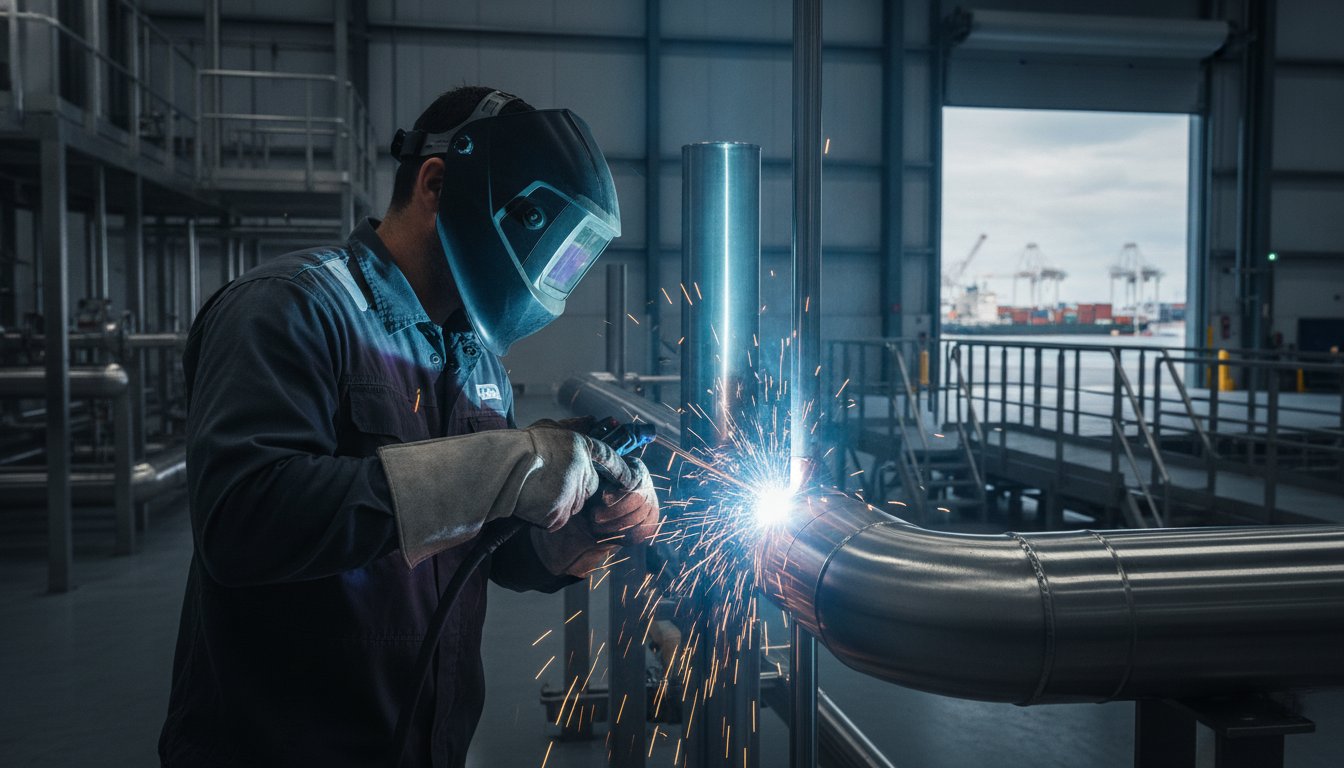
Industrial stainless steel maintenance is an engineering necessity for structural integrity and compliance, not just a cosmetic preference. For many facility managers across Brisbane and the Gold Coast, the relentless battle against tea staining and coastal corrosion feels like a losing game that threatens both safety and the bottom line. You know that equipment failure doesn’t just mean a repair bill; it often results in costly operational downtime and the risk of falling foul of rigorous Australian safety standards.
By engaging professional stainless steel maintenance services, you can protect your investment and ensure your facility remains compliant with the latest regulatory requirements, including AS 1657 for safety handrails and AS 4674 for food premises. We’ll show you how a structured approach to cleaning and repair prevents premature asset replacement while keeping your site running at peak efficiency. This guide covers the technical requirements of ASTM A380/A380M-25, the impact of new workplace exposure limits coming into effect in December 2026, and how mobile workshop services provide the precision your industrial assets require without disrupting your daily workflow.
Key Takeaways
- Recognise why South East Queensland’s coastal climate causes aggressive “tea staining” and how to move beyond simple cleaning toward long-term structural preservation.
- Ensure your facility meets AS 1657 and AS 4674 requirements by understanding the specific maintenance needs of safety handrails and food-grade surfaces.
- Learn how professional stainless steel maintenance services utilise surface decontamination and precision mobile welding to restore assets to their original engineering specifications.
- Establish a site-specific maintenance schedule based on your environmental classification to prevent costly equipment failure and unplanned downtime.
- Discover the benefits of on-site mobile workshop services for industrial pipework and custom fabrications to keep your operations running without interruption.
Why Stainless Steel Maintenance Services are Vital in South East Queensland
Industrial maintenance represents a fundamental shift away from simple cosmetic cleaning. While a quick wipe-down might remove surface dust, professional stainless steel maintenance services focus on the long-term structural preservation of the asset. To understand why this is necessary, we must first look at what is stainless steel and how it functions. This material relies on a microscopic, self-healing chromium-oxide passive layer to resist oxidation. In the demanding environments of South East Queensland, this layer is under constant chemical attack.
Without regular intervention, this protective barrier breaks down, leading to the phenomenon known as “tea staining.” This visual brown discolouration is often the precursor to more severe issues like pitting or crevice corrosion. If left unmanaged, these microscopic pits can penetrate deep into the metal. This compromises the structural integrity of industrial pipework, benches, and custom fabrications. Neglect doesn’t just look poor; it eventually leads to structural failure and the need for expensive replacements.
The Impact of South East Queensland Humidity and Salt
Brisbane and the Gold Coast present unique challenges due to high ambient humidity and airborne salt. Assets located within five kilometres of the coast are particularly vulnerable to rapid surface degradation. You’ll often see the first signs of tea staining as light brown spots that don’t wash away with rain. In these local environments, 304-grade stainless steel requires significantly more frequent attention than its 316-grade counterpart. Neglecting these early signs allows contaminants to become embedded, making eventual restoration far more difficult and expensive.
Maintaining Regulatory and Safety Compliance
Safety is the non-negotiable side of maintenance. There’s a direct link between consistent upkeep and the longevity of safety handrail fabrication Brisbane projects. Regular structural inspections are essential to ensure ongoing AS 1657 compliance for walkways, platforms, and ladders. Corrosion at weld points or mounting brackets can lead to catastrophic failure if not identified early. Similarly, food processing plants must adhere to strict AS 4674 maintenance schedules. Pitted or corroded surfaces provide a foothold for bacteria. This makes it impossible to achieve required hygiene standards regardless of how much sanitiser is used during daily cleaning routines.
The Technical Process: How Professionals Restore Stainless Steel
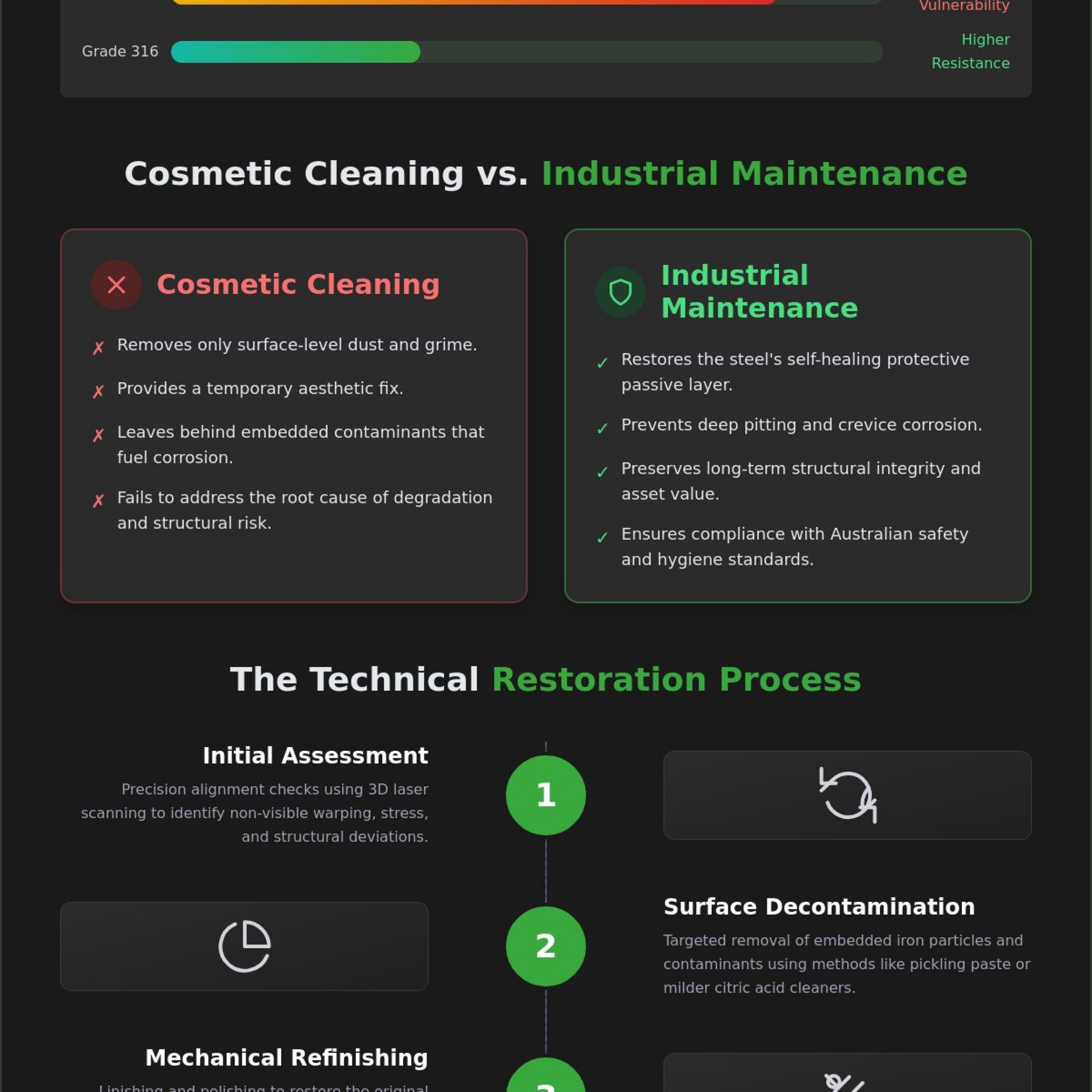
Effective restoration of industrial assets requires a high degree of technical precision. While general cleaning addresses surface-level debris, professional stainless steel maintenance services involve a multi-stage process designed to return the metal to its original metallurgical state. This process begins with a detailed initial assessment. We utilise 3D laser scanning to perform precise alignment checks, ensuring that structural assets like safety handrails or industrial pipework haven’t shifted or warped due to environmental stress or mechanical impact. This data-driven approach allows us to identify issues that aren’t visible to the naked eye.
Once the assessment is complete, the focus shifts to surface decontamination. This involves the removal of embedded iron particles and organic contaminants that can compromise the metal’s integrity. If these particles remain, they act as focal points for corrosion. Following decontamination, mechanical refinishing is used to address physical damage. By linishing and polishing the surface back to its original grit specifications, we ensure the asset meets both aesthetic and functional requirements. This methodical approach guarantees that the restoration is more than just a temporary fix.
Chemical Cleaning vs. Mechanical Polishing
The choice between chemical and mechanical methods depends on the severity of the degradation. For heavy heat tint or weld scale, pickling paste is an effective tool, while milder citric acid cleaners are suitable for lighter surface contaminants. In food-grade environments, maintaining specific surface roughness (Ra) values is critical for AS 4674 compliance. If deep-seated pitting or heavy scratches are present, mechanical polishing is the only way to remove the damaged material and create a smooth, hygienic surface that resists bacterial growth. For complex on-site repairs, our mobile workshop services allow us to perform these technical procedures directly at your facility to minimise disruption.
Passivation: The Invisible Shield
Passivation is the critical final step in any restoration project. This chemical process involves treating the stainless steel with a mild oxidant to accelerate the formation of the protective chromium-oxide layer. It’s mandatory after any on-site welding or grinding, as these high-heat processes strip away the natural protection and leave the metal vulnerable. Passivation is a post-fabrication treatment designed to remove free iron from the surface of the metal to ensure the formation of a protective oxide layer. By restoring this invisible shield, we provide the asset with the best possible defence against the harsh South East Queensland climate.
Cosmetic Cleaning vs. Industrial Maintenance: Knowing the Difference
Understanding the distinction between cosmetic cleaning and industrial maintenance is vital for asset managers. While many providers focus on the visual “look” of the steel, true stainless steel maintenance services encompass the structural and functional integrity of the installation. Cosmetic cleaning typically involves the removal of tea staining and fingerprint protection to maintain a high-shine finish. While important for architectural features, this surface-level care doesn’t address the underlying mechanical health of industrial equipment.
Industrial maintenance, by contrast, involves structural repairs, pipework integrity checks, and mobile welding. For a production facility, a “wash and polish” service is insufficient. A critical example of this difference is found in on-site industrial pipework repair Brisbane. While an architectural cleaner might remove salt spray from a facade, a maintenance specialist identifies microscopic weld defects or thinning walls in a high-pressure line before they lead to a catastrophic leak. This proactive engineering approach prevents the costly downtime associated with equipment failure.
Specialist Industrial Pipework and Maintenance
In high-pressure or high-temperature systems, we inspect welds for signs of stress corrosion cracking. This type of degradation often occurs internally and is invisible to standard cleaning crews. When damage is detected, we utilise custom stainless steel fabrication Brisbane capabilities to manufacture and install precise replacement sections. This level of service is essential for maintaining the sanitary standards required in pharmaceutical and food processing plants, where even minor surface irregularities can harbour contaminants. We ensure that every repair maintains the smooth, crevice-free surfaces required for hygiene compliance.
Mobile Welding and On-Site Structural Repairs
The primary advantage of our service is the fully equipped mobile workshop. This allows us to perform immediate repairs to damaged safety handrails, bollards, and benches without transporting them off-site. On-site welding restores the structural safety of these assets, ensuring they continue to meet Australian safety standards. It’s also important to recognise that maintenance requirements for mild steel fabrication Brisbane installations differ significantly from stainless steel. While mild steel often requires repainting or re-galvanising to prevent oxidation, stainless steel demands the metallurgical restoration of its passive layer through chemical treatment and precision welding.
Creating an Effective Maintenance Schedule for Your Facility
Setting a fixed schedule for stainless steel maintenance services is the only way to move from reactive repairs to proactive asset management. The frequency of your maintenance intervals depends heavily on your facility’s environmental classification. For sites within five kilometres of the Brisbane River or the coastline, a monthly rinsing and inspection cycle is a standard requirement to combat salt spray. Inland industrial zones with high particulate matter may require quarterly attention, while sheltered urban environments can often extend to bi-annual professional reviews. Without these structured intervals, the passive layer on your steel will eventually fail under the weight of local contaminants.
Daily or weekly tasks for on-site staff should focus on fresh water rinsing to remove salt deposits and basic visual checks for surface discolouration. Professional engineering inspections, however, should occur at least annually to verify structural points that general staff might overlook. Keeping a detailed log of these activities is essential for insurance purposes and safety audits. It provides a clear paper trail of your commitment to workplace safety and asset preservation, proving that you’ve taken reasonable steps to prevent equipment failure or injury.
The Facility Manager’s Maintenance Checklist
A robust facility manager’s checklist should include a visual scan for tea staining, particularly around joints and welds where “bleeding” or rust streaks often start. You should also check the rigidity of stainless steel handrails Brisbane to ensure they remain AS 1657 compliant. In fluid systems, verify the integrity of gaskets and seals to prevent crevice corrosion at connection points. These small mechanical checks prevent minor leaks from becoming major structural issues that require a full system shutdown.
When to Call the Professionals
Recognising “red flag” corrosion is critical for site safety. If you notice deep-seated pitting that doesn’t clear with a standard wipe, or if you find hairline cracks near structural welds, you need immediate engineering intervention. The cost-benefit of preventative stainless steel maintenance services is clear when compared to the expense of an emergency replacement following a structural failure. Wrighty recommends that high-traffic commercial zones or heavy industrial plants undergo a professional audit every six months to identify hidden risks before they escalate. If you are unsure about the current state of your assets, arrange a site-specific maintenance audit to secure your facility’s future.
Donewright Stainless: On-Site Mobile Maintenance Experts
Donewright Stainless brings a unique perspective to stainless steel maintenance services by combining high-level fabrication expertise with rigorous maintenance protocols. We don’t just identify problems; we have the technical capacity to manufacture and install the solution on the spot. This dual capability is what sets our team apart in the South East Queensland industrial sector. Whether we are servicing a food processing plant in Logan or an aged care facility on the Gold Coast, our focus remains on precision, longevity, and absolute adherence to Australian Standards.
Our approach is rooted in the belief that maintenance should be an investment in asset life rather than a recurring cost. By leveraging our deep understanding of metallurgy and industrial engineering, we provide a level of service that goes far beyond surface aesthetics. We understand how the local climate affects different grades of steel, and we tailor our maintenance programs to meet these specific environmental challenges. Our team acts as a reliable guide, helping you navigate the complexities of compliance while preserving the value of your infrastructure.
Minimal Downtime via Our Mobile Workshop
Operational efficiency is the cornerstone of our service model. Our fully equipped mobile workshops are designed to reduce client downtime to the absolute minimum. By bringing the factory to your facility, we eliminate the logistical headaches and delays associated with transporting large or complex assets off-site for repair. This localised approach ensures that stainless steel maintenance services are delivered with maximum efficiency and minimal disruption to your daily operations.
On-site fabrication is superior for maintenance projects because it allows for real-time adjustments and precise fitting. If a section of pipework or a handrail bracket requires replacement, we can fabricate the component in our service vehicle and install it immediately. This immediate response keeps your facility running and ensures that safety systems are restored without the need for temporary, non-compliant workarounds. It’s a practical, on-the-job solution that prioritises your site’s productivity.
Custom Solutions for Industrial Challenges
Every facility has its own set of challenges, from the impact-prone zones requiring stainless steel safety bollards Brisbane businesses rely on, to the intricate networks of industrial pipework. Our local knowledge of South East Queensland environmental factors is a critical asset in ensuring your installations survive the local humidity and salt air. We don’t believe in one-size-fits-all solutions; instead, we provide bespoke recommendations based on the specific wear patterns and exposure levels of your site.
We take pride in being a steady, experienced hand for facility managers who need honest advice and high-quality results without the fuss. Our commitment to excellence is personal, and we treat every maintenance contract as a long-term partnership. Contact the team today to organise a comprehensive on-site maintenance audit and ensure your industrial assets are protected for the long haul.
Secure the Future of Your Industrial Assets
Protecting your infrastructure in South East Queensland requires a shift from reactive cleaning to a structured engineering approach. We’ve established that consistent, professional stainless steel maintenance services are the only way to combat the aggressive local climate while ensuring your site meets AS 1657 safety compliance. Whether you’re managing complex industrial pipework or architectural handrails, the focus must remain on the metallurgical health of the asset to prevent costly structural failure.
Donewright Stainless simplifies this process by bringing a fully equipped mobile workshop directly to your facility. Our specialists are experts in both architectural and industrial stainless steel, providing the precision repairs and on-site fabrication needed to keep your operations running. Taking proactive steps today prevents the logistical headaches of emergency replacements tomorrow. It’s about maintaining a standard of excellence that reflects the quality of your own operations.
Book a Professional Maintenance Audit with Donewright Stainless to secure your facility’s longevity and safety. We’re here to provide the steady, experienced hand your assets deserve.
Frequently Asked Questions
How often should stainless steel be maintained in Brisbane?
Maintenance frequency depends on your facility’s proximity to the coast and the level of industrial pollutants present. Facilities within five kilometres of the Brisbane River or the shoreline generally require monthly rinsing to prevent salt buildup. Inland sites often manage with quarterly professional reviews. Regular stainless steel maintenance services ensure that surface contaminants are removed before they can penetrate the protective oxide layer, which is essential in the high-humidity SEQ climate.
What is tea staining and can it be permanently removed?
Tea staining is a brown surface discolouration caused by salt and industrial pollutants trapped on the metal’s surface. While it isn’t structural rust, it indicates that the protective passive layer has been compromised. It can be removed through mechanical polishing followed by chemical passivation. However, it will return without a consistent maintenance schedule, especially on 304-grade installations in coastal areas like the Gold Coast or Redlands.
Do I need a specialist for stainless steel maintenance or can my cleaners do it?
General cleaners are suitable for daily cosmetic wiping, but industrial assets require a technical specialist for structural preservation. Specialists identify issues such as weld decay or stress corrosion cracking that a standard cleaning crew would miss. We use industrial-grade chemicals for passivation and precision tools for mechanical restoration. This ensures your equipment meets both hygiene and safety standards rather than just looking clean on the surface.
Is it possible to repair stainless steel pipework without shutting down the plant?
Many repairs can be completed with minimal disruption to your operations through on-site fabrication. Our mobile workshop provides the tools necessary for precision welding and structural adjustments, allowing us to address leaks or weaknesses without a full plant shutdown in many scenarios. While some high-pressure systems require isolation, our goal is always to keep your facility running while we restore the integrity of your industrial pipework.
What is the difference between 304 and 316 stainless steel maintenance?
The primary difference lies in the frequency of care required due to the metal’s composition. 316-grade contains molybdenum, making it more resistant to chlorides, while 304-grade is more susceptible to pitting in Brisbane’s salt air. Consequently, 304-grade installations require more frequent rinsing and chemical treatments to maintain their integrity. Professional stainless steel maintenance services account for these metallurgical differences when designing your facility’s specific upkeep schedule.
How does professional maintenance ensure AS 1657 compliance?
Professional inspections focus on the structural points specified in AS 1657, such as handrail mounting brackets and platform welds. We check for hidden corrosion or mechanical loosening that could compromise the rigidity of these safety systems. By identifying and repairing these defects early, we ensure your facility remains compliant with Australian safety standards. This proactive approach protects your staff from potential equipment failure and reduces liability risks.
Can scratches be removed from stainless steel on-site?
Surface scratches can be removed on-site using mechanical linishing and polishing techniques. We match the original grit finish of the metal to ensure a uniform appearance across the entire asset. It’s vital that any mechanical work is followed by chemical passivation to reform the chromium-oxide barrier. This prevents the scratched area from becoming a focal point for future corrosion or bacterial growth in food-grade environments.
What are the benefits of a mobile welding service for maintenance?
Mobile welding eliminates the need to transport large or fixed components off-site, which significantly reduces logistical costs and project timelines. Our service vehicles are fully equipped to handle complex fabrication and repairs directly at your facility. This ensures that safety handrails, benches, or pipework are restored to original specifications with the same precision you would expect from a factory setting, all while minimising operational downtime.