
Fabrication and Installation Brisbane: The Industrial Project Planning Checklist
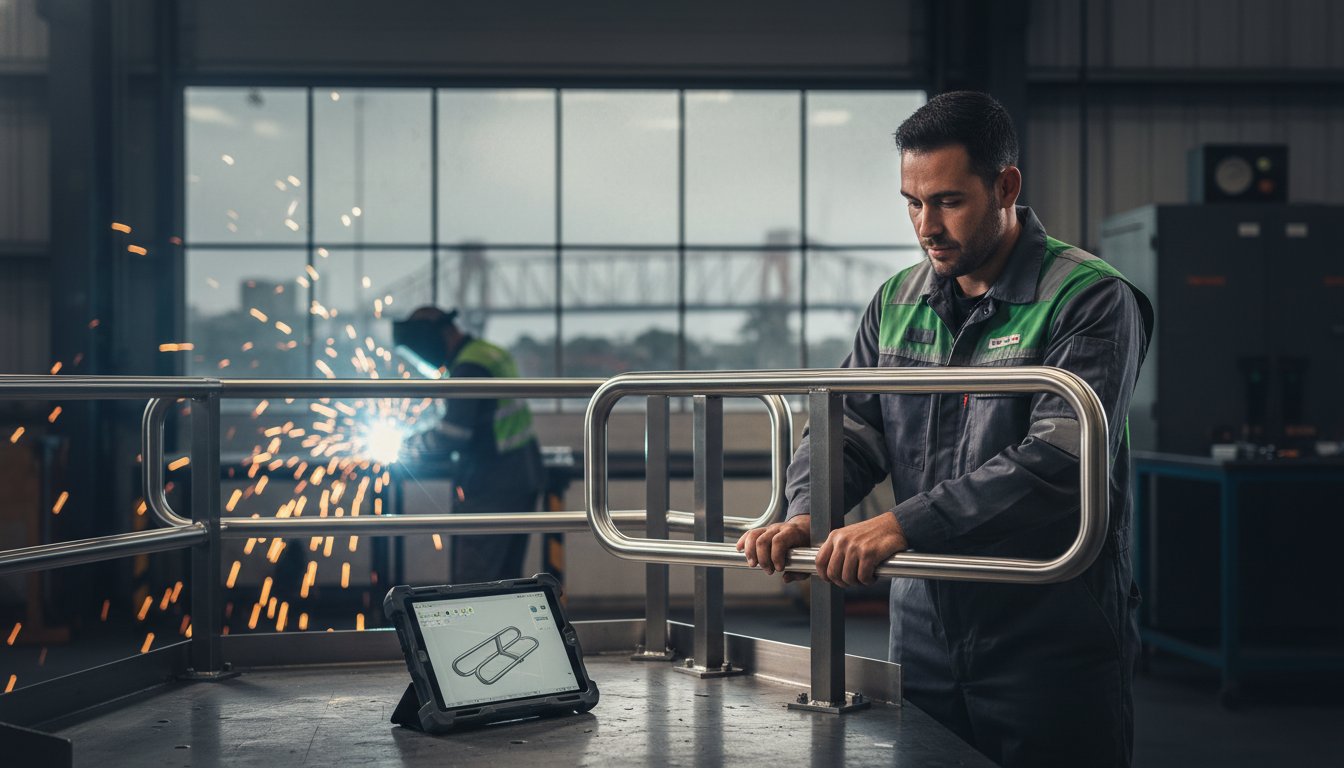
What if the most expensive part of your next build isn’t the material cost, but the three days of operational downtime caused by a safety handrail that simply doesn’t fit on-site? When planning for industrial metal fabrication Brisbane, you’ll likely agree that workshop precision must translate perfectly to the final facility layout to avoid costly delays. Coordinating between separate fabricators and installers often creates unnecessary friction, especially when you’re working to meet the strict safety requirements of the Work Health and Safety Act 2011.
This article provides a comprehensive planning checklist to ensure your project moves seamlessly from the initial design to a compliant, durable installation. With Brisbane’s industrial sector projected to contribute over $22 billion to the gross regional product by 2041, maintaining a competitive edge requires results that are right the first time. We’ll examine how to align your project with the Welding processes code of practice 2021 and the Brisbane City Plan 2014, ensuring your installation avoids rework and withstands our city’s humid climate.
Key Takeaways
- Discover how precision site measurements and 3D scanning during the scoping phase effectively eliminate the risk of costly on-site fitment issues.
- Understand why selecting the correct material, such as 316-grade stainless steel, is vital for industrial metal fabrication Brisbane to withstand local high-corrosion environments.
- Learn why mobile workshop services are a project life-saver for managing on-site fabrication needs while maintaining strict safety protocols and hot work permits.
- Identify the critical maintenance requirements and load-bearing specifications necessary to ensure your stainless steel safety barriers remain compliant over the long term.
- Recognise the value of an integrated fabrication partner who manages the entire project lifecycle to ensure a seamless transition from the workshop to the site.
Scoping Your Project: The Pre-Fabrication Planning Phase
A successful project doesn’t start at the welding bench; it begins with a meticulous scoping phase. Before any steel is cut, you must define the primary objective of your installation. Is the goal to enhance worker safety through stainless steel handrails, or are you installing industrial pipework for a high-pressure sanitary environment? Clearly identifying the core function dictates the choice of materials and the specific metal fabrication processes required to meet operational demands. For those managing industrial metal fabrication Brisbane, the scoping phase is the most effective time to mitigate risk and control costs.
Understanding Australian Compliance Standards
Compliance isn’t a suggestion in the industrial sector. AS 1657 is the non-negotiable benchmark for fixed platforms, walkways, and ladders. If your project involves industrial metal fabrication Brisbane, ensuring your safety handrails and protection meet these load-bearing and height specifications is essential. For food processing plants in South East Queensland, standards are even more rigorous to prevent bacterial harbourage. Using non-compliant finishes or designs doesn’t just risk safety; it creates insurance and liability nightmares that can halt operations indefinitely. We’ve seen projects delayed for weeks because a simple walkway didn’t meet the required slip-resistance or gap-spacing standards.
The Site Survey: Avoiding the “Measure Twice” Trap
Site measurements are where many projects fail before they’ve even arrived for installation. While traditional manual measures have their place, precision 3D scanning is increasingly the standard for complex facility layouts. A thorough site survey must identify:
- Physical access constraints for mobile workshop services and installation teams.
- The structural integrity of existing concrete or steel before mounting new custom stainless benches or trolleys.
- Clearances for plant machinery and existing utility lines.
Drafting detailed technical drawings for client approval ensures everyone is aligned before the workshop team begins. This precision prevents the rework that often plagues projects when separate fabricators and installers don’t communicate effectively. It’s about getting the fitment right in the workshop so the on-site team isn’t forced to make modifications under pressure.
Finally, coordinate your fabrication schedule with planned plant shutdowns. Brisbane industrial hubs often operate on tight margins. Missing a shutdown window can delay a project by months. Managing lead times through proactive scoping ensures your metalwork is ready the moment the site is accessible, allowing for a smooth transition from the workshop to the floor.
Material Selection and Workshop Precision Standards
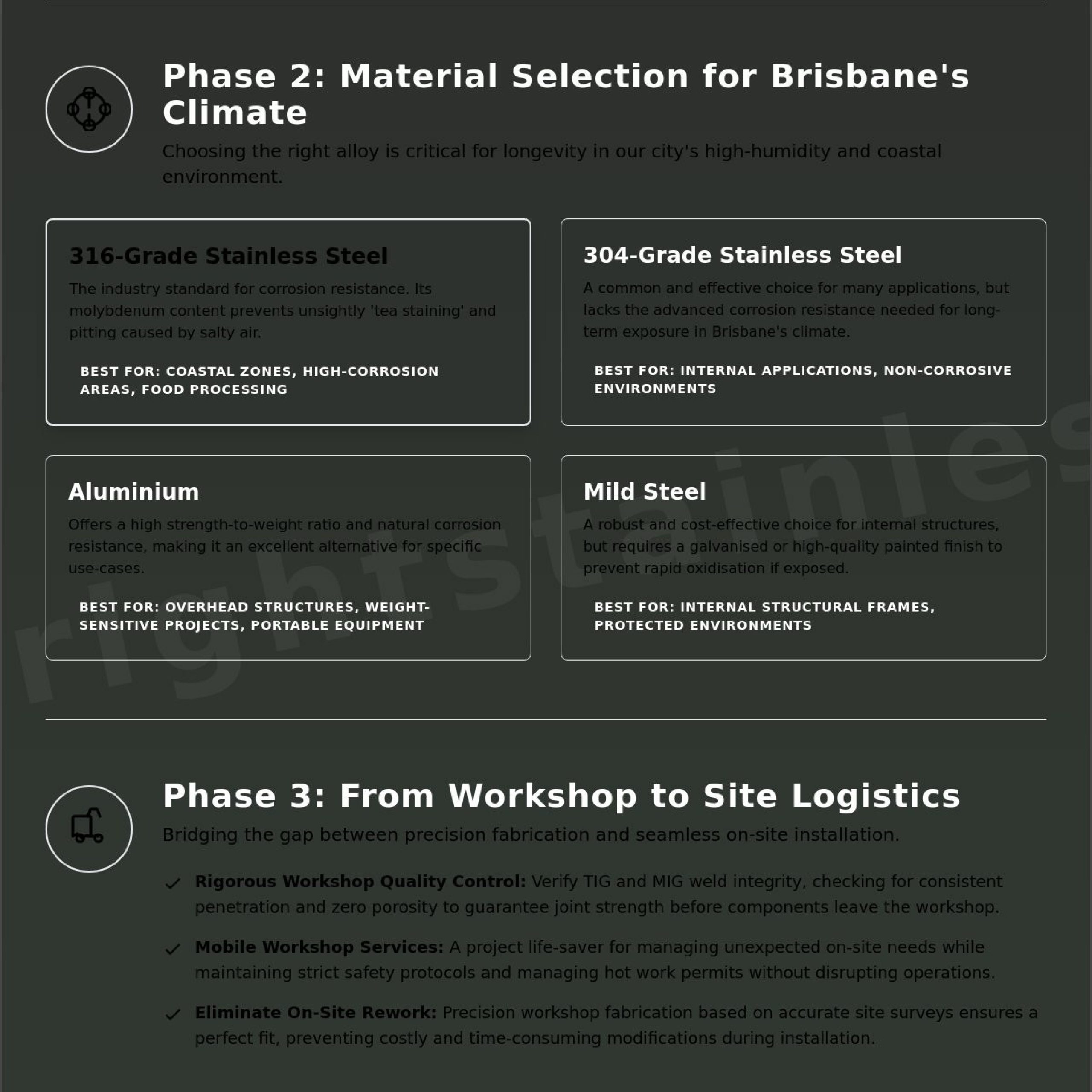
Selecting the right alloy is a decision that impacts the entire lifecycle of your project. In the context of industrial metal fabrication Brisbane, the local environment plays a decisive role in material longevity. Our city’s high humidity and proximity to the coast mean that standard materials often underperform if they aren’t specified correctly for the conditions. While mild steel is a robust choice for internal structural frames, any exposure to the elements requires a galvanised or high-quality painted finish to prevent rapid oxidisation. This decision should be made during the scoping phase to ensure the finish aligns with the expected lifespan of the facility.
Choosing the Right Grade for the Environment
316-grade stainless steel remains the industry standard for coastal or high-corrosion zones. While 304-grade is common in many applications, it often lacks the molybdenum content necessary to resist “tea staining” in Brisbane’s salty air. This unsightly brown discolouration isn’t just an aesthetic issue; it can lead to pitting and structural degradation over time. For weight-sensitive projects, aluminium fabrication offers a high strength-to-weight ratio and natural corrosion resistance. It’s an excellent alternative for overhead structures or portable equipment where reducing the overall load is a priority without sacrificing durability.
Workshop Quality Control Measures
Precision in industrial metal fabrication Brisbane is maintained through rigorous workshop quality control. Verifying the integrity of TIG and MIG welds is essential before any components leave the floor. We check for consistent weld penetration and ensure there’s no porosity that could compromise the joint’s strength. Pre-assembling items like custom stainless benches or trolleys in the workshop ensures that dimensional accuracy is maintained against the technical drawings. This step is vital to avoid fitment friction on-site; it allows us to identify and correct minor deviations in a controlled environment where the right tools are always at hand.
Surface finishing serves as the final layer of protection against Brisbane’s harsh conditions. Electropolishing is the preferred choice for sanitary applications in food processing; it removes surface impurities and creates a smooth, easy-to-clean finish that resists bacterial growth. For more industrial settings, powder coating provides a durable, high-visibility finish for safety handrails and protection. If you aren’t sure which material or finish suits your specific site conditions, consulting with an expert in stainless steel fabrication can prevent costly material failures down the track. Each choice should reflect the specific chemical, thermal, and physical stresses the metalwork will face daily.
The Installation Phase: On-Site Mobile Welding and Logistics
Precision in the workshop is only half the battle. The transition from the fabrication floor to the final site location is where the most complex challenges often arise. Even with meticulous planning, real-world site conditions can vary from the original blueprints. This is where the mobile workshop advantage becomes a project life-saver. Having the capability to perform on-site adjustments ensures that industrial metal fabrication Brisbane projects don’t stall when faced with minor structural discrepancies or unexpected facility obstacles. It’s the difference between a project that finishes on schedule and one that gets bogged down in costly rework.
Safety during this phase is paramount. Working in an active industrial environment requires a disciplined approach to risk management. Before any work begins, we secure hot work permits and establish clear exclusion zones to protect your personnel and equipment. Site-specific inductions are a mandatory part of our process, ensuring every team member understands the unique hazards of your facility. We follow the Welding processes code of practice 2021 to ensure every joint made on-site meets the same rigorous safety standards as those completed in a controlled workshop environment.
Logistics coordination for heavy industrial pipework or large-scale safety handrails requires an experienced hand. We manage the delivery sequence and any necessary crane hire or specialised lifting equipment to prevent site congestion. This is particularly critical in high-traffic industrial zones across Logan or the Brisbane CBD, where space is at a premium. A well-managed logistics plan ensures that components arrive exactly when they’re needed, allowing for a seamless “final fit” adjustment by expert hands.
Executing On-Site Welding and Repairs
Seamless joins are essential for the structural integrity of any industrial system. Utilising mobile welding Brisbane allows our teams to complete complex assemblies on-site without sacrificing quality. We use specialized equipment to manage fumes and sparks, which is vital when working in active commercial or food processing environments. Every on-site weld is executed with the same precision as our workshop-based TIG and MIG processes, ensuring full compliance with Australian Standards for every project we deliver.
Installation Logistics and Site Management
Effective site management is about more than just bolting metal to the floor. We focus on industrial plant maintenance welding strategies that prioritise your operational uptime. By organising a logical delivery sequence, we minimise the footprint of our installation teams and keep your facility moving. Once the installation is complete, we conduct a thorough site clean-up, removing all metal offcuts and debris to leave your floor ready for immediate use. It’s a methodical approach that reflects the precision of the trade itself.
Post-Installation: Compliance, Safety, and Maintenance
Handing over a completed project is a formal process that ensures every aspect of the work aligns with the initial scoping and regulatory requirements. In the context of industrial metal fabrication Brisbane, the final compliance sign-off is the moment where workshop precision meets site-specific safety standards. This involves verifying that all stainless steel safety barriers, platforms, and handrails meet their designated load-bearing specifications. We provide a comprehensive documentation package for every project, including material certificates and records of weld procedures. These documents are vital for your facility’s safety audits and long-term insurance records, proving that the installation meets the necessary Australian Standards.
Load testing is a critical component of this final phase. It isn’t enough to assume a structure is sound; industrial handrails and walkways must be physically verified to handle the stresses of a high-traffic environment. This testing ensures that the installation can withstand both static and dynamic loads as prescribed by AS 1657. By conducting these checks before the final handover, we eliminate the risk of future structural failure and provide you with the confidence that your site is fully compliant from day one.
Longevity through Proper Maintenance
Maintaining the integrity of your metalwork requires a proactive approach. While 316-grade stainless steel is highly resistant to corrosion, it still requires regular cleaning to prevent pitting and the buildup of surface contaminants. This is especially true in Brisbane’s humid climate, where salt and industrial pollutants can settle on surfaces. Our maintenance checklist includes identifying early signs of structural fatigue, which is common in plants with high-vibration machinery. Scheduling regular inspections for safety-critical components like guards and handrails ensures that minor issues are addressed before they become expensive repairs or safety hazards.
Safety Certification and Handover
The handover process concludes with a final walk-through to ensure every “snag” is resolved and the site is left in pristine condition. We provide the necessary AS compliance certificates at this stage, documenting that the work meets all relevant safety regulations. If your project included custom trolleys or mobile benches, we also provide staff training on their safe operation and weight limits. This ensures your team can use the new equipment effectively while maintaining a safe working environment. If you need to ensure your facility remains compliant with regular inspections, you can book our professional maintenance services to keep your metalwork in peak condition.
Partnering for Success: Why Integrated Fabrication Matters
Success in industrial metal fabrication Brisbane isn’t just about the quality of a single weld; it’s about the continuity of the entire project. When you separate the workshop fabricator from the on-site installer, you invite a “blame game” that often leads to delays and budget blowouts. If a component doesn’t fit perfectly on-site, the installer blames the workshop, and the workshop blames the site measurements. By choosing an integrated partner, you eliminate this friction. The team that understands the technical nuances of your custom stainless trolley or industrial pipework in the workshop is the same team that ensures its precision fitment on your facility floor.
Donewright Stainless manages this entire lifecycle with a focus on accountability and technical excellence. From our base in Bethania to projects across the Gold Coast, we maintain total control over every variable. This integrated model is backed by “Wrighty’s” hands-on oversight, ensuring that the meticulous standards established during the design phase are carried through to the final installation. It’s a methodical approach that provides our clients with a sense of security; they know that the person responsible for the build is also responsible for the result.
The Donewright Difference: Experience and Reliability
Our reputation is built on a history of delivering high-quality custom stainless steel fabrication Brisbane wide. We don’t just deliver metalwork; we deliver operational solutions that meet strict Australian Standards. Our mobile workshop is the “secret weapon” for complex installations, allowing us to make precision adjustments on-site that would otherwise require components to be sent back to the workshop. This capability ensures we get the job done right the first time, without the fuss that typically accompanies large-scale industrial projects.
Requesting Your Industrial Fabrication Quote
Ready to start your next project? To provide the most accurate and transparent quote, we recommend having your technical drawings, site access requirements, and preferred deadlines ready for review. We specialise in providing fixed-price quotes for complex projects, ensuring there are no hidden surprises once the work begins. Whether you require a full-scale installation of stainless steel handrails or urgent maintenance services for existing plant equipment, our team is ready to assist.
Organising a site visit is the most effective way to ensure your industrial metal fabrication Brisbane project is scoped correctly from the outset. We take the time to understand your specific operational challenges, from chemical exposure to high-traffic safety needs. Contact our team today to discuss your requirements and experience the reliability of a partner who values precision as much as you do.
Secure Your Project with Precision Installation
Success in industrial metal fabrication Brisbane depends on a unified strategy that accounts for every stage of the project lifecycle. By prioritising meticulous scoping and ensuring full AS 1657 compliance, you protect your facility from the hidden costs of rework and unexpected downtime. The coordination between workshop precision and on-site expertise is the only way to ensure your safety handrails or industrial pipework perform exactly as intended under local conditions.
Our team brings over 20 years of industrial maintenance experience to every project, acting as AS 1657 compliance specialists who understand the finer points of the trade. We utilise a fully equipped mobile workshop for on-site repairs and adjustments, ensuring that the final fitment is seamless and secure. This hands-on approach eliminates the friction often found between separate fabricators and installers.
Request a site measure and quote from our Brisbane fabrication experts to begin your next project with confidence. We’re ready to help you deliver a high-quality, compliant result that stands the test of time.
Frequently Asked Questions
Do I need a separate installer for my metal fabrication project in Brisbane?
No, you don’t need a separate installer when you partner with an integrated specialist. Having a single team manage your project from the workshop to the final site fitment eliminates communication gaps and ensures that technical requirements are maintained throughout the build. It’s the most reliable way to avoid the fitment issues that often occur when fabricators and installers work in isolation.
What Australian Standards apply to industrial handrail installation?
AS 1657 is the primary standard governing the design and installation of fixed platforms, walkways, stairways, and ladders. Adhering to this standard is essential for industrial metal fabrication Brisbane projects to ensure worker safety and regulatory compliance. Depending on the facility, other standards like AS 1428 for accessibility or specific food safety regulations may also apply to your metalwork.
How long does a typical industrial metal fabrication and installation project take?
Project timelines depend entirely on the scope and complexity of the metalwork required. A custom stainless trolley might be completed in a few days; however, large-scale industrial pipework or safety handrail installations are often scheduled around specific plant shutdown windows to minimise operational impact. We provide clear lead times during the quoting phase to help you plan your facility’s schedule effectively.
Can you perform on-site welding in an active food processing plant?
Yes, we can perform on-site welding in active food processing environments by using specialised equipment and strict safety protocols. We utilise TIG welding for clean, high-quality joins that meet sanitary requirements and manage fumes and sparks to protect your products and personnel. This allows for essential repairs or modifications without requiring a total facility closure.
What is the difference between 304 and 316 stainless steel for Brisbane projects?
316-grade stainless steel contains molybdenum, which provides superior resistance to the “tea staining” and pitting common in Brisbane’s humid, coastal air. While 304-grade is suitable for many indoor or less corrosive applications, 316 is the standard for any metalwork exposed to the elements or harsh industrial chemicals. Choosing the correct grade is vital for the long-term durability of your installation.
Do you provide site measures or do I need to provide the drawings?
We provide comprehensive site measures to ensure precision fitment, though we can also work from your existing technical drawings. Our team often conducts a site survey to identify physical constraints or structural requirements that might not be evident in a drawing alone. This meticulous approach to measurement is what prevents rework and ensures a smooth installation process on the day.
Is mobile welding safe for my commercial facility?
Mobile welding is safe for commercial facilities when conducted by experienced professionals following the Welding processes code of practice 2021. We manage the entire safety process, including the acquisition of hot work permits and the establishment of exclusion zones to protect your staff and assets. Our mobile workshop is configured to maintain a clean, controlled work area even in the middle of a busy industrial plant.
What regions do you cover for on-site installation?
Our installation teams cover the entire South East Queensland region from our base in Bethania. This includes all Brisbane metropolitan areas, Logan, and the Gold Coast. We’re experienced in navigating the logistics of various industrial hubs across these regions, ensuring that our mobile workshop services arrive on time and ready to work.