
Stainless Steel Safety Barriers: The Ultimate Guide to Industrial Protection
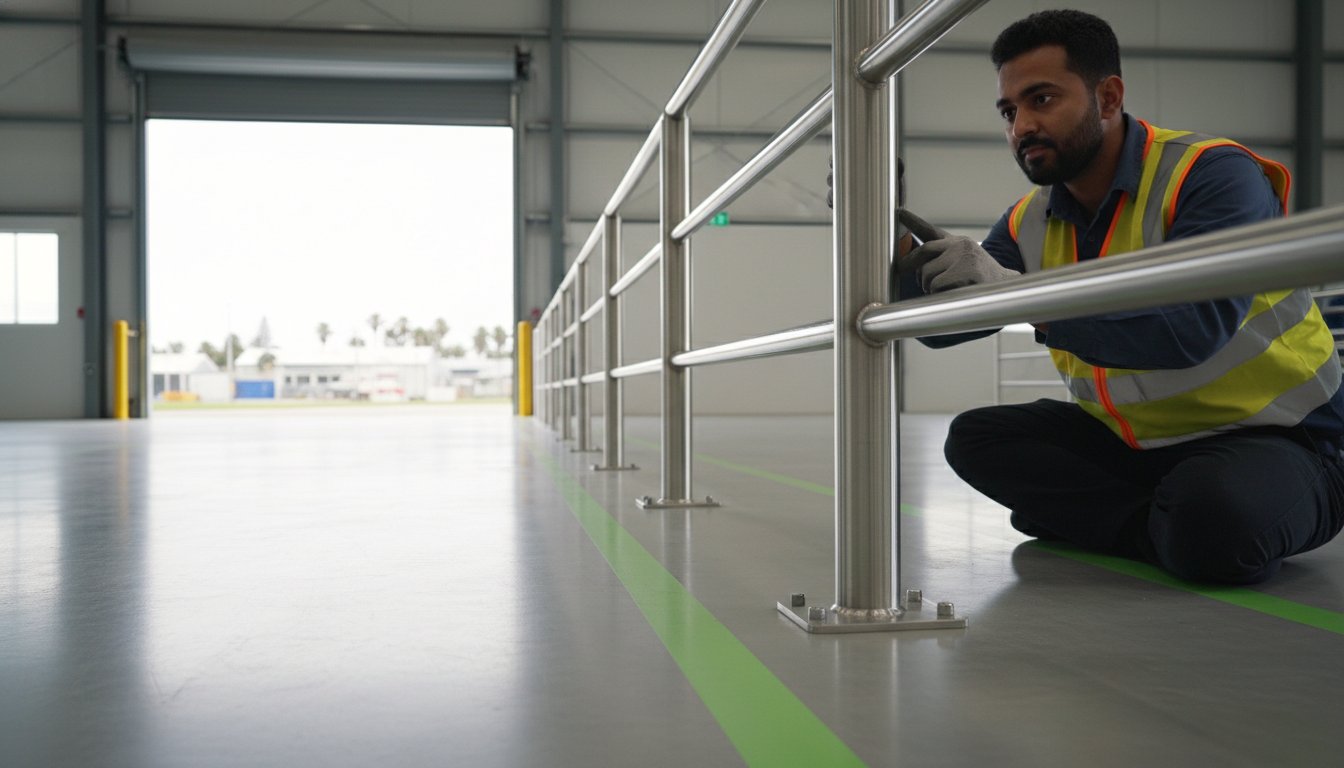
An off-the-shelf safety rail is often the most expensive mistake a facility manager can make in a high-traffic industrial environment. While generic options might look the part on day one, the reality of coastal salt air or aggressive wash-down protocols quickly exposes inferior metals. You shouldn’t have to worry about whether your stainless steel safety barriers will pass a surprise safety audit or succumb to corrosion within a few years. It’s frustrating to deal with modular systems that don’t quite fit your floor layout, leaving gaps in both your protection and your compliance with AS 1657:2018.
We understand that you need a “set and forget” solution that balances long-term durability with strict regulatory adherence. This guide provides the technical clarity you need to select, specify, and install high-grade stainless steel barriers that thrive in the harshest Australian conditions. We will examine the critical differences between grade 304 and 316, the essential updates in the latest Australian Standards, and how a local fabrication partner can streamline your design and on-site installation.
Key Takeaways
- Identify the critical differences between Grade 304 and 316 stainless steel to ensure your barriers withstand specific environmental pressures like salt air or chemical wash-downs.
- Learn how to align your facility with the current AS 1657:2018 standards to guarantee full compliance and avoid the risks associated with non-standard safety installs.
- Discover why bespoke stainless steel safety barriers offer superior protection and better floor space utilisation than generic, off-the-shelf products.
- Understand the role of fixed bollards and safety guardrails in creating a physically separated, secure environment for both pedestrians and heavy machinery.
- Recognise the long-term value of a professional fabrication partner who can manage everything from precise design to compliant on-site installation.
What are Stainless Steel Safety Barriers and Why Do They Matter?
A Safety barrier in an industrial setting is more than just a visual marker; it’s a structural safeguard. These permanent or semi-permanent installations protect your most valuable assets: your people, your machinery, and your building’s infrastructure. While many facilities start with cheaper alternatives, the “stainless advantage” quickly becomes clear. High-grade stainless steel safety barriers provide a level of hygiene and corrosion resistance that powder-coated mild steel simply cannot match. In environments where wash-downs are frequent or salt air is present, inferior metals begin to degrade almost immediately. Choosing stainless steel eliminates the cycle of rust, strip-back, and repaint, which significantly reduces long-term maintenance costs and can even lead to lower insurance premiums by demonstrating a commitment to permanent, high-quality risk mitigation.
Primary applications for these robust systems include food processing plants, where sanitation is non-negotiable; chemical facilities, where reactive substances are present; and high-traffic loading docks, where the risk of vehicle impact is constant. By installing a durable solution, you’re investing in a “set and forget” safety strategy that maintains its structural integrity and professional appearance for decades.
The Difference Between Crowd Control and Industrial Protection
It’s a common mistake to confuse crowd control with industrial protection. A retractable belt or a plastic bollard might help with “zoning off” an area for cleaning, but it won’t stop a three-tonne forklift. Industrial protection requires fixed, structural guardrails designed to absorb or deflect impact. Identifying high-risk zones, such as mezzanine edges or machinery pits, is the first step in a proper traffic management plan. These barriers create a physical separation between pedestrian walkways and vehicle thoroughfares, ensuring that human error doesn’t result in a catastrophic accident.
Why Stainless Steel is the Gold Standard in Australia
Australian industrial sites face unique environmental challenges, particularly in states like Queensland where high humidity and intense UV exposure accelerate the breakdown of traditional coatings. Stainless steel remains resilient against these conditions, maintaining its strength without becoming brittle. In food-grade fabrication, the non-porous surface of stainless steel is essential to prevent bacterial growth and ensure easy sanitisation. Within these demanding environments, stainless steel safety barriers serve as an essential component of AS 1657 compliance by providing reliable, fixed protection that meets rigorous national safety requirements.
Selecting the Right Material: Grade 304 vs 316 Stainless Steel
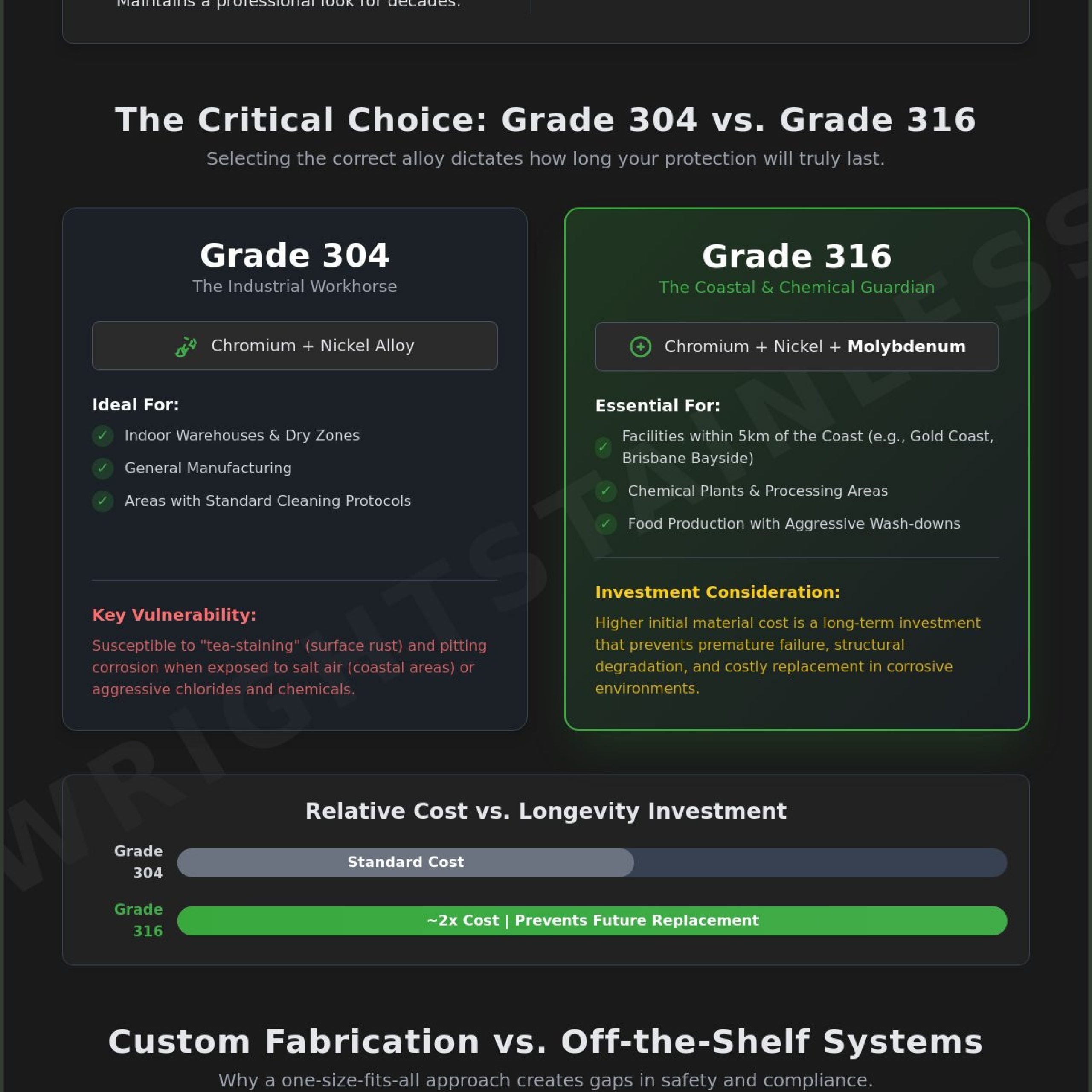
Not all steel is created equal. While stainless steel safety barriers provide essential structural protection, the specific alloy you choose dictates exactly how long that protection will last. Grade 304 is the most common industrial choice. It contains chromium and nickel, making it excellent for indoor warehouses or dry manufacturing zones where standard cleaning protocols apply. However, it lacks the chemical resilience required for more aggressive environments.
Grade 316 includes an addition of molybdenum. This chemical difference provides superior resistance to chlorides and industrial chemicals. If your facility uses heavy-duty cleaning agents or handles acidic products, 316 is the only viable option. While industry data shows Grade 316 can be nearly double the price of 304, the investment prevents premature failure and structural degradation. Adhering to international OSHA safety standards highlights why maintaining structural integrity in hazardous areas is vital; a corroded barrier is an unreliable one.
When to Specify Grade 316 for SEQ Facilities
Site managers in South East Queensland face a specific set of environmental hurdles. If your facility sits within 5km of the coast, salt-laden air will cause Grade 304 to develop “tea-staining” in a matter of months. This brownish discolouration isn’t just an aesthetic issue; it’s a sign of surface oxidation that can eventually lead to pitting. For Gold Coast or Brisbane bayside operations, specifying Grade 316 is the only way to ensure your barriers remain structurally sound and professional in appearance.
The choice of finish also plays a role in site safety and hygiene. A satin or brushed finish provides a professional look and reduces glare in bright loading docks. Mirror polishing, while more labour-intensive, offers the highest level of corrosion resistance because the surface is so smooth that contaminants have almost nowhere to grip.
Maintenance and Longevity
Maintenance requirements vary significantly between grades. Grade 304 requires more frequent cleaning to prevent the buildup of salts or chemicals that cause pitting. Expert stainless steel fabrication helps here by providing seamless welds that prevent bacterial growth and chemical traps. By choosing the right grade and finish from the start, you secure a long-term ROI and ensure your high-quality stainless steel safety barriers stay compliant for years without the need for constant repairs.
Common Types of Safety Barriers for Industrial Applications
Industrial protection is not a generic commodity. While some providers focus on temporary zoning with retractable belts, true site safety relies on permanent, structural stainless steel safety barriers. These installations provide the physical resistance necessary to withstand vehicle impacts and prevent personnel from entering hazardous zones. Unlike flimsy alternatives, fixed barriers offer a definitive physical stop that protects your infrastructure and your people.
Fixed bollards are a staple in high-traffic loading docks. They act as a sacrificial barrier to protect building corners, doorway frames, and expensive machinery from the constant threat of forklift damage. When these are fabricated from high-grade stainless steel, they provide a long-term solution that won’t require constant repainting or replacement due to surface rust. They’re particularly effective for protecting sensitive control panels or industrial pipework from accidental bumps.
Safety guardrails serve a different purpose, primarily creating dedicated pedestrian walkways. By physically separating people from heavy vehicle traffic, you significantly reduce the risk of workplace accidents. This aligns with international safety logic, such as the principles found in OSHA 1910.29, which mandates specific guardrail system requirements to ensure worker protection. For areas requiring occasional entry, removable barriers offer a flexible middle ground. These allow your team to maintain a secure perimeter while still providing access for maintenance or equipment upgrades without compromising the overall safety of the facility.
Bespoke Guarding for Specialised Equipment
Off-the-shelf barriers rarely accommodate the complex layouts of industrial pipework or custom conveyors. Our approach to stainless steel safety barriers involves precise measurement and design to ensure the guarding fits perfectly around your existing infrastructure. We can integrate these barriers seamlessly with custom stainless trolleys or benches to create a unified, efficient workflow that doesn’t compromise on safety. This level of customisation ensures that protection never becomes a bottleneck for your daily operations.
Handrails and Balustrades as Safety Barriers
In many facilities, the biggest risk isn’t a forklift; it’s a fall from height. Stainless steel handrails and balustrades are essential for elevated platforms and mezzanines. These systems must do more than just look professional; they must maintain structural integrity under significant load. To meet Australian safety standards, these barriers often require kickplates to prevent tools or debris from falling onto workers below. We focus on ergonomic grip and seamless fabrication to ensure every handrail is both safe to use and easy to clean.
Compliance and Standards: Meeting AS 1657 Requirements
Adherence to Australian Standards is the foundation of any industrial safety strategy. AS 1657:2018 serves as the primary benchmark for the design, construction, and installation of fixed platforms, walkways, stairways, and ladders. For facility managers, this isn’t a optional guideline; it’s a legal necessity under Work Health and Safety (WHS) regulations. Ensuring your stainless steel safety barriers meet these specific requirements protects your business from the significant legal and financial implications of a workplace accident. Non-compliant installations often lead to failed safety audits, voided insurance claims, and, most importantly, preventable injuries to your workforce.
Structural integrity is a core focus of the standard. A safety barrier must be capable of withstanding specific load-bearing forces to ensure it doesn’t fail when a worker leans on it or falls against it. Beyond pure strength, the regulations dictate precise height and spacing requirements. Handrails must typically sit between 900mm and 1100mm above the floor, with specific gap limits to prevent accidental slips or falls through the barrier itself. When we design and install these systems, we ensure every millimetre aligns with these rules, providing a “set and forget” solution that stands up to the scrutiny of any safety inspector.
Safety Audits and Retrofitting
Many older facilities in Brisbane and across Queensland operate with “blind spots” where safety infrastructure has degraded or no longer meets modern standards. We often see rusted mild steel rails that have become structurally unsound due to humidity. Upgrading these to compliant stainless steel safety barriers is a straightforward process that drastically improves site safety. Our mobile welding Brisbane services allow us to handle these retrofits on-site, addressing compliance issues immediately without requiring a full facility shutdown.
Documentation and Certification
Compliance is only as good as the paperwork that supports it. We recommend that all facility managers demand material certificates for their stainless steel to verify it’s the correct grade for the environment. Providing “as-built” drawings is another essential step for your permanent safety records. Because we understand the specific local bylaws and the nuances of AS 1657:2018, we can provide the technical documentation you need for total peace of mind. If you’re unsure about your current setup, you can contact us for a safety handrail and protection audit to identify and rectify any compliance gaps.
Custom Fabrication: Why Bespoke Solutions Outperform Off-the-Shelf
Choosing off-the-shelf safety products often leads to unforeseen complications during installation. While a pre-made rail might seem cost-effective initially, the “hidden costs” of modifying these items to fit non-standard floor slopes or unique industrial obstacles can quickly mount up. In a busy facility, a barrier that doesn’t fit perfectly is more than an eyesore; it’s a potential trip hazard or a bottleneck that slows down your operations. Bespoke stainless steel safety barriers are designed to work with your specific floor plan, ensuring that protection never comes at the expense of efficiency. By customising the layout, we can maximise your available floor space while maintaining the strict clearance zones required for heavy machinery and pedestrian traffic.
Precision fabrication also ensures aesthetic and functional consistency across your site. When you invest in high-quality safety infrastructure, you want it to integrate seamlessly with your existing stainless steel handrails, custom benches, or industrial pipework. Our approach starts with a comprehensive site measure-up, allowing us to identify potential installation challenges before a single piece of steel is cut. For a deeper look at how to coordinate this process effectively, our industrial metal fabrication Brisbane project planning checklist outlines every step from initial design through to compliant on-site installation. This meticulous planning results in a cleaner finish and a more robust safety system that feels like an integral part of the building rather than an afterthought.
The On-Site Advantage: Mobile Welding and Installation
Downtime is the enemy of productivity. Our on-site industrial fabrication and mobile welding services in Brisbane allow us to handle complex installations and final adjustments on-site, which significantly reduces the time your facility needs to be cordoned off. Whether your project requires barriers to be core-drilled into a specific concrete slab or securely base-plated, we ensure the mounting method is appropriate for the structural environment. Every Brisbane project benefits from “Wrighty’s” hands-on oversight, ensuring that the final weld is as precise as the initial design. This mobile capability means we can react to on-site variables immediately, providing a level of agility that stock suppliers simply can’t match.
Future-Proofing Your Facility
When planning your safety upgrades, it’s worth considering how your facility might grow. Fully welded stainless steel safety barriers offer the highest level of strength and hygiene, making them ideal for permanent high-risk zones. However, if you anticipate layout changes, we can design modular systems that offer flexibility without sacrificing compliance. We focus on integrating these barriers with your existing maintenance access points and industrial pipework to ensure that safety never hinders your team’s ability to service equipment. If you’re ready to secure your site with a solution that lasts, you can organise a site measure and quote for your safety barriers today.
Secure Your Facility with Compliant Industrial Protection
Investing in high-quality stainless steel safety barriers is a strategic decision that pays dividends in site safety and reduced maintenance costs. You now understand how selecting the correct grade, such as 316 for coastal SEQ sites, prevents premature corrosion and unsightly tea-staining. You also recognise that meeting AS 1657:2018 standards is the only reliable way to ensure your facility remains legally compliant and safe for all personnel. Bespoke fabrication ensures these systems fit your unique layout perfectly, eliminating the bottlenecks and safety gaps often created by generic, off-the-shelf alternatives.
Our team brings specialised expertise in food-grade environments and industrial maintenance to every project we handle. We operate a fully equipped mobile workshop for seamless on-site installs across South East Queensland, ensuring your safety upgrades are completed with precision and minimal operational disruption. You shouldn’t have to worry about the structural integrity of your protection systems. Get a Custom Quote for Your Safety Barriers and let us provide a robust, “set and forget” solution that secures your infrastructure for the long term. We are ready to help you create a safer and more efficient industrial environment.
Frequently Asked Questions
Do stainless steel safety barriers need to be AS 1657 compliant?
Yes, any fixed stainless steel safety barriers used for platforms, walkways, stairways, or ladders must comply with AS 1657:2018. This standard ensures the structure can handle specific load-bearing weights and meets strict height regulations. Compliance is essential for meeting your workplace health and safety obligations and protecting your business from legal liability in the event of an accident.
Is Grade 304 stainless steel suitable for outdoor safety barriers in Brisbane?
Grade 304 is usually not recommended for outdoor use in Brisbane or the Gold Coast. Our local humidity and salt air lead to tea-staining and surface oxidation on 304 alloys very quickly. For outdoor installations or sites within five kilometres of the coast, Grade 316 is the standard choice to ensure long-term durability and a professional finish that won’t degrade.
Can you repair existing safety barriers with mobile welding?
You can absolutely repair or modify existing safety systems using our mobile welding services. This is a cost-effective way to fix broken welds, add kickplates, or retrofit existing rails to meet modern standards. Our mobile workshop allows us to perform these tasks on-site, which means your facility stays secure without needing a complete shutdown or the removal of heavy infrastructure.
What is the standard height for an industrial safety guardrail?
The standard height for an industrial safety guardrail under AS 1657:2018 is between 900mm and 1100mm from the floor or platform surface. This range ensures the rail provides effective fall protection for the average worker. We also ensure that any gaps between rails or the floor meet strict spacing requirements to prevent accidental slips or falls through the barrier itself.
How long does it take to fabricate and install custom safety barriers?
The timeline for custom stainless steel safety barriers depends on the project’s scale and complexity. Typically, the process involves an initial site measure, followed by workshop fabrication and then on-site installation. While lead times vary based on material availability and current workshop capacity, we focus on a methodical approach to ensure every weld and fitting is precise and compliant.
Do I need bollards or guardrails for my warehouse?
You usually need both to create a comprehensive traffic management plan. Bollards are best for protecting building corners, doorways, and expensive machinery from forklift impacts. Guardrails are designed to create physically separated walkways for staff. Combining these two elements ensures that both your infrastructure and your people are protected from vehicle-related accidents in high-traffic zones.
What is the difference between a safety barrier and a handrail?
A safety barrier is a structural installation designed to prevent access to a hazard or separate different types of traffic. A handrail is specifically designed to provide a handhold for support on stairs or elevated walkways. While they often work together in a single system, the barrier focuses on physical protection while the handrail focuses on ergonomic stability and fall prevention for the user.
Can stainless steel barriers be used in food-grade environments?
Stainless steel is the preferred material for food processing and pharmaceutical plants because it’s non-porous and highly resistant to bacteria. It can withstand aggressive chemical wash-down protocols that would destroy powder-coated or galvanised steel. We use specialised welding techniques to ensure there are no crevices where contaminants can hide, maintaining the high hygiene standards required in these industries.