
Stainless Steel vs Galvanised Steel Handrails: Which Should You Choose
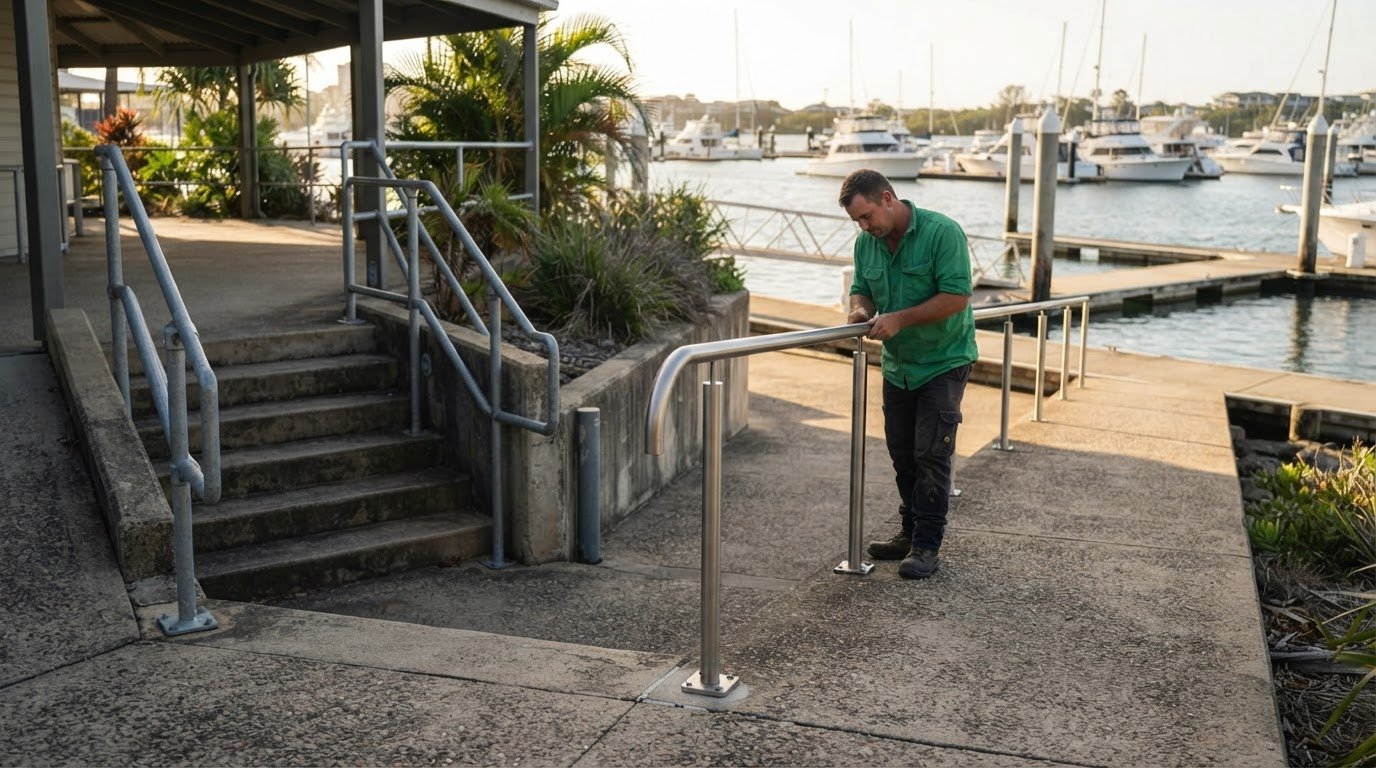
The obvious choice isn’t always the right handrail material. For handrails exposed to coastal salt, Grade 316 stainless steel is generally more suitable; galvanised steel can suit sheltered or inland locations when its zinc coating matches the exposure. When weighing stainless steel vs galvanised steel handrails, site conditions matter as much as the material itself.
Both materials can provide a durable handrail, but they protect steel in different ways and call for different considerations at joints, welds and during maintenance. It’s understandable to focus first on strength or appearance, yet salt, moisture and exposure can affect which option makes sense over time. This guide compares composition, strength, magnetism and finish, then explains where each material fits outdoors and in marine settings. The aim is a practical basis for choosing a handrail material suited to the site and its intended use, rather than assuming one option is right everywhere.
Key Takeaways
- Learn how zinc coatings and stainless steel’s protective surface work, and why damage affects each material differently.
- Use the site’s exposure to moisture, salt and chemicals to narrow down suitable options for outdoor and marine handrails.
- Look beyond strength alone: grade, magnetic response, finish and joint details all influence suitability.
- Use the comparison to identify which material best fits your handrail’s setting, appearance requirements and maintenance needs.
Galvanised Steel vs Stainless Steel: What Is the Difference?
Both materials protect steel from corrosion, but by different means. Chromium creates stainless steel’s protective surface, while galvanising adds a zinc coating.
Corrosion Protection and Resistance
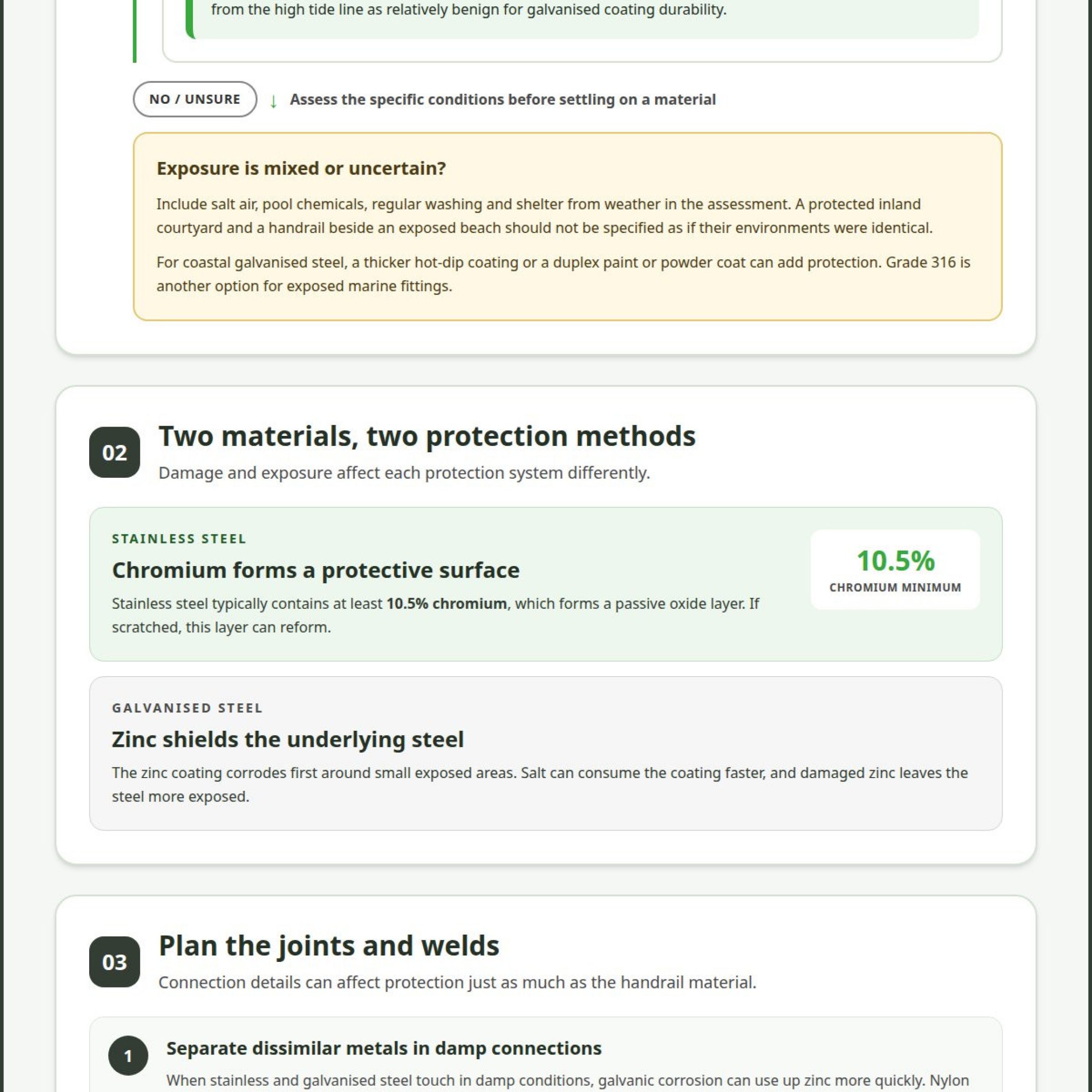
Stainless steel typically contains at least 10.5% chromium, which forms a passive oxide layer. If scratched, this layer can reform, helping maintain corrosion resistance. Grade 316 includes molybdenum, improving resistance to salt and chemicals. Galvanised steel instead relies on zinc, which shields the underlying steel and corrodes first around small exposed areas.
Inland, either material may suit outdoor use when its grade or coating suits the conditions. Salt accelerates zinc consumption, while 316 stainless steel offers stronger coastal resistance than Grade 304. Neither material is immune to corrosion: deposits and sheltered crevices can affect stainless steel, while damaged zinc leaves galvanised steel more exposed.
Galvanic Corrosion at Connections
When stainless and galvanised steel touch in damp conditions, galvanic corrosion can use up the zinc more quickly. Brackets, fasteners and joints are possible contact points, so fabrication details matter as much as the handrail material. Nylon washers or sleeves can separate the metals at outdoor connections and help reduce this risk.
Welding also needs consideration. Welding after galvanising burns away zinc around the weld, so the joint needs re-galvanising or a zinc-rich repair coating. Before welding galvanised steel to stainless steel, the zinc is removed from the weld area because molten zinc can cause cracking in stainless steel.
| Option | Protection mechanism | Outdoor and coastal consideration | Connection detail |
|---|---|---|---|
| Stainless steel | Chromium passive layer | Grade 316 suits salt exposure better than Grade 304 | Isolate from galvanised steel in damp joints |
| Galvanised steel | Sacrificial zinc coating | Salt can consume the coating faster | Repair zinc protection at welded areas |
For maintenance, rinse exposed coastal rails with fresh water monthly. Inspect galvanised coatings a couple of times a year for chips or scratches.
During installation and repair, account for contact between dissimilar metals, weld locations and damaged coatings. These details help maintain protection at joints and exposed areas.
Choose by weighing site exposure, the required finish and the connection design; for salty locations, Grade 316 stainless steel provides greater resistance than galvanised steel.
Choosing materials for outdoor and marine applications
For a coastal home, the stainless steel vs galvanised steel handrails comparison generally favours Grade 316 stainless steel. It offers greater salt resistance than Grade 304, while galvanised steel’s coating can be consumed faster in salty air. Inland and sheltered settings have different exposure demands.
Materials for Project Conditions
Start with the site conditions: consider salt air, pool chemicals, regular washing and shelter from weather. A Queensland handrail beside an exposed beach differs from one in a protected inland courtyard. The Galvanizers Association of Australia describes calm coastal areas more than 50 metres from the high tide line as relatively benign for galvanised coating durability.
Budget decisions should account for coating requirements, cleaning and future repairs, not just the initial material. For coastal galvanised steel, a thicker hot-dip coating or a duplex paint or powder coat can add protection. Grade 316 is another option for exposed marine fittings.
Suitability by Application
Indoor stairs and sheltered inland outdoor runs can suit Grade 304 stainless steel when salt isn’t a significant factor. Galvanised steel may also suit outdoor applications when its coating matches the exposure. A rail exposed to sea spray has more demanding conditions than a sheltered stair or covered entry.
Near pools, canals, beaches and exposed decks, Grade 316 is the stronger stainless steel choice for saline conditions. It offers greater resistance than Grade 304, though finish, design and cleaning still matter. A marine-facing barrier and an inland handrail shouldn’t be specified as if their environments were identical.
For the stainless steel vs galvanised steel handrails decision, weigh site exposure, intended use and maintenance needs together. The structural layout and connection details also shape the finished design. A project-specific material plan can bring these considerations together.
Strength, magnetism and appearance
Strength figures describe the material, not the capacity of a finished handrail. Design, section size, supports and connections also affect performance.
Grade 304 and Grade 316 stainless steel have a minimum tensile strength of 515 MPa. Grade 250 structural steel is listed at 410 MPa. Their minimum yield strength is about 205 MPa, compared with 250 MPa for Grade 250 steel. Higher tensile strength alone doesn’t mean a stainless rail is stronger in every practical application.
Magnetism isn’t a reliable shortcut for identifying a handrail’s grade. Magnetic response can vary with the steel grade and fabrication, so a magnet test can’t establish whether a component is Grade 304 or 316. For a project specification, the documented material grade is more useful than appearance or magnetic response alone.
Appearance and Finish Options
Stainless steel can have a brushed or polished finish, while galvanised steel has a visible zinc coating. The chosen finish affects how the rail looks alongside nearby fencing, stairs or building materials. For example, brushed stainless steel looks different from galvanised steel, even when both are used in the same setting.
Salt deposits can cause brown tea staining on stainless steel, particularly near the coast. A smooth finish, regular washing and a design that allows rain to rinse the surface can help reduce these marks.
Appearance and Surface Feel
Stainless steel has a continuous metal surface, while galvanised steel has a visible coating. This can matter on a prominent stair or balcony where people see and touch the rail regularly. When incorporating new staircases or upper-deck balustrades into a home extension or renovation, residential building specialists like Built By LCY Pty can help coordinate these architectural finishes with your wider layout. Consider the surrounding materials and the handrail’s visual role, not just its colour.
Weather exposure can change the appearance of either material. Salt deposits may leave tea staining on coastal stainless steel, while galvanised steel’s coating can wear or become damaged. A handrail beside exposed fencing has different visual demands from an indoor stair, so factor in both location and upkeep.
Galvanised and stainless steel composition
Stainless steel is an alloy, while galvanised steel is generally mild steel protected by a zinc coating. Stainless steel contains at least 10.5% chromium, which contributes to its corrosion-resistant surface. The distinction matters for handrails and balustrades because one material’s protection comes from its alloy, while the other relies on an applied coating.
Hot-dip galvanising immerses steel in molten zinc heated to between 445°C and 465°C. The zinc bonds to the steel, forming a protective coating over the underlying metal. That base is commonly mild steel, whose composition includes iron and carbon. Unlike stainless steel, galvanised steel doesn’t become stainless through this process; its protective layer remains a separate part of the finished material.
Stainless steel grades differ in their chemical composition. Grade 304 is described as containing 18% chromium and 8% nickel. Grade 316 contains 2-3% molybdenum, an addition that improves resistance to salt and chemicals. These differences help explain why selecting a grade is significant for a handrail’s intended environment. The grade, rather than the broad label “stainless”, identifies the alloy being specified.
For example, a specification for a stainless handrail can identify Grade 304 or 316, while a galvanised steel specification describes the base steel and zinc coating. Those details matter during fabrication, especially where components, brackets or replacement sections must match. A coating also needs suitable treatment where cutting or welding affects its coverage; stainless steel composition isn’t a substitute for specifying its grade.
For a project-specific discussion of material and fabrication requirements, talk through your handrail specifications.
Donewright Stainless
Donewright Stainless fabricates stainless steel handrails and safety handrails and protection, helping turn material decisions into practical outcomes. The right choice depends on the site’s exposure, desired finish and connection details, so consider these factors from the start of design and fabrication.
For projects where stainless steel suits the conditions, Donewright Stainless can design and install handrails to suit the site. If you’re weighing options for a new handrail or safety protection, contact Donewright Stainless to discuss the project.
Specify a handrail that suits your site
Choosing between stainless steel and galvanised steel handrails is a project decision, not just a material comparison. Bring the site conditions, intended use and design requirements together in a clear specification. Note where the handrail will sit, the desired finish and any existing structures or materials it must connect with. This gives fabrication a practical starting point and helps align the design with the finished space.
Donewright Stainless can help translate those requirements into a considered handrail solution. If you’re ready to discuss your project, contact Donewright Stainless. A clear conversation about the site and what the handrail needs to do is a sound first step towards a well-suited result.
Frequently Asked Questions
What’s the best handrail for a coastal home?
Grade 316 stainless steel is generally the preferred choice for a coastal home, particularly for exposed balconies, stairs and outdoor entertaining areas. Its composition offers better resistance to salt than Grade 304. The final specification should also account for how the rail is cleaned, its finish and whether its design traps salt or moisture. These details help manage surface staining in coastal conditions.
Are there Australian rules I need to follow?
Yes. Australian handrails and balustrades must meet relevant National Construction Code requirements. For many Class 1 houses, the NCC Housing Provisions require a handrail on at least one side of a stair flight with a rise of 1 m or greater. They also specify a handrail top at least 865 mm above the stair nosings. Workplace access may involve different requirements.
How does each material handle Australian weather?
Stainless and galvanised steel respond differently to rain, humidity and salt in coastal air. On a Brisbane property exposed to sea breezes, saline deposits can stain stainless steel, while salty air can consume galvanised steel’s zinc coating more quickly. Sheltered inland conditions are generally less demanding. Regular washing removes deposits from exposed rails, while inspecting galvanised coatings helps identify damage before the underlying steel is exposed. The same considerations apply across Brisbane, the Gold Coast, Logan and Ipswich.
How long do steel and stainless steel handrails last?
Service life varies with the environment, material specification, installation and maintenance, so coating life shouldn’t be treated as a guaranteed handrail lifespan. The Galvanizers Association of Australia states that galvanised coatings in rural areas often last over 100 years. That rural figure doesn’t describe coastal exposure. For either material, site conditions and upkeep affect how long the finished handrail remains serviceable.
How much do they cost?
Handrail pricing depends on the project, including material, bends, finish and site requirements. Donewright Stainless offers its “wright” price for any project size. Across Brisbane, the Gold Coast, Logan and Ipswich, the proposed specification and installation requirements shape the quotation rather than a single standard rate.
How long does hot-dipped galvanised steel last near the coast?
In severe marine environments, rust can appear on galvanised steel in three to five years. This describes when rust may appear, not a guaranteed end-of-life date for the handrail. Coastal exposure, coating thickness and maintenance all affect coating performance. A sheltered coastal site differs from one directly exposed to salt spray, so location matters when assessing durability.