
Custom Metalwork for Retail Shop Fittings
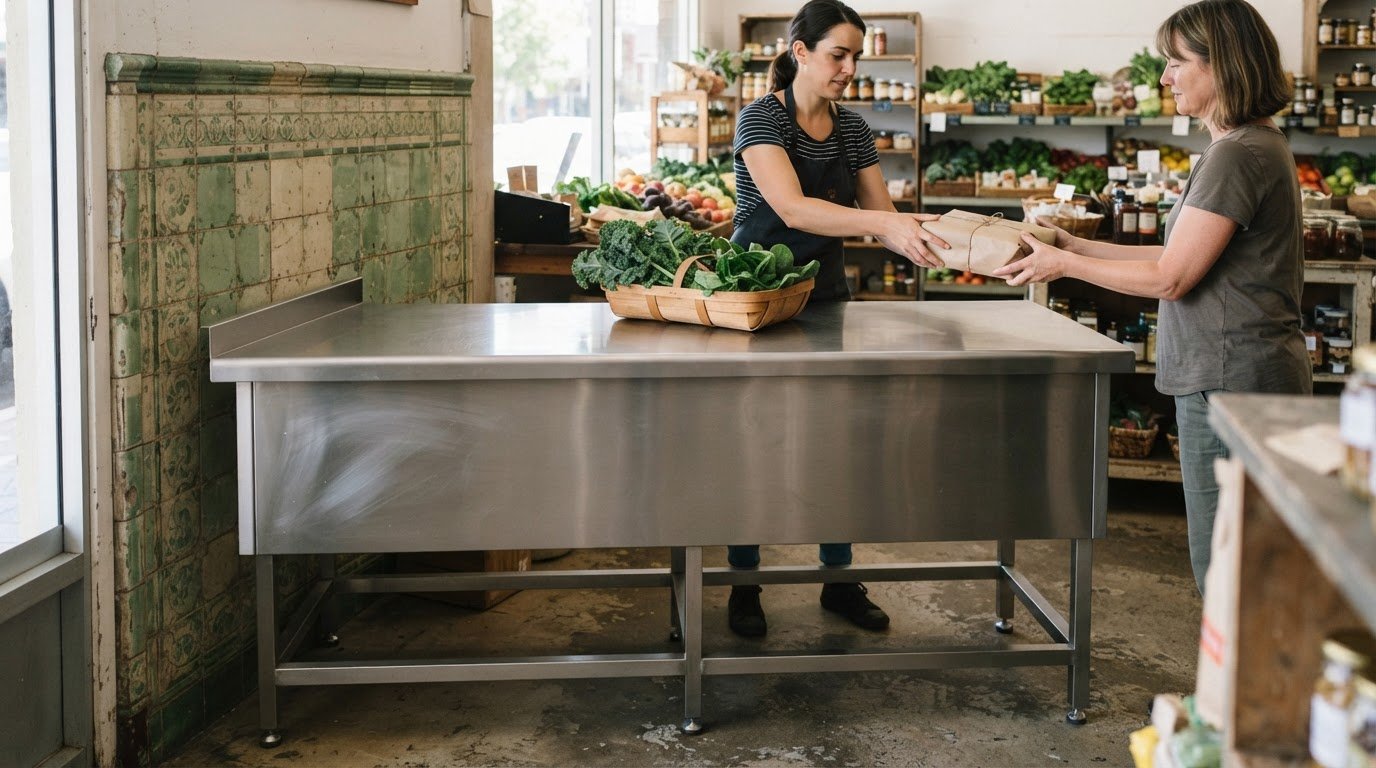
Can custom metalwork for retail fitouts match an existing design or pattern? Yes. A fabricator can use the design, dimensions and finish as a reference to create metal components that sit naturally within the space.
Consistent details matter when updating a shop or hospitality venue without losing the character of its interior. Custom metalwork can complement established patterns and finishes while serving practical purposes such as display, storage or protection.
This article explains how custom metalwork for retail fitouts can follow an existing design, what to consider when choosing stainless steel, mild steel or aluminium, and how finishes affect the result. It also covers metal components used in retail and hospitality spaces, so you can plan how fabrication supports your design.
Key Takeaways
- Use an existing design, pattern or dimensions as a reference for metal components that complement the wider fitout.
- Choose stainless steel, aluminium or mild steel according to the component’s purpose and the demands of its environment.
- Consider how brushed, polished, patina and powder-coated finishes will sit alongside the interior’s existing materials and colours.
- Custom benches, handrails and other fabricated elements can help bring practical requirements and a consistent design together.
Custom stainless steel, aluminium and mild steel fabrication
Custom fabrication turns a design reference into metal components made for a particular space. Material selection, fabrication and installation all need to suit the fixture’s dimensions and intended use.
For custom metalwork for retail fitouts, choose materials and finishes that suit both the design and the component’s working conditions.
Custom fixture design and fabrication
Start with the design reference: drawings, dimensions, photographs or an existing pattern can guide the fixture’s shape and detailing. A display frame, counter surround or shelf bracket can then be designed around the available space, access needs and intended use.
Fabrication can involve measuring, cutting, forming, joining and finishing. CNC sheet metal processes can cut or form components to a digital design, helping create consistent shapes across matching parts. The agreed specifications guide how each piece fits together.
Off-the-shelf fittings suit standard dimensions, while custom fixtures can follow a specific layout or pattern. Bespoke work requires fabrication before installation, with timing shaped by the design details, material selection and installation sequence.
Australian retail metalwork fabricators
Australian fabricators specialising in retail metalwork produce made-to-measure components for commercial interiors, rather than relying only on standard fittings. Their work may cover stainless steel, mild steel or aluminium fixtures, with capabilities varying between fabrication, delivery and installation.
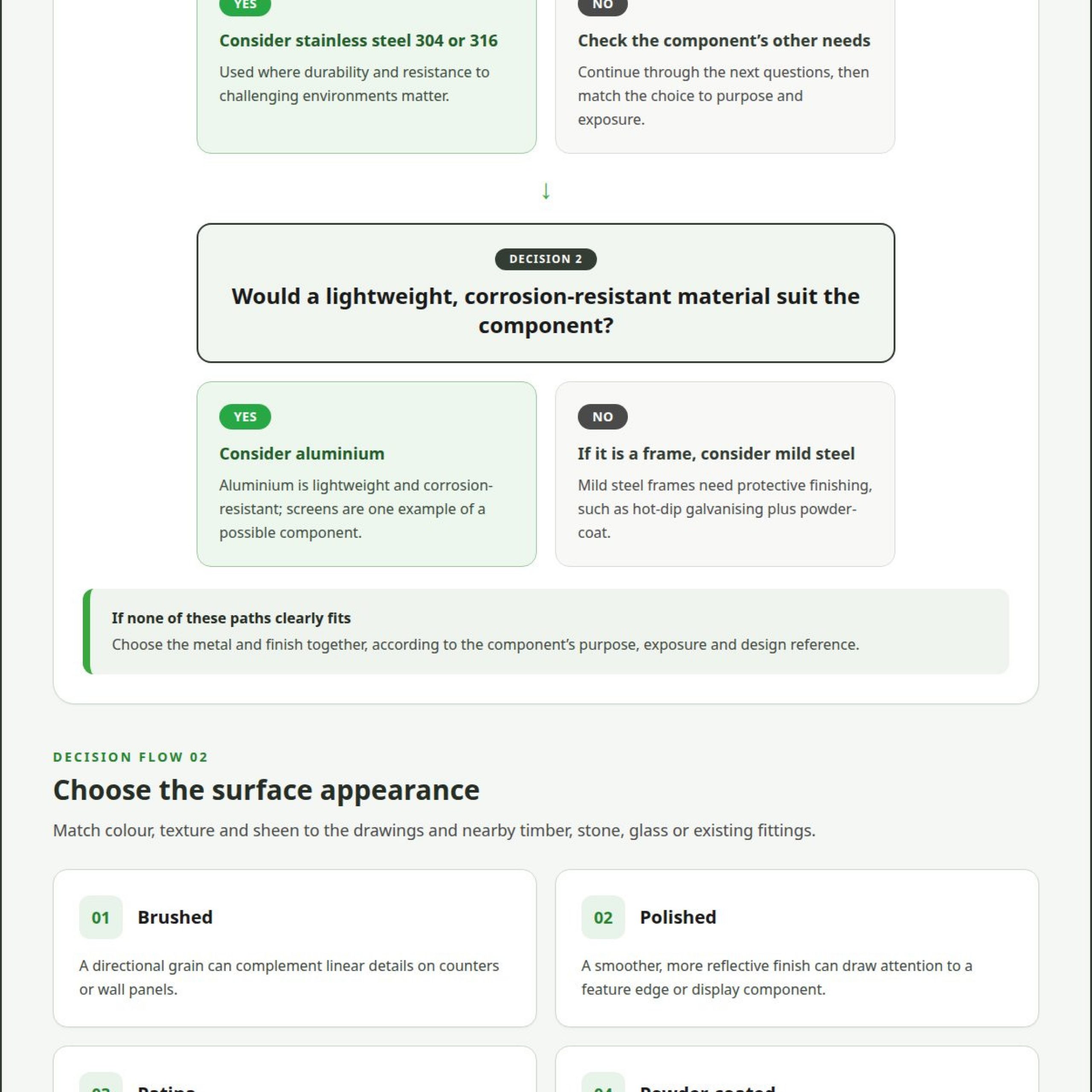
For example, stainless steel 304 and 316 are used where durability and resistance to challenging environments matter. Aluminium is lightweight and corrosion-resistant, while mild steel frames need protective finishing, such as hot-dip galvanising plus powder-coat.
Installation timing depends on the approved design, fabrication sequence, site access and coordination with other fitout work. A clear scope should specify dimensions, material, finish, installation responsibilities and warranty terms. Common risks include incorrect measurements, unsuitable finishes and damage during handling. Maintenance depends on the material and environment. Regular cleaning helps remove surface contamination, and a maintenance plan can help identify wear early.
Brushed, polished, patina and powder-coated finishes
A finish affects how a metal fixture looks beside timber, stone, glass or existing fittings. Match its colour, texture and sheen to the drawings and surrounding surfaces.
Surface finishes and coatings
A brushed finish leaves a directional grain that can complement linear details on counters or wall panels. A polished finish is smoother and more reflective, drawing attention to a feature edge or display component. Patina adds varied surface character. Samples help show how a finish will look alongside other fitout materials.
Powder-coating applies colour to metal, helping coordinate fixtures with the chosen palette. For mild steel frames, hot-dip galvanising plus powder-coat is identified as suitable protection. Drawings should specify the finish and which surfaces receive it, particularly when joined components need a consistent appearance.
Metal choices for different finishes
Choose the metal and finish together. Stainless steel 304 and 316 suit situations where durability and resistance to challenging environments are critical. Their finished appearance can be specified as brushed or polished to align with architectural details, such as a counter trim or visible shelf support.
Aluminium is lightweight and corrosion-resistant, making it an option for components such as screens. Mild steel offers another base for frames, with hot-dip galvanising plus powder-coat providing a protective finish. Choose the combination according to the component’s purpose, exposure and design reference, not colour alone.
For a consistent result, decide on the finish before fabrication begins. Drawings and a physical sample can help the fabricator align colour, texture and sheen across separate parts. This is especially useful when a new fixture needs to sit beside existing metalwork without creating a distracting contrast.
Cleaning and upkeep also depend on the selected surface and its setting. A maintenance plan can account for visible marks, surface contamination and wear, while maintenance services can support ongoing care of metalwork.
Custom shop fittings and interior metalwork
Australian retail fitouts use metal for counters, display frames, shelving, screens and protective details. Custom fabrication lets these components follow a shop’s layout and coordinate with its timber, glass or stone surfaces.
Common examples include metal reception counters, work benches, trolley bays, display supports and decorative screens. Their dimensions and configuration can be developed around the space, the task each fitting serves and the interior design reference. For commercial environments aiming to reinforce their visual identity across key customer touchpoints, organisations such as DaGrace Branding provide corporate branding and workplace-visibility solutions that complement bespoke architectural fittings.
CAD drawings translate a design into manufacturing information. They can show the counter footprint, panel dimensions, edges, joins and interfaces with adjacent materials. Shop drawings give the project team a practical view of how components fit together before fabrication starts.
Precision matters at the joins. For a reception counter, drawings can show how the metal frame, front panels and work surface relate. For a display screen, they can define the panel layout and its relationship to nearby openings or shelving.
Shop benches and reception counters need different layouts. A bench may need clear access to its work surface, while a reception counter may need a defined customer-facing side and staff workspace. Choose the design to suit the activity and available floor area, not just the finish.
A practical process starts with site dimensions and a design reference, followed by CAD or shop drawings for review. Once the geometry, material and finish are agreed, fabrication can proceed. Installation is planned around site access and the fitout sequence.
Custom metal components for retail and hospitality fitouts
A bespoke metal component can meet a specific fitout need while following an existing design. In a café, it might be a trolley sized for the service area; in a shop, it could be a display support shaped around a product layout. Metalwork can be scoped as one part of a wider fitout, rather than an end-to-end fitout solution—work that is typically led by complete interior design and fit-out specialists such as Right Solution Contracting LLC.
Start with the component’s purpose and setting. A bench in a food-service space has different practical demands from a decorative retail display. Dimensions, access, cleaning and connections to surrounding surfaces all affect the design. Drawings or a pattern can guide fabrication, while the fabricator works out how the parts join.
Cutting, forming and welding turn the specified material into a finished component. A stainless trolley, for example, needs a layout suited to its intended use, with joined sections made to the agreed dimensions. A screen or display frame needs different details, with its pattern and edges contributing to both the interior design and its function.
Durability and strength depend on matching the material and construction to the task. A fixture handled frequently may need a different design approach from a feature intended mainly for visual impact. The project scope should specify what is being made, its finish, how it will be installed and which parts belong to other trades.
On-site adjustments can be important when existing walls, floors or services affect the final fit. Mobile welding can support metalwork at the project location, while planned fabrication keeps the component aligned with the design. Coordinating the scope with the shopfitter clarifies sequencing and interfaces without confusing metal fabrication with full fitout delivery.
For a retail or hospitality project requiring a made-to-measure metal component, discuss bespoke metalwork requirements as part of the fitout planning.
Donewright Stainless
Donewright Stainless fabricates custom metalwork for retail and hospitality fitouts, including components tailored to a design. Its stainless steel fabrication includes custom stainless benches, specified to suit the space and the task they need to serve.
Bring the design reference, dimensions and intended use into the project discussion. These details help define the fabrication scope and show how the metalwork fits into the wider fitout. For projects requiring safety features, Donewright Stainless also fabricates stainless steel handrails and provides safety handrails and protection.
If you’re planning metal components for a shop or hospitality space, contact Donewright Stainless to discuss the project.
Shape the next stage of your fitout
Before fabrication begins, turn the design intent into a clear project scope. Specify the component’s purpose, the pattern or reference it should follow, and how it will connect with the wider space. This gives the metalwork a defined role in the fitout instead of leaving details to be resolved on site.
For custom metalwork for retail fitouts, bring the requirements together with practical decisions about materials, finish and installation. Donewright Stainless provides stainless steel fabrication, handrails, and safety and protection services for projects that need these components.
Share the design reference and project requirements to start a conversation about the metalwork. Contact Donewright Stainless to discuss your fitout plans and take the next step with confidence.
Frequently Asked Questions
Can you match an existing design or pattern?
Yes. An existing design or pattern can guide a custom metal component. Drawings, photographs or a sample can help define details such as edge profiles, spacing and connections to adjoining surfaces. For example, a replacement panel can follow existing joinery proportions while being made to suit its position. The reference informs the fabrication scope and installation planning.
Do you work with designers and architects?
Yes. Designers and architects can provide drawings and design requirements for fabricated metal components. These documents communicate dimensions, material choices, finishes and how a component relates to its surroundings. For example, a designer’s counter detail can inform how the metalwork meets a benchtop. Clear project information supports coordination between fabrication and the wider fitout team.
How long does production take?
Production time depends on the component’s design, material, finish and installation requirements. A straightforward bench differs from a project with several bespoke parts, detailed drawings or coordination with other fitout work. The fabrication sequence also matters, from material preparation and cutting to forming, welding and finishing. A defined scope helps establish a realistic programme around site access and installation.
What materials do you use?
Donewright Stainless works with stainless steel, mild steel and aluminium. The right material depends on the component’s purpose, setting and appearance. A stainless bench, for example, has different material considerations from an aluminium screen or mild steel frame. Material choice can also affect fabrication and finish, so consider it alongside the intended use.
What types of shop fitouts do you handle?
Donewright Stainless fabricates metal components for commercial projects, including work suited to retail and hospitality spaces. The scope focuses on the metalwork, rather than managing an entire shop fitout. Across Brisbane, the Gold Coast, Logan and Ipswich, projects can include benches, bench tops and other fabricated items designed for a particular space and purpose.
Which metals and finishes are best for retail fixtures and shopfitting?
The best combination depends on the fixture’s use, environment and design. Stainless steel 304 or 316 may suit demanding environments; aluminium offers a lightweight, corrosion-resistant option, while mild steel frames can use hot-dip galvanising plus powder-coat. Brushed or polished stainless, patina and powder-coated finishes create different visual effects. Consider the surrounding materials and how the fixture will be maintained.