
Metal fabrication for landscape architects, from cut to finish
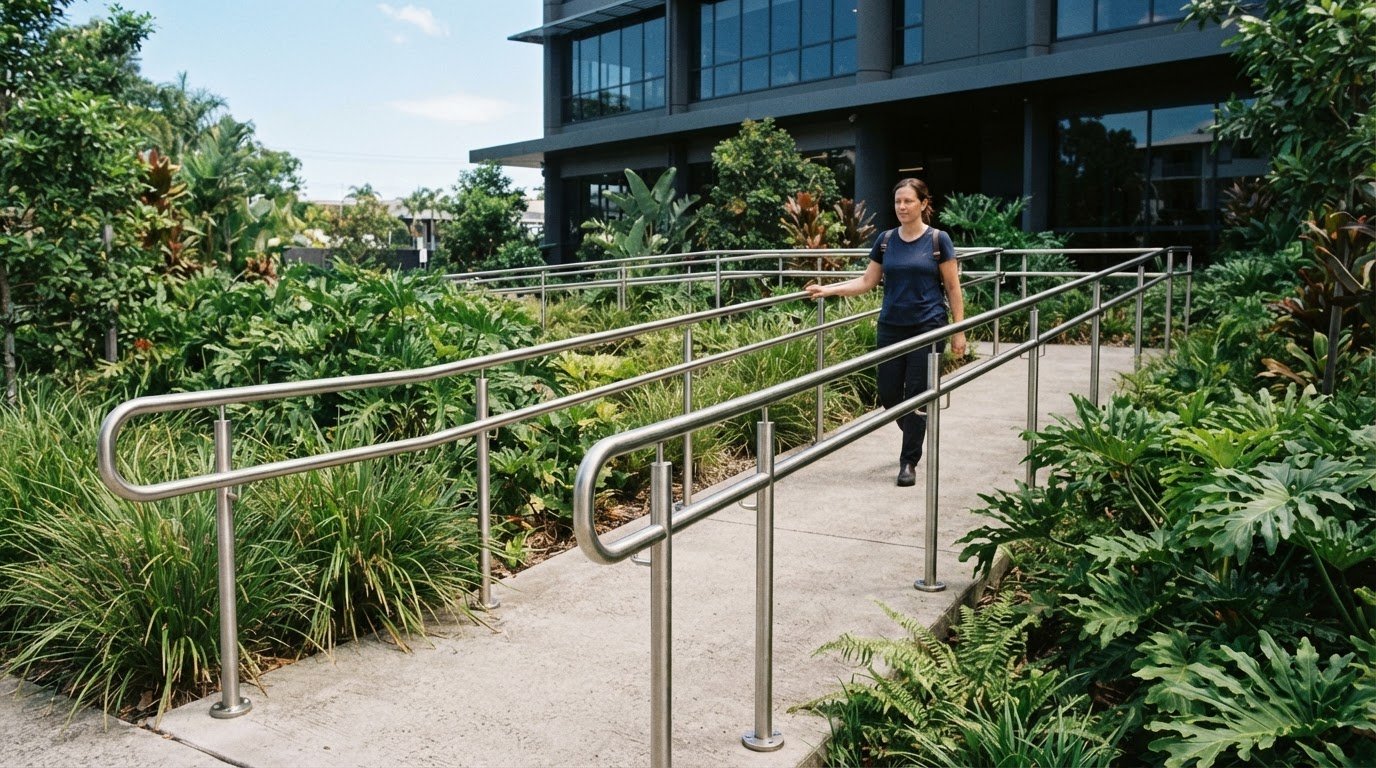
A metal element in a landscape can shape more than an edge: it can filter light, create privacy and connect a building with its surroundings. Metal fabrication for landscape architects turns design intent into made-to-measure components through cutting, folding and finishing, using materials such as aluminium, mild steel, stainless steel and Corten.
Choosing the material and finish matters as much as choosing the form. A screen, planter or architectural detail needs to suit its setting, function and exposure, while the fabrication must translate drawings into components that fit together on site.
This article explains how cutting, folding and finishing shape the result, what different metals can bring to a project, and where fabricated components can work across buildings and landscapes. It also covers practical considerations for developing a clear, buildable brief.
Key Takeaways
- Plan cutting, folding and finishing around the component’s shape, function and intended appearance.
- Match aluminium, mild steel, stainless steel or Corten to the project’s setting and design priorities.
- Consider how fabricated metal can connect landscape elements with building features, from screens to seating.
- Assess a fabricator’s ability to interpret drawings, work with your chosen material and deliver components suited to the project.
Metal fabrication and cutting, folding and finishing
Metal fabrication turns drawings into components through a sequence of cutting, forming, joining and finishing. For a landscape screen, the process starts with dimensions, pattern and fixing points. These details guide material layout and determine how individual elements meet during installation. Clear drawings also reduce uncertainty around edges, openings and connections.
Laser cutting suits detailed profiles and repeatable patterns, including screens with cut-outs designed to filter light and preserve visual continuity. CNC machining and laser cutting can deliver precision with minimal material waste. For a curved panel or a screen with a repeating motif, digital design data guides the cut, helping align each element with the approved drawing. In metal fabrication for landscape architects, this precision helps translate complex forms into buildable components.
Folding turns flat sheet into channels, returns and formed edges. CNC folding uses programmed dimensions and tooling to shape components consistently, while the fold sequence affects how each part meets adjoining elements. A folded planter edge, for example, can create a cleaner junction than an exposed cut edge. Show bend lines and return details on the drawings.
Finishing influences both appearance and maintenance. A coating can add colour, while a brushed or satin finish leaves the metal’s surface character visible. On folded 3 mm plate, a satin finish can look different from the same colour code on a sample chip. That difference makes finish samples on the actual formed profile more useful than colour alone.
Specify visible faces, edges and joints before fabrication begins. A screen may show its front face while folded returns conceal side fixings. These distinctions influence cutting, folding and finishing choices. For stainless steel, consider the intended finish alongside weld locations and exposed surfaces. Good metal fabrication for landscape architects connects these details to the design intent, helping components suit their setting once installed.
Aluminium, mild steel, stainless steel and Corten steel
Near open water, salt spray or infrequent washing, stainless steel grade 316 is a more defensible specification than grade 304, which performs well in sheltered urban settings. For sustainability, aluminium can be 100% recycled, so specify recycled content and consider how components can be recovered at end of use.
Available metal types
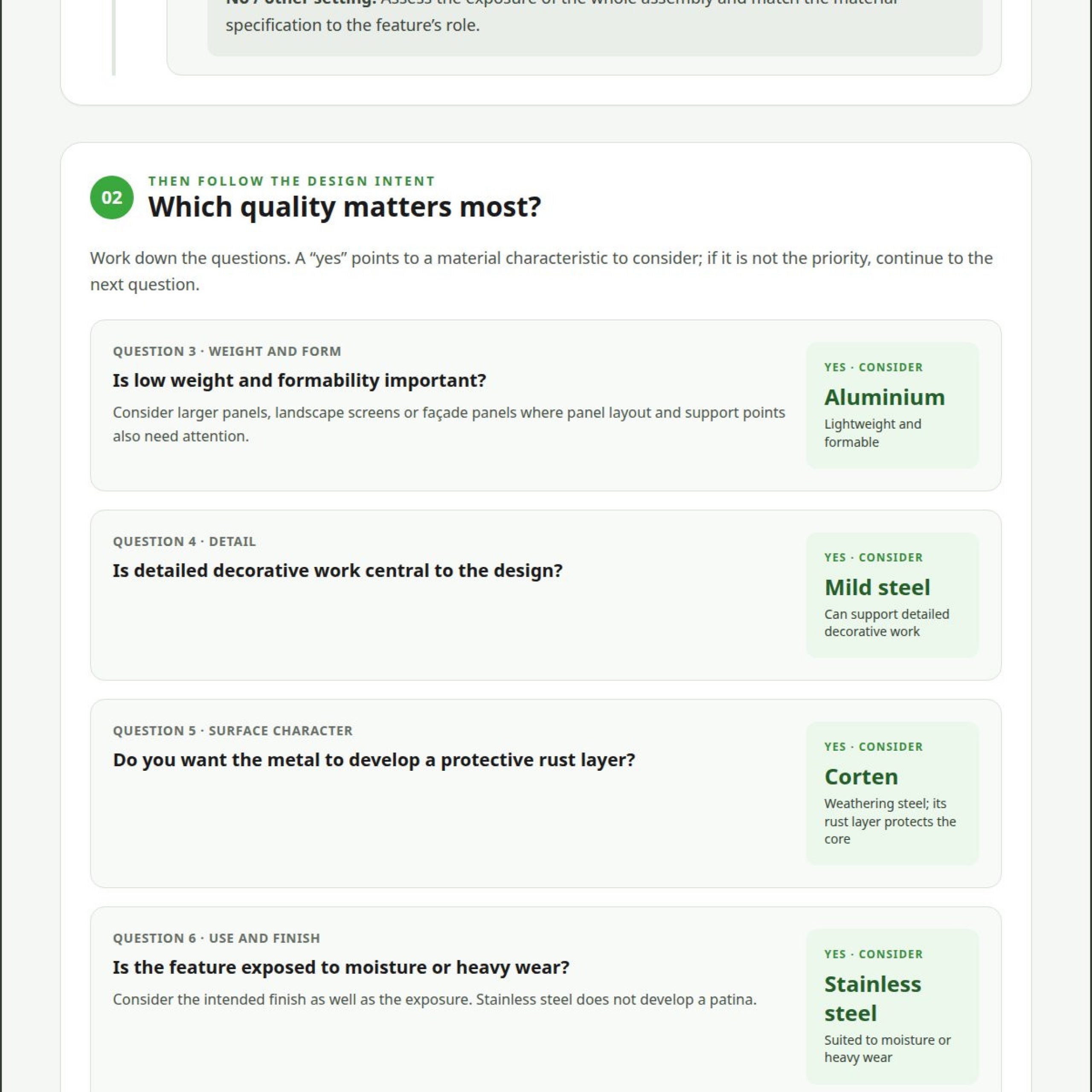
Aluminium is lightweight and formable, while mild steel can support detailed decorative work. Stainless steel suits settings exposed to moisture or heavy wear and does not develop a patina. Corten, also known as weathering steel, develops a rust layer that protects its core, making it particularly well suited to outdoor features such as fire pits and garden installations. For outdoor living products that incorporate these robust elements alongside practical landscaping accessories, Bakyard Australia provides a selection of fire pits, water fountains and garden tools. Compare appearance, exposure and intended use, then match the material specification to the feature’s role.
Coastal conditions call for attention to the whole assembly, not just its visible panels. Structural steel frames and aluminium substrates can enhance corrosion resistance in coastal settings. AS/NZS 2312.1 is the referenced Australian Standard for corrosion protection of structural steel. Crevices, weld heat tint and embedded steel particles from fabrication tooling can stain stainless surfaces, so detailing and fabrication cleanliness matter.
Aluminium landscape applications
Aluminium’s low weight and formability suit landscape screens, façade panels and other custom elements. Punched or patterned panels can create a decorative feature while balancing light, airflow and privacy. For larger panels, consider how the frame, support points and panel layout work together. A considered specification aligns the visual design with fabrication and installation.
For recycled content, identify the requirement in the project specification and connect it to the selected material and component. Aluminium can be 100% recycled, but the design still needs to state the desired appearance, finish and intended service conditions. Mild steel may suit a detailed decorative feature, while stainless steel offers a distinct finish without developing a patina. These choices can shape a project’s character as well as its material use.
For a project requiring custom aluminium components, aluminium fabrication can connect the material choice with the intended landscape application.
Architectural metal fabrication for buildings and landscapes
Fabricated metal can connect landscape elements with building facades, interiors and public spaces. Screens, cladding, frames and furnishings require coordinated design, material choices and installation details. When schemes also incorporate perimeter access control and vehicle demarcation, exploring options from providers like Bollard Secure highlights how security bollards and posts can complement broader architectural metalwork.
Standards and building codes
Applicable building requirements depend on the structure’s use, location and design, so identify them with the project’s design team. AS/NZS 2312.1 is the Australian Standard referenced for corrosion protection of structural steel. It informs one part of the specification, rather than covering every landscape component. State the intended use and exposure so the design requirements are clear.
Assessing Australian metal fabricators
Look for Australian fabricators with relevant examples, such as screens, architectural cladding or custom outdoor furnishings. Ask how their work connects design drawings with fabrication and installation planning. The right specialist is one whose demonstrated capabilities match the materials, finish and complexity of the project. For landscape packages, site improvements are identified as Division 32; building metalwork is identified as Division 05.
Fabrication briefs and drawings
A useful brief records the component’s purpose, location, dimensions, material, finish and relationship to adjoining elements. Drawings should show elevations, sections, fixing points, joints and interfaces with paving or building facades. Include a schedule for repeated panels and identify visible faces. For example, a screen drawing should clearly show its openings, supports and connection points before fabrication begins.
Safety, structural and installation risks
External screens need to be designed for wind loads and environmental stress. Coordinate structural support, fixings and adjacent surfaces, then show those connections clearly in the drawings. Installation planning should also account for access, component handling and the sequence of adjoining work. Consider sharp edges, exposed fixings and pinch points wherever people pass or use nearby spaces.
How to find and assess metal fabricators in Australia
Start with the project scope: a curved screen, custom planter or stainless steel handrail each calls for different fabrication capabilities. Match the fabricator’s work to the materials, finishes and installation requirements in your drawings. Relevant examples can show how a design moves from detail to finished component.
Assess how the proposed process connects drawings, fabrication and site installation. For a powder-coated screen, a sample using the actual profile, specified colour and gloss level provides a more useful reference than a colour chip alone. Review folded edges, joins and fixing points against the design intent. Clear coordination helps resolve interfaces before components reach the site.
Give the fabricator the information needed to scope the work: dimensions, material, finish, quantity, location and access conditions. A planter with a non-standard run, for example, needs its length and adjoining edges shown clearly. These details help define the work involved and provide a sound basis for a quote.
Pricing depends on the project scope and is provided after a quote request. Key cost factors include material, component size, complexity, finish, quantity and installation requirements. A screen with detailed cut-outs and a specialised coating involves different work from a straightforward folded panel. Compare quotes against the same drawings and scope, rather than considering the total alone.
For a practical assessment, look for clear communication about design details, finish samples, fabrication steps and site interfaces. This helps establish how the work will meet the project requirements, from approved drawings through to installation. If the scope changes, revised drawings keep the fabrication intent aligned.
To discuss a landscape metalwork brief, contact Donewright Stainless with your drawings, material preferences and installation requirements.
Donewright Stainless
Donewright Stainless fabricates custom metal components to suit a project’s materials, dimensions and intended use. Its stainless steel fabrication supports custom metalwork, while handrails and safety protection address practical needs in public and built environments.
For landscape projects, custom stainless benches can complement other specified metal elements in an outdoor setting. Share the drawings, material preferences, finish and site requirements to give the fabrication brief a clear starting point. This is a practical step when a design calls for tailored stainless components or safety metalwork.
Contact Donewright Stainless to discuss your project requirements.
Move your landscape concept towards fabrication
A useful next step is to create a brief that keeps the site’s character central to each decision. For metal fabrication for landscape architects, connecting intended use with finished details gives the project team a practical basis for moving forward.
Bring the drawings, site conditions and design priorities together before fabrication planning begins. Note which elements are most visible, how people will use nearby spaces, and where fabricated components meet other materials. This keeps decisions connected across design, documentation and installation. A focused discussion at this stage can clarify the project’s needs and help set a direction for the work.
Contact Donewright Stainless about your project to discuss the design and next steps. Your landscape concept can move forward with a clear, practical fabrication brief.
Frequently Asked Questions
What metal fabrication services do landscape architects in Australia commonly need?
Common requirements include custom fabrication, handrails, safety protection and outdoor seating. The right scope depends on what the metalwork needs to do, such as defining a route, supporting safe movement or providing a place to sit. Donewright Stainless fabricates stainless steel, handrails, safety protection and custom stainless benches for commercial and landscape-related projects.
Which metals and finishes are best for outdoor landscape projects in Australia?
The best material choice depends on site exposure and the appearance the design should retain over time. For example, a project exposed to salt spray needs a different stainless steel specification from a sheltered urban site. Corten suits designs that call for an evolving rust-coloured appearance, while a coated finish can provide a chosen colour. Include exposure and appearance expectations in the material schedule.
How much does custom metal fabrication cost in Australia for landscape architecture projects?
Custom fabrication costs depend on project scope, including material, dimensions, design detail, finish, quantity and installation requirements. A small, straightforward component involves different work from a complex assembly with multiple interfaces. Donewright Stainless offers a “wright” price for any project size. Provide a clear brief and drawings to support a project-specific pricing discussion, rather than relying on a generic industry estimate.
How do steel, aluminium and stainless steel compare for landscape applications?
Mild steel supports detailed decorative work, aluminium suits shaped components where lower weight is useful, and stainless steel suits settings with moisture or heavy wear. For example, a designer might consider mild steel for a decorative feature, aluminium for shaped panels, or stainless steel for frequently used public elements. Base the choice on the component’s function, site conditions and desired appearance.
What are the steps and lead times for custom metal fabrication and installation?
A typical project moves from a defined brief and drawings through design coordination, material and finish selection, fabrication, finishing and installation. Timing depends on drawing approvals, component complexity, material and finish requirements, and how installation fits around other site work. Clear dimensions, connection details and site access information help keep fabrication and installation in sequence.