
Fabrication and Installation Brisbane: A Practical Project Checklist
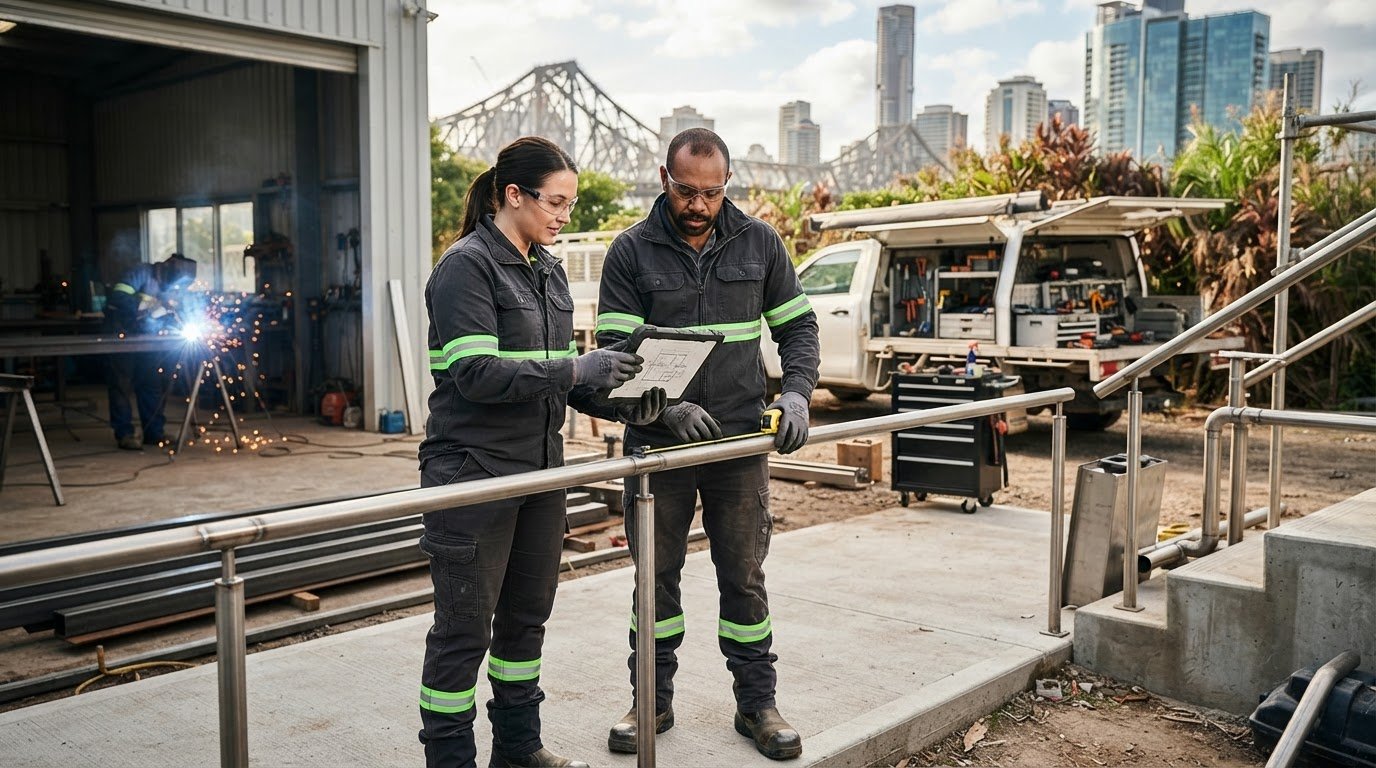
Planning installation from the outset helps keep a fabrication project on track. A custom handrail, stainless steel bench or section of industrial pipework can be made accurately, yet unclear dimensions, restricted site access or an unsuitable finish can still lead to fit-up problems and rework. That’s why fabrication and installation Brisbane projects benefit from resolving site requirements before the metalwork is ready to fit.
Design and material are important, but so are a clear scope, useful drawings and measurements, and a practical plan for getting the finished item into position. This checklist covers the decisions to make before commissioning custom metalwork, from defining its purpose and choosing a material to preparing the site and planning handover. Donewright Stainless brings fabrication and on-site installation together, with mobile workshop services for work carried out at your site. Use the steps below to organise the project information, decisions and access details that help guide the work.
Key Takeaways
- Plan for the finished installation from the outset, so measurements, design details and fabrication decisions work together.
- Resolve dimensions, connection points and site constraints before manufacture begins.
- Choose between stainless steel, mild steel and aluminium based on the application, exposure, cleaning needs and maintenance expectations.
- Prepare access, work areas and site coordination details to help installation proceed with less disruption to operations.
- For fabrication and installation Brisbane projects, a coordinated team can carry custom metalwork from workshop production through to on-site fit-up and handover.
Fabrication and installation in Brisbane: what does a coordinated project involve?
Fabrication is the process of making a metal item for a specific project, using operations such as cutting, bending and assembly. Installation is positioning and fitting that item at its intended site. In a coordinated fabrication and installation Brisbane project, the brief and site information help shape the item, so it is designed with its final fit and use in mind.
This connection between workshop and site is important. A measurement that misses a wall, floor or existing pipe connection can affect the fit of a finished component. Sharing drawings, dimensions and site details early helps identify interfaces and practical constraints before manufacture. For an overview of the processes involved, see this introduction to metal fabrication.
There is no single process for every job. The scope, site conditions and material requirements determine what information is needed and how fabrication connects with installation. Replacing a bench has different considerations from fitting handrails around existing structures or connecting industrial pipework to site services.
What information belongs in a fabrication brief?
Start with the item’s purpose, who will use it, its operating environment and the outcome you need. A practical brief guides design decisions and reduces the risk of assumptions about how the item will function.
Include the information available, such as drawings, photographs, measurements and project specifications. Note how dimensions were taken, and identify adjoining surfaces, equipment or services that could affect the fit. Record site access, relevant safety requirements, preferred timing and operational constraints, including areas that need to remain in use. These details connect the design intent with conditions on site.
Which Brisbane projects may need fabrication and installation?
Commercial and industrial sites may need stainless steel handrails or safety protection designed for a particular access route, boundary or existing structure. The layout matters: nearby equipment, available fixing areas and how people move through the space can all influence the finished work.
Other projects may call for custom stainless steel benches, trolleys or bench tops for a working environment, or industrial pipework suited to the site layout. Each needs its own brief and installation plan. Donewright Stainless coordinates custom fabrication with on-site installation across Brisbane, Logan, Ipswich and the Gold Coast, supported by a mobile workshop for work at the site.
How does a fabrication and installation project move from brief to site?
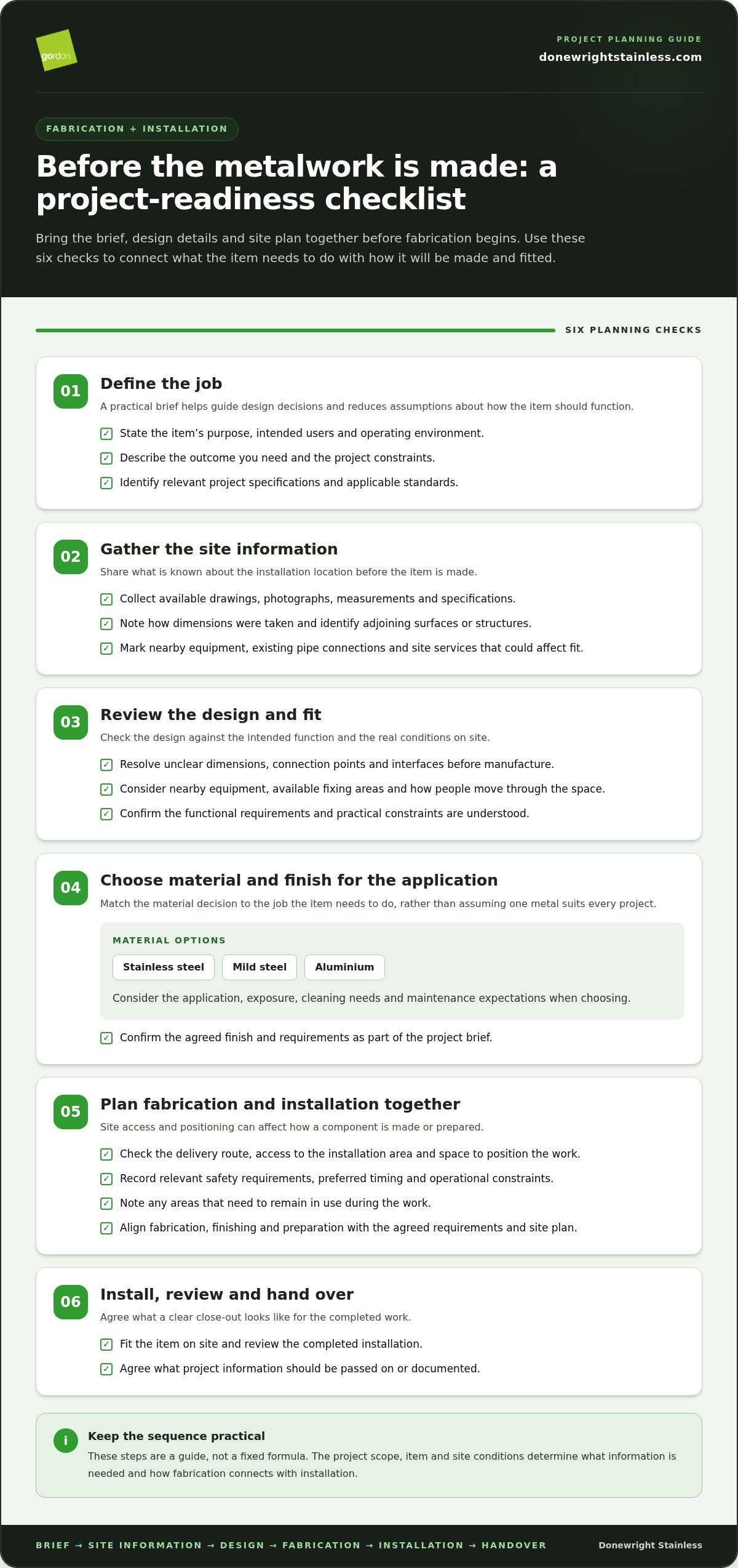
A clear sequence connects what the metalwork needs to do with how it will be made, delivered and fitted. For fabrication and installation Brisbane projects, the steps below are a practical guide rather than a fixed formula. The sequence depends on the project scope, item and site conditions.
From site information to fabrication planning
Bring together drawings, measurements, photographs and access details. This information helps establish the item’s intended location, its connections to existing structures or equipment, and any constraints that could affect manufacture or installation. Review it against the functional requirements before fabrication begins.
Identify project specifications and applicable standards, then establish which requirements apply to the work. Resolve unclear dimensions, interfaces and practical constraints early. For example, a handrail meeting an existing edge or pipework connecting with site services may affect the design and fabrication plan.
From workshop fabrication to on-site installation
Fabrication, finishing and preparation vary with the item, material and agreed requirements. Installation planning should inform those decisions. The route into the site, space to position the work and access to the installation area may affect how a component is made or prepared. A fully equipped mobile workshop can also support projects carried out on site.
A practical project sequence may look like this:
- 1. Define the brief: Set out the intended use, required outcome and project constraints.
- 2. Gather site information: Provide available drawings, measurements, photographs, access details and relevant specifications.
- 3. Review the design: Resolve dimensions, interfaces, functional requirements and practical fit before manufacture.
- 4. Plan fabrication and installation together: Align the item’s preparation with the delivery route, site access and work-area needs.
- 5. Fabricate and prepare: Make and finish the project-specific item to the agreed requirements.
- 6. Install and hand over: Fit the item on site, review the completed work and pass on relevant project information.
Handover can include a review of the completed installation and relevant project information. Agreeing what should be reviewed or documented helps bring the job to a clear close.
Donewright Stainless coordinates custom fabrication with on-site installation, so workshop planning and site requirements can be considered together. Explore custom fabrication and installation.
How do material and finish choices affect a Brisbane fabrication project?
Choose a material for the job the item needs to do, rather than assuming one metal suits every application. For fabrication and installation Brisbane projects, consider the operating environment, exposure, cleaning routine, contact with other materials, loading requirements and expected maintenance. These details help guide a project-specific discussion about material and finish before fabrication begins.
To compare options, record the intended application, relevant exposure, preferred appearance or finish, cleaning needs and maintenance expectations. The points below are a starting place for that discussion, not a substitute for project specifications.
When might stainless steel, mild steel or aluminium suit the brief?
Consider each material in relation to the item’s function and design requirements. The right choice depends on the full brief, including conditions at the site and how the item will be used.
- Stainless steel: Consider it for items such as handrails, custom benches, trolleys, bench tops or pipework. Describe the environment, what may contact the surface and how the item will be cleaned.
- Mild steel: Include it in the discussion when the project calls for mild steel fabrication. Set out the intended use, operating environment, finish expectations and maintenance approach.
- Aluminium: For aluminium fabrication, explain the item’s function, design requirements, exposure and practical considerations for handling or upkeep.
These materials are not interchangeable, and none should be assigned to an application by default. Select the material for the project’s requirements, including identified specifications and the item’s intended use.
How should the finish and maintenance needs be described?
Separate appearance from performance requirements in the brief. Describe the finish you want, the cleaning methods or routine the item will face, and the conditions where it will operate. Include contact with other materials and expected loading, so these factors can be considered together rather than as separate preferences.
For example, a bench in a regularly cleaned work area may need a different finish discussion from a handrail exposed to outdoor conditions. Describe the setting and how the item will be maintained. This gives the fabrication team useful context without assuming one finish or material will suit every site.
Discuss finish and maintenance before manufacture, while design choices can still be considered alongside function and installation. For more detail on stainless steel applications, see the custom stainless steel fabrication guide.
What should Brisbane sites prepare before metalwork installation?
A prepared work area helps the installation team plan how to bring in materials, reach the work location and carry out the job around site operations. For fabrication and installation Brisbane projects, readiness depends on the item and location. Checking access, measurements and operational constraints in advance can bring practical issues to light before installation day.
What site details help installation planning?
Share current details about the route from the delivery point to the work area, including loading arrangements, access restrictions and obstacles. Photographs can show details a floor plan may miss. Measurements help relate the installation location to nearby structures and equipment.
- Access: Note entry points, delivery access, parking or loading arrangements, and restrictions on moving materials through the site.
- Work area: Identify the installation location, available space and known obstructions. Indicate which areas need to remain clear.
- Measurements: Provide relevant dimensions and current photographs, especially where existing structures or equipment affect the fit.
- Coordination: Name the site contact and record operating hours, nearby activities and access arrangements that affect the work.
Site-specific safety procedures, work-area controls and approvals depend on the project and location. Include the requirements that apply at your site in the planning discussion, so installation can be coordinated with the people responsible for the area.
How can installation minimise disruption to operations?
Plan timing and access with the people who manage day-to-day site activity. Consider whether the work could affect vehicle movements, nearby equipment, pedestrian routes or areas that need to stay operational. Agreeing how the work area will be accessed and managed helps avoid surprises and clarifies what installation involves.
When the project requirements suit work at the site, mobile welding or a fully equipped mobile workshop can support on-site fabrication or maintenance. This is useful when work needs to happen at the location. The right approach depends on the job and site conditions. Read more about mild steel fabrication and mobile on-site solutions.
Preparing a site access plan or arranging metalwork for an operating facility? Discuss your fabrication and installation project with Donewright Stainless.
How can Donewright coordinate fabrication and installation across Brisbane?
Donewright Stainless brings custom metal fabrication and on-site installation together, carrying project requirements from the initial brief through to the finished work. This coordination matters when a fabricated item needs to fit an existing site, connect with equipment or be installed around ongoing operations. The approach is tailored to the work and site conditions rather than applying the same plan to every job.
Donewright is Brisbane-based and serves the Gold Coast, Logan and Ipswich. A fully equipped mobile workshop supports on-site projects, alongside mobile welding, industrial pipework and maintenance services.
Which Donewright capabilities can support a custom project?
Donewright fabricates stainless steel, mild steel and aluminium for commercial and industrial applications. Depending on the brief, work can include stainless steel handrails, safety protection, custom benches and industrial pipework. On-site installation connects the fabricated item with its intended location. Mobile welding and workshop support can also suit work that needs to happen at the site.
Handrail projects show why fabrication and installation belong in the same plan. The brief needs to explain the intended use and site layout, while installation planning considers access and how the finished handrail fits its surroundings. For more information, see the Brisbane stainless steel handrail fabrication guide.
What should a project enquiry include?
A concise enquiry gives the team a clear starting point. Describe the outcome you need, your material preference if known, and the project documents you have. Site information connects the design to installation conditions and helps identify questions to resolve during planning.
- Purpose: Explain what the item needs to do and who will use it.
- Project documents: Include drawings, specifications or other relevant information you have.
- Site context: Attach current photographs and approximate dimensions, noting existing structures or equipment that affect the work.
- Installation considerations: Describe delivery access, work-area constraints, operating requirements and relevant site contacts.
These details help frame a practical discussion about fabrication, installation and site readiness. To discuss a fabrication and installation project, send Donewright Stainless your brief and available site information.
Set your fabrication project up for a confident start
A well-planned project connects the brief with the finished installation. Define the required outcome, share available drawings and measurements, and flag site access, operating constraints and relevant specifications early. This information helps shape design, material selection and installation planning around the actual job, rather than assumptions.
For fabrication and installation Brisbane projects, Donewright Stainless coordinates custom stainless steel, mild steel and aluminium fabrication with on-site services. A fully equipped mobile workshop supports projects where work needs to happen at the site. Based in Brisbane, Donewright serves Brisbane, the Gold Coast, Logan and Ipswich, working across commercial and industrial applications from handrails and safety protection to benches and industrial pipework.
Have a project in mind? Gather your brief, site photographs, approximate dimensions and access notes, then discuss your fabrication and installation project with Donewright Stainless. A clear starting point makes it easier to plan the next steps and work towards metalwork suited to its purpose and site.
Frequently Asked Questions
What does fabrication and installation include?
Fabrication means making a metal item for a specific project, while installation means fitting it at the intended site. The work may involve reviewing the brief and available measurements, planning and fabricating the item from a suitable material, preparing it for delivery and installing it on site. Donewright Stainless fabricates items such as handrails, safety protection, benches and industrial pipework, with the scope shaped by each project’s requirements.
How do I prepare a site for metal fabrication installation?
Share clear details about access, the work area and site operations. Note delivery and loading arrangements, the installation location, relevant measurements, known obstructions and any areas that need to remain in use. Current photographs can help explain the layout. Identify the site contact and communicate applicable safety procedures, work-area controls and approvals, which depend on the project and location.
Which metal is best for a Brisbane commercial or industrial project?
There is no single best metal for every Brisbane project. Consider stainless steel, mild steel and aluminium in relation to the item’s function, operating environment, exposure, cleaning needs, contact with other materials, loading and maintenance expectations. A handrail, custom bench and industrial pipework may each have different requirements. Describe the application and site conditions to help tailor the material choice to the project.
Can metal fabrication and installation be coordinated as one project?
Yes. Coordinating fabrication and installation connects the brief, site information, design review, workshop planning and on-site fit-up. Resolving dimensions, interfaces and access requirements before manufacture can help reduce avoidable rework. Donewright Stainless brings custom fabrication and on-site installation together for fabrication and installation Brisbane projects. The sequence depends on the scope and site conditions.
Does Donewright Stainless provide on-site welding in Brisbane?
Yes. Donewright Stainless provides mobile welding and mobile workshop services for on-site projects. The fully equipped mobile workshop supports work at the site, including projects where fabrication or maintenance needs to take place on location. The approach depends on the work and site conditions. Donewright is Brisbane-based and also serves the Gold Coast, Logan and Ipswich.
What information should I provide for a fabrication project?
Describe the outcome you need, what the item will be used for and your material preference, if known. Include available drawings, project specifications, photographs and approximate dimensions. Note existing structures or equipment that could affect the fit, along with delivery access, work-area constraints, operating requirements and the relevant site contact. This information helps shape design, fabrication and installation planning around the project.
Does Donewright Stainless service the Gold Coast, Logan and Ipswich?
Yes. Donewright Stainless provides service across Brisbane, the Gold Coast, Logan and Ipswich. Its work includes stainless steel, mild steel and aluminium fabrication, on-site installation, mobile welding, industrial pipework and maintenance for commercial and industrial applications. To discuss a project, share the intended outcome and available site details so the scope and installation requirements can be considered in context.
