
Custom Stainless Steel Benches: The Ultimate Guide to Quality, Grades, and Compliance
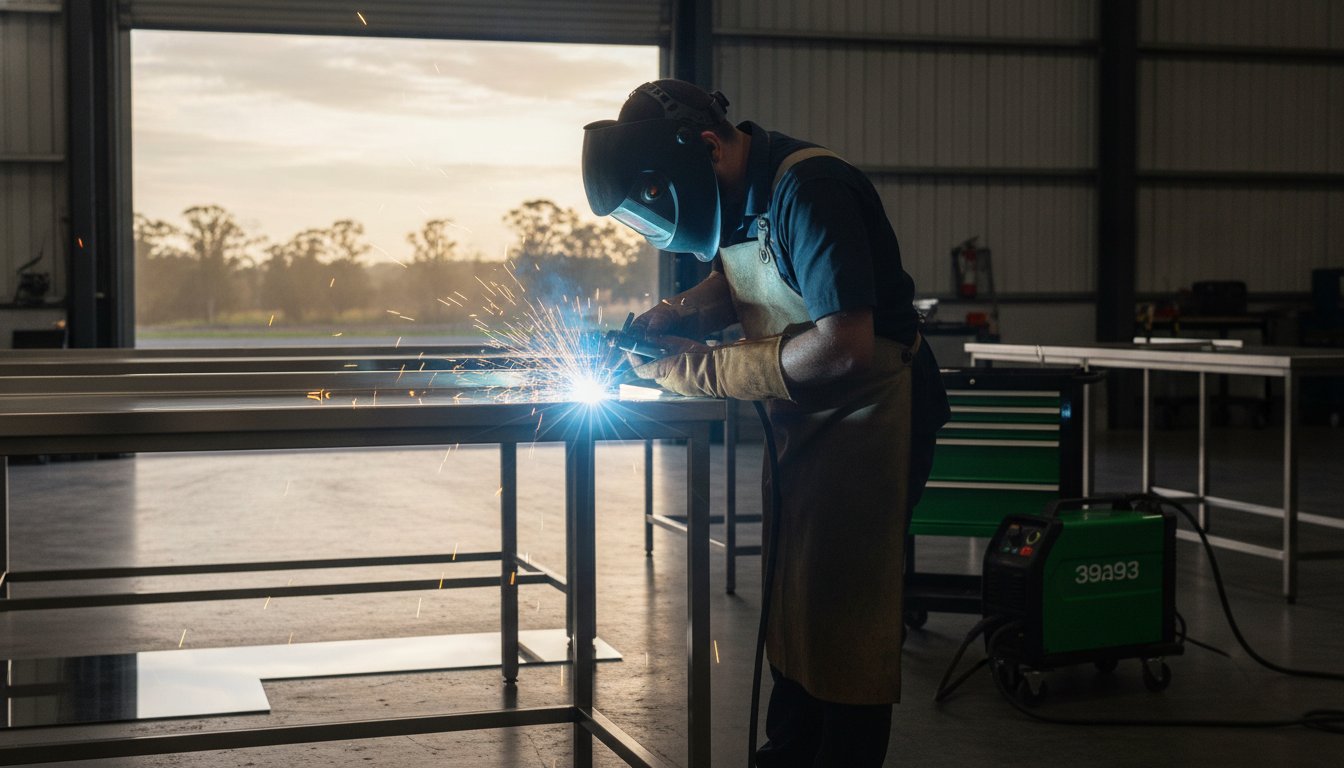
A cheap import that buckles under load or develops rust within months isn’t a bargain; it is a liability that threatens both your workflow and your compliance status. You likely recognise that off-the-shelf solutions often fail to meet the rigours of a busy Australian facility, leading to costly replacements and hygiene risks. Investing in custom stainless steel benches is about more than just filling a gap in a room. It’s about ensuring your equipment can withstand decades of use while staying fully compliant with the strict health and safety regulations required in your industry.
We know that navigating material grades and technical standards like AS 4674 can feel like a chore when you’re focused on daily production. This guide simplifies that process, teaching you how to choose, design, and maintain surfaces that genuinely last 20 years or more. We’ll examine why the choice between grade 304 and 316 stainless steel matters for your specific environment, how to achieve a seamless fit in awkward spaces, and the maintenance routines that protect your investment. By the end, you’ll have the technical clarity needed to secure a workspace that is as durable as it is efficient.
Key Takeaways
- Identify the critical differences between Grade 304 and 316 to ensure your material choice matches your specific site conditions and corrosive risks.
- Navigate AS 4674 compliance by incorporating bespoke design features like coved radii that standard retail options simply cannot provide.
- Avoid the “false economy” of light-duty imports by investing in custom stainless steel benches engineered to withstand the rigours of high-traffic Australian workplaces.
- Learn how precision TIG welding and professional site measurements result in a seamless, hygienic finish that remains structurally sound for over 20 years.
- Implement a simple but effective maintenance routine to protect your stainless surfaces from common aesthetic issues like tea staining and pitting.
The Case for Custom Stainless Steel Benches in Professional Environments
In a demanding professional setting, equipment must be viewed as a strategic asset rather than a simple consumable. While Stainless steel is the preferred material for its hygiene and durability, the way it is fabricated determines its real-world performance. Custom stainless steel benches are bespoke engineered solutions designed to meet specific operational requirements. They differ significantly from mass-produced retail furniture, which often lacks the structural integrity needed for industrial applications. A custom solution is built to a specific gauge and reinforced to handle the unique stresses of your facility.
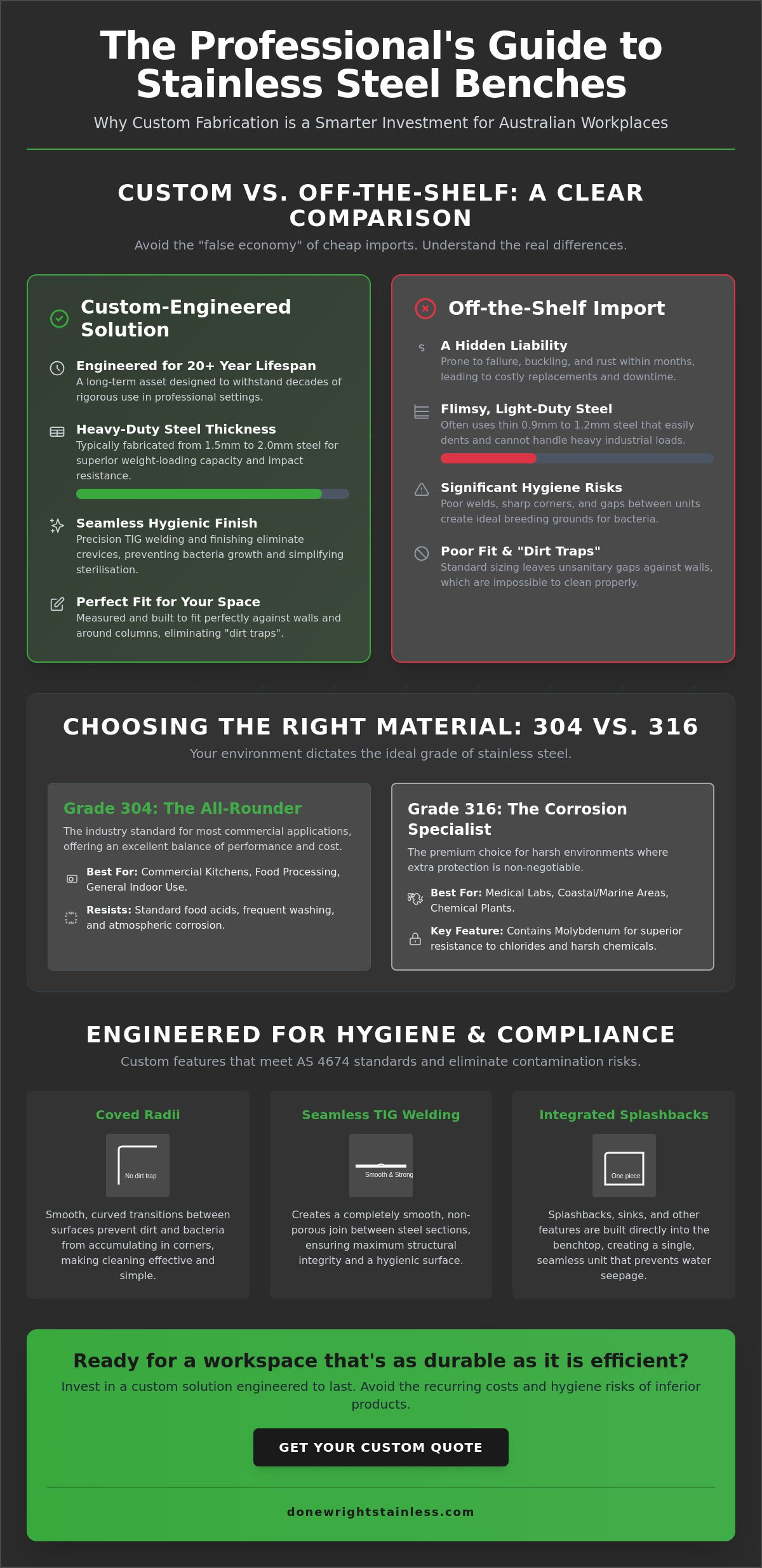
Many facility managers fall into the trap of the “false economy” by choosing light-duty imported benches. These off-the-shelf units often use thin 0.9mm or 1.2mm steel that is prone to denting and buckling under heavy use. In contrast, custom fabrication typically utilises 1.5mm or 2.0mm steel, ensuring a superior weight-loading capacity. This structural strength is vital for workshops handling heavy machinery parts or commercial kitchens supporting large-scale stockpots and appliances. Investing in a higher initial quality prevents the recurring costs and operational downtime associated with replacing failed equipment every few years.
A critical advantage of custom work is the implementation of sanitary design. This engineering philosophy focuses on eliminating areas where bacteria, moisture, and debris can accumulate. By using precise welding and finishing techniques, fabricators create smooth, continuous surfaces that are easy to sterilise. This approach is not just about aesthetics; it is a fundamental requirement for maintaining high safety standards and passing rigorous health inspections in professional environments.
Custom vs. Flat-Pack: Why Precision Matters
Standard flat-pack benches often struggle to fit into the irregular dimensions of Australian industrial sheds or older commercial buildings. These gaps between the bench and the wall become notorious “dirt traps” that compromise hygiene and are nearly impossible to clean properly. Custom fabrication allows for a perfect fit against any wall or around existing structural columns. It also enables the direct integration of splashbacks, sinks, and drainage systems into the benchtop. This seamless construction prevents water from seeping into cupboards or onto the floor, protecting your infrastructure and reducing slip hazards.
Industries That Benefit Most from Bespoke Benches
Different sectors require specialised features to maintain peak efficiency. Commercial kitchens and food processing plants prioritise hygiene, requiring coved edges and smooth welds that meet food safety standards. Medical and laboratory facilities often require 316-grade steel for its superior chemical resistance against harsh sterilising agents. Meanwhile, industrial manufacturing plants and heavy-duty workshops rely on the extreme durability and impact resistance that only a custom, reinforced bench can provide. Each of these applications demands a level of precision that standardised retail products cannot match.
Choosing the Right Grade: 304 vs 316 Stainless Steel
Selecting the correct alloy is the most important technical decision you’ll make when commissioning custom stainless steel benches. Many people assume that “stainless” is a single material, but it is actually a diverse family of alloys, each engineered for specific environmental conditions. Choosing the wrong grade for your custom stainless steel benches can lead to premature corrosion, structural failure, or hygiene issues that compromise your facility’s safety. Most professional projects in Australia rely on two primary grades: 304 and 316.
Grade 304: The All-Rounder for Commercial Kitchens
Grade 304 is the industry standard for the vast majority of indoor commercial applications. It contains roughly 18% chromium and 8% nickel, providing a robust defence against standard food acids and frequent water exposure. Grade 304 is the most common stainless steel used in the food industry due to its balance of cost and performance. It’s particularly effective for benches, trolleys, and shelving where the primary concern is frequent washing and contact with organic food acids. Because it’s easier to form and weld than higher grades, it remains the most cost-effective way to achieve a professional finish that meets strict sanitary requirements.
Grade 316: Essential for Brisbane and Gold Coast Coastlines
For facilities located near the ocean, Grade 304 often isn’t enough. Grade 316 is frequently referred to as “marine grade” because it includes approximately 2% molybdenum. This specific addition significantly boosts the metal’s resistance to chlorides and salt air. In South East Queensland, salt spray can travel several kilometres inland, settling on metal surfaces and causing “tea staining.” This unsightly brown discolouration is a common sight on inferior metals in coastal areas. We generally recommend that any business within 5km of the coastline prioritises 316 to ensure their equipment remains pristine and structurally sound.
Molybdenum also makes 316 the mandatory choice for chemical processing plants or facilities that use high-strength cleaning agents daily. It provides a level of protection against pitting and crevice corrosion that 304 simply cannot match. Adhering to AS 4674-2004 requires choosing materials that remain fit for purpose throughout their lifespan, especially in corrosive environments.
- Standard Indoor Kitchen: Grade 304
- Coastal Locations (within 5km of the sea): Grade 316
- High-Salt or Brine Processing: Grade 316
- Laboratory or Chemical Use: Grade 316
- General Dry Storage: Grade 304
If you’re planning a new fit-out and need help specifying the right material for your site conditions, our specialists in stainless steel fabrication can guide you through the selection process to ensure your investment lasts.
Design Standards and Hygiene: Navigating AS 4674 Compliance
Compliance with Australian Standards is the foundation of any professional fit-out. For food-based businesses, AS 4674-2004 “Design, construction and fit-out of food premises” serves as the primary regulatory framework. While this standard is currently officially withdrawn by Standards Australia, it remains the benchmark used by Environmental Health Australia and local councils during audits. Custom stainless steel benches allow for precise adherence to these rules in ways that mass-produced units cannot. A bespoke approach ensures that every joint and edge is engineered to prevent the accumulation of food particles or stagnant water, which are primary drivers of bacterial growth.
One essential design feature in commercial settings is the “wet-edge” or marine edge. This raised lip around the perimeter of the benchtop prevents liquids from running off onto the floor or behind the equipment. By containing spills on the surface, you reduce slip hazards and protect the underlying floor structure from moisture damage. High-quality fabrication ensures these edges are smooth and continuous, facilitating a rapid cleaning process that stands up to the scrutiny of health and safety inspectors. When your equipment is designed for easy maintenance, you reduce the labour hours spent on sanitisation and ensure a safer environment for your staff. For Brisbane facility managers seeking stainless steel work benches commercial grade, understanding these design requirements is the first step toward a fully compliant fit-out.
Coving and Radius: The Secret to Food Safety
Bacteria thrive in sharp, 90-degree internal corners where cleaning tools cannot reach. AS 4674-2004 specifies that internal angles must be coved, meaning they should have a rounded radius. Achieving a seamless, coved transition between a benchtop and its integrated splashback requires specialised custom stainless steel fabrication Brisbane. This process involves folding and welding the metal to create a smooth curve, effectively eliminating dirt traps and ensuring the entire surface can be sterilised with a single wipe. It’s a technical detail that makes a significant difference during a surprise health inspection.
Safety Protection and Load Ratings
In industrial environments, benches often function as part of a larger safety ecosystem. They may need to integrate with safety handrail fabrication Brisbane to protect staff working near platforms or elevated machinery. Beyond spatial integration, the structural integrity of the bench is paramount. Heavy-duty benches require robust structural framing, often made from stainless or mild steel, to support high load ratings without sagging. To further enhance workplace safety, custom stainless steel benches incorporate bullnose or rounded external edges. These features reduce the risk of impact injuries in high-traffic zones where staff move quickly around equipment. Facilities that also rely on food grade stainless steel trolleys alongside their fixed benching will find that a cohesive approach to custom fabrication ensures consistent hygiene standards and load ratings across all mobile and stationary equipment.
The Fabrication Process: From Workshop to On-Site Installation
Precision is the baseline for every project. The transition from raw material to a finished workstation begins with a rigorous “measure twice, cut once” philosophy. Professional fabricators don’t rely on generic floor plans; they use manual measurement or advanced laser scanning to capture the exact quirks of your site. This data is vital for ensuring your custom stainless steel benches integrate perfectly with existing plumbing, electrical outlets, and adjacent machinery. Without this initial accuracy, even the most expensive materials will fail to provide a professional result during installation.
The structural integrity of the bench depends largely on the welding technique. We utilise TIG (Tungsten Inert Gas) welding for all high-quality stainless finishes. TIG welding allows for a high degree of control over the heat, resulting in strong, clean joins that require minimal grinding. This method is superior to standard MIG welding for stainless steel because it preserves the material’s corrosion resistance and provides a much more refined aesthetic. Beyond the welds, professional installation is necessary to prevent “drumming.” This is the hollow, metallic noise caused by vibrations when a benchtop isn’t properly bonded to its substrate or structural frame.
The Importance of Mobile Welding and On-Site Adjustments
Industrial floors are rarely perfectly level, which can cause significant issues for rigid metal structures. A fully equipped mobile workshop is essential for managing these real-world variables. On-site adjustments allow us to level the benches precisely and ensure that integrated splashbacks sit flush against walls. For large-scale projects, mobile welding services enable the seamless joining of massive bench sections that would be impossible to transport in one piece. We provide a comprehensive mobile workshop service for Brisbane and Gold Coast projects, bringing workshop-grade precision directly to your facility to ensure a flawless final fit.
Finishing Touches: Brushed vs. Polished Surfaces
The final finish of the steel affects both the look of your facility and the ease of daily sanitisation. Most commercial kitchens and industrial sites opt for a No. 4 brushed finish. This grain hides minor scratches and fingerprints, making it practical for high-traffic zones. In contrast, a mirror polish is typically reserved for architectural features or specific laboratory environments. Once fabrication is complete, we perform a passivating process. This involves applying a specialised solution to the steel to restore the protective chromium oxide layer that can be depleted by the heat of welding, ensuring your bench remains resistant to rust from day one.
If you’re ready to upgrade your facility with equipment designed for your specific workflow, contact our team to discuss your requirements for custom stainless benches today.
Maximising Longevity: Maintenance and Care for Stainless Benches
It’s a common misconception that “stainless” steel is entirely immune to corrosion or marking. In reality, the name refers to the metal’s ability to resist staining better than other steels, not a total invulnerability. Without proper care, even high-quality custom stainless steel benches can fall victim to tea staining or pitting. Tea staining appears as a brown surface discolouration that mimics rust, while pitting involves small, deep holes that can compromise the structural integrity of the benchtop over time. Both issues are typically caused by environmental contaminants or the use of incorrect cleaning chemicals that strip away the metal’s protective layer.
Maintaining your equipment doesn’t require expensive specialised chemicals. A simple protocol using warm water and mild detergents is usually sufficient for daily sanitisation. Always use a soft cloth or a nylon scouring pad, and ensure you wipe in the direction of the grain to avoid micro-scratches. You must strictly avoid using steel wool or metal brushes. These leave behind carbon steel particles that will eventually rust and contaminate the stainless surface. Similarly, chloride-based cleaners or bleach should never be used, as they can chemically attack the chromium oxide layer and initiate pitting. The same cleaning principles apply to all stainless equipment in your facility, including food grade stainless steel trolleys that are subject to the same daily chemical washdowns and hygiene requirements.
Preventing Tea Staining in South East Queensland
The humid, salt-laden air in Brisbane and the Gold Coast creates a challenging environment for metal surfaces. Atmospheric chlorides from the coast settle on the steel, and if left uncleaned, they initiate the tea staining process. For outdoor or coastal installations, a regular fresh-water rinse is the most effective way to remove these salt deposits before they cause damage. Grade 316 stainless steel requires less frequent maintenance in coastal zones than Grade 304. However, regardless of the grade, a proactive cleaning schedule is the best way to protect your aesthetic and functional investment against the local climate.
Professional Maintenance and Repairs
There are times when standard cleaning isn’t enough to restore a workspace to its original condition. If your custom stainless steel benches have become dull, heavily scratched, or show signs of deep pitting, professional re-polishing can often restore the surface and its protective oxide layer. It’s also important to inspect the underlying support structures. Many industrial benches utilise mild steel fabrication Brisbane for their internal frames. If these frames haven’t been properly treated or if the protective coating has chipped, they can corrode and eventually affect the stainless top.
Regular inspections ensure that small issues don’t turn into expensive structural failures. If you’ve noticed wobbling, deep scratches, or need a custom solution or a site measure, Contact the Donewright team today to ensure your facility remains compliant and efficient.
Securing Your Facility’s Future with Precision Engineering
Investing in custom stainless steel benches is a strategic decision that ensures your facility remains hygienic, efficient, and compliant for decades. You’ve seen how selecting the correct grade, such as 316 for coastal Queensland environments, and insisting on sanitary design features like coved radii are essential steps to avoid the high costs of premature failure. These technical details don’t just improve aesthetics; they directly impact your ability to pass health audits and maintain a safe, productive workplace.
With over 20 years of Brisbane industrial experience, our team acts as AS 4674 and AS 1657 compliance specialists. We operate a fully equipped mobile workshop to handle precise on-site installations, ensuring your equipment fits perfectly regardless of floor levels or awkward space constraints. If you’re ready to upgrade your workspace with durable, bespoke solutions, Get a Quote for Your Custom Stainless Benches. We look forward to helping you build a workstation that stands the test of time.
Frequently Asked Questions
What is the best grade of stainless steel for a commercial kitchen bench?
Grade 304 is the industry standard for most indoor commercial kitchens. It provides robust resistance against food acids and frequent washing. If your facility is located near the coast in Brisbane or the Gold Coast, we recommend Grade 316. This marine-grade alloy contains molybdenum, which prevents the tea staining and corrosion caused by salt-laden air.
How much weight can a custom stainless steel bench hold?
The load capacity is determined by the steel’s gauge and the underlying structural frame. A bench fabricated with 1.5mm or 2.0mm steel and reinforced with a stainless or mild steel frame can support significant weights. We tailor the engineering of each bench to match the specific demands of your heavy-duty industrial equipment or commercial appliances.
Do I need a custom bench or can I use a standard size?
Custom stainless steel benches are the superior choice for professional environments where hygiene and space efficiency are priorities. Standard sizes often leave gaps between the bench and the wall, creating notorious dirt traps. A custom solution is measured to fit your specific floor plan, ensuring a seamless finish that eliminates awkward gaps and maximises your available workspace.
How do I clean stainless steel benches without scratching them?
The most effective method is using warm water mixed with a mild detergent and a soft microfibre cloth. Always wipe in the direction of the grain to maintain the finish. You must avoid steel wool, metal brushes, and harsh chloride-based cleaners. These abrasive tools and chemicals will scratch the surface and strip away the protective layer that prevents rust.
What is AS 4674 and why does it matter for my benches?
AS 4674-2004 is the Australian Standard governing the design and construction of food premises. It sets strict requirements for hygiene, such as mandatory coving for internal corners to prevent bacteria buildup. Adhering to this standard is critical for passing local council health audits and ensuring your facility meets the highest safety benchmarks for food preparation.
Can you install stainless steel benches on-site in Brisbane?
Yes, we offer comprehensive on-site installation across Brisbane and the Gold Coast. Our team uses a fully equipped mobile workshop to perform on-site welding and make precise adjustments for uneven floors. This hands-on approach ensures that your custom stainless steel benches are perfectly level and securely fitted, preventing the vibration and noise issues often associated with off-the-shelf units.
How long does it take to fabricate a custom stainless steel bench?
Fabrication timelines depend on the design’s complexity and the project’s overall scale. While a single bench can often be completed within a few days, larger commercial fit-outs require additional time for site measurement and detailed workshop production. We provide a realistic schedule after completing the initial measure to ensure your project stays on track.
What is the difference between a brushed and a polished finish?
A No. 4 brushed finish features a fine grain that is excellent at hiding fingerprints and minor surface scratches, making it the practical choice for most kitchens. A polished finish is highly reflective and mirror-like, typically used for architectural features. Both options are easy to sanitise, though the brushed finish is generally preferred for high-traffic industrial and commercial zones.