
Mild Steel Trolley Fabrication in Ipswich
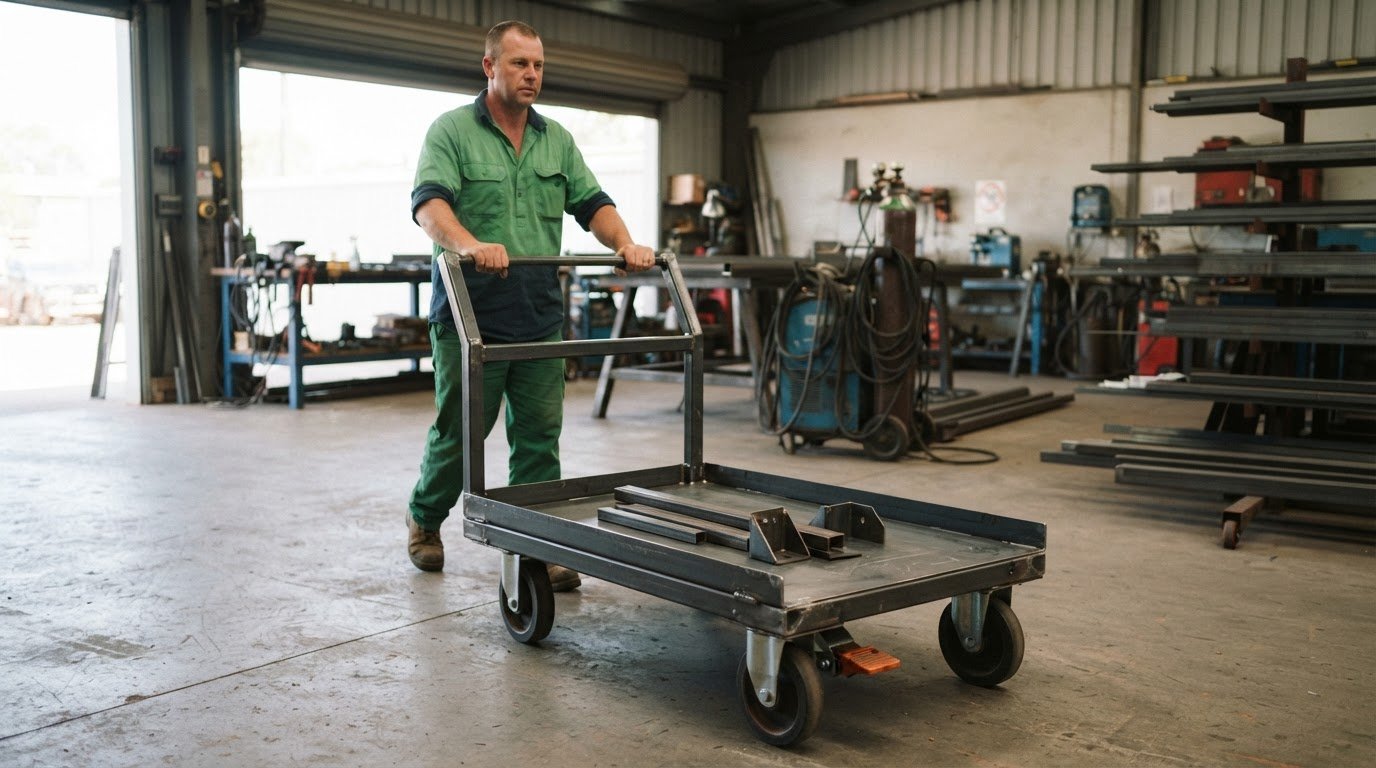
A dependable mild steel trolley takes more than welding alone. Mild steel trolley fabrication in Ipswich can involve cutting, forming, rolling and welding sheet metal, tube, pipe or box section to suit the trolley’s intended use. The material and fabrication method both shape the finished structure, so they need to match the design.
When commissioning a trolley, focus on strength and practical function. Its frame, dimensions and construction all affect how it fits into the workplace and handles everyday tasks.
This article explains how fabricators work with mild steel, what each process contributes and how a design brief guides the result. It also outlines factors that affect quality, timing and cost, and what to prepare when planning a custom trolley. A clear brief helps shape the fabrication process around the job.
Key Takeaways
- Match cutting, welding, rolling and forming methods to the trolley’s design and intended use.
- Understand how sheet metal can contribute to a trolley’s structure, and what fabrication choices influence the finished result.
- Compare tube, pipe and box section as frame materials according to the design requirements.
- Prepare clear details about dimensions, materials and intended use to help shape a useful fabrication quote.
Fabrication capabilities including welding, cutting, rolling and forming
A trolley frame starts with a design suited to its intended load, movement and working environment. Mild steel trolley fabrication in Ipswich can combine cutting, forming, rolling and welding of sheet metal, tube, pipe and box section. Each process shapes a different part of the structure, from a flat platform to curved handles and joined frame members.
Cutting prepares material to the required dimensions, while forming bends sheet or section into useful shapes. Rolling creates curved components where a design calls for them. Welding joins the prepared parts, and precision welding helps keep connections aligned and consistent. For example, a fabricated frame may use cut box section for its supports and formed sheet for a tray.
MIG, TIG and stick welding are distinct processes used for different fabrication jobs. The suitable method depends on the material, joint design, access and required finish. Steel and aluminium also call for material-specific fabrication decisions, so a method used for one should not automatically be assumed suitable for the other.
Mobile welding and on-site repairs can address work at the item’s installed location. A mobile workshop is useful when transporting an item to a fabrication workshop is impractical. The repair scope depends on the damaged area and access for the work.
For Australian workplace use, trolley design should account for its intended task, handling conditions and safe operation. A suitable load rating depends on the trolley’s design and the load it is intended to carry; no universal rating applies to every fabricated trolley. Sizes, capacities and layouts can be tailored to the brief, such as a compact parts trolley for heavy equipment maintenance teams sourcing items from stormparts.com.au, or a larger platform design.
Fabrication time depends on the design, material preparation, welding requirements and workload. Reviews, warranty terms and examples of completed trolley work are useful evidence when assessing a workshop, but no specific Ipswich-area workshop can be named here. A clear design brief helps define the work and supports an informed quote.
Steel and sheet metal fabrication
Sheet metal gives a trolley fabricator options for platforms, trays, guards and panels. Start by defining each part’s purpose, dimensions and connection points. Cutting creates the blanks, then forming bends them into edges, channels or lips. These features can stiffen a panel and help contain items in transit. Welding joins the fabricated parts, while machining can refine openings or interfaces when the design requires it.
Three practical strands of metal fabrication are sheet-metal work, welding and machining. A trolley may combine all three: a formed steel tray, welded supports and machined fixing points. Machinery selection depends on the material thickness, shape and accuracy needed for each component. The fabricator also plans how parts meet, since poor fit-up can affect alignment and the trolley’s operation.
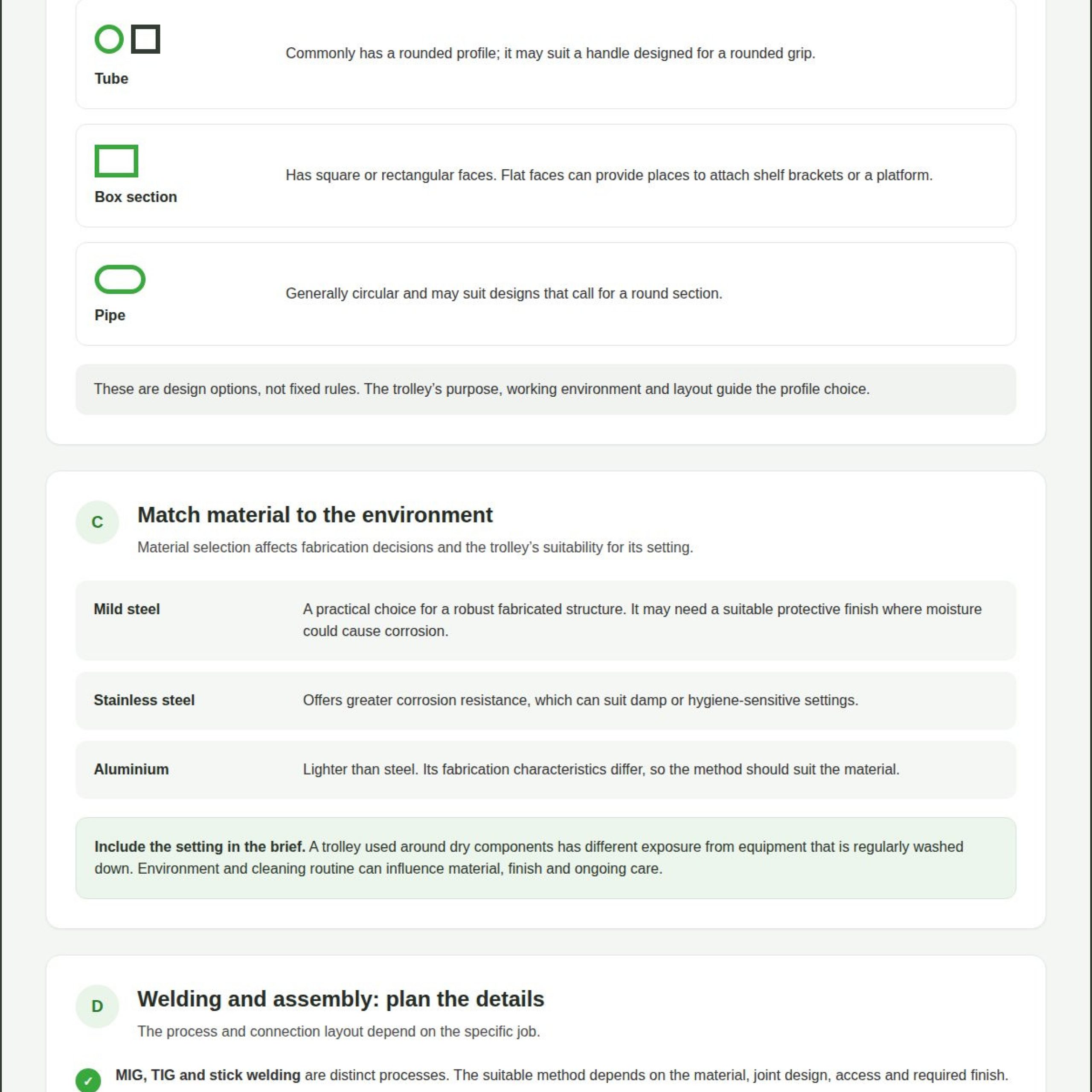
Mild steel is a practical choice for a robust fabricated structure. Stainless steel offers greater corrosion resistance, which can suit damp or hygiene-sensitive settings; aluminium is lighter than steel. Each material has different fabrication characteristics, so the choice depends on the trolley’s environment, use and design. Mild steel may need a suitable protective finish where moisture could cause corrosion.
Potential issues include corrosion, damaged finishes, loose connections and wear at frequently used joints. The working environment and handling affect what needs attention. A sensible maintenance routine includes keeping surfaces clean and dry, inspecting welds and joints, and repairing damaged protective coatings. If a trolley develops cracks, distortion or unstable movement, take it out of service until the damage has been assessed and addressed.
For example, a workshop trolley used around dry components has different exposure from equipment regularly washed down. That difference can influence material selection, finish and ongoing care. A fabrication brief should state the trolley’s setting and cleaning routine, alongside its required function. For project-specific mild steel fabrication, those details help shape a suitable design and fabrication approach.
Fabrication from tube, pipe and box section
Hollow steel sections can form a trolley’s frame, handle and supports. Tube commonly has a rounded profile, while box section has square or rectangular faces. Pipe is generally circular and may suit designs that call for a round section. The chosen profile affects how components meet, the trolley’s appearance and where connections can be positioned.
For example, a box-section frame provides flat faces for attaching shelf brackets or a platform. Tube may suit a handle designed for a rounded grip, while pipe can form circular frame elements. These are design options, not fixed rules. The trolley’s purpose, working environment and layout guide the profile choice.
Fabrication begins by translating the design into cut lengths and joint locations. The fabricator cuts each section, prepares the ends for accurate fit-up, then holds the components in alignment during welding. A square frame, for instance, needs consistent corner positioning so shelves and supports sit as intended. The completed assembly can then be checked against the design before finishing.
Connections need careful planning. A joint may sit at a corner, beneath a platform or where a handle meets the frame. Its position and shape affect welding access and the trolley’s final arrangement. If a design combines sheet components with box section, the fabricator plans their interfaces before assembly.
Material selection matters too. Mild steel, stainless steel and aluminium each have different fabrication characteristics, so the chosen material should suit the trolley’s use and environment. A trolley intended for a damp work area may need different material or finish considerations from one used in a dry workshop.
Consider installation requirements during design, especially if the trolley must fit through a doorway or around fixed machinery. Overall dimensions, handle position and removable components can affect access and use. A clear brief describing the route, work area and intended arrangement helps the fabricator plan a practical frame from the outset.
What information is needed to get a trolley fabrication quote?
A useful quote starts with the trolley’s job and operating environment. Describe what it will carry, where it will travel and how staff will use it. For example, a trolley moving components between workstations needs a different layout from one holding tools beside machinery. These details help define the frame, platform and access requirements.
Include dimensions or a sketch showing the required length, width and height. Mark features such as shelves, handles, partitions, access points and castor positions. If the trolley must pass through a doorway or fit beside fixed equipment, provide those clearance dimensions too. Photos of the work area can clarify access and installation conditions.
Describe the load, including its shape and how it sits on the trolley. State the required capacity and whether the weight is evenly spread or concentrated in one area. The fabricator can use this information to consider the frame and support layout. Identify the proposed material, such as mild steel, and any finish or cleaning requirements.
Explain the quantity required and whether the design is new or based on an existing trolley. For a replacement or modification, photos and measurements of the current unit can show useful details. Drawings, sample components or a written specification can help clarify requirements before fabrication begins.
Price depends on the project and is discussed through a quote. Key factors include dimensions, material, design complexity, finishing and quantity. Include your preferred timeframe and any delivery or installation details, as these shape planning. A complete brief defines the scope and gives the quote a clear basis for discussion. Donewright Stainless offers a “wright” price for any project size.
Gather the dimensions, intended use, load details and any sketches, then request a trolley fabrication quote for your project.
Donewright Stainless: Custom stainless trolley
Donewright Stainless can help with trolley projects through its custom stainless trolley and mild steel fabrication services. The right option depends on the working environment, material requirements and intended use. Stainless steel may suit settings where corrosion resistance and regular cleaning matter, while mild steel fabrication suits projects calling for mild steel components.
Share the trolley’s purpose, dimensions, load requirements and operating conditions to create a clear project brief. A sketch or photos can show the layout, access and features needed. Donewright Stainless also provides stainless steel fabrication for other custom requirements, including items designed to work alongside a trolley.
For a trolley or related fabrication project, contact Donewright Stainless to discuss your requirements.
Plan the next step for your trolley
A trolley is part of a working environment, so its design can affect equipment movement and access to nearby work areas. Consider how it will fit alongside existing benches, machinery and safety features. For operations where manual trolleys operate alongside heavier material handling machinery, teams can consult nortruckforklifts.com to align their forklift and lifting equipment requirements with floor layout planning. If the project also involves fixed access or protection needs, coordinating these elements with the trolley design can support a more considered workplace layout.
Donewright Stainless provides stainless steel handrails, safety handrails and protection, and stainless steel fabrication, alongside trolley and mild steel fabrication. These capabilities can support projects where a trolley is part of a broader fabrication requirement.
For mild steel trolley fabrication in Ipswich, a clear project brief gives the next discussion a practical starting point. Share the intended use and the outcome you need, then explore the right approach for your workplace. Contact Donewright Stainless about your trolley to take the next step.
Frequently Asked Questions
Which Ipswich, Queensland fabricators make custom mild steel trolleys?
Donewright Stainless provides mild steel fabrication and custom trolley work for Ipswich projects. The distinction is useful: the business offers custom stainless trolleys as a named product and mild steel fabrication for projects requiring that material. It is a local option for discussing a trolley brief, including whether mild steel suits the intended workplace and application.
What mild steel trolley fabrication services are available in Ipswich?
Donewright Stainless provides mild steel fabrication, mobile welding, maintenance and mobile workshop services. These capabilities can support a wider industrial job, such as fabrication alongside existing equipment or repair work on site. In your brief, identify whether you need a new trolley, a modification or work on an existing fabricated item.
What steel grades, tube sizes and finishes are suitable for a mild steel trolley?
The suitable grade, section dimensions and finish depend on the trolley’s use and environment. For example, a trolley used around moisture may need different corrosion protection from one kept in a dry indoor area. The design also considers how the frame supports the load and connects with platforms or fittings. Include these operating conditions in the brief to guide material selection.
Do Ipswich fabricators offer delivery, installation or repairs for steel trolleys?
Donewright Stainless offers mobile welding, maintenance and mobile workshop services for on-site projects. It also provides installation services for stainless steel products. These options suit repair work at a worksite or stainless fabrication projects that include installation. For a trolley, include its location and the work required in the brief so the scope is clear.