
Stainless Steel Maintenance for Longer Factory Equipment Life
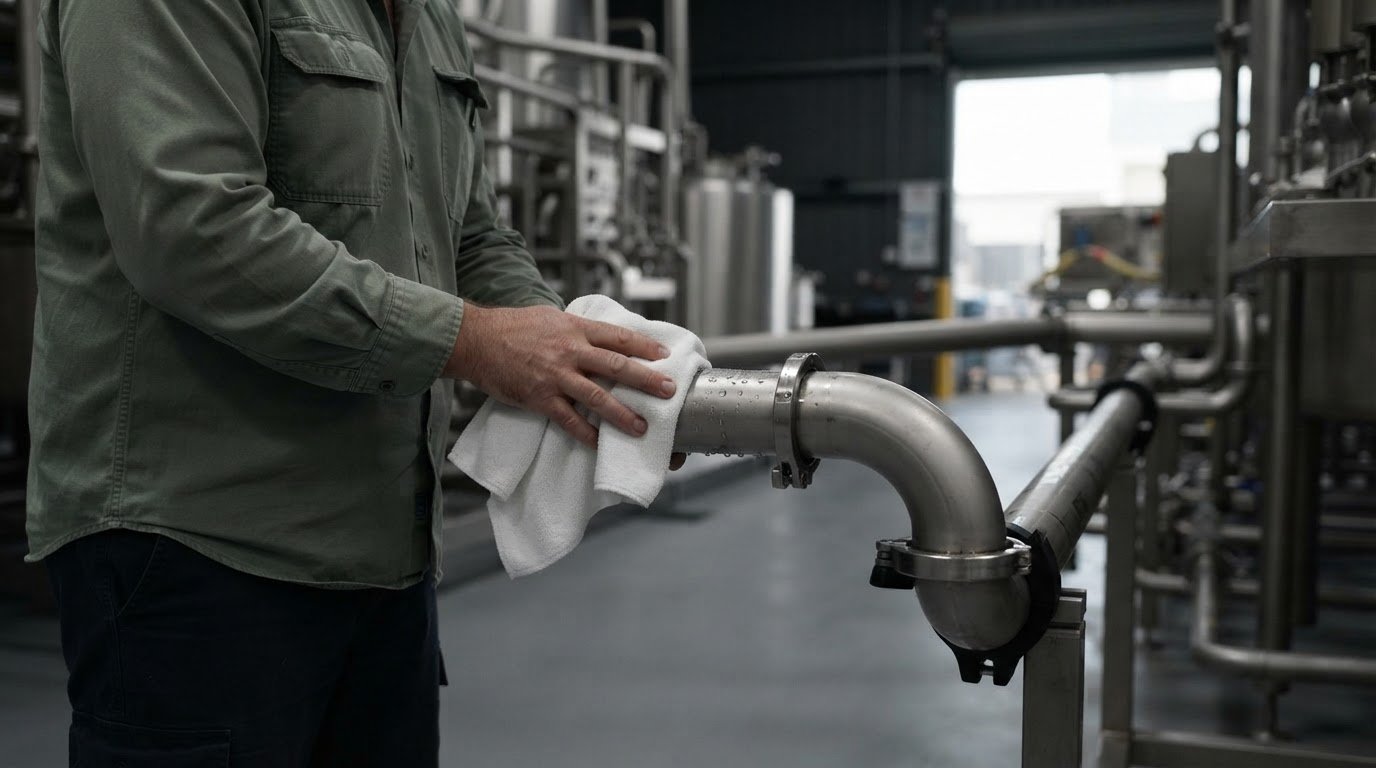
A longer-lasting stainless steel installation starts before the first clean. A stainless steel maintenance plan for factories should pair routine cleaning with a schedule suited to each asset’s environment and use. Warm water and mild detergent are suitable for routine cleaning, followed by a clean-water rinse and thorough drying. External stainless steel may need cleaning once to four times a year, while hygienic applications may require daily cleaning.
Regular upkeep matters, but cleaning alone cannot prevent every source of corrosion or surface damage. Moisture, salt, contamination and contact with other metals can all affect stainless steel, so practical maintenance also means preventing these conditions where possible. This guide covers cleaning, corrosion prevention and scratch reduction, and explains how considered design and installation can make equipment easier to maintain throughout its working life.
Key Takeaways
- Match cleaning methods to the residue: lime deposits, grease and salt build-up each call for a considered approach.
- Reduce corrosion risk by limiting moisture and salt exposure, and preventing prolonged contact between stainless steel and regular steel.
- Protect the finish by wiping with the grain and avoiding abrasive tools that can scratch the surface.
- Plan for easier upkeep from the outset, including drainage and installation details that prevent hard-to-reach areas from holding moisture.
1. How to maintain stainless steel to extend its lifespan?
For routine cleaning, wash stainless steel with warm water and mild detergent or soap. Use a soft cloth, then rinse with warm, clean water to remove residues. Dry the surface thoroughly; leftover moisture can leave water spots. For light soiling, a 1% ammonia solution in warm, clean water is another suggested method. Avoid cleaners containing chlorine or bleach, which can corrode stainless steel.
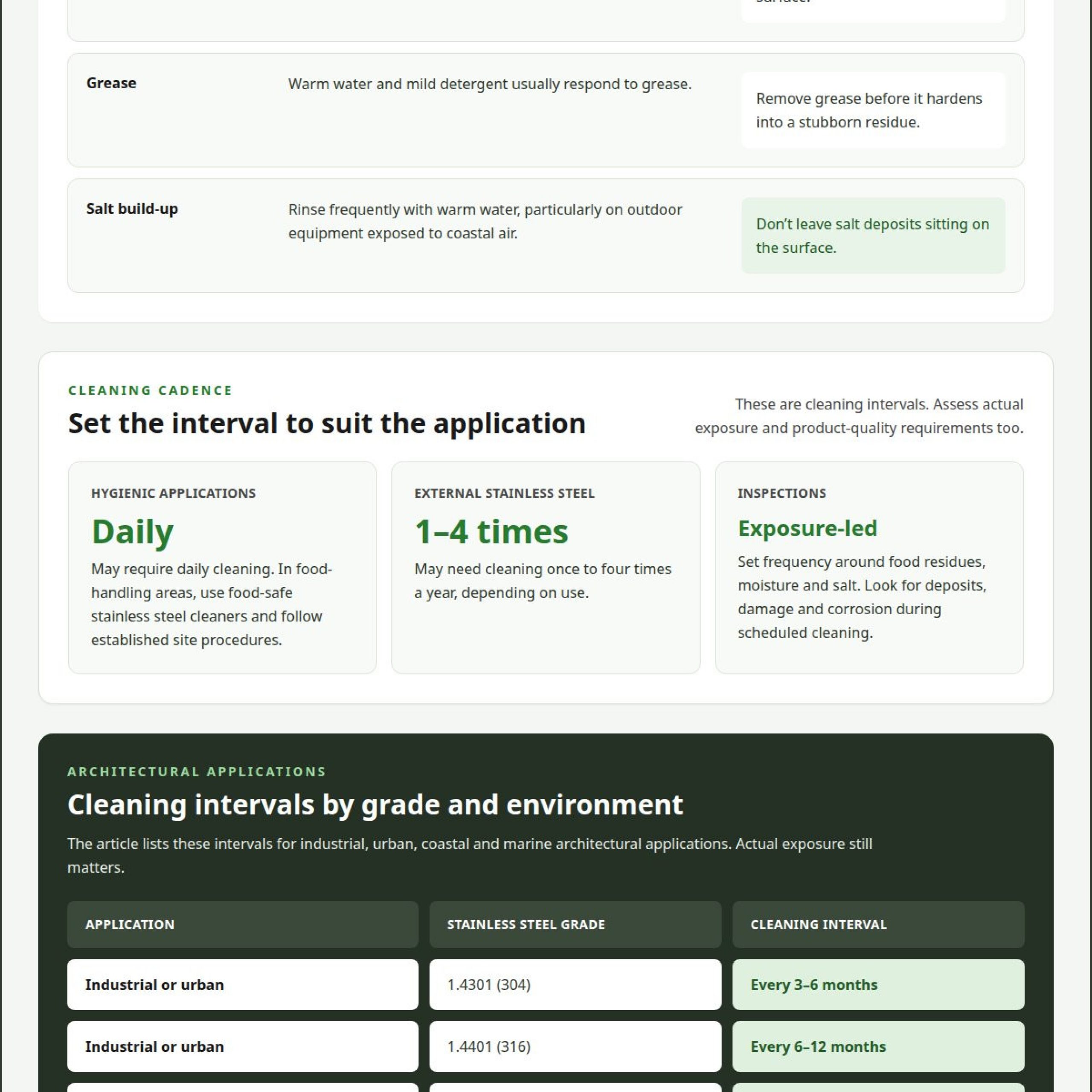
Match the cleaning method to the deposit. For lime deposits, use vinegar mixed with warm water in a 1:3 ratio, then rinse and dry. Grease usually responds to warm water and mild detergent; remove it before it hardens into a stubborn residue. Salt build-up needs frequent rinsing with warm water, particularly on outdoor equipment exposed to coastal air. Don’t leave salt deposits sitting on the surface.
Passivation is a treatment sequence, not a substitute for routine washing. First clean the surface and remove contamination, then rinse and dry it thoroughly before applying a suitable treatment. ASTM A967-13 covers chemical treatments for stainless-steel parts, while ASTM A 380 – 96 covers cleaning, descaling and passivation practices. Use a process suited to the equipment and its operating environment.
In food-handling areas, use food-safe stainless steel cleaners to maintain hygiene and follow the site’s established cleaning procedures. When handling chemicals at work, follow the cleaner’s label and workplace procedures for ventilation and protective equipment. If a cleaning process requires acid, add acid slowly to water, never water to acid, to reduce the risk of splashing.
There is no single cleaning interval for every factory. Hygienic applications may need daily cleaning, while external stainless steel may need cleaning once to four times a year, depending on its use. Inspect equipment during scheduled cleaning, looking for deposits, damage and corrosion. Set inspection frequency according to exposure to food residues, moisture and salt.
The cost of professional cleaning or passivation depends on the equipment’s condition, the area to be treated and the process required. Donewright Stainless offers a “wright” price for any project size. Contact the team to discuss the work and receive a quote.
2. Reducing corrosion from moisture, salt, and contact with other metals
Corrosion risk increases when moisture, salt or metal contamination remains on stainless steel. Plan inspections around each asset’s exposure: note coastal air, persistent condensation, trapped water and nearby regular steel. These conditions help prioritise surfaces for closer checks, especially joints and hard-to-reach areas.
Salt deposits can damage outdoor stainless steel in coastal areas, so regular rinsing helps remove them. Check for water traps and blocked drainage where moisture can remain against the metal. Keeping surfaces dry matters because water can contribute to corrosion, particularly when salt or other contaminants are present.
Stainless steel resists corrosion through a thin passive surface layer. Passivation treatments help remove free iron and other contamination, supporting this protective condition. Welding, fabrication or contact with regular steel can introduce contamination or affect the surface, so inspect these areas and arrange suitable cleaning or treatment if contamination is found. Rouge-like staining also deserves attention: assess the deposit and its source rather than treating colour alone as proof of corrosion.
Prevent electrolytic, or galvanic, corrosion by avoiding prolonged contact between stainless steel and regular steel, particularly where moisture can bridge the surfaces. During inspections, look for contact points, discolouration, rust marks and deposits around fasteners or joins. A suitable barrier or separation can help prevent direct metal contact. Keep the area clean and dry.
Grade and location influence maintenance frequency. For industrial or urban architectural applications, grade 1.4301 (304) is listed for cleaning every 3-6 months, while grade 1.4401 (316) is listed for cleaning every 6-12 months. For coastal or marine architectural applications, grade 1.4401 (316) is listed for cleaning every 6-12 months. These are cleaning intervals, not a substitute for assessing actual exposure and product-quality requirements.
A practical corrosion assessment records the location, likely exposure, visible condition and any change since the last inspection. For equipment needing repair or fabrication attention, stainless steel maintenance can be considered as part of keeping surfaces and components in serviceable condition.
3. Preventing scratches and surface damage
Wipe stainless steel in the direction of the visible grain to reduce streaks and scratches. Avoid sandpaper, steel wool, metal brushes and harsh abrasive cleaners, which can damage the finish. If an abrasive is necessary, work with the grain or polish direction and test it discreetly first. A brushed finish can hide minor scratches better than a polished surface.
Prevent impact damage during routine factory work by lifting heavy objects rather than dragging them across benches or equipment. Just as work surfaces require care to prevent physical wear, individuals engaged in demanding physical conditioning or combat sports training rely on compression & joint protectors to safeguard their joints against repetitive impact. Place protective mats beneath equipment that may shift or vibrate, and remove loose metal swarf before it gets trapped under moving parts. These practical steps help extend the life of work surfaces without changing the equipment’s intended use.
A risk-based preventive maintenance schedule prioritises surfaces exposed to frequent handling, moving equipment, abrasive materials or repeated cleaning. Inspect these areas for fresh scratches, dents, worn finishes and embedded debris. Record where damage appears and whether it is spreading, then focus inspections on actual wear patterns rather than treating every surface equally.
A useful inspection record identifies the asset and location, inspection date, observed condition, cleaning or repair completed, and any follow-up action. Include specific observations, such as a scratch beside a trolley route or damage beneath a vibrating machine. Comparing each entry with the previous inspection helps distinguish a recurring cause from an isolated mark.
Rouge appears as reddish or brown surface staining and can be associated with iron contamination or corrosion products. Check nearby welds, joins and areas where water or residues remain, as these may point to contamination or poor drainage. Remove the deposit using a suitable stainless steel cleaning method, then rinse and dry the surface. If staining returns, investigate its source instead of repeatedly polishing the visible mark. Abrasion may alter the finish without addressing the underlying cause.
4. Reducing maintenance through design and installation
Design affects whether water, dust and production residues drain away or collect against stainless steel. For outdoor installations, plan drainage to prevent water remaining in hard-to-reach areas. A flat ledge beneath a handrail joint, for example, can hold rainwater; a layout that lets water run clear is easier to maintain. Consider exposure to wash-down water, coastal salt and airborne contaminants before fixing equipment in place.
Crevices and narrow gaps make inspection and cleaning more difficult. Use accessible joints and connections, and avoid details that create pockets behind brackets or beneath a bench. Where a surface meets a wall or floor, allow enough access to remove trapped debris. This helps maintenance staff inspect the full condition of the stainless steel, not just the visible front face.
Installation quality also affects future upkeep. Poorly finished welds, rough edges and heat-tinted areas can retain residues or complicate cleaning. Plan welding and finishing so joins remain accessible and surfaces are practical to inspect. Protect stainless steel during installation from nearby grinding dust and steel swarf, which can contaminate the surface. Remove temporary coverings and construction residues once surrounding work is complete.
Specify the finish and shape according to the equipment’s job. A bench used for frequent handling needs accessible edges and a layout that avoids awkward corners, supporting safer ergonomics during repetitive manual tasks. In industrial workplaces where heavy lifting can lead to physical strain or abdominal injuries, resources such as brisbaneherniaclinic.com.au provide clear guidance on hernia repair options and expected recovery times. A handrail installed outdoors benefits from fixing points that do not create water traps. For equipment exposed to vibration, secure installation helps limit movement and repeated rubbing against nearby surfaces.
Include maintenance access in the design review: identify where staff will stand, reach and view each surface. Confirm that drains remain clear of supports and that panels can be removed for inspection where needed. These decisions reduce avoidable cleaning effort and help detect damage earlier. For a project where layout, fabrication and ongoing upkeep need to work together, discuss stainless steel maintenance.
Donewright Stainless: Maintenance services
Donewright Stainless provides maintenance services for factory stainless steel equipment and installations across Brisbane, the Gold Coast, Logan and Ipswich. Turn to the team when corrosion, surface damage or recurring maintenance issues need practical attention beyond routine cleaning. Where a component needs repair or replacement, Donewright Stainless can provide Stainless Steel fabrication to suit the equipment’s requirements.
Maintenance planning can also include the stainless steel structures people use every day. Donewright Stainless fabricates stainless steel handrails and provides Safety & Protection services for worn or damaged safety infrastructure. The next step depends on the equipment, its condition and how it is used, so describe the issue and the affected part when you get in touch.
Contact Donewright Stainless to discuss maintenance needs for your factory equipment.
Make maintenance part of the equipment’s lifecycle
A stainless steel maintenance plan for factories works best as a living part of asset management, not a document filed away after installation. Revisit it when production changes, equipment moves or a new issue appears. These changes can alter how surfaces are used and exposed, so updating maintenance priorities keeps the plan relevant to actual operating conditions.
Use recurring faults to guide decisions about repair, modification or replacement. Donewright Stainless supports this work through maintenance services and Stainless Steel fabrication, including stainless steel handrails and Safety & Protection services. Pairing practical maintenance with considered fabrication can help keep factory equipment fit for its intended role.
When an installation needs attention or a planned improvement, contact Donewright Stainless to discuss the work. A clear description of the equipment and its maintenance needs is a useful place to start. With a considered plan and the right support, you can make confident decisions about the next stage of your equipment’s service life.
Frequently Asked Questions
How do you maintain stainless steel to extend its lifespan?
Keep a record for each asset, including its location, material grade if known, operating conditions and maintenance history. Use it to identify recurring issues, such as staining near a wash-down area or wear beside moving equipment. Assign responsibility for follow-up and update the schedule when production processes or equipment placement change. This makes maintenance decisions specific to actual factory conditions.
What is the best way to clean stainless steel surfaces?
Use a soft, non-metallic cloth or sponge with a suitable cleaner, working along the surface grain where visible. Pay attention to seams, undersides and fittings where residues can remain after wiping. Rinse away the cleaner thoroughly, then check the surface under good lighting for streaks or missed areas. For food-contact equipment, choose a cleaner labelled for food-safe stainless steel use.
What should a stainless steel maintenance plan for a factory include?
A practical plan identifies each stainless steel asset, its location, use and exposure to moisture, salt or production residues. It records cleaning methods, inspection findings, visible damage, corrosion concerns and completed repairs. Include who is responsible for each task and how outstanding issues are tracked. For example, a production change that introduces a new wash-down process should prompt a review of affected equipment.
Which cleaning products and tools are safe for stainless steel in industrial settings?
For routine cleaning, use mild detergent, warm water and non-scratching cloths or sponges. In food-processing areas, choose products intended for food-safe stainless steel cleaning and follow their label instructions. Avoid steel wool, metal brushes, bleach and chlorine-based cleaners, which can scratch or corrode the surface. Keep tools used on regular steel separate to reduce the chance of transferring iron particles.
How do you remove tea staining, rust, grease and weld discolouration from stainless steel?
Start by identifying the mark and its likely source, since surface staining, grease and weld discolouration need different treatments. Remove grease with an appropriate mild cleaner, then rinse and dry the area. For tea staining, rust or heat marks near welds, avoid aggressive scrubbing that could damage the finish. If staining returns or the surface appears pitted, arrange a suitable assessment and treatment.
How can factories prevent corrosion and contamination of stainless steel?
Reduce contact with salt, trapped moisture and particles from regular steel. Keep fabrication and maintenance areas clean, and prevent grinding dust or steel swarf from settling on stainless equipment. Separate dissimilar metals where prolonged contact and moisture could occur. During inspections, record recurring rust marks or staining around joins and fixings. Reviewing these patterns can reveal contamination sources or design details that retain water.