
Stainless Alternatives: How to Choose the Right Metal for Your Project
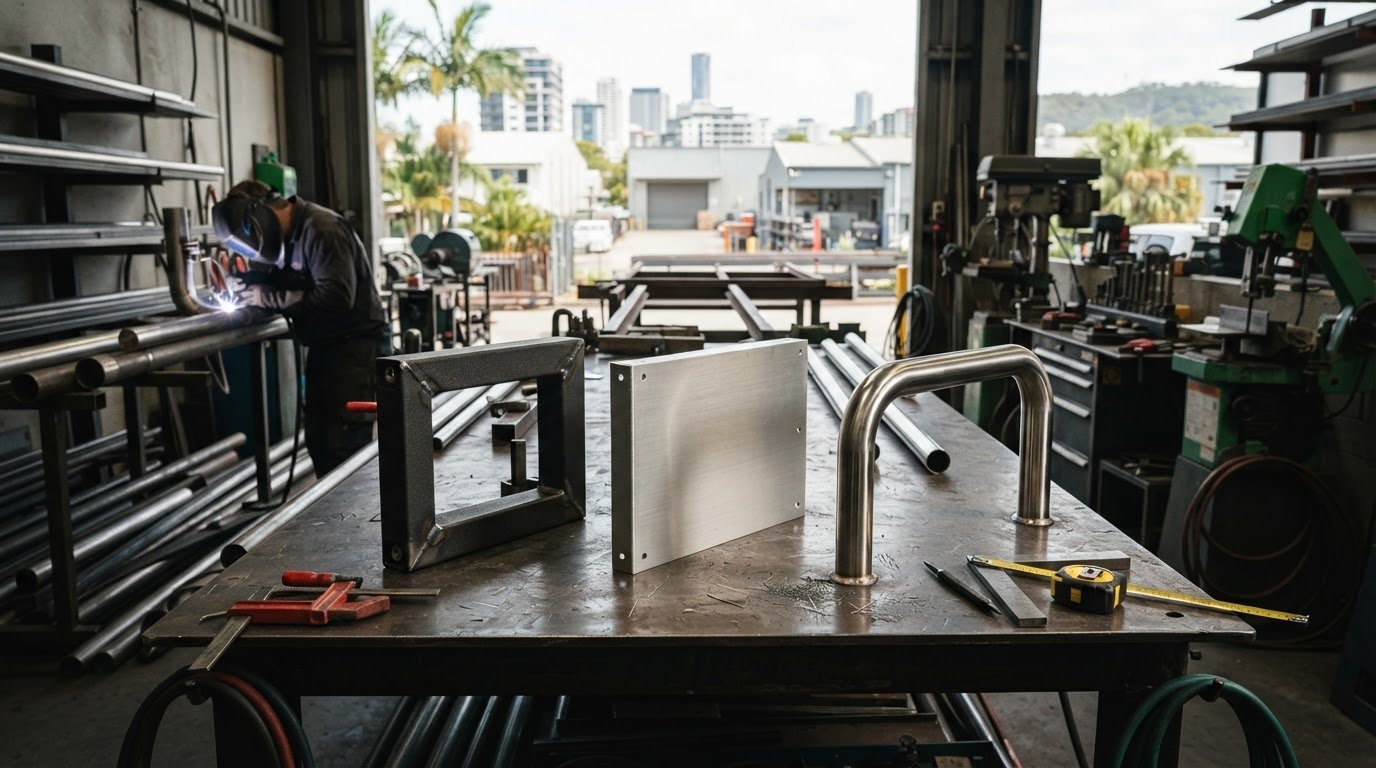
The best stainless alternative may be the material that looks least like a direct substitute. Mild steel or aluminium could suit a project, but only if the metal can handle its exposure, service conditions and fabrication requirements. Choosing by material name alone can leave important questions about corrosion, strength, weight and finish unanswered.
When stainless steel isn’t the right fit, the practical choice depends on where and how the finished item will be used, and how it needs to be made and maintained. This guide compares stainless alternatives by application and trade-off, so you can build a shortlist around the job rather than assumptions about a material.
We’ll look at mild steel and aluminium, explain the conditions that influence suitability, and outline the project details to record before specifying custom metalwork. Those details help connect material selection to the finished outcome, whether you’re planning a bench, handrail, trolley or another fabricated item. A clear picture of exposure, function, finish and fabrication needs makes for a more informed decision.
Key Takeaways
- Choose a material for the job’s actual function and environment, not as an automatic like-for-like substitute for stainless steel.
- Compare stainless alternatives such as mild steel, aluminium and galvanised steel against the project’s exposure, weight, strength, finish and fabrication needs.
- Assess the complete design, including coatings and fabrication details, rather than relying on material properties alone.
- Record the item’s location, expected loads, cleaning routine and appearance requirements to build a practical shortlist.
- Donewright Stainless fabricates stainless steel, mild steel and aluminium, connecting material selection with custom-fabricated outcomes.
Stainless alternatives: when does it make sense to consider another material?
A stainless alternative is a different material selected to meet a particular function, operating environment and fabrication requirement. It isn’t automatically a like-for-like replacement. A material that suits an indoor bench may not be right for an exposed handrail or an industrial component subject to different cleaning routines.
Start by recording the conditions the finished item will face: exposure to moisture or contaminants, expected loads, acceptable weight and appearance, cleaning needs, and fabrication method. These details define what the material must do and give you consistent criteria for comparing options.
Let the operating conditions guide material selection, not the material label alone.
What does stainless steel do well in fabricated applications?
Stainless steel is often considered where corrosion resistance or cleanability matters. It can be used for fabricated handrails, benches and industrial components, but its suitability depends on the specific application. As the overview of stainless steel explains, it includes different grades with distinct characteristics, so “stainless” alone doesn’t define how a finished item will perform.
Grade, surface finish, fabrication details and exposure all matter. A setting with regular cleaning has different requirements from one exposed to weather or process conditions. The design and workmanship also influence the finished result, so material choice is only one part of the specification.
Why look at alternatives to stainless steel?
Another material may suit a project’s weight, design or fabrication requirements, or the conditions in which the item will operate. Mild steel and aluminium are options for fabricated work, but neither is automatically suitable for every application. Their suitability depends on what the component needs to do and how it will be protected, finished and maintained.
That’s different from substituting a material without reviewing the specification. If a design calls for stainless steel, changing it may affect how the item handles exposure, loads, cleaning or appearance. Revisit those requirements first, then compare materials against them rather than ranking metals as universally better or worse.
This approach gives you a useful comparison of stainless steel, mild steel, aluminium and galvanised steel. Identify which options deserve consideration for the job, then carry that shortlist into the design and fabrication decisions.
Which stainless alternatives should you compare?
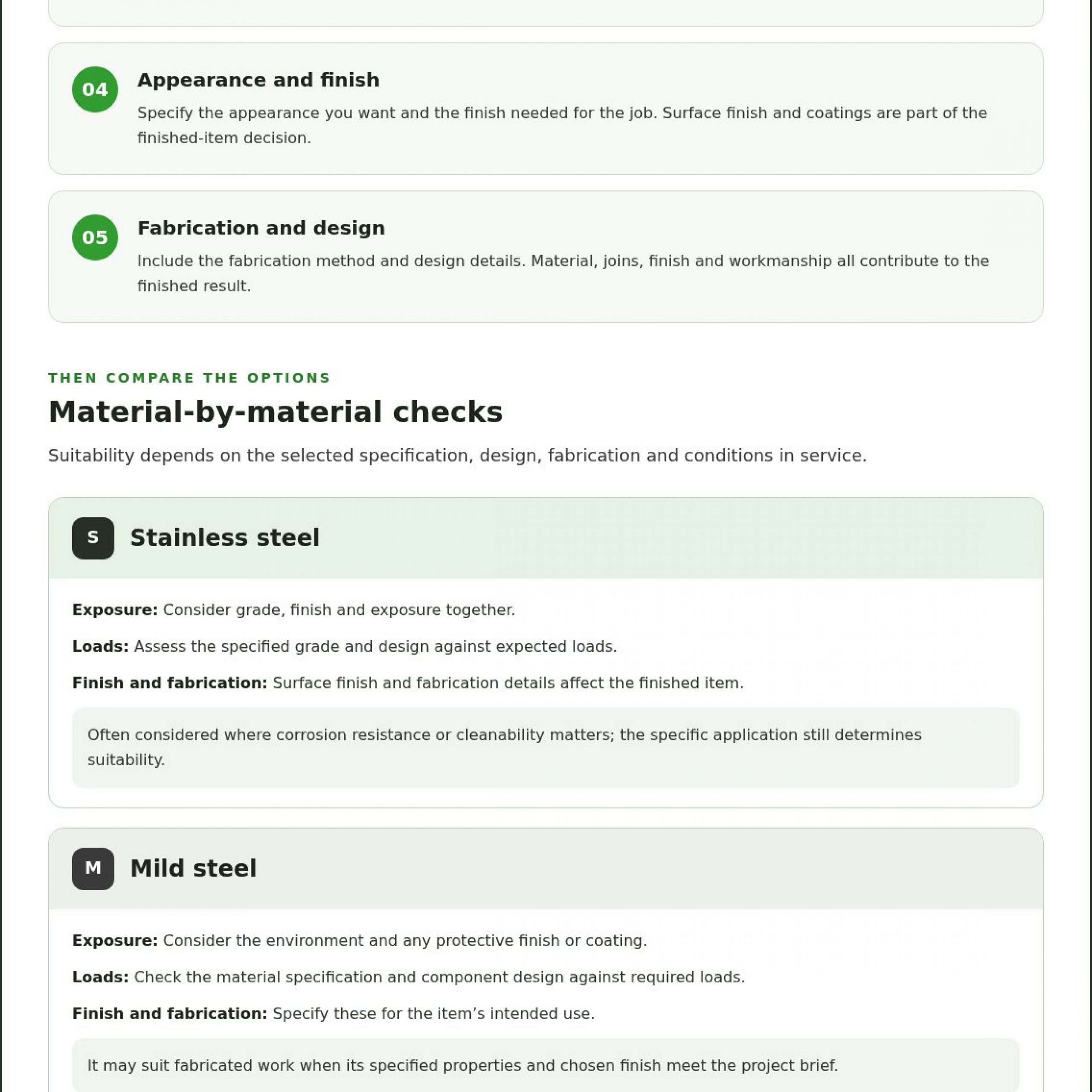
Compare materials against the same project requirements, not a general ranking. Use the table as a starting point: actual performance depends on the selected specification, design, fabrication and conditions in service.
| Material | Corrosion exposure | Weight and loads | Finish and fabrication |
|---|---|---|---|
| Stainless steel | Consider the grade, finish and exposure together. | Assess the specified grade and design against expected loads. | Surface finish and fabrication details affect the finished item. |
| Mild steel | Consider the environment and any protective finish or coating. | Check the material specification and component design for the required loads. | Specify the finish and fabrication method for the intended use. |
| Aluminium | Assess the alloy, finish and site conditions for the application. | Often shortlisted when weight is a key design consideration; verify load requirements. | Account for its fabrication requirements and the finish needed for the job. |
| Galvanised steel | A zinc coating protects the steel; consider exposure and potential coating damage. | Assess the steel specification and design for the required loads. | Consider coating condition, finish expectations and fabrication sequence. |
Material suitability depends on its specification and the environment in which it will operate. A coating or finish can influence performance, but it doesn’t change the underlying properties of the base material.
Mild steel and galvanised steel as alternatives
Mild steel may suit a fabricated item when its specified properties and chosen finish meet the project brief. Galvanised steel is steel protected by a zinc coating, so distinguish the coating’s role from the base steel’s properties. For either option, consider the service environment, possible damage to protective coatings and the maintenance the item will receive. Assess suitability for the particular project rather than assuming it from the material name.
Aluminium as a stainless steel alternative
Aluminium may enter the shortlist when reducing weight is important to the design. That doesn’t make it a direct substitute: loads, site conditions and intended service life still shape the decision. Its fabrication and finishing requirements also need to suit the component’s design and use. Assess a custom-fabricated item as a whole, including how its material, joins and finish work together.
These stainless alternatives involve different trade-offs rather than a universal best choice. Donewright Stainless fabricates in stainless steel, mild steel and aluminium, helping translate a project brief into material and fabrication decisions. Explore custom metal fabrication for projects in Brisbane and South-East Queensland.
How do stainless alternatives compare in real projects?
A material name doesn’t tell you whether a finished component will suit its job. Compare the actual conditions it will face, including indoor or outdoor exposure, moisture, possible chemical contact, expected loads, cleaning routine and appearance. Then consider how the design, protective coating and fabrication details affect the result.
The matrix below is illustrative. It helps frame project questions, but it isn’t a material specification or recommendation for a particular installation.
| Illustrative scenario | What to assess | Material considerations |
|---|---|---|
| An indoor bench with regular cleaning | Cleaning routine, surface finish and exposure to substances used in the work area. | Compare the specified stainless steel grade and finish with other options against the actual cleaning and service requirements. |
| An outdoor handrail | Weather exposure, expected loads, appearance and ongoing maintenance. | Assess the chosen material and, where relevant, protective coatings for the site conditions and design. |
| A component where lower weight matters | Required loads, rigidity, fixing details and handling needs. | Aluminium may be considered, but its suitability depends on the design and specified requirements. |
| A fabricated item with a protective coating | Exposure, coating condition, potential damage and maintenance access. | For galvanised steel, assess both the base steel and the protective coating as parts of the finished item. |
Corrosion, moisture and cleaning requirements
Describe the exposure clearly: indoors or outdoors, dry or wet, and whether the item may contact chemicals or other contaminants. The maintenance routine matters too. A surface that is cleaned regularly may face different demands from one that is difficult to access. Assess the exact environment and material specification rather than assuming a broad label guarantees a particular outcome.
Strength, weight and finished appearance
Loads and rigidity are design requirements, not properties to infer from a material name alone. A lighter material may suit a weight-sensitive design, but the component still needs to meet its load and fixing requirements. Surface finish, joints, edges and fabrication quality also influence the finished appearance and function. Where an engineer or project specification governs material choice, use it as the basis for selection.
Assess stainless alternatives as complete fabricated solutions. The material, design details, coatings and workmanship all contribute to how the item serves its intended purpose.
How to shortlist stainless alternatives for your application
A useful shortlist starts with a clear description of the component and its working conditions. Record what it must do, where it will operate, what it will face, the loads it must handle and the finish the project requires.
Use this process to turn those details into a material brief:
- Define the function. Note what the component supports, protects, carries or contains, and how it connects to the rest of the installation.
- Record the location and exposure. Specify whether it will be indoors or outdoors, and describe moisture, cleaning routines and contact with other materials or substances.
- Document loads and design needs. Include expected loads, rigidity requirements, dimensions and any limits on weight. Use project drawings or engineering information where available.
- Set the finish expectations. Describe the required appearance and surface finish, along with any coating or maintenance requirements relevant to the service conditions.
- Review project documents. Check drawings, specifications and applicable project requirements before settling on a material. Where a specification or engineer governs the selection, use it as the basis for the decision.
Start with the component’s job and operating environment
Details that seem minor can shape the material shortlist. A handrail’s location, exposure and connection points all matter, as do its cleaning routine and nearby materials. For practical context, see this guide to stainless steel handrails in Brisbane. If the design combines different metals, include their points of contact in the brief so the complete assembly can be assessed. Compatibility depends on the specific materials and conditions, so don’t assume a mixed-material design will suit every setting.
Turn the shortlist into a fabrication-ready brief
Bring together dimensions, drawings, load requirements, finish expectations and installation conditions. Add information about access and any existing structures or components the new work must fit. This connects material choice to fabrication details and the finished item, rather than treating them as separate decisions. Donewright Stainless tailors custom fabrication to project requirements across stainless steel, mild steel and aluminium. For more on fabricated material options, read the custom stainless steel fabrication guide.
With a complete brief, the stainless alternatives under consideration can be assessed against the same requirements. Discuss your custom metal fabrication project with Donewright Stainless, serving Brisbane, the Gold Coast, Logan and Ipswich.
From material choice to custom fabrication with Donewright Stainless
Material selection is only one part of a successful fabricated outcome. Define the component’s job and site conditions, then assess which material and fabrication approach can meet the project requirements. Stainless steel, mild steel and aluminium each have a place in custom fabrication, but none is a universal fit. The right choice depends on the design, exposure, loads, finish and how the item will be installed and maintained.
Donewright Stainless works across these three materials, connecting the specification to a made-to-measure result. That means considering the whole component, including dimensions, joins, finish and installation requirements, rather than choosing by material name alone. For projects in Brisbane, the Gold Coast, Logan and Ipswich, Donewright also provides on-site work through its mobile workshop.
When custom fabrication helps resolve material trade-offs
Custom design and fabrication can address practical details behind material selection. A handrail or safety protection needs to suit its location and use; a bench needs to meet its functional and finish requirements; industrial maintenance work may need a solution shaped around existing equipment or site conditions. The material, design and fabrication method all need to work together. Donewright provides stainless steel, mild steel and aluminium fabrication, with custom design, fabrication and on-site installation tailored to project requirements.
What to include when discussing a project
A clear brief gives the fabrication process a sound starting point. Bring together the intended function, site location, relevant drawings, operating conditions, expected loads and finish requirements. Include installation details, access constraints and how the item connects with existing structures or materials. If the project has a specification or engineering requirements, include those documents so they can inform the work.
Donewright’s mobile workshop and on-site welding support industrial work at the project location. Sharing the site context alongside the design details helps connect material decisions with fabrication and installation planning. This is useful when shortlisted stainless alternatives need to be assessed as part of a complete, site-ready component.
Discuss your custom metal fabrication project.
Make your material shortlist work for the project
The right choice starts with the job, not a blanket preference for stainless steel or an alternative. Compare stainless alternatives against the real service conditions, including exposure, loads, cleaning, finish and fabrication needs. Then use drawings and project requirements to shape a practical, fabrication-ready brief.
Donewright Stainless works with stainless steel, mild steel and aluminium fabrication, connecting material selection with the design and construction of custom metalwork. For projects across Brisbane, the Gold Coast, Logan and Ipswich, its mobile workshop and on-site welding support can help with suitable work at the site.
Have a project in mind? Share the intended function, location and key requirements to start a considered discussion about the fabrication approach. Discuss your custom metal fabrication project with Donewright Stainless.
Frequently Asked Questions
What is the best alternative to stainless steel?
There’s no single best alternative; the right choice depends on the component’s function, exposure and fabrication requirements. Mild steel may suit a project where its specified properties and finish meet the brief, while aluminium may be considered where weight matters. Galvanised steel adds a protective coating to a steel base. Compare options against expected loads, cleaning, appearance and maintenance, and review project drawings and specifications before selecting a material.
Is mild steel a suitable alternative to stainless steel?
Mild steel can be suitable when its specification, finish and any protective treatment match the project conditions. It isn’t automatically a direct substitute for stainless steel, particularly where moisture, contaminants or regular cleaning influence the requirements. Consider the component’s location, loads, appearance and maintenance needs. Donewright Stainless fabricates in mild steel as well as stainless steel and aluminium, tailoring custom work to the project brief.
Is aluminium stronger or lighter than stainless steel?
Aluminium is generally lighter than stainless steel, which can make it worth considering when weight is a key design factor. Strength isn’t a simple material-to-material comparison: the alloy, section, component design and expected loads all matter. Assess rigidity, fixings and service conditions for the actual part rather than assuming one metal will perform better. Drawings, engineering information or the project specification should guide the final material choice.
Can galvanised steel replace stainless steel outdoors?
Galvanised steel may be considered for some outdoor applications, but it isn’t automatically interchangeable with stainless steel. Galvanising is a protective coating on steel, so assess both the base material and how the coating suits the site exposure. Potential coating damage, maintenance access, appearance and expected service conditions also matter. Review the project specification and the component’s use before treating galvanised steel as a suitable option.
How do I choose a metal for a custom fabrication project?
Start by documenting the component’s function, location, exposure, expected loads, cleaning routine and finish requirements. Gather dimensions, drawings, installation details and any project specifications before settling on a material. These details connect the material choice to fabrication and the finished item. Donewright Stainless works with stainless steel, mild steel and aluminium fabrication for custom projects across Brisbane, the Gold Coast, Logan and Ipswich.
Does choosing an alternative to stainless steel always reduce maintenance?
No. Maintenance depends on the material specification, protective finish, fabrication details and conditions in service, not simply whether the item is stainless steel. A coated material, for example, requires consideration of coating condition and possible damage, while any option needs to suit the cleaning routine and exposure. Include maintenance access and expectations in the project brief, then assess the complete design rather than assuming an alternative will need less care.
