
Industrial Fabrication: A Guide for Brisbane Projects
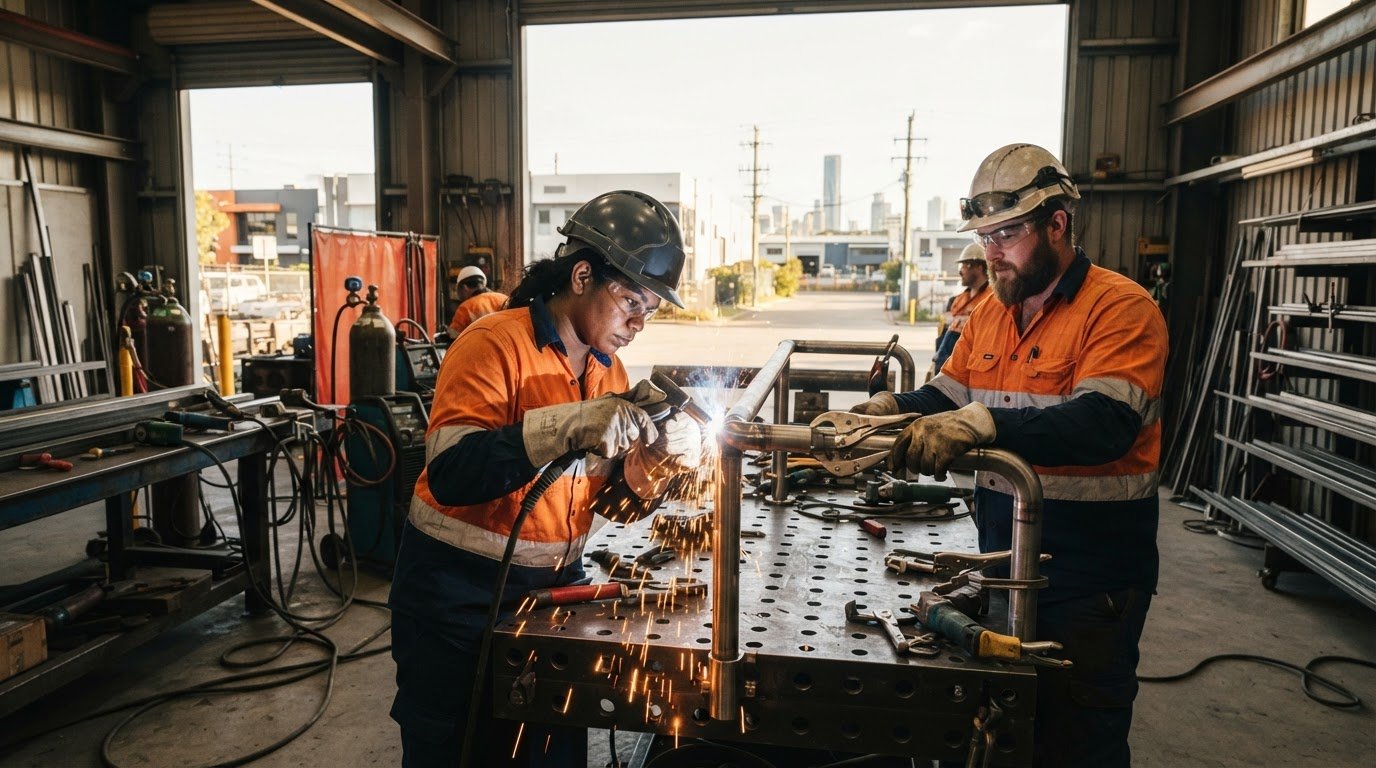
What if fabrication that looks right on paper still leaves your team coordinating separate workshop and site work? For Brisbane projects, industrial fabrication specialists need to match the materials, custom components and site conditions involved, not just make broad capability claims.
It’s reasonable to be concerned about delays, equipment downtime and whether a fabricator can deliver the work your operation needs. Start your assessment with the project details: the materials required, what needs to be fabricated and installed, and what support is needed on site. Workshop fabrication, mobile welding and maintenance can each play a part.
This guide explains how to assess fabrication and maintenance capabilities against your project requirements, coordinate workshop work with on-site support, and prepare a clear project brief. Donewright Stainless provides stainless steel, mild steel and aluminium fabrication, including handrails, safety protection, custom benches, trolleys, bench tops and industrial pipework. The company serves industrial and commercial projects across Brisbane, the Gold Coast, Logan and Ipswich. Use the guidance below to clarify what your project involves and prepare for a practical discussion.
Key Takeaways
- Assess industrial fabrication specialists against your actual project scope, not a broad capability list.
- Separate custom metalwork from standard components so the brief shows what needs to be made for your site.
- Compare workshop and mobile work by considering access, existing equipment and installation needs. The two can work together.
- Prepare a useful project brief by describing the item or system, its intended use, materials and required installation.
- Donewright Stainless brings fabrication, installation and mobile workshop support together for industrial and commercial projects across Brisbane, the Gold Coast, Logan and Ipswich.
What industrial fabrication specialists do for Brisbane projects
An industrial fabrication specialist makes project-specific metalwork and can provide related services such as installation, on-site welding and maintenance. Rather than supplying only standard, off-the-shelf components, the work is planned around the item’s purpose, the site and how it needs to fit with existing equipment or structures.
Metal fabrication generally involves processes such as cutting, bending and assembling metal. In an industrial project, these tasks may sit within a wider sequence: define the requirements, fabricate the components, install them and carry out maintenance as needed. Scope varies from job to job, so begin with the actual site and operating need rather than a generic list of services.
Which industrial projects need custom metal fabrication?
Custom fabrication can suit a project when a standard component doesn’t match the required dimensions, layout or use. Examples include stainless steel handrails and safety protection, custom benches and trolleys, and industrial pipework. A component may need to fit around existing equipment, available floor space, access routes or the way staff use an area.
Operating conditions matter too. The intended use and surrounding environment can influence the material and configuration. There isn’t one standard design for every site, so define the requirements before settling the details. Donewright Stainless provides stainless steel, mild steel and aluminium fabrication, including custom fabrication and installation for industrial and commercial applications.
When should workshop fabrication include on-site support?
Workshop fabrication can suit components that can be made away from the operating site and brought in for installation. On-site support is relevant when access is restricted, work needs to connect with existing assets, or equipment can’t easily be moved. Consider these conditions when deciding how to organise the work.
Mobile welding and a fully equipped mobile workshop support industrial work at the site, including pipework and maintenance. These services can complement workshop-made components: fabrication can happen in the workshop where practical, while site work covers installation or existing equipment. Plan both parts together, accounting for site access, operating conditions and where each task needs to take place.
How to assess an industrial fabrication specialist’s capabilities
A long list of services doesn’t show whether a fabricator suits your job. Assess capability against the complete scope: what needs to be made, what material the project calls for, and how the work will be installed or maintained at your site.
Look for a clear match between the project materials, custom requirements, installation needs and site support.
Match materials and fabrication scope to the job
Start with the item or system and its intended use. Stainless steel, mild steel and aluminium have different properties, so identify the specified material and describe the conditions the finished work will face. Don’t choose by material name alone. Explain the functional requirements and relevant site details so the scope can be considered in context.
Then connect the material to the work. A handrail or safety protection may involve custom dimensions and installation. A bench or trolley needs to suit its working area and use. Industrial pipework has its own connection and site requirements. Describe the component and how it fits into the wider operation rather than assuming one approach suits every job.
Assess installation, maintenance and site coordination
Map the work from manufacture through to use. Does it need to be made in a workshop, installed on site, welded in place or supported by maintenance? Consider access to the work area, existing equipment and operating conditions. These details help clarify what can happen off site and what needs to be coordinated at the facility.
A fully equipped mobile workshop supports site-based industrial work, including mobile welding, pipework and maintenance. It can complement workshop fabrication where existing assets or site conditions affect installation. For related repair detail, see Donewright Stainless’s article, “On-Site Industrial Pipework Repair Brisbane”. Weld Australia, the peak body representing the welding industry, provides broader industry information that can help frame questions about welding practice and training.
Use this project-fit checklist to organise the scope:
- Materials: Is stainless steel, mild steel or aluminium specified?
- Custom work: What dimensions, function or site constraints shape the item?
- Installation: Does the work need to be fitted or connected on site?
- Site support: Will mobile welding, maintenance or a mobile workshop be relevant?
- Coordination: What existing equipment or operating conditions could affect the work?
Donewright Stainless brings fabrication, installation and mobile workshop services together for industrial and commercial requirements. Visit Donewright Stainless fabrication services to learn more about the work it provides.
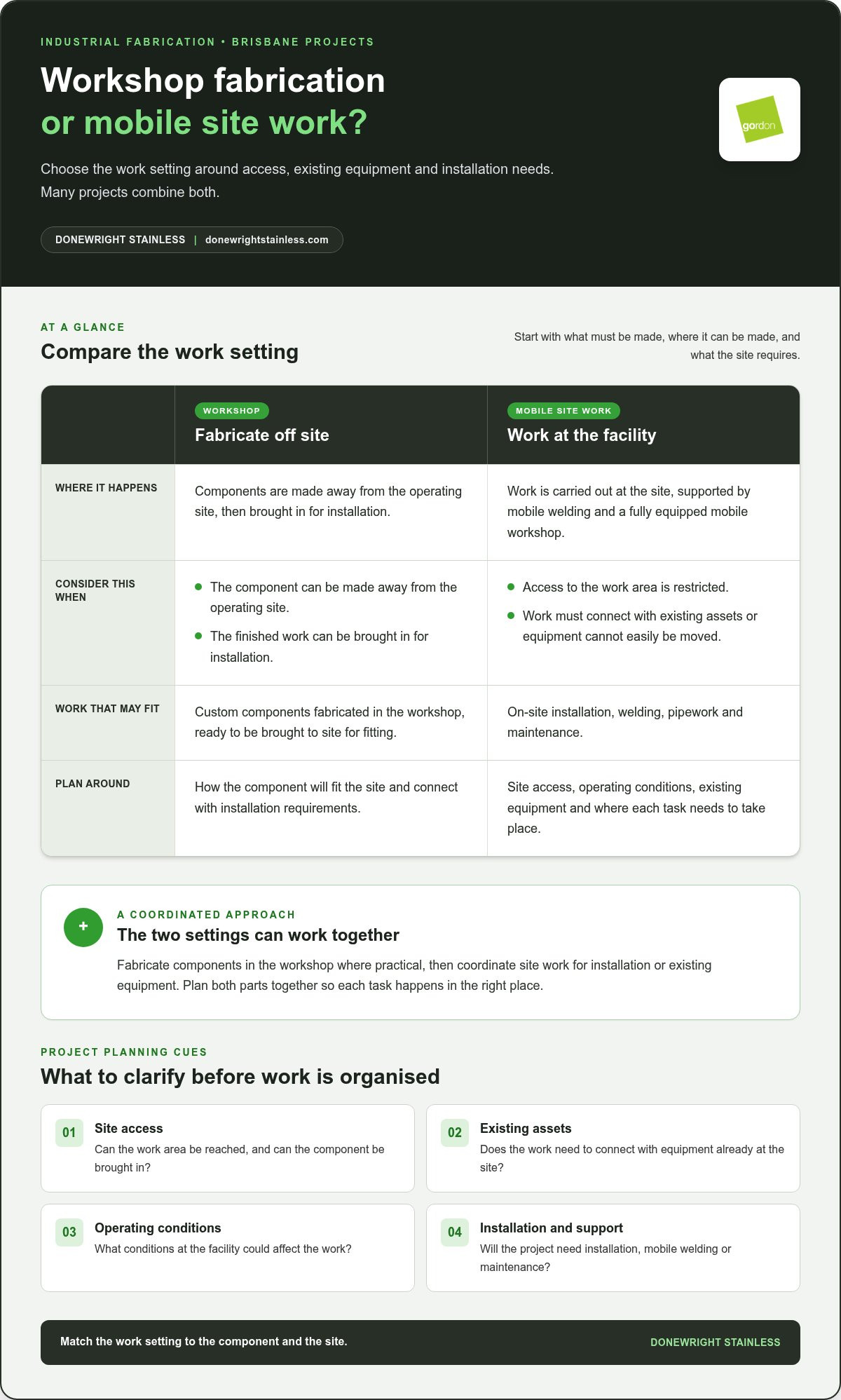
Workshop fabrication or mobile site work: what does your project need?
The choice isn’t always workshop or site. Industrial fabrication specialists can plan work across both settings, depending on the item, access and what needs to connect with existing equipment. Decide where each part of the job can be completed and what the site work will involve.
| Project consideration | Workshop fabrication | Mobile site work |
|---|---|---|
| Work location | Components can be made away from the operating site. | Work takes place at the facility where the equipment or structure is located. |
| Site access | May suit items that can be transported to the site and positioned for installation. | May suit work in areas where removing or moving an asset isn’t practical. |
| Existing assets | Useful for fabricating a new component to fit a defined project scope. | Relevant when work needs to connect with or address existing equipment or pipework. |
| Installation | Fabrication can be followed by a separate installation stage. | Mobile welding or maintenance can support work carried out at the site. |
When workshop fabrication is a practical fit
Custom benches, trolleys and handrails may need to suit a particular layout or intended use. Workshop fabrication allows components to be prepared away from the operating area, with installation considered as part of the same project. Size, transport, access and the way an item connects to existing structures can all affect where the work should happen.
When mobile welding and on-site maintenance matter
Industrial pipework repairs and maintenance often involve assets that are already installed. When access, removal or operating conditions make off-site work unsuitable, a mobile workshop can bring fabrication support to an industrial or commercial site. Donewright Stainless provides mobile welding, maintenance and a fully equipped mobile workshop for site-based industrial work.
Workshop and mobile work can complement each other. A project may involve workshop-made components followed by on-site installation or welding. Plan the stages together, taking account of access, existing assets and operating constraints. For related project context, see Industrial Pipework Brisbane: Fabrication and Repair.
To decide how to split the work, identify what can be made off site, what must be worked on in place, and how installation fits around site operations. This gives the project team a practical basis for coordinating the job.
Prepare a project brief for an industrial fabrication specialist
A clear brief turns an operational need into a defined fabrication scope. You don’t need to settle every technical detail before a project discussion. Explain what the item or system needs to do, what you know about the site, and where you need guidance. This gives industrial fabrication specialists a useful starting point for discussing materials, fabrication and installation.
What information helps define the fabrication scope?
Use this checklist to organise the details you already have:
- Describe the item or system. Is the work a handrail, safety protection, bench, trolley, pipework or another metal component?
- Explain its intended use. Note what it needs to support, contain, protect or help staff do.
- Record approximate dimensions and quantity. Include measurements you have, and label estimates as approximate rather than presenting them as final specifications.
- Identify the material. State whether stainless steel, mild steel or aluminium is preferred or specified, and share the reason if it’s known.
- Describe the operating environment. Include relevant conditions around the item’s use, location and nearby equipment.
- Attach useful references. Add sketches, drawings, existing plans or photos where available, with key measurements or areas marked clearly.
These details help communicate the intended result without guessing at technical specifications. Include known requirements and constraints, and distinguish them from assumptions. Technical requirements and standards depend on the individual project, so note any requirements already identified for the job instead of assuming one set applies to every fabrication task.
What site details help plan installation or maintenance?
Describe where the work will happen and what surrounds it. Note access restrictions, the available work area, existing assets and operating conditions that could affect installation or maintenance. For example, explain whether a component needs to be fitted around installed equipment, or whether pipework work involves an existing system.
Be clear about the delivery stages you expect: workshop fabrication, installation, mobile welding, pipework work or ongoing maintenance. If operations affect access or the timing of site work, include that context in the brief. This helps identify practical coordination needs early.
For broader context on custom stainless work, see Custom Stainless Steel Fabrication Brisbane. When your brief is ready, discuss your fabrication project with Donewright Stainless.
How Donewright Stainless supports industrial fabrication projects
Donewright Stainless is a Brisbane-based specialist serving Brisbane, the Gold Coast, Logan and Ipswich. Its industrial and commercial fabrication work covers stainless steel, mild steel and aluminium, with custom fabrication and installation shaped around project requirements.
Custom fabrication and installation for site requirements
Site layouts and operational needs often call for metalwork made to suit a particular space or use. Donewright Stainless fabricates items such as handrails, safety protection, custom stainless benches and trolleys, and stainless bench tops. Its work can include installation, connecting the fabricated item to the project’s real-world requirements rather than treating it as a standalone component.
For example, a handrail project needs to account for where the rail will be fitted and how it relates to the surrounding area. Dimensions, access and intended use all help define the work. The Stainless Steel Handrails Brisbane article provides more context on this type of fabrication.
Mobile workshop support across South East Queensland
Not every part of a project can be completed away from the site. Existing equipment, installed pipework or access constraints may mean some work needs to take place where the asset is located. Donewright Stainless supports site-based industrial work with a fully equipped mobile workshop, mobile welding and maintenance services, including industrial pipework work.
Workshop fabrication and mobile support can form parts of the same project. Custom components can be made for the intended application, while mobile services support work involving existing assets or site requirements. The right mix depends on the scope and operating conditions. Start by defining what needs to be made or maintained, how it will be used, and what installation or site work is involved.
Donewright Stainless brings these capabilities together for industrial and commercial requirements across Brisbane, the Gold Coast, Logan and Ipswich. Share your project brief, including the item or system, preferred material, site details and required installation or maintenance, to establish a practical next step.
Discuss your industrial fabrication project
Put your project requirements into action
The right industrial fabrication specialists match their work to the project’s materials, custom requirements and site conditions. Assess the full scope, including whether fabrication belongs in a workshop, whether mobile support is needed, and how installation or maintenance fits around existing operations.
A clear brief makes the next discussion more practical. Describe the item or system, its intended use, preferred material, approximate dimensions, site access and any existing equipment that may affect the work. Drawings, sketches or photos can help explain the requirements.
Donewright Stainless is Brisbane-based and serves Brisbane, the Gold Coast, Logan and Ipswich. Its industrial and commercial capabilities include stainless steel, mild steel and aluminium fabrication, alongside a fully equipped mobile workshop supporting industrial maintenance and mobile welding. Workshop and site services can be considered together against your project’s needs.
Discuss your industrial fabrication project and share the details you have ready, including the item or system, material and site requirements.
Frequently Asked Questions
What does an industrial fabrication specialist do?
An industrial fabrication specialist makes and installs metalwork to suit a project’s requirements, and may provide related site services such as maintenance or mobile welding. Work can include custom handrails, safety protection, benches, trolleys and industrial pipework. The scope depends on the item’s intended use, materials, dimensions and connection to existing equipment. Unlike standard off-the-shelf components, custom fabrication is planned around the specific application and site.
How do I choose an industrial fabrication specialist for a project?
Assess industrial fabrication specialists against your actual scope, not just the length of their capability list. Identify the materials required, what needs to be made, whether installation is part of the job, and whether site work or maintenance is involved. Consider how access and existing equipment affect the work. A clear brief with measurements, drawings or photos can help establish whether the fabrication and site support align with your project needs.
Can an industrial fabrication specialist complete work on site?
Yes, some industrial fabrication work can be completed on site using mobile welding and a mobile workshop. This can be relevant for industrial pipework, maintenance or work involving installed equipment that is difficult to move. The right balance of workshop and site work depends on access, operating conditions and installation requirements. Donewright Stainless supports on-site industrial work with mobile welding and a fully equipped mobile workshop.
What materials can industrial fabrication specialists work with?
Donewright Stainless provides fabrication in stainless steel, mild steel and aluminium for industrial and commercial requirements. The suitable material depends on the item’s purpose, its operating environment and the project specifications. A custom bench, trolley, handrail or pipework project may have different material requirements. Include any material preference or specification in your brief, and avoid guessing technical grades if they haven’t been established for the job.
What information should I provide for an industrial fabrication quote?
Describe the item or system, its intended use, approximate dimensions and quantity, and any preferred or specified material. Include the operating environment, site access, existing equipment and whether the scope involves installation, mobile welding, pipework or maintenance. Drawings, sketches and relevant photos can help explain the requirements. Note any known technical requirements or applicable standards, as these depend on the individual project.
Does Donewright Stainless provide industrial fabrication services in Brisbane and nearby areas?
Yes. Donewright Stainless is Brisbane-based and serves Brisbane, the Gold Coast, Logan and Ipswich. Its industrial and commercial work includes stainless steel, mild steel and aluminium fabrication, custom fabrication and installation, industrial pipework, maintenance and mobile welding. A fully equipped mobile workshop supports site-based work. Share your project scope, location and installation or maintenance requirements to discuss your industrial fabrication project.
