
Custom Aluminium Checker Plate Fabrication: A Brisbane Buyer’s Guide
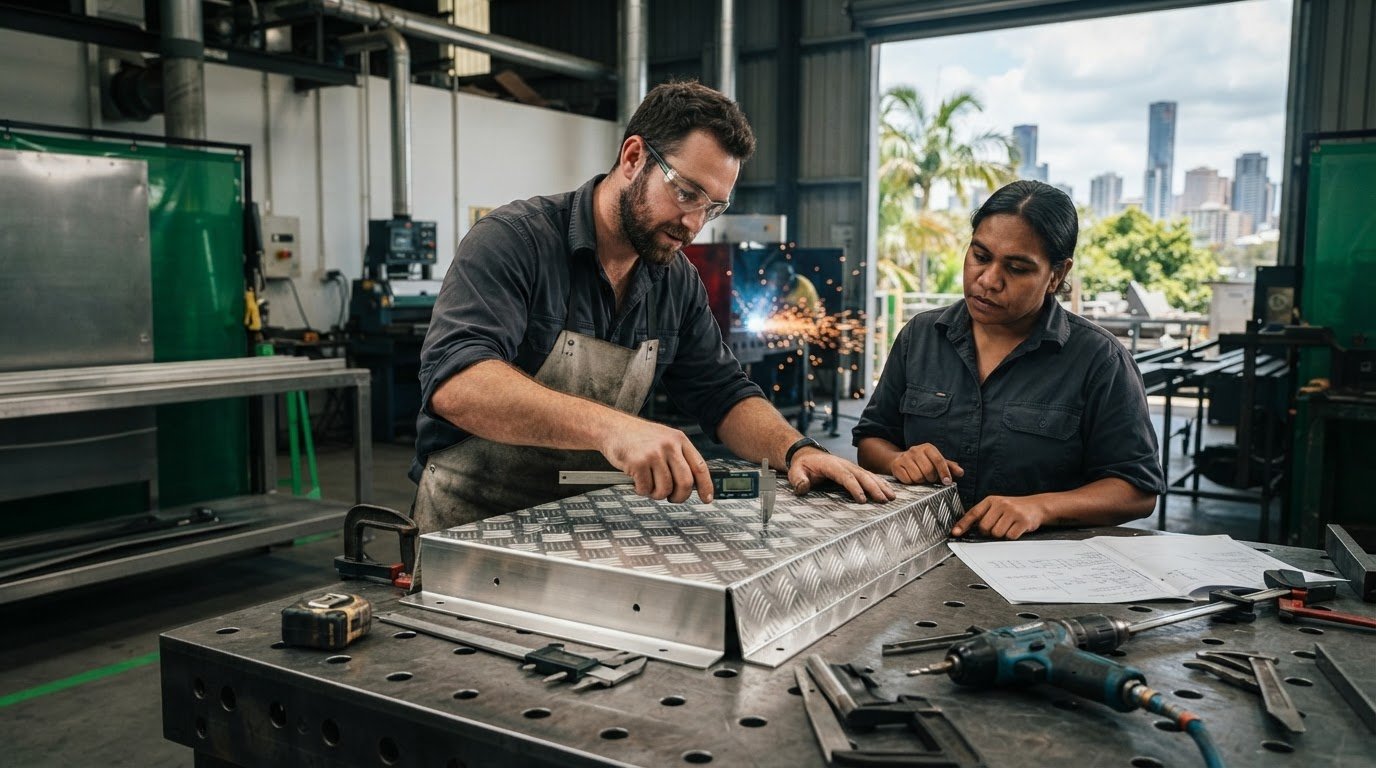
What if the checker plate that looks right on paper doesn’t fit the site or suit the job? With custom aluminium checker plate fabrication, details such as plate thickness, alloy, tread pattern and finished dimensions all affect the result. Before work begins, it pays to confirm the specification and understand what the fabricator’s scope includes.
This guide will help you prepare a clear brief, assess fabrication options and choose a local partner for your Brisbane project. You’ll learn what information to gather, which material and pattern questions to ask, and how to check whether a fabricator’s experience matches your requirements.
Start with the application and site conditions, not just the sheet. Donewright Stainless provides aluminium fabrication and serves Brisbane, the Gold Coast, Logan and Ipswich. For a checker plate project, ask about relevant experience, available materials and finishes, and whether site measuring, delivery or installation can be included. Confirming these details early helps clarify the scope and reduce fit-up issues.
Key Takeaways
- Identify the component’s purpose and engineering requirements before settling on an alloy, temper, thickness or pattern.
- For custom aluminium checker plate fabrication, distinguish the available space from the finished dimensions, including bends, clearances and fixing points.
- Compare stock material and made-to-measure fabrication by considering the modifications, adjustments and site coordination each option may need.
- Prepare a brief with site measurements, fixing details, drawings and finish expectations to help avoid preventable revisions.
- When considering a local fabricator, check relevant checker plate experience and confirm which project stages, such as site measuring or installation, are available in your area.
Custom aluminium checker plate fabrication: when is a made-to-measure solution worthwhile?
Aluminium checker plate, also called tread plate, is sheet or plate with a raised pattern on one face. The pattern is part of the surface profile, but it does not by itself confirm that the plate meets a particular access or safety requirement. For a general overview of the material and its uses, see this description of aluminium tread plate.
Checker plate may be used for components such as access covers, platform surfaces or protective panels around equipment. These examples are not a specification. The design depends on the component’s purpose and the conditions where it will be used. For example, a cover that sits flush in a frame has different dimensional and fixing requirements from a panel fitted over machinery.
What information identifies the right checker plate application?
Start with the installation location and the component’s purpose. Is it for pedestrian access, equipment protection or another use? Then record expected traffic and loads, exposure to weather or other conditions, cleaning requirements and how the component will be fixed. This gives the fabricator or relevant technical adviser a sound basis to discuss the design. Don’t choose a plate on appearance alone.
When does custom fabrication add practical value?
A made-to-measure component may be useful when the site has specific dimensions or the part needs features such as clearances, cut-outs, returns or formed edges. Measuring these accurately can reduce gaps, clashes and alterations during fitting. A standard sheet may be a better fit for a straightforward application. Compare the options against the brief, including how the part will be supported, fixed and accessed once installed.
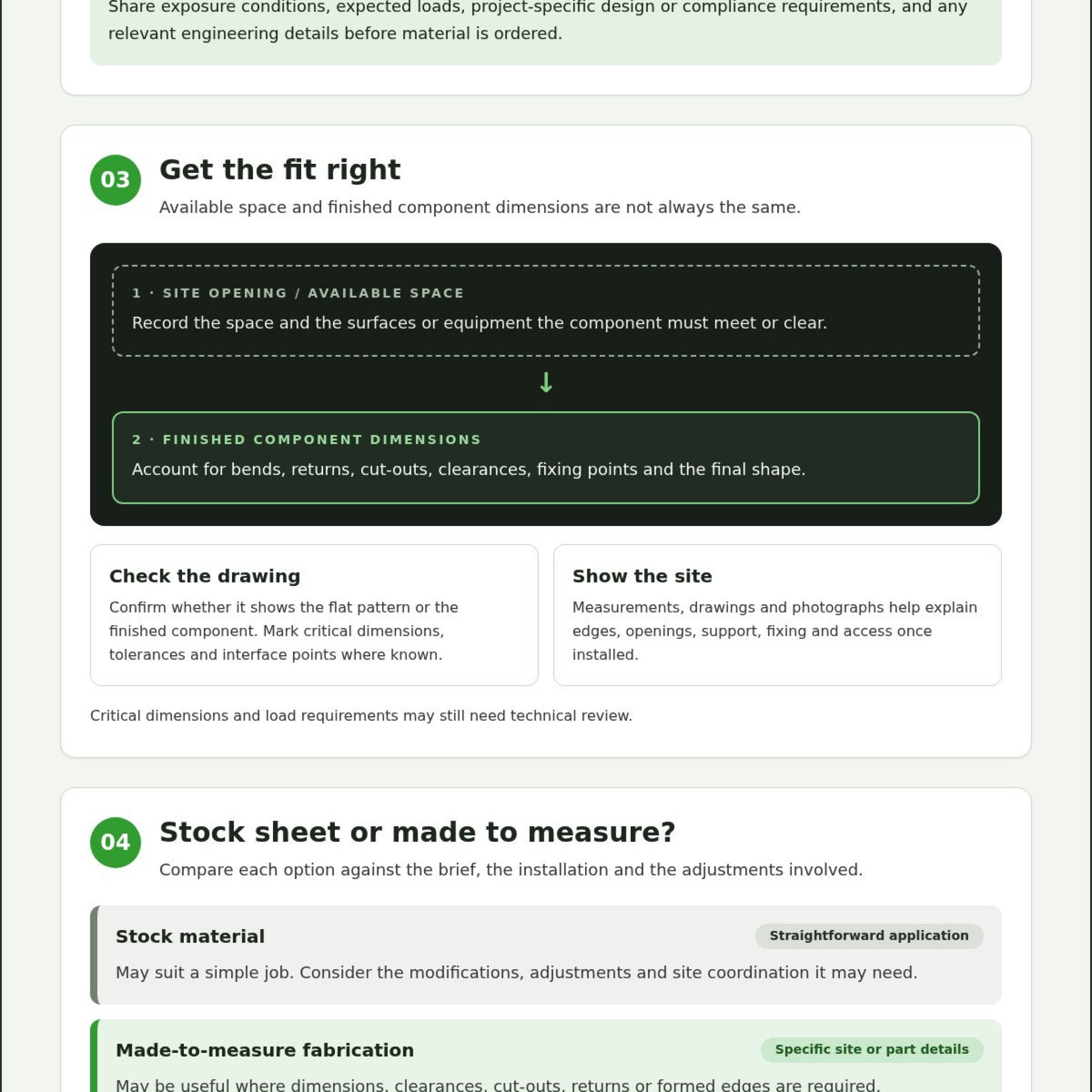
For custom aluminium checker plate fabrication, separate the available space from the finished component dimensions. Note where edges meet adjacent surfaces, whether folds affect clearances, and where fixings or openings are required. Drawings, photographs and site measurements help communicate these details. Critical dimensions and load requirements may still need technical review.
Consider exposure and maintenance as well. An outdoor component or one in a wash-down area may face different conditions from a sheltered indoor part. Share the environment, fixing method and any project-specific engineering requirements before fabrication. This helps the fabricator discuss material and design choices with the intended use in mind.
Specify aluminium checker plate fabrication: grade, thickness, pattern and finish
A useful specification connects the material to the job. Alloy, temper and thickness need to be assessed against the component’s purpose, expected loads, operating environment and engineering requirements. Grades such as 5052 and 3003 are used for aluminium checker plate, but neither should be selected by name alone. The Australian Aluminium Council provides background on the Australian aluminium industry. Confirm the right material for your application with the fabricator or project engineer.
Which material and dimensions should go into the brief?
Provide the operating environment, expected loads and exposure conditions, along with drawings or measured dimensions. Include tolerances and interface points where known, such as the frame, surrounding panels or equipment the part must clear. Ask the fabricator to confirm a suitable alloy, temper and thickness before material is ordered. If the project has design or compliance requirements, identify them early so they can be considered against the proposed component.
Be precise about dimensions. A sheet’s nominal measurements may not match the finished part: bends, returns and cut-outs can change its final shape and fit. Mark critical dimensions, required clearances and fixing locations. If you’re working from a drawing, confirm whether it shows the flat pattern or the finished component.
How should you specify edges, finish and fixing details?
Describe the visible face and pattern orientation, particularly if the component needs to align with adjacent plates or meet a visual requirement. Confirm which patterns and finishes are available for the job rather than assuming a particular option can be supplied. Specify whether edges will be exposed, folded or cut, and note any deburring expectations. State the intended finish and cleaning conditions instead of assuming a standard finish will suit.
Show fixing locations and identify the supporting surface, access available for installation and any constraints around nearby components. If aluminium will contact another metal, ask whether the materials and exposure create a dissimilar-metal concern and whether a separation detail is needed.
Before approving the specification, check that the proposed dimensions, material and fixing approach have been reviewed against the project’s load requirements and any applicable standards or engineering advice. Requirements depend on the application, so a general material description is not evidence of compliance.
A clear brief gives a fabricator a practical basis to assess the work. For a Brisbane project, you can discuss an aluminium fabrication enquiry with Donewright Stainless and confirm whether its experience and available processes suit your checker plate requirements.
Compare checker plate fabrication options by fit, finish and project requirements
A standard sheet isn’t automatically the easier option, and made-to-measure fabrication isn’t always necessary. The practical choice depends on whether the material’s dimensions suit the site, what changes are needed and how the finished part can be handled and fixed. Compare the complete job, not just the sheet.
Stock sheet or made-to-measure component: how do they differ?
Stock material may suit a straightforward application where its dimensions need little alteration. A custom-fabricated part may be a better match for a specific opening or may include required cut-outs, folds or returns. Before deciding, consider whether the material can be transported and manoeuvred to the installation point, and whether any cutting or adjustment can be done safely and accurately on site.
Ask the fabricator to review your drawings and site conditions before recommending an approach. Compare finished dimensions, the fit against adjoining surfaces, the fixing method and any access constraints. Custom work does not remove the need for accurate measurements and agreed tolerances, and some site adjustment may still be required.
What should you ask an aluminium fabricator before proceeding?
Ask about relevant aluminium fabrication experience and get a clear description of the proposed scope. For checker plate work, verify specific experience rather than assuming general aluminium capability covers every material, process or installation requirement. Agree how drawings, measurements, tolerances and finish approvals will be managed. Also clarify who checks site dimensions and who accepts the finished component.
Use a comparison table to keep discussions focused:
| Requirement | Question to ask | Evidence to request |
|---|---|---|
| Fit and dimensions | Will the proposed sheet or part suit the opening and interfaces? | Reviewed drawing with critical dimensions and tolerances marked |
| Cut-outs and edges | Are the required openings, folds and edge details included? | Drawing or written scope showing each feature |
| Finish and approval | How will the agreed finish be confirmed before fabrication? | Written finish description or an agreed approval sample, if applicable |
| Site and installation | Who verifies measurements, arranges delivery and completes installation? | Written allocation of responsibilities and acceptance criteria |
For custom aluminium checker plate fabrication, request a proposal that separates confirmed details from items still to be checked. If site verification, delivery or installation is required, confirm whether the fabricator can include it for your location. That makes proposals easier to compare and helps prevent different assumptions from emerging after fabrication starts.
Prepare a checker plate fabrication brief and avoid preventable rework
A clear brief turns a site requirement into a scope that can be reviewed before fabrication. For custom aluminium checker plate fabrication, missing dimensions, fixing details or finish expectations can lead to revised drawings or changes to the component. Record what is known, flag what still needs confirmation and agree on approval points in writing.
What should a quote request include?
Give the fabricator enough information to assess the work and identify questions. Include:
- Application and location: what the component does and where it will be installed.
- Drawings and dimensions: current drawings or site measurements, quantities, critical clearances and interfaces.
- Operating conditions: known loads, exposure, cleaning requirements and access constraints.
- Finish and fixing details: intended appearance, edge treatment, fixing method and supporting surface.
- Project scope: whether site verification, delivery or installation is expected.
Ask the fabricator to state assumptions, exclusions and any information still needed to finalise the proposal. Mark estimated dimensions as estimates rather than presenting them as confirmed. A quote based on incomplete details may need revision once those details are checked.
How can site coordination reduce delays and rework?
Before work proceeds, agree who verifies site measurements and whether a site visit is needed. Set out how drawings will be reviewed, who can approve them and who is authorised to request changes. Confirm the approval point before fabrication, then document any changes to dimensions, fixings or finish so everyone is working from the same information.
Clarify responsibility for delivery, installation and final acceptance too. Don’t assume these tasks are included in a fabrication scope; confirm what is covered for the specific project. Donewright Stainless provides aluminium fabrication and has a mobile workshop for on-site projects, but checker plate experience and the availability of site work should be confirmed against your requirements and location.
If you’re comparing materials as part of the design discussion, review the relevant options for custom stainless steel fabrication in Brisbane and mild steel fabrication solutions in Brisbane. Base the material choice on the application and project requirements, not assumptions about what is easiest to fabricate.
Once you’ve gathered the site information and clarified the scope, discuss your aluminium fabrication requirements with Donewright Stainless and confirm whether the relevant checker plate experience and project support are available.
Arrange custom aluminium checker plate fabrication with a South East Queensland fabricator
A local fabricator can discuss the job in relation to its actual site conditions, but the scope still needs to be confirmed project by project. Donewright Stainless is a Brisbane-based provider of aluminium fabrication and custom metal work. Its fully equipped mobile workshop supports on-site projects. Whether on-site work suits a particular checker plate component depends on the requirements, so check this directly.
What can Donewright Stainless confirm for your project?
Donewright Stainless serves Brisbane, the Gold Coast, Logan and Ipswich. This gives commercial and industrial customers in these areas a local point of contact, but it does not mean every project or type of work is available at every location.
For checker plate, ask about relevant fabrication experience and examples, suitable materials, fabrication processes and the work included in the proposed scope. If the job may need site measuring, delivery or installation, confirm whether those tasks are available for your location and who is responsible for them. General aluminium fabrication capability is a useful starting point, not a substitute for checking the specific requirements of your component.
What are the next steps for a fabrication enquiry?
Share the information needed to assess the work. A concise enquiry can include:
- Drawings, photographs and measured dimensions, with critical clearances or fixing points identified.
- The component’s intended use, operating conditions and any known load or project requirements.
- The site location, access constraints and whether site verification or installation may be needed.
- Your preferred finish, quantity and any approval or timing considerations relevant to the project.
Then ask which alloy, temper and thickness options may suit, which fabrication and finishing processes are proposed, and what information remains outstanding. Confirm how drawings will be reviewed and approved, and clarify the scope before work proceeds. This helps you assess whether the proposed approach fits the brief and whether technical or site details need further review.
For custom aluminium checker plate fabrication, a practical discussion should establish fit, material suitability and responsibilities before work begins. If your project is in Brisbane, the Gold Coast, Logan or Ipswich, discuss an aluminium fabrication project with Donewright Stainless. Include your drawings and site details so the team can assess the enquiry and confirm whether its experience and available scope match the work required.
Turn your checker plate brief into a clear next step
A reliable result starts with a component designed for its application. Confirm the operating conditions and project requirements, then agree on the material, dimensions, finish, fixing details and approvals before fabrication. A complete brief also helps you compare stock material with a made-to-measure option and clarify who is responsible for site checks and installation.
Donewright Stainless is a Brisbane-based fabricator with aluminium fabrication capability and a fully equipped mobile workshop for on-site projects. The business serves Brisbane, the Gold Coast, Logan and Ipswich. For custom aluminium checker plate fabrication, ask about relevant experience, available processes and a suitable project scope, including whether site work is available for your location.
Share your drawings, measurements, intended use and site details to begin the conversation. Discuss your aluminium fabrication requirements with Donewright Stainless and clarify the practical next steps for your project. Agreeing on the key details early gives you a clearer path from enquiry to finished component.
Frequently Asked Questions
What is aluminium checker plate used for?
Aluminium checker plate may be used for made-to-measure components such as access covers, platform surfaces and protective panels. Its raised pattern is formed on one face, but the pattern alone does not establish that a plate meets a particular grip or safety requirement. Confirm the intended use, loads, support and fixing method, and seek technical review where the application has engineering or compliance requirements.
How do I choose the thickness of aluminium checker plate?
Choose thickness based on the application and its engineering requirements, not appearance alone. Consider the expected load, unsupported span, support arrangement, fixing method and operating environment. Alloy and temper also affect whether a proposed material suits the job. Give the fabricator your drawings and known load information, then ask them to confirm a suitable specification or identify where an engineer’s review is needed before material is ordered.
Can aluminium checker plate be custom cut and folded?
Aluminium checker plate can be cut or formed for some applications, but the achievable details depend on the alloy, temper, thickness, pattern and available fabrication processes. Tell the fabricator about required cut-outs, returns, folded edges and finished dimensions, then ask what can be done for your design. For custom aluminium checker plate fabrication, approved drawings and clear measurements help ensure the intended shape and interfaces are understood before work proceeds.
Is aluminium checker plate suitable for outdoor use in Brisbane?
It may be suitable outdoors, but the specification depends on the exposure and installation. Consider rain, drainage, cleaning, nearby materials and, for coastal locations, salt exposure. Grade, finish, fixings and contact with dissimilar metals may affect the material choice. Describe the site conditions to the fabricator and check any project-specific engineering or compliance requirements. A raised pattern or aluminium construction alone does not make a component suitable for every outdoor use.
What should I send when requesting a checker plate fabrication quote?
Send the intended use, site location, quantity, drawings or measured dimensions, and photographs if they help show the installation area. Include known loads, exposure, clearances, cut-outs, fixing details, finish expectations and access constraints. State whether you expect site measurement, delivery or installation, then ask the fabricator to list assumptions, exclusions and missing information. This gives them a clearer basis to assess the scope and identify questions before quoting.
Can Donewright Stainless fabricate and install aluminium checker plate in Brisbane?
Donewright Stainless provides aluminium fabrication and serves Brisbane, the Gold Coast, Logan and Ipswich. Checker plate-specific experience and installation availability are not confirmed for every project, so ask directly about relevant examples, suitable materials, proposed processes and the work included in the scope. If site measuring, delivery or installation is needed, confirm whether it is available for your location and who is responsible for each stage.
What is the difference between aluminium checker plate and stainless steel plate?
They are different materials with different properties and fabrication considerations. Aluminium is generally lighter than stainless steel, while suitability for corrosion exposure, loads, cleaning and appearance depends on the particular alloy, grade, finish and application. Checker plate refers to a raised surface pattern; stainless steel plate may be supplied with other surface finishes. Compare the materials against the project requirements and ask a fabricator or engineer to review the proposed specification.
