
Custom Trolley Manufacturer Gold Coast: A Practical Buyer’s Guide
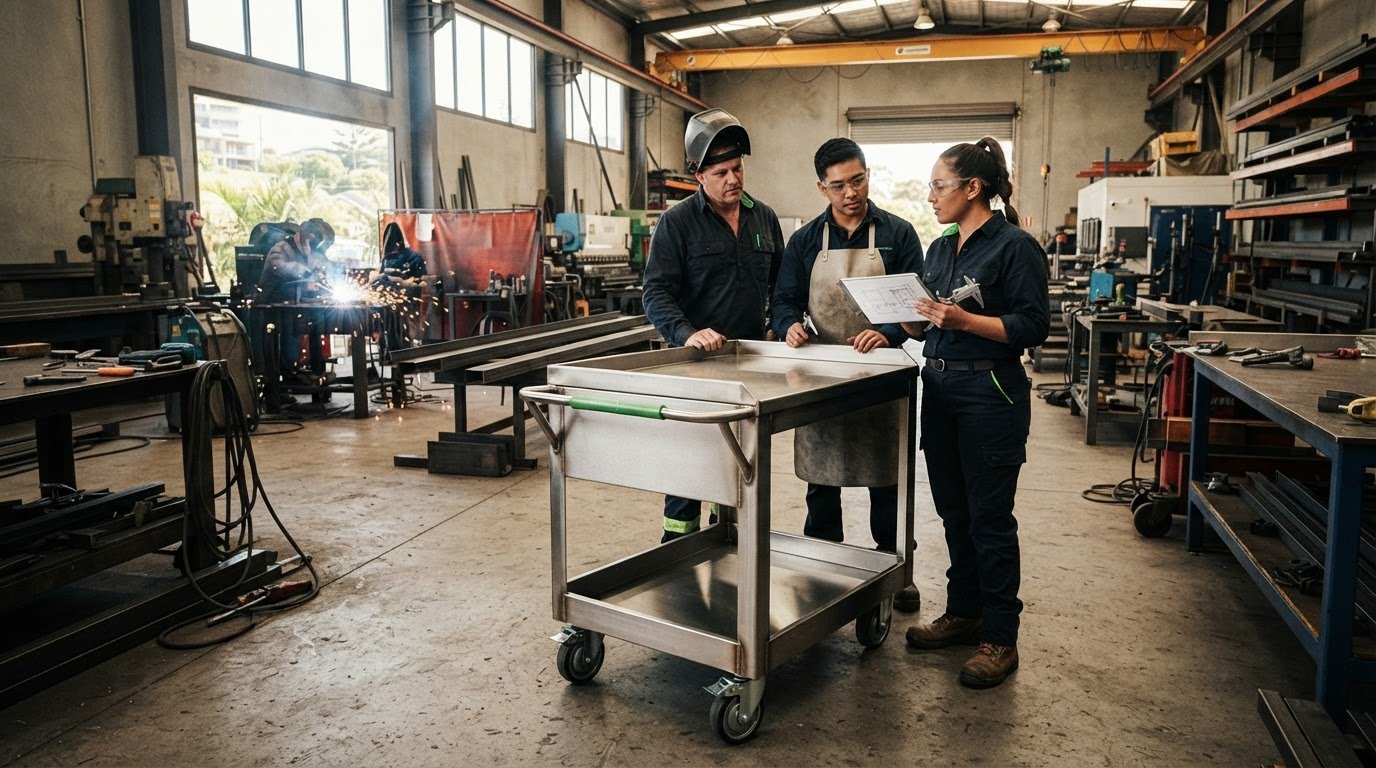
An off-the-shelf trolley may look like the quickest solution, but it can become a daily workaround if its dimensions, handling features or capacity don’t suit the task. A custom design starts with how the trolley will be used, not just what’s available on the shelf. Choosing a custom trolley manufacturer Gold Coast workplaces can brief clearly is an important step towards a fit-for-purpose result.
It’s understandable to want a trolley that moves the load reliably and fits your site and workflow. This guide explains what to prepare before requesting a quote, from load details and route measurements to workplace conditions and features. It also covers questions to ask a local fabricator and what to clarify from the initial brief through to manufacture and installation. Donewright Stainless provides custom trolley fabrication and on-site installation across its fabrication work, serving the Gold Coast as well as Brisbane, Logan and Ipswich.
Key Takeaways
- A custom trolley can be practical when standard dimensions or features don’t suit the workplace task, access or workflow.
- Prepare a useful brief by recording the load, trolley dimensions, travel route and work environment. Flag details that need a fabricator’s review.
- Compare materials and features against operating conditions and maintenance needs, not appearance alone.
- When assessing a custom trolley manufacturer Gold Coast businesses can work with, ask about relevant fabrication capability, design communication and what the quote includes.
- Gather measurements, photographs and site access details before discussing design, manufacture and installation with a local fabricator.
When does a custom trolley make sense for a Gold Coast workplace?
A custom trolley is designed around a particular handling task and the conditions at the workplace. Its dimensions and features can be considered in relation to the load, route and workflow. A Hand truck is one familiar form of wheeled handling equipment, but a workplace may need a different configuration for its specific task.
Standard trolleys can work well when their size, access and layout match the job. A mismatch becomes clear when a trolley won’t pass through a doorway, fit into a work area or carry an awkwardly shaped item in a practical way. Custom fabrication may address that constraint instead of asking staff to adapt their handling process around unsuitable equipment.
A custom trolley makes sense when a standard option can’t safely or practically accommodate the load, route or work process.
Which workplace problems can a purpose-built trolley address?
Start with the task a standard trolley struggles to perform. In a commercial kitchen, staff may need to move equipment or supplies through narrow access points. In a workshop or warehouse, the challenge might be transporting irregular components along a repeated route or keeping task-specific items together. These are illustrative situations, not Donewright project examples.
Consider awkward loads, how often the trolley will be used, tight turns, changes in floor surface and any storage needed on the trolley. A suitable design can be planned around the task and route, but don’t assume it will deliver a particular productivity or safety result without assessing how it will be used.
What should buyers assess before choosing a local manufacturer?
Look for a fabricator who asks about the task before discussing a design. Be ready to explain the load, how often it moves, the route, workplace conditions and any access or installation requirements. This helps separate confirmed operating needs from assumptions that still need technical review.
Check that the provider services the project location on the Gold Coast and clarify whether the project scope covers design, manufacture and any on-site installation. Donewright Stainless makes custom stainless steel trolleys for commercial and industrial applications, provides stainless steel fabrication and offers on-site installation across its fabrication work. Confirm project details such as material grade, finish, load capacity and installation scope with the fabricator before proceeding.
What specifications should a custom trolley manufacturer confirm?
A useful brief separates what your team knows from what needs design review. Record the intended task, operating conditions and constraints, then ask the fabricator to assess technical details such as capacity and stability against the proposed design. Safe Work Australia’s Model Code of Practice can also help workplaces consider risks associated with manual tasks.
How do load, size and access affect trolley design?
Describe the load as it’s handled in practice, not only by its approximate weight. Include its dimensions and shape, how it’s placed or removed, and whether it sits centrally or is distributed unevenly. Measure the route too: aisle and doorway widths, turning points, ramps, floor transitions and space for parking or storage can all affect the design.
These details help the fabricator assess the design, but they don’t replace technical review. The fabricator should consider capacity and stability for the actual trolley and its intended use. Don’t treat an assumed load rating or a familiar-looking frame as confirmation that the trolley is suitable.
Which material and finish suit the work environment?
Explain where the trolley will operate and what it will encounter, including moisture, cleaning routines and workplace substances. Donewright Stainless makes custom stainless steel trolleys and provides stainless steel fabrication, but the appropriate material grade and finish depend on the project. Ask the fabricator to confirm those choices rather than specifying them based on assumption.
Use this checklist to prepare a brief for a custom trolley manufacturer Gold Coast businesses are considering:
| Specification | Buyer input | Ask the fabricator |
|---|---|---|
| Load | What is carried, its dimensions, weight and distribution | How will capacity and stability be assessed for the intended use? |
| Overall size | Required trolley dimensions and usable storage space | What design clearances or measurements need confirmation? |
| Route | Aisles, doors, turns, ramps and floor transitions | Could any route feature affect movement or the proposed design? |
| Work environment | Exposure, cleaning practices and substances encountered | Which material and finish are suitable, and why? |
| Handling and storage | How items are loaded, removed and stored between tasks | Which details are confirmed, and which require design review? |
Attach measurements and site photographs where available, and label estimates clearly. For a project-specific discussion, review Donewright’s custom stainless trolley fabrication and ask which requirements need further assessment.
How should you compare custom trolley materials and features?
Compare options against the trolley’s task, environment, maintenance needs and handling conditions. A feature that helps in one workplace may add unnecessary complexity in another. Explain how operators will use the trolley and ask the fabricator to assess suitable choices. Donewright Stainless makes custom stainless steel trolleys; confirm the material, finish and features for your project before treating them as part of the design.
When might stainless steel be the right trolley material?
Base material selection on the actual work environment. Tell the fabricator whether the trolley will encounter moisture, cleaning products or other workplace substances, and explain the cleaning routine. Stainless steel may be worth discussing for the application, but suitability depends on the conditions and specification. Ask the fabricator to confirm the appropriate grade and finish instead of assuming one option will meet every requirement.
For broader context on fabrication considerations, see this custom stainless steel fabrication guide.
Which trolley features should be specified rather than assumed?
Describe the route and handling process before settling on wheels, brakes or handles. The surface, turns and stopping points can affect which options the fabricator should review. Shelves, guarding and restraints also depend on the load. Consider whether items need to be contained, how operators access them and how they’re transferred on and off the trolley. These are design choices to assess, not standard inclusions.
Discuss how each proposed feature could affect movement, cleaning and ongoing maintenance. A clear description of the task helps the fabricator weigh practical trade-offs and identify details that need technical review.
| Specification area | Buyer can confirm | Fabricator should review |
|---|---|---|
| Material and finish | Exposure, cleaning routine and substances encountered | Suitable material grade and finish for the application |
| Wheels and braking | Route, floor conditions, turns and stopping points | Options suited to movement and the operating environment |
| Handles | How operators position and manoeuvre the trolley | Handle design in relation to task and trolley configuration |
| Shelves, guarding and restraints | Load shape, access needs and whether items require restraint | Configuration and implications for handling, cleaning and maintenance |
Use the table to separate known operating requirements from design decisions. A custom trolley manufacturer Gold Coast buyers consult should be able to discuss these trade-offs and explain which specifications still need assessment before manufacture.
How do you prepare a clear custom trolley brief on the Gold Coast?
A clear brief gives a fabricator enough context to understand the job, identify open questions and plan next steps. It doesn’t need to contain finished engineering decisions. Separate confirmed measurements and operating requirements from estimates, then ask the fabricator to review uncertain details before the design is finalised.
A useful trolley brief explains what must be moved, how and where it will be handled, and what the site requires for delivery and installation.
What information should you send before requesting a quote?
Collect practical details before contacting a custom trolley manufacturer Gold Coast businesses can work with. A short written brief, supported by photographs or a sketch, can make the initial discussion more precise.
- Describe the task. Explain what the trolley will carry, how often it will be used and how operators load and unload it.
- Record the load. Note dimensions, weight if known, shape and how the load sits or is distributed. Mark estimates clearly.
- Measure the route and work area. Include doorways, aisles, turning points, ramps, floor transitions and storage clearances.
- Explain the environment. Note exposure, cleaning routines, workplace substances and maintenance considerations.
- Share site information. Provide photographs or sketches, identify access constraints and list any known installation requirements.
Label each measurement as confirmed or estimated. This helps the fabricator see what can inform an initial design and what needs checking on site or through further review.
What should happen during design review and installation planning?
Before manufacture proceeds, review the proposed dimensions and features with the fabricator. Ask which operating requirements have been addressed, what technical questions remain and whether any assumptions need checking. Confirm project-specific details such as material, finish and load capacity rather than relying on preliminary estimates.
Discuss delivery and installation separately. Share the Gold Coast site address, access arrangements, relevant operating constraints and who will coordinate access. Confirm the installation scope, each party’s responsibilities and project timing directly with the provider. Don’t assume standard lead times or that installation is automatically included.
Donewright Stainless provides custom stainless steel trolley fabrication and on-site installation across its fabrication work. To discuss a clearly scoped requirement, contact Donewright Stainless about your trolley brief.
Choosing a custom trolley manufacturer on the Gold Coast
A useful supplier discussion should make design decisions and project scope clearer, not leave you guessing about what’s included. Compare fabricators by how they handle your requirements, communicate technical questions and clarify responsibility for manufacture and installation. This gives you a practical basis for choosing a custom trolley manufacturer Gold Coast businesses can brief with confidence.
What questions help assess a fabrication partner?
Ask how the fabricator will review the trolley’s load, dimensions, route and operating conditions. Find out how proposed features or design changes will be discussed, and what information they need before confirming a design. A capable partner should identify assumptions that need checking rather than treating estimates as confirmed specifications.
- Which requirements can be confirmed from my brief, and which need technical verification?
- What does the proposed scope include, and are there any exclusions?
- Who is responsible for manufacture, delivery and any required on-site installation?
- How will design changes or unresolved details be agreed before work proceeds?
Clear answers help you understand the handover from your initial brief through to delivery. Confirm project timing and installation arrangements directly, as these depend on the particular job and site.
How can Donewright Stainless support a custom trolley brief?
Donewright Stainless is a Brisbane-based fabricator that services the Gold Coast, Logan and Ipswich. Its work includes custom stainless steel trolleys, stainless steel fabrication and on-site installation across its fabrication work. It’s a local fabrication partner to consider when you have a defined commercial or industrial handling requirement and want to discuss design, manufacture and installation scope together.
If you’re weighing material options, Donewright’s mild steel fabrication guide offers additional context. Material suitability still needs to be confirmed for your trolley’s intended use, environment and maintenance requirements. Ask the fabricator to verify project-specific details such as grade, finish and load capacity rather than assuming they’re standard.
Before approaching a supplier, gather the task description, load information, measurements, route details and site access notes. Then compare how clearly each fabricator explains its proposed scope and outstanding questions.
Ready to put your requirements into a brief? Discuss your custom trolley requirements with Donewright Stainless and share the project details for an initial conversation.
Put your trolley requirements into a practical brief
A custom trolley is most useful when its design reflects the real task, route and workplace conditions. Before requesting a quote, gather load details, measurements, photographs and site access information. Mark estimates clearly, then ask the fabricator to review capacity, stability, material choices and features against the intended use. This gives you a sounder basis for comparing a custom trolley manufacturer Gold Coast businesses can work with, including how each supplier explains scope, installation needs and unresolved questions.
Donewright Stainless makes custom stainless steel trolleys, serves the Gold Coast, Brisbane, Logan and Ipswich, and provides fabrication and installation. Share the task and available project details to begin a practical conversation about what needs to be confirmed for your trolley.
Discuss your custom trolley requirements with Donewright Stainless. With a clear brief and the right questions, you can move towards a design considered around the way your workplace operates.
Frequently Asked Questions
What should I tell a custom trolley manufacturer before requesting a quote?
Explain what the trolley will carry, how it will be loaded and unloaded, and where it needs to travel. Include the load’s dimensions and known weight, required trolley size, route constraints, workplace conditions and any cleaning or maintenance needs. Photos, sketches and site access details can clarify the brief. Label estimates separately from confirmed measurements, and ask the fabricator which details need further assessment before a design or quote can be confirmed.
Can a stainless steel trolley be made to suit a specific workplace?
Yes. A custom stainless steel trolley can be designed around a particular handling task and workplace, subject to confirming the project requirements with the fabricator. Explain the operating environment, cleaning routine, substances the trolley may contact, load and route. Ask the fabricator to assess the appropriate material grade, finish and design for those conditions. Don’t assume a particular stainless steel specification will suit every workplace or meet requirements that haven’t been discussed.
How do I choose the right trolley size and load capacity?
Base the size on both the load and the route. Measure the items being moved, the space needed to load and remove them, doorways, aisles, turns and storage clearances. Tell the fabricator how the load sits on the trolley and whether its weight is evenly distributed. The fabricator should assess capacity and stability for the proposed design and intended use. Don’t rely on a guessed rating or the dimensions of a similar trolley.
Are custom trolleys suitable for commercial and industrial use?
They can be designed for commercial and industrial handling tasks when requirements are clearly defined and the design is assessed for the intended use. A trolley for moving supplies through a workplace may need different dimensions and features from one used to transport components around an industrial site. Discuss the load, frequency of use, route, environment and operator handling with the fabricator. Suitability depends on the actual design and operating conditions.
Can Donewright Stainless make custom trolleys for Gold Coast businesses?
Yes. Donewright Stainless makes custom stainless steel trolleys for commercial and industrial applications and services the Gold Coast, as well as Brisbane, Logan and Ipswich. The business provides stainless steel fabrication and on-site installation across its fabrication work. Donewright Stainless is a custom trolley manufacturer Gold Coast businesses can approach with a defined project brief. Confirm the trolley’s specifications and installation scope directly for your project.
What features can be included in a custom trolley?
Possible design features include wheels suited to the route, braking, handles, shelves, guarding or restraints, depending on the task. These aren’t automatic inclusions; discuss each with the fabricator. Explain how operators move the trolley, access the load, transfer items and clean or maintain the equipment. The fabricator can review which features suit the proposed design and identify technical questions to resolve before manufacture.
