
Sustainable Stainless Steel: Australian Business Guide
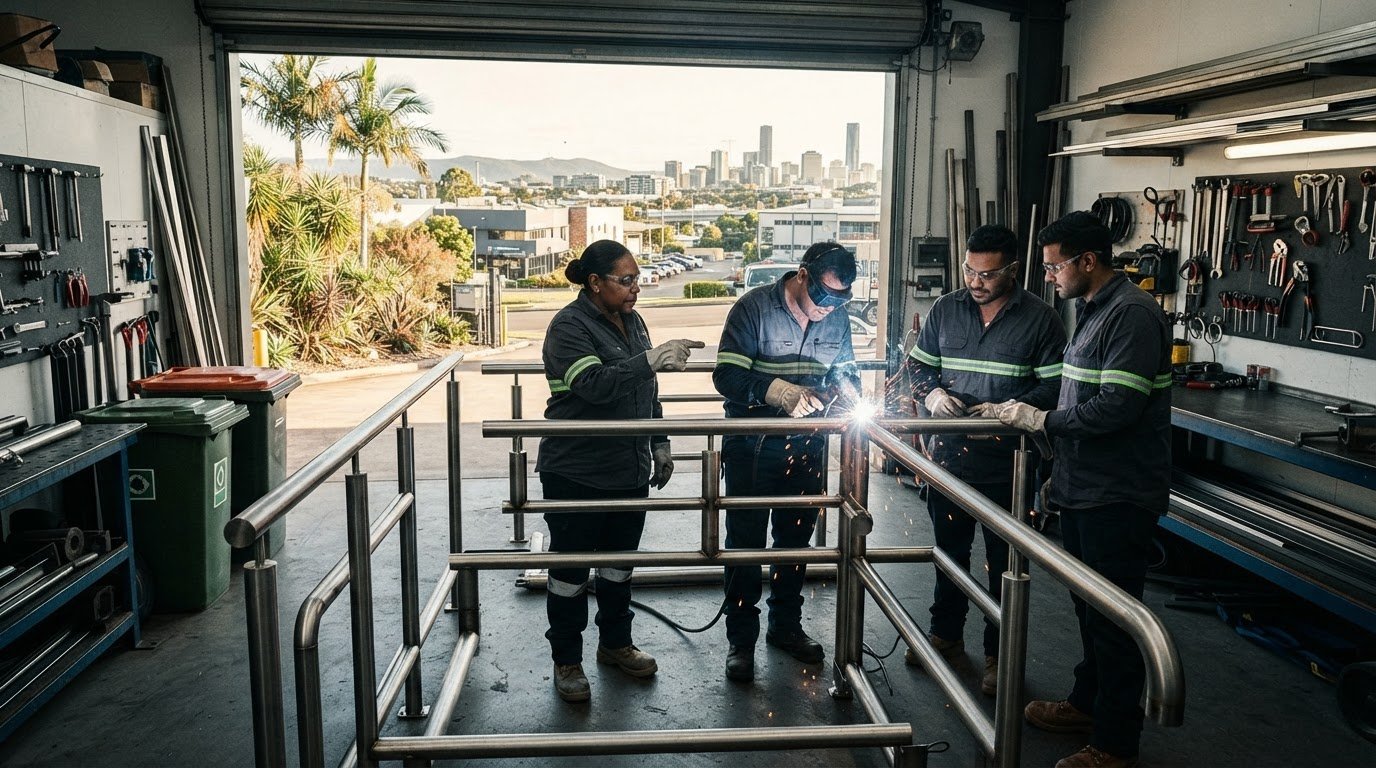
The most sustainable stainless steel choice isn’t necessarily the one with the strongest environmental claim. If the material doesn’t suit its operating conditions, or poor fabrication leads to early replacement, the project may fall short of its sustainability goals. Assessing sustainable stainless steel solutions can be challenging because claims aren’t always easy to compare, and the right specification depends on how the component will be used.
A sound decision starts with clear criteria. This guide explains how to assess material information and suppliers, match stainless steel to the project’s environment and performance requirements, and plan fabrication, installation and maintenance to support a longer service life. You’ll also find questions to ask before confirming a specification, so the solution is designed for the job rather than selected on a broad sustainability claim alone.
We’ll cover practical choices that influence durability and responsible resource use, then consider how a local fabricator can help turn project requirements into fit-for-purpose work. Donewright Stainless is based in Brisbane and serves Brisbane, the Gold Coast, Logan and Ipswich, with capabilities including custom stainless steel fabrication, installation and maintenance.
Key Takeaways
- Assess sustainability claims by checking what they cover, the assumptions behind them and whether the supporting documents relate to your project.
- Choose sustainable stainless steel solutions based on operating conditions, exposure, hygiene needs and maintenance requirements, not the material name alone.
- Include fabrication quality, installation coordination and future repair access in your project brief to help avoid preventable rework or replacement.
- Use a practical project checklist to organise evidence, site details and maintenance planning before confirming a specification.
- Ask local fabricators about project fit, documentation and relevant capabilities. Donewright Stainless provides custom fabrication, installation and industrial maintenance across Brisbane, the Gold Coast, Logan and Ipswich.
What makes sustainable stainless steel solutions a sound project choice?
A material’s name alone can’t establish whether a project is sustainable. Stainless steel may offer properties suited to demanding conditions, but the right choice depends on the application, fabrication, care and what happens when the component is no longer needed. A specification that doesn’t match its environment can lead to avoidable damage, repairs or replacement.
Sustainable stainless steel solutions are project choices assessed across material sourcing, design, fabrication, operation, maintenance and end-of-life, using evidence relevant to the application. This lifecycle view helps businesses compare options on more than a single claimed benefit and consider both practical performance and responsible resource use.
What does sustainability mean for a stainless steel project?
Lifecycle thinking follows a component from material sourcing through fabrication and everyday use to maintenance and end-of-life. Each stage raises different questions: what documentation supports sourcing claims, how much processing is required, and what care will the finished item need?
Project requirements matter. A handrail exposed to outdoor conditions and a bench used in a hygiene-sensitive setting face different demands. Material selection and design should account for the actual environment and use. Seek competent advice where requirements are technical or regulated.
Stainless steel’s material properties don’t, by themselves, prove a product’s overall environmental performance. Claims about recycled content, recyclability or lifecycle impacts need relevant evidence and clear assumptions. For background on stainless steel recycling and reuse, consult the reference alongside project-specific documentation, rather than treating a general description as proof of a particular product’s impact.
Why design life and maintenance belong in the discussion
Fit-for-purpose design can help prevent premature damage and avoidable rework. Details such as how a component is supported, joined and accessed for cleaning or repair should reflect its intended use. Fabrication quality matters too: unsuitable welds or surface treatment can compromise performance, so discuss relevant workmanship and finish requirements with the project team.
Maintenance belongs in the service-life plan, not as an afterthought. Establish how the finished item will be inspected, cleaned and repaired, and whether those tasks can be done without unnecessary disruption. No material or design guarantees a particular lifespan; actual performance depends on conditions, workmanship and care. A realistic maintenance plan helps decision-makers assess the solution over its working life without assuming unverified environmental savings.
How to assess stainless steel sustainability claims and evidence
Broad terms such as “green”, “eco-friendly” or “sustainable” don’t tell you what has been measured or whether the claim applies to your project. Ask suppliers to explain the basis of each statement and provide documentation you can review. A documented environmental claim identifies its evidence, scope and assumptions; general marketing language may not explain what was assessed.
Which documents and details should buyers request?
Start with written material grades and relevant product specifications, then check that the documents relate to the item being proposed. If a supplier makes an environmental claim, ask for its source and assessment boundary: which stages, processes or components are included, and which are excluded? Clarify whether the information covers the material, a finished product or a broader product category.
Environmental product declarations and lifecycle assessments can help, but only if they are relevant and comparable. Different boundaries, assumptions or assessment methods can make two documents unsuitable for direct comparison. Treat each document as evidence to examine, not as a standalone verdict on which option is more sustainable.
Use this checklist to test a claim:
- Scope: What material, product or project does it cover?
- Material: Does the documentation match the specified grade and item?
- Assumptions: Which lifecycle stages and conditions are included?
- Project stage: Is the claim relevant to the proposed design and fabrication, or only a general material statement?
- Documentation: Can the supplier provide the source and supporting records in writing?
How to compare suppliers without relying on broad claims
Compare like with like. Review the material specification, fabrication scope, installation responsibilities and maintenance guidance together. A quote or proposal should make clear what work is included and what assumptions the supplier has made. If key details are missing, ask how the supplier will confirm site conditions and project requirements before fabrication begins.
Unclear or unavailable evidence isn’t proof that a supplier or product performs poorly. It is an issue to resolve before relying on the claim. Ask whether the documents apply to the actual item, and whether they cover the proposed finish, fabrication and installation. Keep answers and specifications with the project records so the basis for your decision remains clear.
For a custom project, discussing the intended use and evidence requirements with a fabricator can help clarify the scope before work proceeds. Businesses assessing custom stainless steel fabrication can use these questions to establish what the supplier can document and deliver, without assuming environmental credentials that haven’t been verified.
How material, design and fabrication choices affect project sustainability
A suitable specification balances performance with the work required to fabricate, install and maintain the finished item. Choosing too little for the operating conditions can lead to damage or early replacement. Over-specifying can add material or complexity the project doesn’t need. For sustainable stainless steel solutions, start with the job’s actual demands and seek competent technical advice before selecting a grade or finish.
| Project factor | What to consider |
|---|---|
| Application | Define the component’s purpose, expected loads and how it will be used. |
| Exposure | Describe indoor or outdoor conditions and any relevant contact with moisture or other substances. |
| Hygiene needs | Identify cleaning frequency, cleaning methods and access to surfaces that need attention. |
| Finish | Specify a finish that suits the intended use, appearance and cleaning requirements. |
| Fabrication | Confirm dimensions, joining details, installation conditions and the required scope of work. |
| Maintenance | Plan inspection, cleaning and repair access for the component’s expected use. |
How should stainless steel grade and finish be specified?
Grade selection depends on service conditions, including exposure and cleaning regime. A finish should also suit the application rather than being treated as a purely visual decision. There’s no universal grade or finish for every project. Give the supplier clear details about the environment and intended use, then confirm the recommendation with a suitably competent project adviser. Check claims about corrosion resistance, performance or applicable standards against relevant documentation before relying on them.
Environmental comparisons need the same care. Lifecycle assessment or embodied carbon figures are useful only when their product scope, boundaries and assumptions are clear. Compare like-for-like items and assessment methods. Figures for different product categories or project stages may not offer a sound basis for choosing.
Why fabrication quality and repairability matter
Design details influence whether a component is practical to clean, inspect and maintain. Consider clear access to joints and surfaces, and whether parts can be reached for repair without removing more of the installation than necessary. Accurate fabrication and coordinated installation can help reduce the risk of fit-up issues and rework, though outcomes depend on the project and workmanship.
Where practical, ask whether a damaged part can be repaired or replaced separately instead of discarding a larger assembly. That depends on the design, access and condition of the component. Discussing these points before fabrication begins helps align material, detailing and maintenance with the project’s actual requirements.
A practical checklist for sustainable stainless steel projects in South East Queensland
A clear brief helps keep material selection, fabrication and site work aligned with the project’s real requirements. Use these steps to organise decisions early, identify information that still needs confirming and plan for care after installation.
- Define the use case. Describe what the item must do, who will use it, its dimensions and any operating constraints. Note site access, exposure, cleaning needs and how the component will be used day to day.
- Set the specification and evidence requirements. Record any known material grade, finish, drawings and relevant product information. If a supplier makes environmental claims, ask for supporting documents and check that they apply to the proposed material or finished item.
- Confirm project responsibilities. Identify who will approve the specification and who is responsible for confirming project-specific compliance requirements. Clarify what the fabrication scope includes and what information the supplier needs before work begins.
- Plan fabrication and installation. Discuss site measurements, fabrication tolerances and installation sequencing. Include access for delivery and installation, and coordinate the work with other site activities to help avoid fit-up issues and unnecessary rework.
- Allow for maintenance and repair. Plan how the item can be inspected, cleaned and accessed for maintenance. Where practical, consider whether parts can be repaired or replaced without removing a larger assembly.
- Confirm local scope. For a project in Brisbane, the Gold Coast, Logan or Ipswich, check that the required capabilities and site attendance are available for the specific job before proceeding.
What to include in a project brief
Make the brief practical and specific. Include the item’s function, users, dimensions, site conditions, cleaning requirements and operational constraints. Note known requirements for drawings, material information, finish and installation scope, and clearly mark details that still need confirmation. This gives the fabricator a useful basis for discussing fit, access and sequencing instead of relying on assumptions.
Plan beyond fabrication
Before work starts, agree how measurements will be confirmed, how installation will be coordinated and what information will be provided at handover. Make sure the maintenance plan accounts for inspection, cleaning and repair access. If a requirement or responsibility is unclear, resolve it with the relevant project team member before fabrication proceeds.
Donewright Stainless is based in Brisbane and serves Brisbane, the Gold Coast, Logan and Ipswich. Its capabilities include custom stainless steel fabrication, on-site installation and industrial maintenance. Confirm the relevant scope and site attendance for your project. To review your requirements, discuss your stainless steel project with Donewright.
Working with a local fabricator on sustainable stainless steel solutions
A capable local fabricator can help translate project requirements into practical decisions about design, fabrication, installation and maintenance. Their role is to clarify the work and its limits, not to replace evidence for environmental claims. Ask focused questions, keep specifications in writing and confirm responsibilities before the project proceeds.
What to ask a stainless steel fabricator before engaging them
Start with project fit. Explain the intended use, operating conditions and site constraints, then ask how these will be confirmed before fabrication begins. Request material and fabrication information relevant to the proposed scope. If environmental claims are part of the decision, ask for supporting documentation and check that it applies to the actual material or item.
Clarify what the supplier will manage and what sits with other project participants. For example:
- How will the specification, dimensions and site conditions be checked?
- What material and fabrication details will be documented for the proposed work?
- Which tasks cover design, manufacture and installation, and who coordinates site access?
- What maintenance guidance or support is available after installation?
Clear answers help you compare suppliers on the same basis. They also reveal details that need further discussion, such as installation sequencing or access for future inspection and repair. If a requirement is uncertain, record it as an open item rather than treating an assumption as confirmed.
Where Donewright Stainless may fit your project
Donewright Stainless is a Brisbane-based fabricator serving Brisbane, the Gold Coast, Logan and Ipswich. Its capabilities include custom stainless steel fabrication, design, on-site installation and industrial maintenance. Depending on project requirements, custom handrails and safety protection may suit access or protection needs, while stainless benches, trolleys and benchtops can be considered for work areas and operational use.
Industrial pipework, mobile welding and maintenance services may suit other operational requirements. Confirm the specific scope, site attendance and availability for your job, along with the material information and documentation you need. Donewright’s capabilities should not be taken as evidence of environmental certification or independently measured sustainability outcomes. Assess those claims separately.
With the use case, evidence requirements and responsibilities clearly defined, you can have a more informed discussion about fit-for-purpose fabrication and ongoing care. Talk to Donewright Stainless about your project.
Make your next stainless steel project fit for purpose
A responsible material decision goes beyond broad sustainability claims. Check that supporting evidence relates to the proposed item, and weigh material choice against the project’s operating conditions, fabrication requirements and maintenance needs. Clear planning can help reduce the risk of an unsuitable specification and avoidable rework.
Sustainable stainless steel solutions start with evidence and project fit. A well-defined brief gives your project team a practical basis for discussing material, documentation, installation and care. Confirming these details early can make decisions more straightforward.
Donewright Stainless is a Brisbane-based fabricator providing custom stainless steel work, installation and industrial maintenance, with service coverage including Brisbane, the Gold Coast, Logan and Ipswich. Discuss your requirements and confirm the relevant scope for your project.
Discuss your stainless steel project with Donewright Stainless and take the next step towards a considered, fit-for-purpose solution.
Frequently Asked Questions
What are sustainable stainless steel solutions?
Sustainable stainless steel solutions are project choices assessed across material sourcing, design, fabrication, use, maintenance and end-of-life. The term describes how a particular item is specified and managed, rather than guaranteeing an environmental outcome based on the material name. For a commercial project, consider the item’s function, site conditions, supporting documentation and care requirements. This gives you a more useful basis for comparing options than a broad sustainability label.
Is stainless steel a sustainable material for commercial projects?
Stainless steel may suit a commercial project, but its sustainability depends on the application and the evidence available. Consider whether the specification matches operating conditions, how the item will be fabricated and maintained, and what information supports claims about sourcing or lifecycle impacts. A poorly matched component may need avoidable repair or replacement. Compare relevant documentation and project requirements before deciding whether stainless steel is the right material for the job.
Can stainless steel be recycled in Australia?
Stainless steel can be recycled, but that doesn’t guarantee every item will be recovered at end-of-life. Collection, separation, contamination and acceptance by a recycler can affect what happens to a particular component. For a project, ask how offcuts or retired items can be handled and check with your waste contractor or a metal recycler about local arrangements. Treat recyclability as a material property, not proof of a specific recycling outcome.
How can I verify a stainless steel supplier’s sustainability claims?
Ask for the source and supporting documents behind each environmental claim, then check that they cover the material or product being proposed. Look for the assessment scope, lifecycle stages, assumptions and product category. Environmental declarations or lifecycle assessments are useful only when their boundaries are relevant and comparable. Request written material specifications as well, so you can distinguish evidence about a particular item from general statements about stainless steel.
What stainless steel grade is best for an outdoor project?
There isn’t one grade that suits every outdoor project. The right specification depends on conditions such as exposure, location, cleaning regime and the component’s intended use. For instance, a site near the coast may require different consideration from a sheltered inland setting, but the details still matter. Describe the operating environment to a competent technical adviser and confirm the grade and finish against project requirements rather than relying on a general recommendation.
Does custom stainless steel fabrication reduce material waste?
Custom fabrication can allow dimensions and details to be planned for a particular site, which may help limit adjustments or unsuitable components. It doesn’t automatically reduce material waste: outcomes depend on design, measurements, fabrication planning and how offcuts are managed. Before work begins, provide accurate site information and ask how dimensions, material requirements and fabrication scope will be confirmed. If waste performance is being claimed, request project-specific evidence rather than assuming a benefit.
How do I find a stainless steel fabricator in Brisbane?
Look for a fabricator whose confirmed capabilities match your project, then ask about relevant material information, fabrication scope, installation responsibilities and maintenance support. Donewright Stainless is Brisbane-based and provides stainless steel fabrication, installation and industrial maintenance. Its stated service coverage includes Brisbane, the Gold Coast, Logan and Ipswich. Confirm that the specific work, site attendance and timing suit your project before proceeding; location alone doesn’t establish availability or project fit.
