
Questions to Ask a Metal Fabricator: A Practical Project Checklist
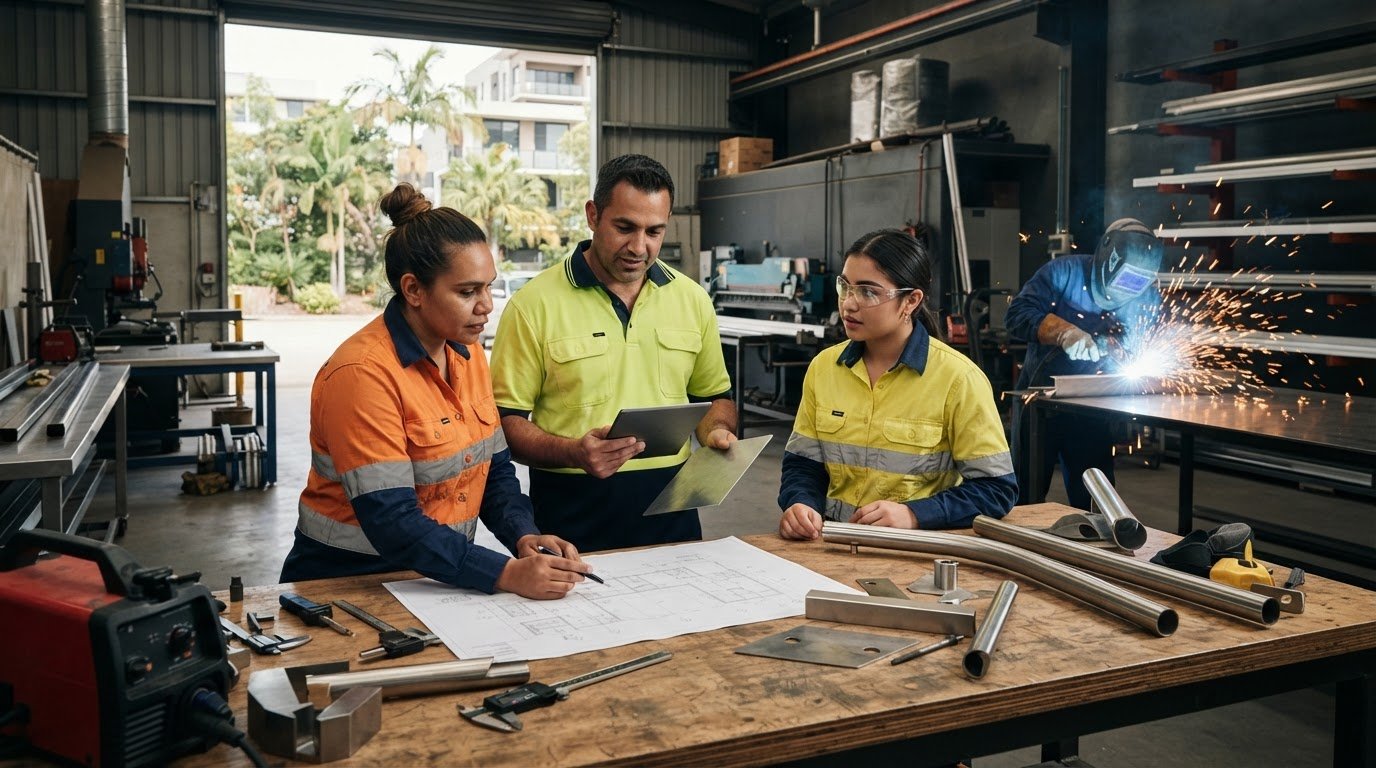
The most important part of a metal fabrication project can happen before any metal is cut. A custom handrail, safety barrier, bench or pipework installation can seem straightforward until its intended use, site conditions, finish and installation details are left open. Asking the right questions to a metal fabricator early helps turn an idea into a clear, buildable scope and reduce the risk of mismatched expectations or avoidable rework.
Material and finish options can be difficult to compare, and access or disruption to site operations may not be top of mind at first. This checklist helps you define what the project needs to do, understand how fabrication choices affect the result and prepare useful information for a discussion with a Brisbane-based team. It covers intended use, dimensions, site conditions, material and finish preferences, fabrication and installation planning, and the details that help move a project forward. A clear brief gives the fabricator a sound basis for tailoring the work to your site.
Key Takeaways
- Start with the item’s purpose, intended users and site conditions to shape a clear project scope.
- Use the questions to ask a metal fabricator to understand how material, finish and fabrication choices suit your project.
- Discuss relevant drawings, standards, approvals and project stakeholders early, as requirements depend on the item and its setting.
- Plan site access, work areas and coordination before installation to help manage operational disruption.
- Share your project purpose, drawings and site details so Donewright Stainless can shape a tailored fabrication and installation scope.
Questions to Ask a Metal Fabricator Before You Scope the Project
Questions at the start help align what the metalwork needs to do with the project scope and site conditions. Before discussing fabrication, clarify the item’s purpose, location and users. A handrail in a busy access area, a bench in a work space and industrial pipework each have distinct functional and installation requirements.
Use these prompts to organise your initial brief:
- What must the item do, and what would make it work well?
- Where will it be installed, and what conditions will it face?
- Who will use, operate or maintain it?
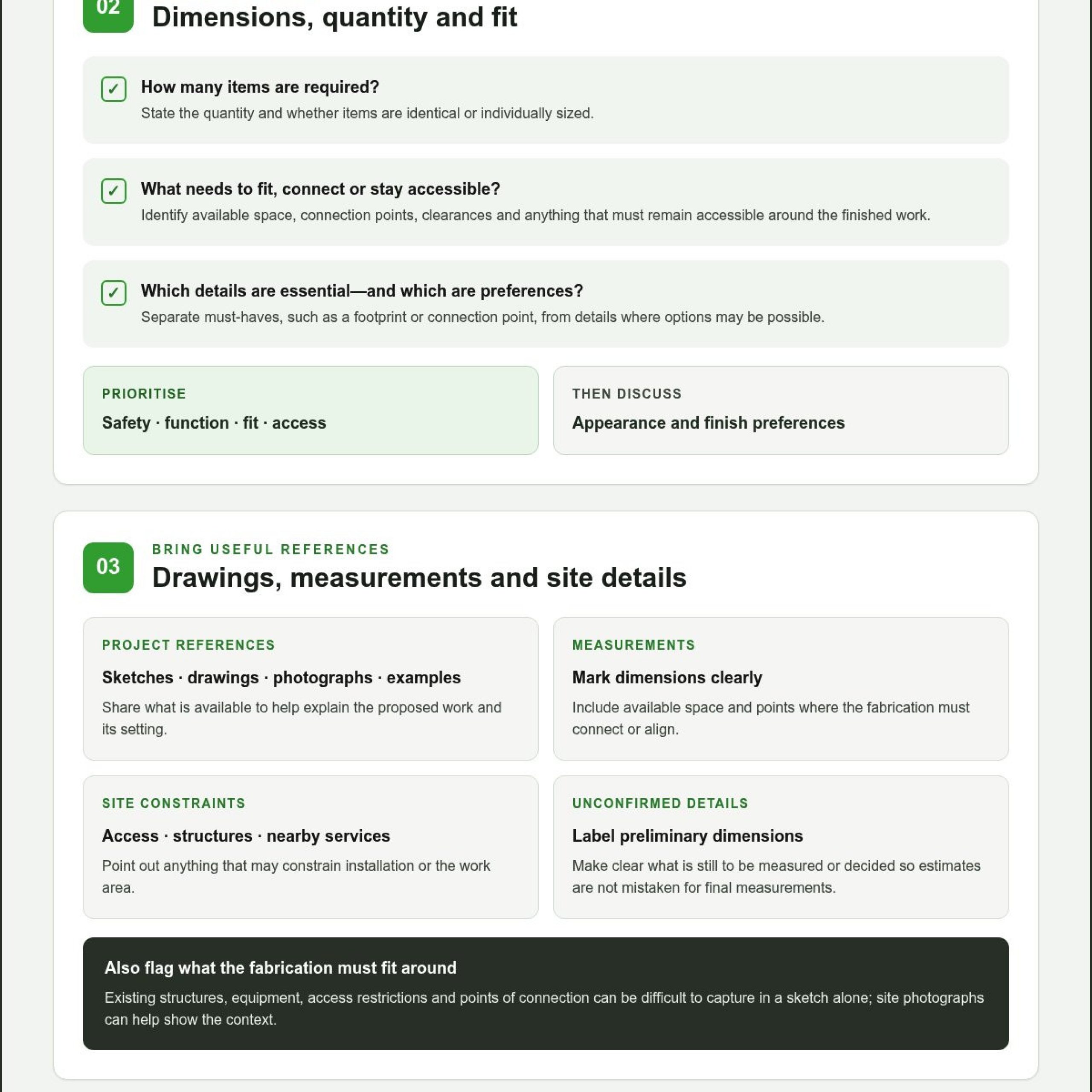
- How many items are required, and are they identical or individually sized?
- What must fit, connect to or remain accessible around the finished work?
A useful fabrication brief brings together purpose, dimensions, material, finish and site context. You don’t need every detail resolved before the first discussion. Share what you know and flag anything still to be measured or decided. The Metal Fabrication overview describes the range of processes and applications involved, reinforcing why the intended outcome matters from the outset.
What information should I bring to a metal fabrication discussion?
Describe the operating environment and expected use. Note whether the item will be indoors or outdoors, exposed to moisture or regular cleaning, or positioned near existing equipment. Bring available sketches, drawings, measurements, photographs and reference examples. Mark dimensions clearly, including the space available and any points where the fabrication must connect or align. For multiple items, state the quantity and whether each has the same requirements.
Include practical site details as well. Point out restricted access, existing structures, nearby services and any constraints on installation. Photographs of the location can explain details that are difficult to capture in a sketch. If dimensions are preliminary, label them clearly so they aren’t mistaken for final measurements.
How do I explain what the finished metalwork needs to do?
Describe the users and the task, not just the shape you have in mind. Explain whether people will hold or lean on a handrail, what needs to fit on or be cleaned around a bench, or how pipework relates to the surrounding operation. Mention relevant movement, loads or protection needs without guessing technical specifications. This context helps inform design and fabrication decisions.
Separate essential requirements from preferences. A particular footprint or connection point may be necessary, while appearance or finish may allow options. Prioritise safety, function, fit and access, then discuss aesthetic details. If project drawings or other stakeholders set requirements, include that context in the brief. A clear list of must-haves and preferences gives the fabrication discussion a practical starting point and helps shape metalwork around its real use.
Questions About Materials, Finish and Fabrication Methods
Material and process choices should follow the job, rather than a blanket rule that one metal is always best. Stainless steel, mild steel and aluminium each bring different considerations for the working environment, appearance, dimensions and intended use. Ask the fabricator to explain the trade-offs for your application, including how the selected material, grade, thickness and finish affect the finished item.
Use this comparison framework to guide the discussion:
- Site exposure: How might moisture, cleaning products, heat or impact affect material and finish selection?
- Function and design: Which material and thickness suit the item’s dimensions, use and connection points?
- Appearance and upkeep: What finish suits the setting, and what cleaning or maintenance will it involve?
- Fabrication approach: How will the design and required quantity shape fabrication and joining methods?
Which material and finish questions help narrow the specification?
Describe the conditions the metalwork will face, including exposure to moisture, cleaning products, heat or impact. Explain whether the surface will be visible, handled regularly or need routine cleaning. Ask how these details influence material and finish selection, and what maintenance the finished item may require. The right option depends on the complete application, so avoid choosing a grade or finish based on a general rule alone.
Stainless steel may suit items such as benches or handrails, while mild steel and aluminium may suit other project requirements. The right choice depends on the design, environment and use. Ask how the proposed grade, thickness and finish address those needs, and whether preferences can be adjusted while preserving essential function. A fabricator can tailor recommendations to the specific job.
Which fabrication and joining methods suit the design?
Ask how the item’s dimensions, shape and required quantity affect fabrication planning. Discuss welding and other relevant processes in relation to the design, assembly access and intended application. Rather than choosing a process by name, find out how it supports the required fit and function. For custom stainless work, a design discussion can connect the proposed approach with the finished item.
Drawings can make these decisions easier to review. Share available plans and identify details that are fixed, such as connection points or clearances, alongside areas where the design can be refined. If a drawing doesn’t show how a component will be used or installed, explain the context. The Fabricators & Manufacturers Association, International (FMA) provides industry resources, while material and process choices should be discussed in relation to the specific job.
Bring your priorities together before the design is finalised: intended use, site conditions, finish preferences and fixed dimensions. This gives the fabricator a sound basis for tailoring the approach. For custom stainless work, explore Brisbane stainless steel fabrication as part of developing a practical specification.
Questions About Standards, Safety and Project Quality
Safety and compliance depend on the item, where it will be used and the requirements that apply to the project. A handrail, custom bench and industrial pipework each have different functions, so a general statement about quality isn’t a substitute for clear, project-specific requirements. Raise these questions to a metal fabricator early, particularly if drawings, specifications or approval processes already guide the work.
Bring relevant project documents to the discussion. Identify standards or specifications named in them, who is responsible for interpreting those requirements, and which stakeholders need to review the design or completed work. If the documentation refers to an Australian Standard, verify the exact reference and its current applicability to the project rather than assuming a general rule applies.
A quality expectation describes the standard of workmanship you want; an acceptance criterion states how the project will determine whether the finished work meets its requirements. Agreeing on acceptance criteria helps make reviews more consistent and reduces uncertainty at handover.
How should I raise standards and compliance requirements?
Start by explaining the project setting and sharing its drawings, specifications and approval requirements. Ask how the documented requirements will inform design, fabrication and installation, and who needs to resolve technical questions or approve changes. Don’t rely on a standard’s name alone: note the exact reference in the project documents and verify it against the work’s scope and current requirements with the responsible project stakeholders.
What quality checks and handover details should be discussed?
Agree what will be reviewed before work begins. This could include specified dimensions, visible finish, weld appearance, fit with adjoining components and functional details. Ask which inspection points matter, what records the project requires and who will review the completed work. For installed metalwork, include the relevant site contact in planning the review so the finished item can be assessed in context.
Define acceptance criteria in clear, observable terms. If a bench must fit a particular space, identify the controlling dimensions in the approved drawing. If appearance matters, describe the expected finish and which surfaces will be visible. Avoid vague directions such as “high quality” on their own; they don’t explain how the item will be assessed.
- Documents: Which drawings, specifications or approved revisions govern the work?
- Review: Which dimensions, finish and functional details will be checked?
- Responsibility: Who reviews the work and signs off on project acceptance?
- Handover: What inspection records or other project information are required?
Keep responsibilities clear if a designer, site manager, safety representative or other stakeholder is involved. Establish who supplies the requirements, who approves design decisions and how changes are recorded. This gives everyone a shared basis for reviewing the work, rather than leaving people to interpret broad expectations differently. Donewright Stainless provides design, fabrication and on-site installation, and a clear record of project requirements connects those stages to the intended outcome.
Questions About Installation, Site Access and Timing
Fabrication plans need to account for the installation site, not just the finished item. Site access, existing equipment, work areas and operating constraints can all affect how installation is coordinated. These questions to ask a metal fabricator help identify practical issues early and set realistic expectations about project timing.
Work through the site-readiness sequence in order:
- 1. Identify site constraints. Share access routes, clearances, surfaces, existing structures and nearby services. Photographs can show conditions that plans don’t capture.
- 2. Plan access. Discuss how people, tools and fabricated components can reach the work area, including restricted entry points or site procedures.
- 3. Coordinate the work. Identify operating hours, relevant site induction requirements, other trades and activities that could affect the installation area.
- 4. Review the installation. Agree who will inspect the completed work, what details they’ll review and how site access will be managed for that review.
What site details matter before fabrication and installation?
Share the site location and conditions around the installation point. Note clearances, access routes, floor or ground surfaces, existing structures and equipment that may restrict movement or positioning. Include photographs from more than one angle where useful, and flag services or adjacent work that need to remain accessible.
Describe how the site operates, too. Are there working-hour restrictions, other trades to coordinate with or site induction requirements? For projects in Brisbane, the Gold Coast, Logan or Ipswich, explain the location and any travel, entry or on-site access considerations. Site conditions vary, so specific details are more useful than assumptions based on the suburb alone.
When is on-site work part of the fabrication solution?
Some projects are best planned around the site itself. Donewright Stainless provides mobile welding and a fully equipped mobile workshop for on-site industrial projects. These services support work such as industrial pipework and maintenance where the existing installation and surrounding operations matter. Not every component is made on site; the approach depends on the job, access and how fabrication and installation fit together.
Discuss which tasks can be completed in the workshop and which need to happen at the site. For pipework, explain the existing setup, where access is available and what operational constraints affect coordination. This helps plan around real conditions rather than treating every installation as identical. For relevant projects, on-site industrial pipework repair in Brisbane shows how mobile support can fit into an industrial setting.
Discuss timing in relation to the project scope, site conditions, access arrangements and coordination with others. Rather than relying on a generic duration, clarify what needs to happen before work can proceed and which site dependencies may affect the sequence. If your project needs fabrication, installation or mobile welding, discuss your metalwork project with Donewright Stainless and share the site details.
How Donewright Stainless Turns Your Questions into a Clear Project Scope
A useful project discussion connects the job’s purpose with the practical details that shape design, fabrication and installation. Donewright Stainless uses information such as drawings, material needs and site context to understand what the metalwork must achieve and how the work fits together. A clear starting brief makes it easier to identify decisions that need to be resolved as the scope develops.
What does Donewright Stainless bring to a custom fabrication project?
Donewright works with stainless steel, mild steel and aluminium, tailoring the approach to the application rather than assuming one material suits every job. Stainless steel handrails, safety protection, custom benches and trolleys are examples of work where function, dimensions and site conditions inform the design. Design, fabrication and installation are considered as connected stages, keeping the intended use in view from concept through to completed metalwork.
Share fixed requirements, such as connection points, dimensions or details that affect how the item will be used. Drawings help communicate these requirements; photographs and notes can add context where plans don’t show surrounding equipment or the installation area. If some details are undecided, distinguish them from essential project needs. This gives the discussion a practical basis for identifying what is known and what needs further design consideration.
Donewright also provides industrial pipework, maintenance and mobile welding. Mobile workshop services support on-site industrial work, with fabrication and installation planning shaped around the project’s circumstances. To learn more about the broader process, explore custom stainless steel fabrication in Brisbane.
What is a useful next step for a Brisbane-area project?
Prepare a short brief with the item’s purpose, available dimensions, drawings or sketches, photographs and known site constraints. Include material or finish preferences, and note which details are essential versus open to discussion. This gives the project conversation a clear starting point without requiring every design decision to be finalised before speaking with the team.
Donewright Stainless is Brisbane-based and serves Brisbane, the Gold Coast, Logan and Ipswich. If your project involves handrails, outline where they’ll be installed and how they’ll be used. You can also review examples of stainless steel handrails in Brisbane.
The questions to ask a metal fabricator are most useful when they open a clear discussion about the work, not when they try to settle every technical detail upfront. Share your brief with Donewright Stainless to discuss the project and a suitable next step. Discuss your metal fabrication project.
Take the Next Step with a Clear Brief
You don’t need every technical decision settled before a fabrication conversation can begin. Turn what you know into a working brief: what the metalwork needs to do, what information is missing and which decisions need input from the fabricator or project stakeholders. This gives the discussion direction while leaving room to refine the design around the job.
The questions to ask a metal fabricator are a starting point, not a test you need to pass. Bring drawings or photos if you have them, note site constraints and be open about details that are still undecided. A practical conversation can shape those early details into a scope that reflects the intended use and installation conditions.
When you’re ready to discuss your project, talk with Donewright Stainless about your metal fabrication project. Start with the information you have and take the next step with confidence.
Frequently Asked Questions
What information should I send a metal fabricator for a quote?
Send enough information to show what the work involves and what could affect its scope. Include the intended use, approximate dimensions, required quantity, preferred material and finish, and the location where the item will be used. Attach sketches, photos or existing plans if available. The questions to ask a metal fabricator can help identify missing details, so flag anything that’s still an estimate rather than a confirmed requirement.
Do I need engineering drawings before approaching a metal fabricator?
No, you can start a discussion with a sketch, photos or a clear description of the job. Drawings become more useful as dimensions, interfaces and project requirements need to be defined. For example, a replacement component may need to match existing fixing points, while a new item may need design input. Share project documents you have and clarify who is responsible for design decisions or technical approvals.
What is the difference between a metal fabricator and a welder?
A metal fabricator plans and makes metal components or assemblies, which can involve interpreting a design, preparing material, shaping parts and joining them. Welding is one joining process, performed by a welder, and may form part of fabrication or be needed for work on site. The roles can overlap, but they aren’t identical. Describe the finished item or repair you need, rather than only the process you think it requires.
How do I choose between stainless steel, mild steel and aluminium?
Choose based on the item’s job, environment, design and upkeep needs, rather than assuming one metal is always right. Consider exposure to moisture, cleaning products, heat or impact, along with the required shape and dimensions. A bench in a particular work area may have different priorities from a handrail or a component in an existing assembly. Explain those conditions so the material choice can be tailored to the application.
Can a metal fabricator install custom work on site?
Yes, custom metalwork can be designed, fabricated and installed on site where the project calls for it. Donewright Stainless provides design, fabrication and installation, as well as mobile welding and mobile workshop services for industrial work. Site installation may be relevant when existing structures or equipment affect fit and positioning. Share the location and access conditions early. Donewright serves projects across Brisbane, the Gold Coast, Logan and Ipswich.
Which Australian Standards apply to a metal fabrication project?
There isn’t one Australian Standard that applies to every fabrication project. Relevant requirements depend on the item, how it will be used, its setting and the project documentation. If a drawing or specification cites a standard, share the exact reference and have the responsible project stakeholders verify its relevance and current requirements. Don’t rely on a general online reference to determine compliance for a particular installation or application.
How can I reduce disruption during industrial fabrication or maintenance work?
Coordinate the work around the site’s operating needs before a start date is set. Identify areas that must remain accessible, site procedures, other trades and operating constraints that affect the work sequence. Donewright Stainless provides mobile welding and mobile workshop support for on-site industrial work. Discuss which activities need access to equipment or work areas, and agree how the team will coordinate with the site contact.
What should I agree before fabrication begins?
Before work starts, make sure the agreed scope identifies the item, key dimensions, material, finish and relevant drawings or revisions. Clarify which details are fixed, who approves design changes and how the completed work will be assessed. Establish site responsibilities for installation, access and coordination as well. Recording these points gives everyone a shared reference if requirements change and helps prevent assumptions from becoming instructions once fabrication is under way.
