
Materials Like Stainless Steel: Comparing Metal Options for Practical Projects
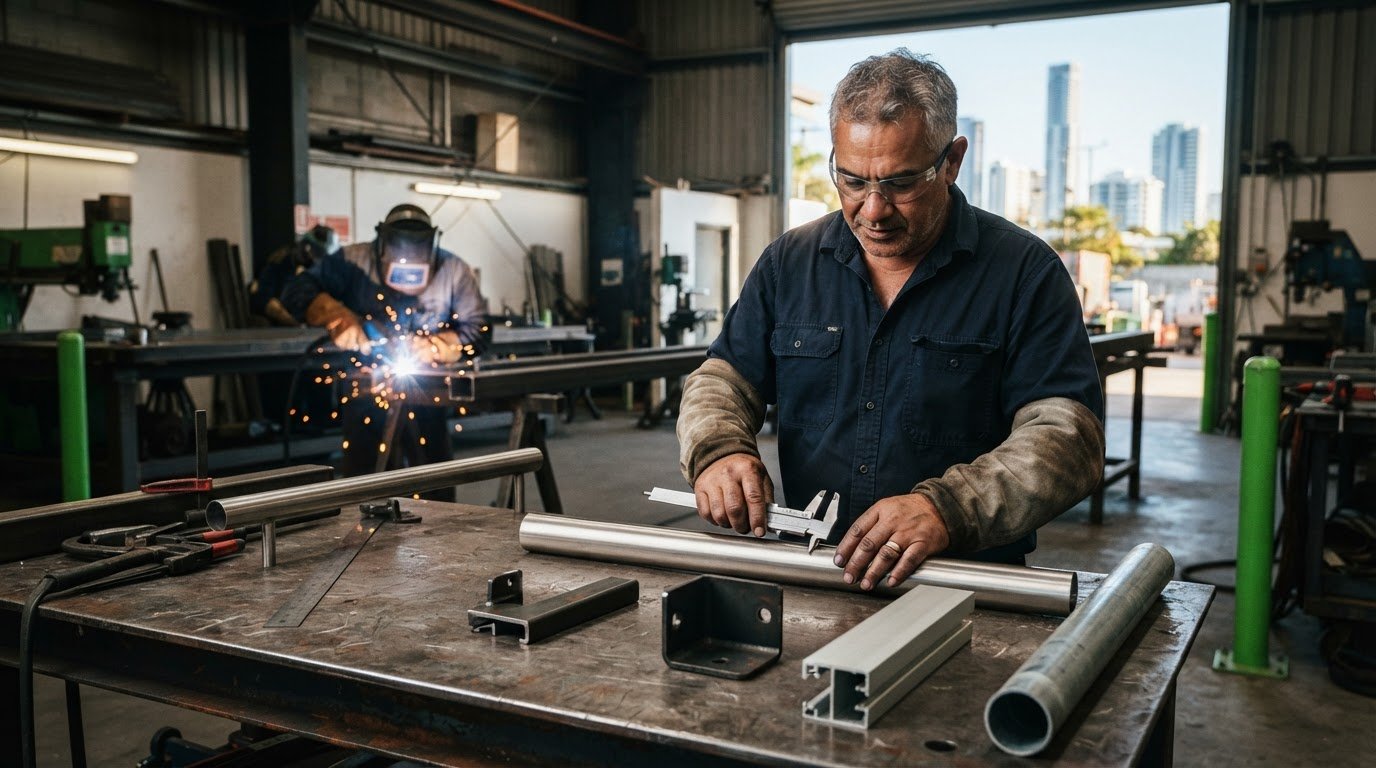
The metal that looks most like stainless steel may not be the right choice for your project. Appearance is a useful starting point, but it doesn’t tell you how a material will handle moisture, regular use, weight or fabrication.
If you’re weighing up metals for a handrail, bench or other practical item, a clear comparison can help you make a more informed decision. Stainless steel, mild steel and aluminium each have different properties. The right fit depends on where the item will be used and what it needs to do.
This guide explains how materials like stainless steel compare, so you can match a material to its working environment, performance needs and fabrication requirements. It covers practical differences between stainless steel, mild steel and aluminium, including corrosion resistance, strength, weight and fabrication. You’ll also learn which project details and material specifications to prepare for a fabrication discussion, helping turn your requirements into a workable design for a project in Brisbane, the Gold Coast, Logan or Ipswich.
Key Takeaways
- “Similar” can refer to appearance, durability, hygiene or intended use. Define what matters for your project before comparing metals.
- Materials like stainless steel can respond differently to exposure, cleaning and day-to-day demands. A polished or coated finish alone doesn’t establish equivalent performance.
- Compare stainless steel, aluminium, mild steel and galvanised steel against practical needs such as weight, strength, finish and maintenance.
- Prepare dimensions, expected loads, location, cleaning routine and desired finish to make a fabrication discussion more focused.
- Project-specific fabrication across stainless steel, mild steel and aluminium can turn material requirements into a practical design.
What materials are like stainless steel, and what does “similar” mean?
“Like stainless steel” can mean a similar bright, clean appearance, resistance to wear, suitability for hygiene-sensitive work or use in the same kind of application. These qualities aren’t interchangeable. A metal that looks similar may behave differently when exposed to moisture, cleaning products or regular handling. Start by defining what the finished item needs to do.
Stainless steel is an iron-based alloy containing chromium. Chromium helps create a thin surface layer that limits corrosion in suitable conditions. The broader family of alloy steels includes steels whose properties are influenced by added elements, but performance depends on composition and use. No single alternative matches every stainless steel property or suits every environment.
What makes stainless steel different from other metals?
Corrosion resistance is a material characteristic, not a promise that corrosion can never occur. Exposure, surface condition, cleaning and the specific stainless steel grade all affect performance, so don’t assume every grade behaves alike. Appearance, strength and cleanability are separate considerations. A polished finish may suit a visible handrail, while a bench surface may need to stand up to routine cleaning and practical use.
Which metals are commonly compared with stainless steel?
Aluminium, mild steel and galvanised steel are useful comparison points, not automatic substitutes. Aluminium is a lighter option to assess when weight matters. Mild steel may suit a design where its finish and maintenance needs fit the working conditions. Galvanised steel has a zinc coating, so its surface protection differs from stainless steel’s alloy composition. Suitability depends on the full job, not just the material name.
Consider what the fabrication needs to do. A handrail needs to suit its location and expected use; a trolley may put more emphasis on weight and handling; a bench may need a cleanable working surface; and workplace protection must suit its intended function. A bright coating or polish can imitate stainless steel visually, but it doesn’t establish equivalent performance in service.
For a practical comparison, assess the item’s function, exposure, cleaning routine, maintenance expectations, weight and fabrication requirements together. Weldability, shaping and the finish you want can all influence the design. The right choice is the metal that meets the project’s demands in its working environment, rather than the one that simply looks closest to stainless steel.
How stainless steel, aluminium and steel alternatives differ in use
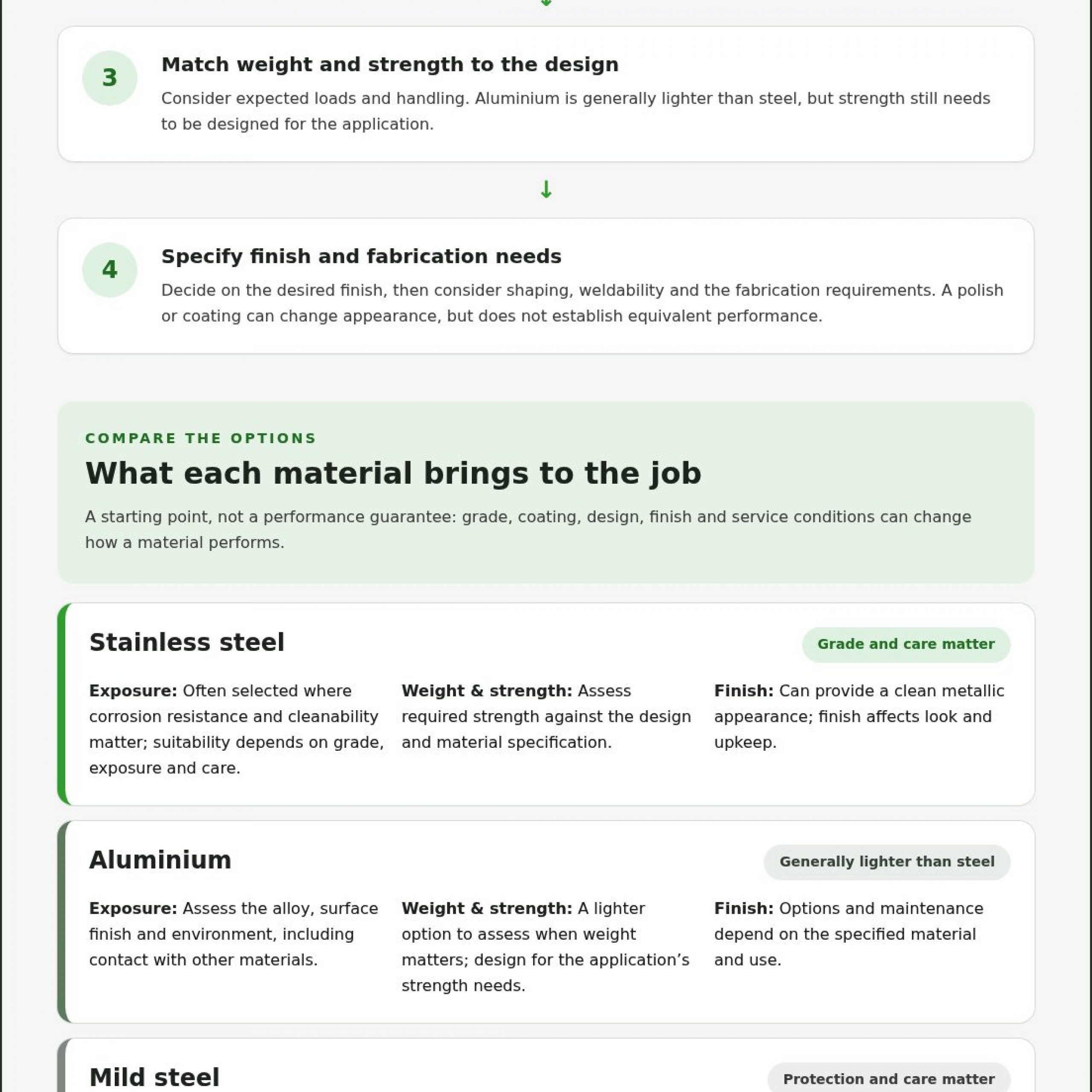
Each metal brings different considerations to a fabricated item. The table below is a starting point, not a performance guarantee. The specific grade, coating, design, finish and service conditions can change how a material performs.
| Material | Exposure and maintenance | Weight and strength | Finish |
|---|---|---|---|
| Stainless steel | Often selected where corrosion resistance and cleanability matter; suitability depends on grade, exposure and care. | Assess the required strength against the design and material specification. | Can provide a clean metallic appearance; finish affects look and upkeep. |
| Aluminium | Assess the alloy, surface finish and environment, including contact with other materials. | Generally lighter than steel; strength needs must be designed for the application. | Finish options and maintenance depend on the specified material and use. |
| Mild steel | Unprotected steel can corrode in exposed conditions; protection and ongoing care matter. | Can suit designs where structural function and fabrication needs guide material selection. | Coating or paint may be specified; condition affects protection and upkeep. |
| Galvanised steel | A zinc coating provides a protective layer, but its condition and the exposure affect ongoing performance. | Assess the steel section and design for the required loads and use. | The coated surface differs from stainless steel and may need maintenance if damaged. |
Stainless steel versus aluminium: weight, exposure and application
Aluminium may suit a design where weight matters, such as a trolley that needs to be moved or handled regularly. That advantage alone doesn’t settle the choice. Exposure, expected loads, cleaning routine, connections and desired finish all matter. A custom bench has different demands from a trolley, so choose the material and construction to suit the item’s function rather than relying on a broad rule about either metal.
Stainless steel versus mild or galvanised steel
Mild steel can suit a design where structural function and fabrication requirements are central, with protection and maintenance considered for the working environment. Galvanising adds a zinc coating to steel, which protects it differently from stainless steel’s alloy composition. If the coating is damaged or the item faces challenging exposure, reassess whether it suits the job.
In short, choose by service conditions and design requirements, not by appearance alone. For a custom item, dimensions, loads, exposure, finish and maintenance expectations help shape the material decision. Custom metal fabrication brings those requirements together in a practical design.
Is a metal that looks like stainless steel a suitable substitute?
A polished or coated metal may look like stainless steel, but appearance alone doesn’t show how it will perform in use. The substrate, surface treatment and fabrication details all matter. A finish can create a similar colour or sheen without giving the underlying metal the same characteristics or maintenance needs.
A metal can look like stainless steel without being suitable for the same working conditions. Assess the service environment, cleaning routine, contact with other materials and expected service life before treating a visual match as a functional substitute. No one material is best for every project; the right choice depends on the trade-offs the job can accommodate.
When appearance is not enough to choose a metal
Lighting can make a surface appear brighter, darker or more reflective, while polishing, brushing and coatings change its texture and sheen. These details matter for a visible item, but they don’t establish how its surface will hold up through handling, cleaning or exposure.
Consider a workplace handrail. A coated steel surface might offer the desired appearance, but its suitability over time depends in part on the coating’s condition and maintenance needs. A bench has different considerations: its finish should suit the work performed, cleaning routine and expected use. A protective coating and an exposed metal finish aren’t the same, so assess each against the job’s requirements.
How the working environment changes the comparison
Moisture, outdoor exposure and cleaning agents can all affect material choice. Contact with other materials matters too, particularly where surfaces meet, fasteners are used or different metals touch. The specific metal, finish, design and conditions together influence how an item performs; broad labels alone can’t predict its service life.
For a hygiene-sensitive or food-related setting, consider the entire item, not just the visible surface. Cleaning products and frequency, joints, edges and areas where residue could collect may affect whether a design is practical to clean and maintain. Corrosive conditions also call for careful assessment of the material and finish against the actual exposure. A bright surface, coating or the word “stainless” doesn’t guarantee a particular outcome.
Before choosing a substitute, describe where the item will be installed, what it will contact, how it will be cleaned and how long it needs to serve its purpose. Those details help distinguish a finish that merely looks right from a material and design suited to the work.
How to choose a stainless steel alternative for your project
A practical material choice starts with the job, not the metal’s appearance. Work through these steps before fabrication begins:
- Define the job. Describe what the item must do, where it will be installed and how it will be used.
- Map the exposure. Note whether it will be indoors or outdoors, exposed to moisture, regularly cleaned or in contact with other materials.
- Prioritise properties. Decide what matters most: weight, strength, finish, durability or maintenance.
- Compare materials. Consider stainless steel, aluminium and steel options against those priorities, rather than choosing by appearance alone.
- Confirm specifications. Record the material grade or coating requirements, dimensions, loads, finish and fabrication or installation details that apply.
These steps can narrow the options early. A trolley that needs to be easy to move may put weight high on the list, while a bench may place greater emphasis on its surface, cleaning routine and working conditions. For more detail on how design and material requirements come together, read this guide to custom stainless steel fabrication in Brisbane.
What project details help narrow down material options?
Bring specific information to the fabrication discussion: the item’s dimensions, expected loads, location, contact points, cleaning routine and desired finish. Add any exposure to moisture or outdoor conditions, and identify the main priority. This gives the design process a useful starting point and relates material properties to the item’s actual purpose.
When should material specifications be checked more closely?
Regulated, hygiene-sensitive or safety-related applications need careful specification review by appropriately qualified people. Material grades, coatings, fabrication methods and installation details can all affect the finished result, so don’t rely on a broad material label alone. The guide to custom mild steel fabrication in Brisbane provides relevant fabrication context.
Clear project information helps turn material comparisons into a workable design. Donewright Stainless provides stainless steel, mild steel and aluminium fabrication for commercial and industrial projects in Brisbane, the Gold Coast, Logan and Ipswich. See Donewright Stainless’ metal fabrication services.
How Donewright Stainless approaches material choice and fabrication
Material selection is part of the design process, not a decision made on appearance alone. Donewright Stainless works across stainless steel, mild steel and aluminium fabrication, matching the material and fabrication approach to the item’s intended use and working environment. The process considers how the finished piece will function, how it will be used and maintained, and what the site conditions require.
Matching fabrication material to the item and its environment
A handrail, workplace safety barrier, bench and trolley each have different design demands. Dimensions, expected use, exposure, finish and installation all inform the plan. A trolley may need to be easy to handle, while a bench’s working surface and cleaning routine may be key considerations. The material’s properties need to work alongside the shape, joins and intended installation, rather than being treated as a standalone choice.
For a more focused example, see the stainless steel handrails Brisbane guide. It relates material selection to a specific fabricated application, where design and installation planning are part of the overall job.
From project requirements to a practical fabrication plan
The process starts with the requirements: what the item needs to do, where it will be used, relevant site conditions, preferred dimensions and finish. Those details shape the design and fabrication decisions. When work at the installation site is needed, Donewright Stainless’ mobile welding and mobile workshop services support on-site project requirements. The aim is to translate the brief into a practical fabricated item, considering material, construction and installation together.
Donewright Stainless serves Brisbane, the Gold Coast, Logan and Ipswich. Whether a project calls for stainless steel, mild steel or aluminium, clear information about use, environment and finish helps guide the fabrication plan. The custom mild steel fabrication guide offers further context for projects where mild steel is under consideration.
Learn more about the company’s on-site work in this overview of Donewright Stainless mobile workshop services.
Make your material choice work for the project
The right metal isn’t simply the one that looks most like stainless steel. It’s the one that suits the item’s working environment, intended use, maintenance needs and fabrication requirements. A finish can influence appearance, but exposure, cleaning routines and the material itself all matter to performance.
Before fabrication begins, outline the item’s dimensions, expected loads, location and desired finish. These details help compare stainless steel, mild steel and aluminium against the practical demands of the job, rather than relying on a broad assumption that one option is always best.
Donewright Stainless undertakes custom commercial and industrial fabrication across stainless steel, mild steel and aluminium. The team also provides mobile workshop and on-site welding services for project requirements. A clear brief is a useful starting point for turning material considerations into a practical design.
Frequently asked questions
What materials are most like stainless steel?
Aluminium, mild steel and galvanised steel are common comparison points, but each is similar in a different way. Aluminium may be considered where lower weight matters, while mild steel may suit certain fabrication and structural functions. Galvanised steel has a zinc coating, unlike stainless steel, whose corrosion resistance comes from its alloy composition. The best comparison depends on the item’s exposure, purpose, finish and maintenance needs.
Is aluminium a good alternative to stainless steel?
Aluminium can be a good alternative where lower weight is a priority, but it isn’t a direct substitute for every application. Consider the item’s expected loads, exposure, finish, cleaning routine and fabrication requirements. For example, a trolley designed for regular handling may have different material priorities from a bench. The specific alloy and design also affect suitability, so base the decision on the conditions the finished item will face.
Can galvanised steel be used instead of stainless steel?
Galvanised steel may suit some projects, but it doesn’t perform identically to stainless steel. Galvanising applies a zinc coating to steel, so protection depends on the coating’s condition and the service environment. Consider exposure, potential coating damage and maintenance needs before choosing it. The item’s design and intended service life matter too. For demanding applications, assess the material specification and finish against the actual working conditions.
What metal looks most like stainless steel?
A polished or coated metal can resemble stainless steel, and the closest visual match depends on the surface finish, colour and lighting. Polished aluminium or coated steel may provide a similar bright appearance, but that doesn’t mean either will perform the same way in service. If the item will be regularly handled, cleaned or exposed to moisture, assess its material and finish for those conditions, not appearance alone.
Is mild steel more suitable than stainless steel for some projects?
Yes. Mild steel may suit a project where its fabrication characteristics and structural function align with the design, and where its protection and maintenance requirements can be managed. Stainless steel may be preferred for different exposure or finish needs, but neither is universally superior. Compare the working environment, expected loads, finish, cleaning and upkeep. For a fabricated item, those details help determine which material is a practical fit.
How do I choose the right metal for an outdoor or industrial application?
Start by documenting the location, exposure to moisture, cleaning routine, contact with other materials, expected loads and desired finish. Then compare stainless steel, aluminium and steel options against those conditions, including any coating or maintenance needs. For safety-related, hygiene-sensitive or regulated uses, have the material and design specifications reviewed by appropriately qualified people. Donewright Stainless supports custom metal fabrication for commercial and industrial projects across Brisbane, the Gold Coast, Logan and Ipswich.
Does stainless steel always resist corrosion?
No. Stainless steel is selected for corrosion resistance, but that doesn’t make it immune to corrosion in every environment. Performance depends on the specific grade, surface condition, exposure, cleaning and contact with other materials. Conditions that are unsuitable for a particular grade or finish can affect how it performs. For a project, identify the actual service environment and verify that the proposed material specification suits it.
Planning a handrail, bench, trolley or other fabricated item in Brisbane, the Gold Coast, Logan or Ipswich? Discuss your fabrication project with Donewright Stainless.
