
How to Set a Clear Scope and Quote a Welding Project
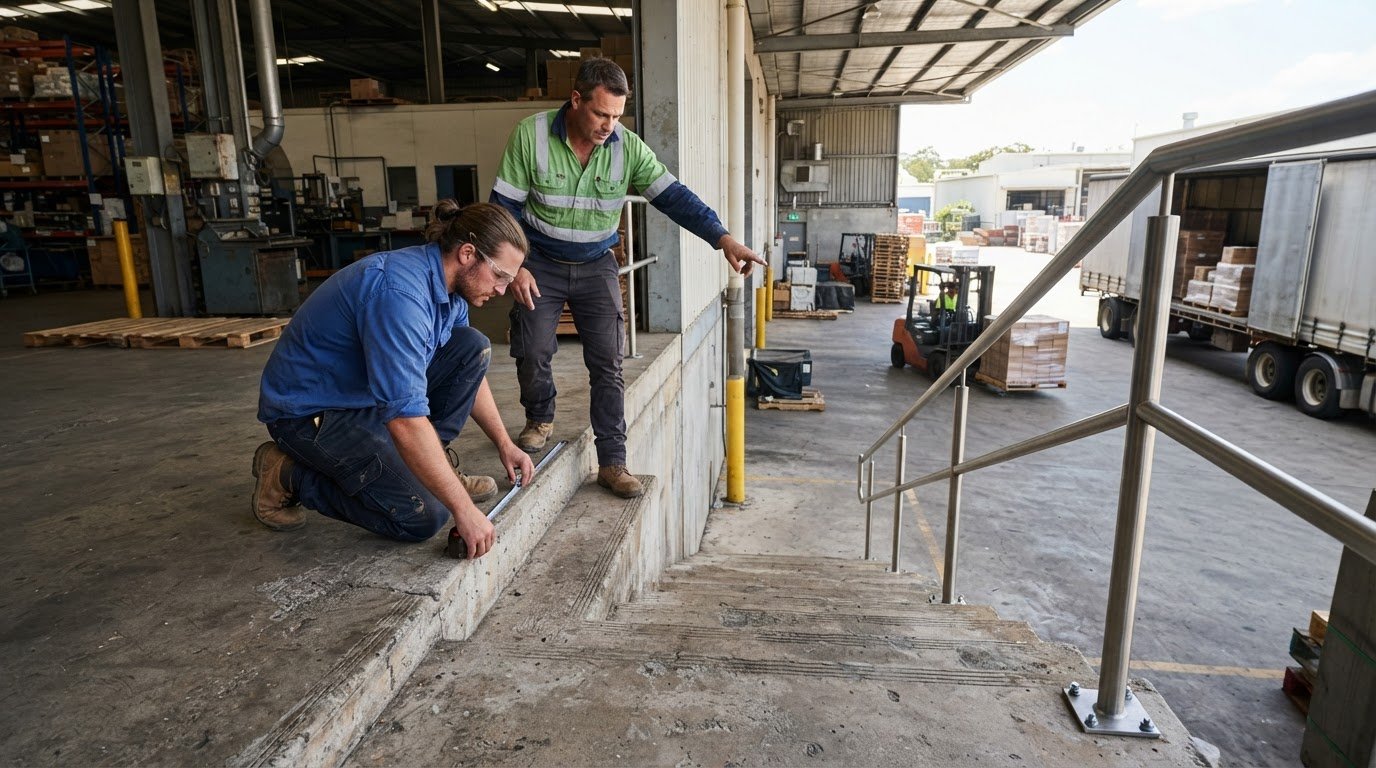
A reliable welding quote starts with a clearly defined scope, not a guess at an hourly rate. To understand how to get a welding project quoted, specify the materials, dimensions, weld requirements, site location and access, and whether the work includes fabrication, installation or both. This gives the estimator a clear basis for assessing labour, materials, equipment, consumables and finishing or travel requirements.
It’s reasonable to want a clear figure before committing to a job. A precise description makes it easier to understand what the quote covers and which project details could affect the scope.
This guide shows how to break a welding job into tasks, identify its main cost components and account for preparation and additional work. You’ll also learn what to include in a written quote request so the work and expectations are clear from the outset.
Key Takeaways
- Break the job into defined tasks so the estimate reflects the work’s complexity, equipment needs and repair requirements.
- Allow for metal quantities, offcuts and price changes when building the materials estimate.
- Set out site access, working conditions and any fabrication or installation requirements to reduce scope gaps.
- Clarify inspection, documentation and acceptance expectations early so they’re accounted for in the project plan.
What Factors Should Be Considered When Estimating Costs for Welding Projects?
Build the estimate around the materials, labour, equipment and site conditions involved. These steps help identify repair complexity and factors that may change the scope.
-
Assess materials and equipment needs
List each material, its grade, dimensions and quantity, allowing for offcuts and cutting waste. Stainless steel, mild steel and aluminium can require different equipment and consumables, so describe the process and tools suited to the job. For a trailer repair, specify whether the damage affects the floor, a cracked crossmember, a mudguard or a drawbar component. Each defect calls for different preparation and welding work.
-
Check qualifications and safety requirements
Confirm that the welder’s qualifications, relevant experience and insurance suit the work, particularly for repairs to loaded or vibrating equipment. Describe site hazards, access limits and safety procedures that affect setup. Identify applicable Australian Standards, project specifications and inspection requirements before estimating. Structural or safety-related work may require defined acceptance criteria and records of materials, qualifications or inspection results, all of which should be included in the project scope.
-
Compare rates and likely extra charges
There is no single hourly rate that accurately prices every Australian welding job. Common costs depend on the material, repair complexity, labour, equipment use and whether the work is on site. The price for welding work is provided after a quote request and depends on these project factors.
Allow for assistants, consumables, overheads and equipment time, as well as preparation, testing, clean-up, finishing, inspection or delivery where required. Delayed materials, difficult access or equipment downtime can also affect the estimate. Break the work into tasks to show what drives the total.
Additional preparation, finishing and travel charges
Separate welding time from preparation, finishing and travel in the estimate. Removing coatings, testing a joint and transporting equipment are distinct tasks that can affect the work involved.
-
Prepare the work
Describe the work area and the preparation needed before welding begins. Specify whether existing paint, rust, grease or damaged material must be removed, and whether components need cutting, cleaning or alignment. These steps affect labour time even when the weld itself is straightforward.
Set out the required preparation standard in the project scope. For example, a repair may require cleaning the surrounding surface and preparing the joint before welding. Include setup, testing and troubleshooting in the labour estimate, rather than counting only welding time. Clear preparation details also define the expected workmanship and reduce uncertainty about what the quote covers.
-
Allow for finishing and travel
List each finishing task after welding, such as cleaning, surface finishing, painting or inspection. State whether the finished item needs delivery or transport as part of the work. These tasks are separate from welding, so include their labour, materials and equipment needs in the estimate.
For on-site work, describe the project location, access to the work area and any limits on moving equipment. Travel and transport expenses depend on distance and site conditions. Mobile welding can suit work that is difficult to move to a workshop, but the estimate should still account for site setup and access. Include post-weld testing and clean-up. A written breakdown clarifies which preparation, finishing and travel tasks are included, preventing assumptions about what happens before or after welding.
Material costs and fluctuating metal prices
Specify the metal, dimensions and quantity before pricing materials. A clear breakdown also shows how changes to material requirements affect the estimate.
-
Confirm material specifications
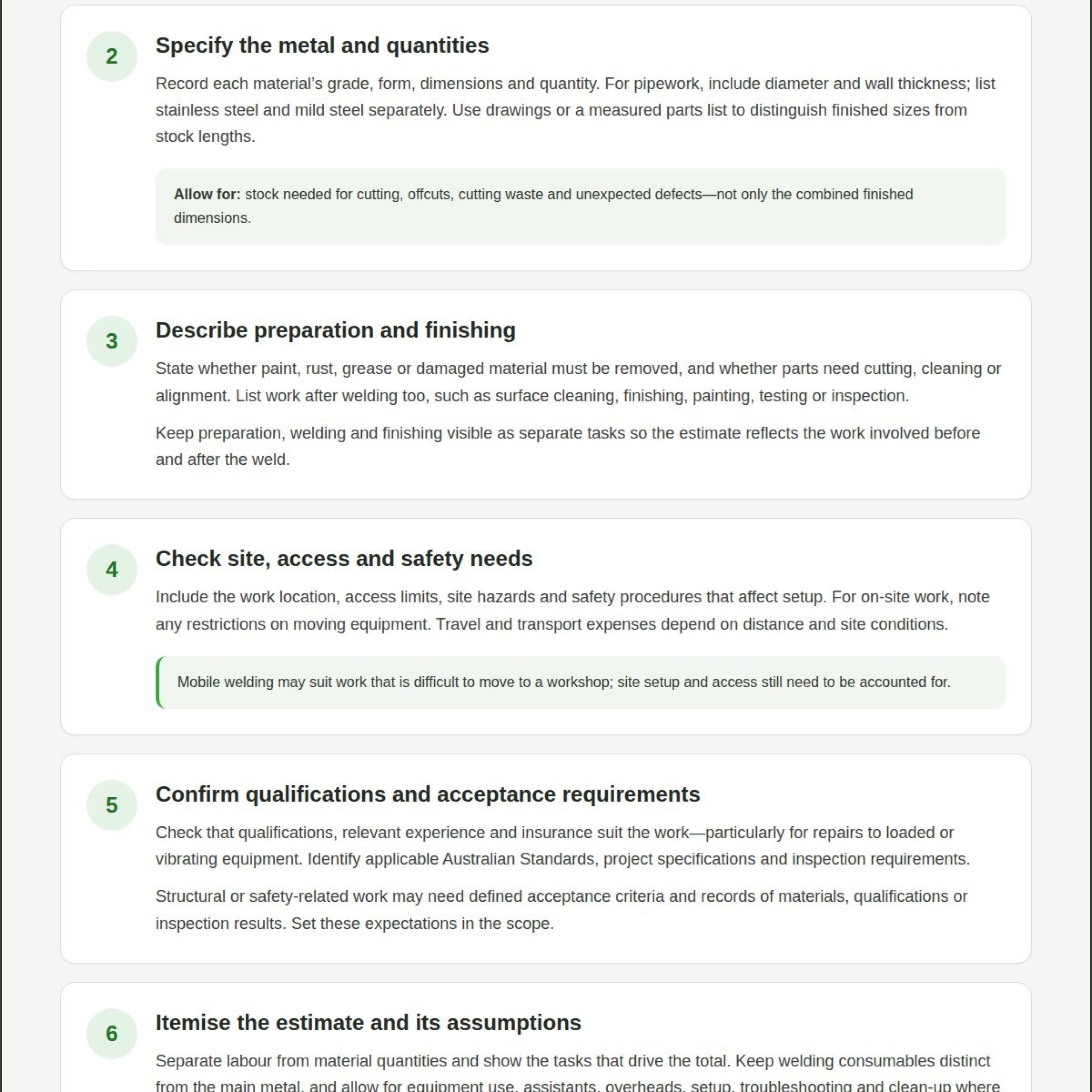
Record the material grade, form, dimensions and quantity for each component. For pipework, include the pipe diameter and wall thickness because these affect material quantities and fabrication requirements. Describe stainless steel and mild steel items separately, even when their finished dimensions match.
Use drawings or a measured parts list to distinguish finished dimensions from stock lengths. If specifications are still being developed, identify settled details and decisions yet to be made. This helps prevent a quote based on one pipe size or grade from being mistaken for an estimate covering another.
-
Estimate materials and consumables
Calculate the material allowance by multiplying the cost per unit by the quantity required. Include stock for cutting and allow for waste from offcuts, cutting errors or unexpected defects. For example, when a job requires several cut sections, account for the stock length needed to produce them, not just their combined finished length.
List welding consumables separately from the main metal. Include the items required for the chosen process, along with materials for preparation or finishing. Keep labour’s hourly rate separate from material quantities, so changes to stock requirements don’t obscure the estimated fabrication or welding time.
-
Account for metal price fluctuations
Explain how the estimate handles material prices if purchasing takes place after the quote is prepared. Metal prices can change between estimating and ordering, so identify the material quantities and unit costs used in the calculation. A clear breakdown shows which part of the estimate may be affected if the specification or purchase timing changes.
Allow for delays while waiting for stock or equipment, as downtime can affect the project schedule and resources allocated to the work. Separate material assumptions from labour and consumables, then revise the relevant items if a grade, dimension or quantity changes.
Client communication and project scope
Set out the work, site conditions and acceptance requirements before finalising the quote. A written scope helps the welder determine the tasks, materials and resources the project requires.
- Describe the finished work. State what needs to be repaired, fabricated or installed, and how many items or joints are involved. Include drawings, specifications, measurements and photos where available. For pipework, provide the diameter, wall thickness and material grade. List weld types and quantities so the requested work can be broken into clear tasks.
- Define what the job includes. Specify whether the scope covers fabrication, field welding, mechanical installation or a combination. If final drawings aren’t ready, explain what’s complete and what remains undecided. This distinction helps avoid pricing an installation when the request only covers fabrication, or assuming supplied components are included.
- Set out site conditions. Give the project location, access arrangements and limits on the work area. Describe working conditions, safety requirements, available utilities and equipment, and any shutdown or outage window. These details help determine the setup and resources needed for on-site work, rather than leaving access constraints until work begins.
- Identify quality and acceptance requirements. State any applicable codes or project specifications, inspection requirements and documentation expectations. These can affect welding procedures, qualifications, inspection and records. Naming them upfront helps define what completion means, including whether the work requires inspection results or material records.
- Confirm timing and quote details. Provide the target dates and required mobilisation date, then request the quote in writing. Ask for itemised labour, materials and additional charges, with the included tasks clearly described. Review the scope for exclusions or unresolved design decisions before accepting, so both parties work from the same job description.
Have a project scope ready? Send your welding quote request with the drawings, site details and requirements.
Donewright Stainless: Mobile welding
Donewright Stainless provides mobile welding for projects that need to be completed on site rather than moving components to a workshop. This can suit repairs or fabrication involving large, fixed or difficult-to-transport items. A clear project scope, site access details, material specifications and required finish help define the work before quoting.
For projects requiring new components, Donewright Stainless also provides Stainless Steel fabrication, including stainless steel handrails and Safety & Protection services. These services suit practical site requirements where dimensions, fixing points and intended use need to be understood as part of the scope.
To discuss your welding project, contact Donewright Stainless.
Set the next project decision in motion
A quote is a starting point for decisions, not just a figure to file away. Use the agreed scope as a reference if the design, site conditions or required finish changes. Record the change and its effect on the work before proceeding, so expectations stay clear for everyone involved.
This approach keeps project decisions aligned as the work develops. If you’re considering how to get a welding project quoted, prepare details about the intended result and site conditions. Donewright Stainless provides fabrication and mobile welding for projects across Brisbane, the Gold Coast, Logan and Ipswich. Share your project requirements to discuss a quote and the “wright” price for your project.
Discuss your welding project with Donewright Stainless. A clear first conversation is a practical step towards defining the work.
Frequently Asked Questions
How Can You Create Accurate Quotes for Welding Projects?
Create an accurate quote by defining the finished result and the work needed to achieve it. To understand how to get a welding project quoted accurately, distinguish the requested work from optional changes, such as repairing a damaged part versus replacing it. Describe how the completed work will be accepted, including any required finish or inspection. This gives the estimate a consistent basis if the requested outcome changes during discussion.
How Do Site Conditions Affect Welding Costs?
Site conditions affect the time and resources needed to carry out welding safely and efficiently. A restricted work area, difficult equipment access or unavailable utilities may change setup requirements. For a job in Brisbane, the Gold Coast, Logan or Ipswich, include the exact work location and describe site access clearly. Photos of the work area can show constraints that an address alone won’t explain.
How Do You Submit an Accurate Quote Request?
Knowing how to get a welding project quoted starts with one written request that brings the project description and supporting documents together. Include the latest drawing version, note any sections still being designed, and identify who can clarify technical details. If details change, send a revised document and state what has changed. This helps the welder work from one current set of instructions.
What Common Mistakes Delay Welding Quotes?
Conflicting measurements, outdated drawings and undecided project details can delay a quote because the intended work is unclear. Another common problem is describing the desired result without explaining the existing condition. For example, “repair this bracket” gives less context than noting where it is damaged and whether it can be removed. Send corrections together instead of spreading changes across separate messages.
What details should I provide to get an accurate welding project quote in Australia?
Provide the project’s purpose, location, required outcome and condition of any existing item. Add the material, measurements, quantity, target timing, and any finish or inspection expectations. State whether the work is for a commercial, industrial or domestic setting if that affects how the finished item will be used. For a handrail, clarify its location and intended function.
What photos, drawings, measurements, and material specifications do welders need for a quote?
Send clear photos of the whole item and close-ups of the weld area, with an object or measurement reference where useful. Include dimensioned drawings, mark the parts to be repaired or made, and label revisions. Identify the material and grade if known, plus pipe diameter and wall thickness for pipework. Explain which measurements are final and which remain provisional.