
Custom metal brackets for heavy-duty industrial applications
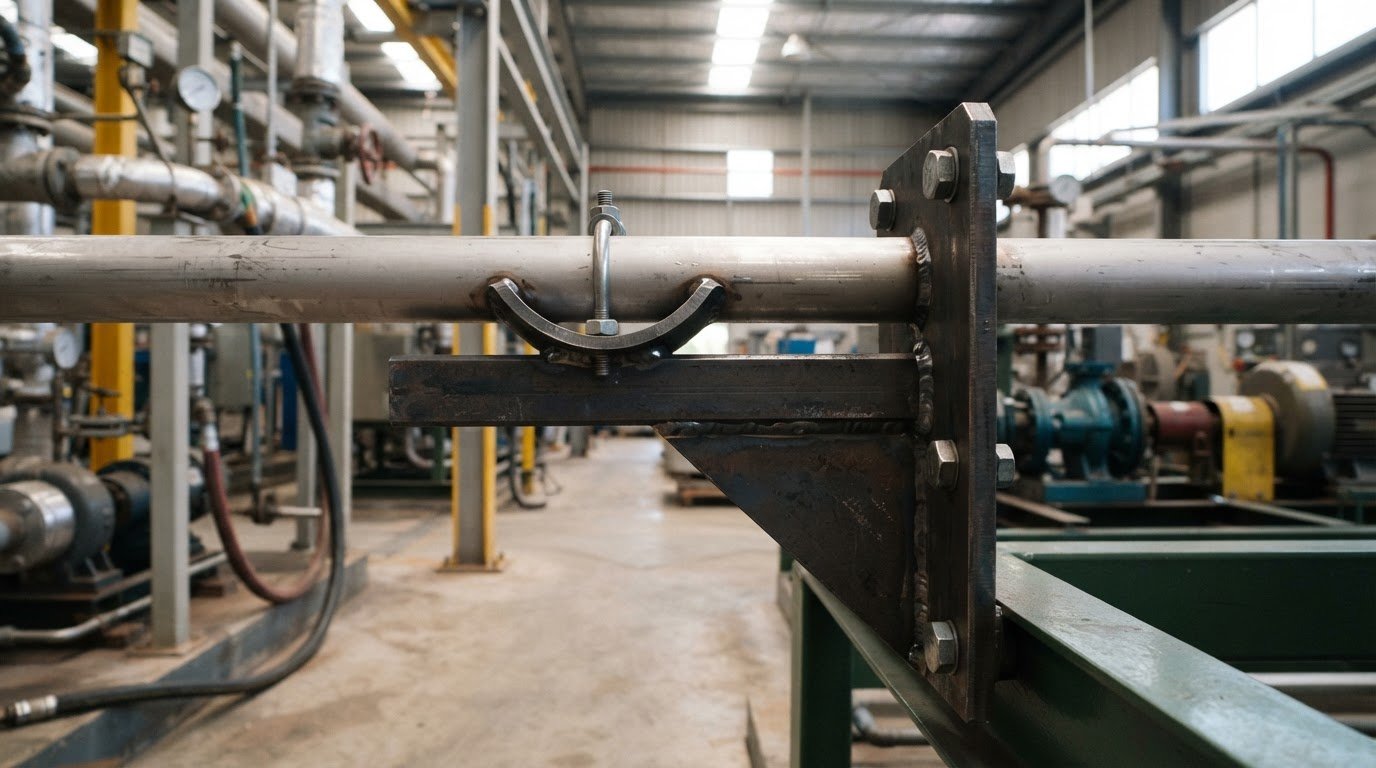
A bracket that looks heavy duty isn’t necessarily right for an industrial job. Custom metal brackets for heavy-duty applications need to suit the drawings, material requirements, mounting points and forces they’ll face in service. Good design starts with the job’s requirements, not appearance alone.
A bracket should fit properly and work with the equipment or structure it supports. For a useful fabrication quote, provide clear project information, including drawings, dimensions, material and thickness requirements, tolerances, finish and quantity. Its intended use and mounting conditions also help define the work.
This article explains what to include when requesting a quote and how custom brackets can be fabricated to suit industrial drawings and specifications. It also covers design and fabrication considerations, helping you prepare a practical brief and understand the next steps.
Key Takeaways
- Assess a bracket by the loads and operating conditions it must handle, not by appearance alone.
- A clear quote request helps establish the fabrication scope and the factors that shape cost.
- Drawings and specifications give the fabricator a practical basis for producing brackets that fit the intended installation.
- For related industrial fabrication needs, Donewright Stainless provides stainless steel fabrication, handrails, safety protection and custom benches.
Heavy-duty brackets for industrial applications
Industrial brackets need to suit the equipment, mounting surface and working conditions. Transport, mining and warehousing each involve different loads, movement and exposure.
Custom and off-the-shelf brackets
Off-the-shelf brackets suit standard dimensions and familiar mounting arrangements. Custom metal brackets for heavy-duty applications are useful when standard parts don’t match a machine frame, access point or installation drawing. For example, a transport bracket may need to fit a vehicle-mounted component without obstructing nearby equipment.
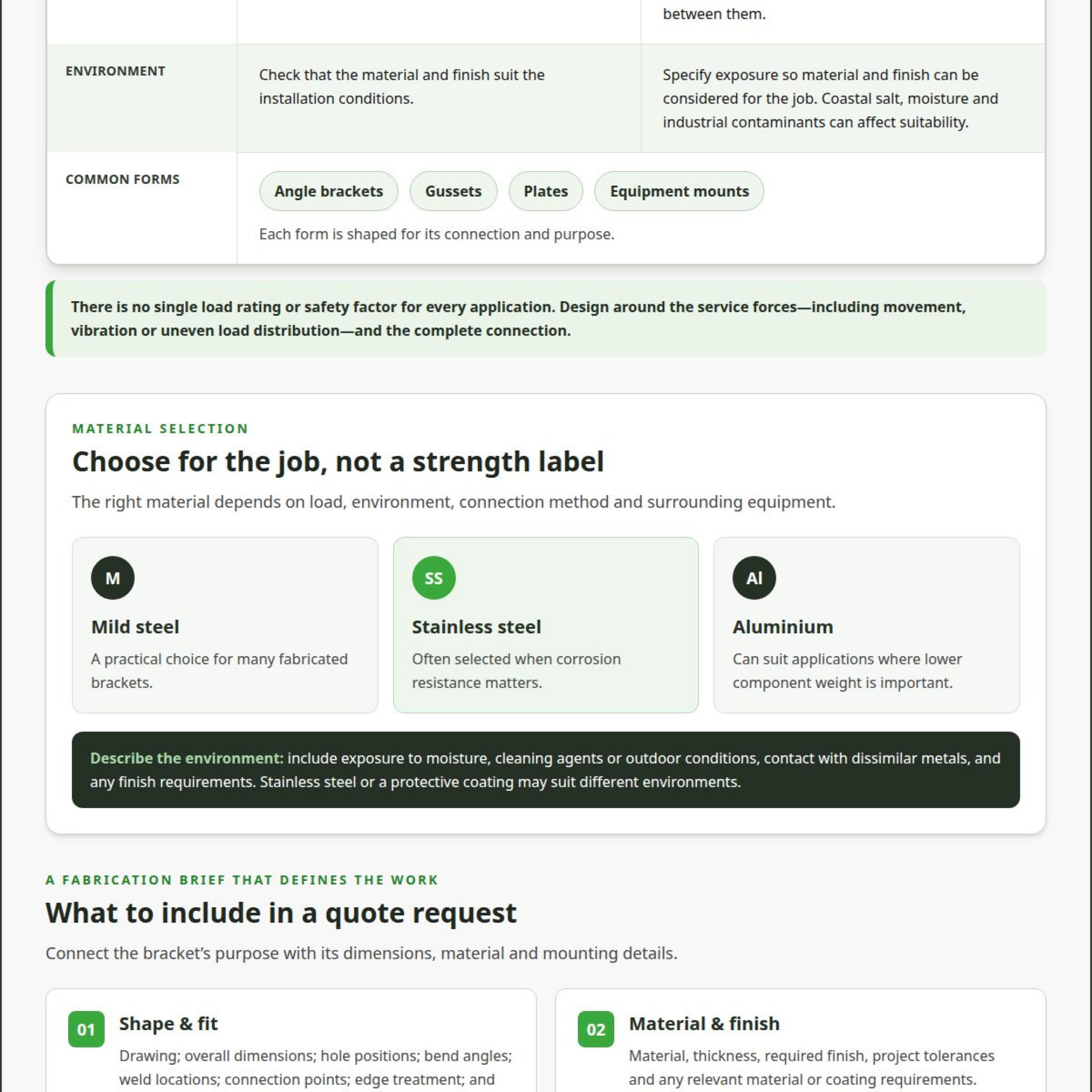
Compare hole positions, dimensions, material and finish with the actual installation. Custom brackets can address unusual clearances or connection points, while standard parts may suit straightforward replacements. Common types include angle brackets, gussets, plates and equipment mounts, each shaped for its connection and purpose.
Load ratings and safety factors
A bracket’s load rating should reflect what it supports in service, including forces from movement, vibration or uneven distribution. No single rating or safety factor suits every application. The design needs to account for the bracket, fixings, supporting structure and how loads transfer between them. For a mining conveyor guard, for example, the design brief should identify the supported assembly and operating conditions.
Fabrication lead times in Australia depend on drawing complexity, material selection, fabrication steps and production scheduling. A simple plate differs from a bracket requiring formed sections, machining and finishing. Outdoor exposure also affects material and finish choices: coastal salt, moisture and industrial contaminants can influence suitability. Stainless steel or a protective coating may suit different environments, so describe the installation conditions.
Installation and use failure risks
Common failure risks include mismatched fixings, weak mounting surfaces, poor alignment and loads beyond the design basis. In a warehouse, handling equipment can also strike a bracket or shift its connection. Installation should follow the drawing, use the specified fixings and seat the bracket against its intended support.
During maintenance, inspect the bracket and connection for movement, cracking, deformation or corrosion. These signs may indicate overload, incorrect installation or environmental wear. In transport applications, vibration makes secure connections and suitable inspection routines especially relevant.
Information needed for a fabrication quote
A clear fabrication brief connects the bracket’s purpose with its dimensions, material and mounting details. Include the drawing and intended application to define the work.
For a useful quote, provide the quantity, overall dimensions, hole positions, material and thickness, finish, tolerances and delivery location. Add details of the supported equipment or assembly, mounting surface and operating environment. For example, a bracket beside a washdown area faces different conditions from one inside a dry warehouse. Include photographs or a marked-up drawing when they clarify access, clearances or adjoining components.
Steel bracket fabrication
Steel bracket fabrication turns a design into a formed, cut and joined component. The drawing should show the bracket profile, bends, holes, weld locations and connection points. State whether the part is a replacement or a new installation, and note nearby obstructions. These details define the fabrication steps and reduce assumptions about fit.
For example, a steel equipment mount may require an angled plate and accurately positioned fixing holes. Specify the required finish and any project tolerances alongside the drawing.
Material choices for heavy-duty brackets
Mild steel is a practical choice for many fabricated brackets, while stainless steel is often selected when corrosion resistance matters. Aluminium can suit applications where lower component weight is important. The best material depends on the load, environment, connection method and surrounding equipment, not a single strength label.
Describe exposure to moisture, cleaning agents or outdoor conditions. Identify contact with dissimilar metals and any finish requirements, too. These details guide material selection and help prevent a mismatch between the bracket and its working environment.
Standards for brackets and fixings
Applicable Australian Standards depend on the bracket’s role, the structure it connects to and the project specification. Structural steel brackets and fixings may have different requirements from machinery components or non-structural supports. The drawing or engineering documentation should identify the standards that govern the assembly.
Include relevant project specifications, design notes and fixing details with your quote request. For example, identify the substrate, connection type and any stated inspection requirements. This gives the fabricator a defined basis for the work without assuming one standard applies to every bracket.
Brackets made to drawings and specifications
A fabrication drawing translates the bracket’s intended function into dimensions and manufacturing instructions. Clear details define its profile, interfaces and finish, reducing ambiguity between the design intent and finished component.
Start with a dimensioned drawing that identifies the bracket’s overall shape, material, thickness and hole locations. Include bend angles, weld positions, edge treatment and finish where they affect manufacture or installation. For example, a mounting plate with slotted holes needs the slot dimensions and positions shown, not just the plate’s outside measurements.
Dimensions need tolerances where variation could affect fit or operation. One market listing specifies a dimensional tolerance of +/-0.02 mm, but that figure is specific to that listing, not a universal requirement for every bracket. Set tolerances according to the drawing’s functional needs, and identify critical dimensions clearly so they aren’t mistaken for general dimensions.
Show how the bracket locates against adjoining parts. A datum, or defined reference point, gives dimensions a consistent origin; this matters when holes must align with a machine frame or an existing assembly. Add a section view where bends, returns or recessed features aren’t clear from the main view. A 3D model can help illustrate shape, but the drawing should identify the controlling dimensions.
Revision control is practical, too. Mark the drawing’s revision and ensure the supplied files describe the same design. If a change moves a fixing hole or alters material thickness, record it rather than relying on an informal explanation. This helps keep the fabrication scope aligned with the intended installation.
Before fabrication, review the drawing and specification together for material, geometry, tolerances, finish and connection details. For a replacement bracket, photographs can clarify surrounding clearances, while measured dimensions define the part itself. These checks provide a clear basis for making a bracket that matches the documented requirements.
Heavy-duty brackets for infrastructure and industry
Infrastructure brackets often connect equipment to structures exposed to movement, weather or demanding operating conditions. Their functions can differ sharply across a rail-side enclosure, mine conveyor support and warehouse equipment mount. Design must account for the bracket’s connection points and surrounding installation, not just its shape.
In transport settings, brackets may support guards, cable routes or equipment housings. A vehicle-mounted component can experience vibration and limited installation clearance, so the design should show both its mounting interface and nearby obstructions. For a rail-side enclosure, maintenance access may also influence bracket placement and orientation.
Mining equipment brings different practical considerations. A bracket near a conveyor or processing plant may face dust, moisture, vibration or impacts from adjacent operations. The drawing should identify what the bracket supports and how it attaches to the structure. This clarifies the connection and fabrication requirements.
Warehousing applications can include equipment mounts, protective barriers and supports around storage or handling systems. A bracket beside a loading area, for example, may need to avoid forklift paths while keeping its supported component accessible. Infrastructure projects can also use brackets for pipework supports, access components or equipment enclosures, depending on the design.
Define the bracket by its job and installation context. Identify the supported item, connection surfaces, operating environment and maintenance access, then align the drawing and fabrication specification with those conditions. This distinguishes a purpose-designed component from a generic part that may not suit the site’s interfaces or clearances.
For an industrial project involving fabricated metal components, discuss your fabrication requirements and the conditions the part must suit.
Donewright Stainless
Donewright Stainless fabricates stainless steel, mild steel and aluminium for industrial requirements, including made-to-measure metalwork. If your bracket project fits these fabrication needs, the drawings, material choice and installation context provide a practical starting point for discussing the scope.
Donewright Stainless also fabricates safety handrails and protection, stainless steel handrails and custom stainless benches. These examples show how fabrication can meet different site requirements, from protective elements to equipment and work surfaces. For a bracket enquiry, bring together the relevant drawing and specifications so the discussion can focus on material, dimensions and fit.
Discuss your project and its fabrication requirements with Donewright Stainless.
Move your bracket project towards fabrication
A well-defined bracket design helps coordinate fabrication with the wider installation. Consider how the part connects with existing equipment, access requirements and surrounding metalwork. This broader view can keep the component practical beyond the drawing itself.
For custom metal brackets for heavy-duty industrial applications, Donewright Stainless brings fabrication expertise across stainless steel work, including stainless steel handrails and safety handrails and protection. Start the discussion with your project drawings and the bracket’s intended role. This helps frame fabrication requirements alongside connected site needs, rather than treating each metal component in isolation.
Share your project requirements with Donewright Stainless to discuss the next step. Contact Donewright Stainless about your brackets and take your design towards a practical fabrication brief.
Frequently Asked Questions
What types of custom heavy-duty metal brackets are available in Australia?
Australian fabrication can produce equipment mounts, pipe-support brackets, guard brackets and mounting plates shaped for their installation. For example, a pipe support may need a curved saddle, while a guard bracket may need an offset to clear nearby machinery. The type depends on what the bracket holds and how it attaches. Donewright Stainless works with projects in Brisbane, the Gold Coast, Logan and Ipswich.
How do I specify dimensions, material, load capacity and finish for a custom metal bracket?
Define each requirement by the bracket’s function and mating parts. Use a drawing to show dimensions and hole locations, then identify the material, finish and load information in the project’s design documentation. For example, note whether a coating must avoid a particular contact surface. If the bracket connects to existing equipment, show that interface so its position and clearances are clear.
How are custom metal brackets designed and manufactured in Australia?
Fabrication turns design information into a component through material selection, cutting, forming, joining and finishing. The sequence depends on the bracket’s geometry and specification. A folded bracket may need forming before holes or attachments are completed, while a welded assembly needs defined component positions. The finished part is assessed against the drawing’s key dimensions and interfaces, aligning the manufacturing process with the intended application.
What information should I provide when requesting a bracket fabrication quote?
Provide the latest drawing, quantity and intended use, along with any project-specific material, finish or tolerance requirements. Include the installation location, connection method and whether the bracket is a one-off replacement or part of a repeat job. A photo of the surrounding assembly can clarify access and nearby components. For fabrication projects in Brisbane, the Gold Coast, Logan or Ipswich, contact Donewright Stainless to discuss your requirements.