
How Stainless Steel Resists Corrosion in Commercial Kitchens
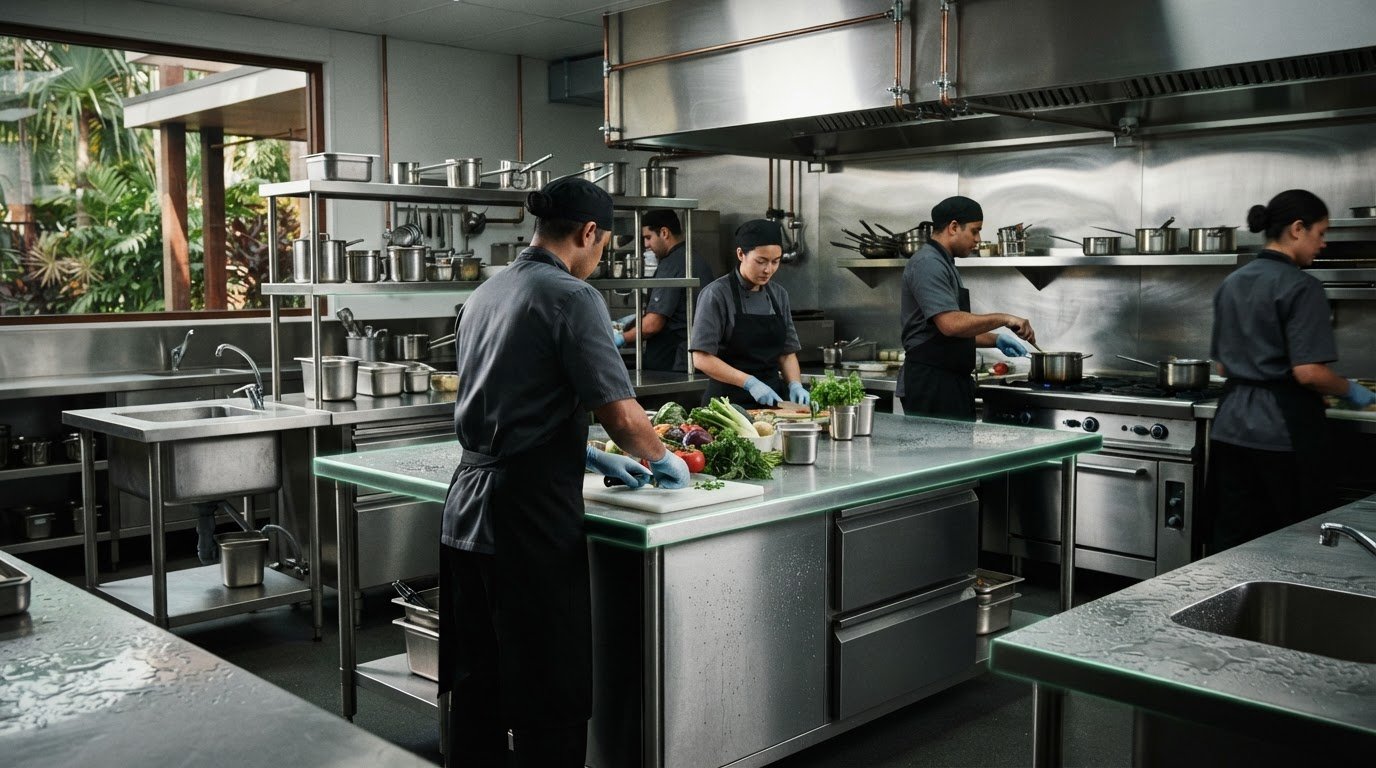
Stainless steel’s corrosion resistance and cleanable surface make it a practical choice for busy commercial kitchens. The benefits of stainless steel in commercial kitchens include a non-porous surface that’s easier to clean and sanitise, durability under daily use, and resistance to rust and staining. Surfaces used for sanitising need to meet a minimum grade requirement of 304, and the Australian Food Standards Code sets out six steps for effective cleaning and sanitising.
Stainless steel supports hygiene, but it does not replace proper cleaning and sanitising. Its performance depends on the material’s composition and condition, and on how it is used and maintained.
This article explains how chromium helps stainless steel resist corrosion, why its surface properties matter for food preparation and cross-contamination, and how its durability can support long-term kitchen use. It also covers what stainless steel can and cannot do, helping you make informed decisions about surfaces and equipment in a commercial kitchen.
Key Takeaways
- Choose stainless steel surfaces with the right grade for their kitchen conditions; surfaces used for sanitising need to meet a minimum grade requirement of 304.
- Understand how stainless steel’s chromium-rich composition forms a protective layer that helps resist corrosion, including after minor surface damage.
- Factor daily wear, heat, moisture and cleaning into material decisions, as durability can reduce the need for frequent repairs and replacements.
- Use the smooth, non-porous surface to support cleaning and sanitising routines, while keeping food-contact areas clean to help reduce cross-contamination.
- For a kitchen layout that needs purpose-built stainless steel benches or fabrication, consider how custom work can suit the space and its practical requirements.
What are the benefits of stainless steel in commercial kitchens?
The benefits of stainless steel in commercial kitchens include cleanable surfaces, corrosion resistance and durability in demanding work areas. Its practical value depends on choosing a suitable material and cleaning it consistently.
Hygiene and easy cleaning
Stainless steel’s smooth, non-porous surface is easy to clean and sanitise. Food residue and liquids are less likely to penetrate the material, so staff can remove contamination from the surface during routine cleaning.
This matters on food-preparation benches, where residue from one task could affect the next. Stainless steel also does not react with acidic or alkaline foods, helping preserve their flavours without metal leaching into dishes.
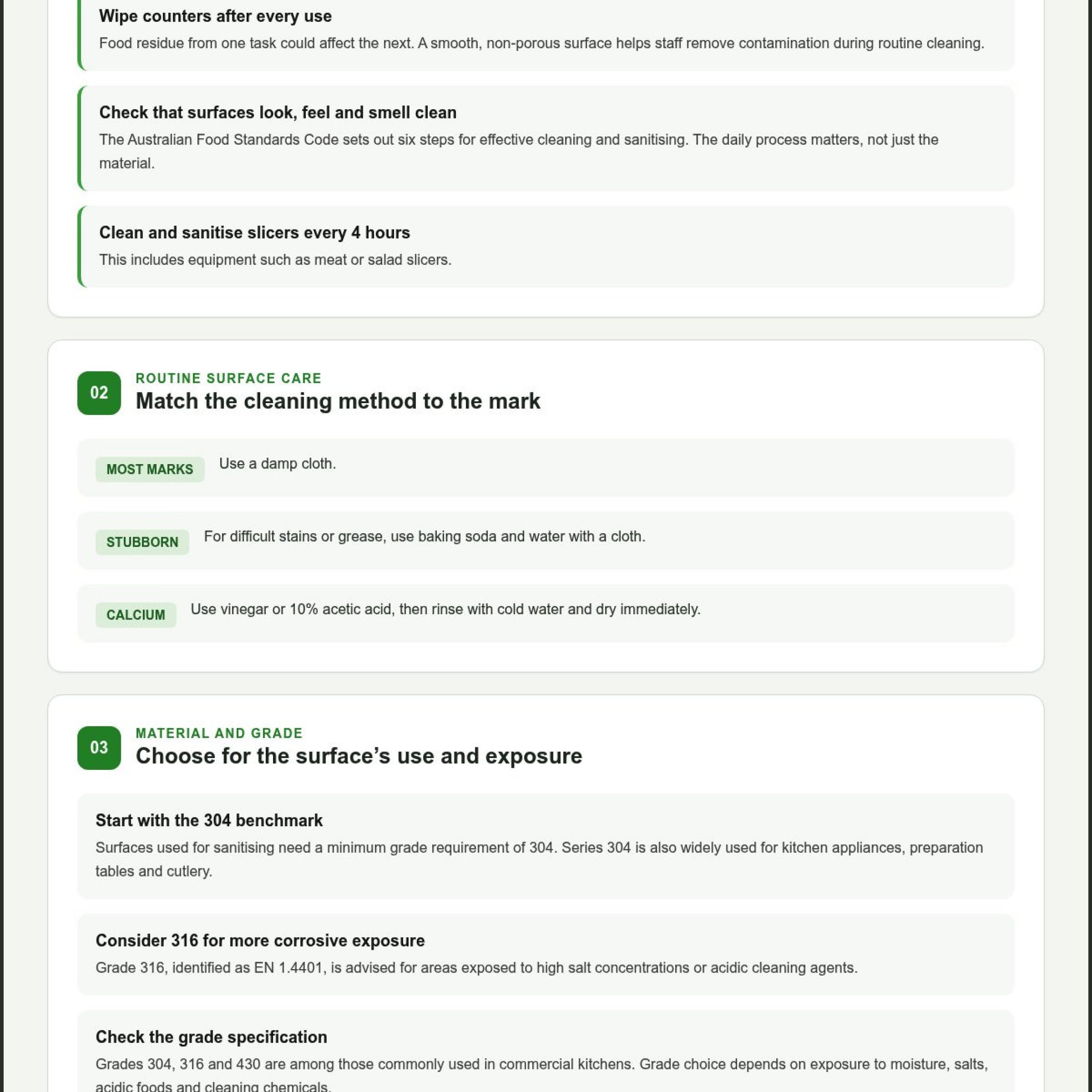
Clean steel surfaces still need regular attention. Clean counters after every use, and clean and sanitise equipment such as meat or salad slicers every 4 hours. A damp cloth removes most marks; for stubborn stains or grease, use baking soda and water with a cloth.
For calcium deposits, the recommended treatment is vinegar or 10% acetic acid, followed by a cold-water rinse and immediate drying. These steps help maintain the surface while supporting an effective cleaning routine.
Comparing kitchen surface materials
When comparing materials, consider cleaning needs, food contact and the kitchen’s appearance. Stainless steel is easy to clean, and its non-porous surface supports wiping and sanitising. Glass is similarly cleanable, while plastic and aluminium are less so.
Stone varies by type and finish, so do not assume it performs just like stainless steel. Consider how cleanable the surface is and how it will be used. Stainless steel also resists corrosion in kitchen environments exposed to water, acids and cleaning agents.
Food safety standards for surfaces and equipment
In Australia, the Australian Food Standards Code sets out six steps for effective cleaning and sanitising. It also requires food-contact surfaces to look, feel and smell clean. These requirements make the daily cleaning process, not just the material, central to food hygiene.
Surfaces used for sanitising need to meet a minimum grade requirement of 304. That gives kitchen operators a concrete material benchmark when specifying these surfaces. Stainless steel supports the routine, but it doesn’t replace the Code’s cleaning and sanitising steps.
In practice, combine the appropriate surface with a consistent routine: clean counters after each use, and clean and sanitise slicers every 4 hours. Following those steps helps keep preparation areas ready for their next task.
A non-porous, corrosion-resistant surface also limits places where microorganisms can colonise. Its reflective finish can make commercial kitchens appear brighter, adding a visual benefit to its practical use in food-preparation areas.
For routine care, wipe benches after each use. A damp cloth suits most marks, while a cloth with baking soda and water can help with difficult stains and grease.
Stainless steel composition and corrosion resistance
Commercial kitchen stainless steel resists corrosion because chromium forms a protective oxide layer on its surface. Grades 304 and 316 are common choices, while the right grade depends on exposure to moisture, salts, acidic foods and cleaning chemicals.
The passive oxide layer
The passive layer is a thin chromium oxide film that forms naturally when stainless steel meets air. It shields the underlying metal from conditions that can cause rust and corrosion.
If a minor scratch disrupts the film, it can self-heal in air. This helps explain why surface damage does not automatically remove stainless steel’s corrosion resistance. Deep damage, contamination or unsuitable cleaning chemicals can still affect the surface, so both grade selection and care matter.
Chromium oxide and resistance
Chromium is the key element in stainless steel’s corrosion resistance: stainless steel is produced with 10.5% chromium, which supports formation of the protective oxide layer. The layer also helps resist staining in kitchen environments exposed to water, acids and cleaning agents.
Composition differs by grade. Stainless steel grades can differ in their alloy composition, so check the grade specification when selecting material. These figures describe alloy composition, not a guarantee of performance in every kitchen condition.
For commercial kitchen surfaces and equipment, 304, 316 and 430 are among the commonly used grades. Series 304 is also widely used for kitchen appliances, preparation tables and cutlery. The best fit depends on the substances and cleaning agents contacting the surface.
Grade 316, identified as EN 1.4401, is advised for areas exposed to high salt concentrations or acidic cleaning agents. Series 316 is also used for range hoods exposed to corrosive agents and kitchen salts. These conditions can make its added corrosion resistance relevant compared with a general-purpose selection.
Series 200 stainless steel is used in food containers, but offers less corrosion resistance than Series 304. That distinction matters if equipment encounters persistent moisture, salt or acidic ingredients. Some foods and storage conditions can pose challenges for stainless steel vessels, so material choice should reflect how the equipment will be used.
Corrosion resistance does not mean stainless steel is immune to every environment. A grade suited to ordinary food preparation may not be the best choice for concentrated salts or acidic cleaning chemicals. Matching the alloy to its exposure helps preserve the passive layer and the steel’s working surface.
For equipment that needs a made-to-fit stainless component, custom stainless steel fabrication can align the design with its intended kitchen conditions.
Durability in commercial kitchens
Stainless steel resists corrosion in kitchen conditions involving moisture, heat and cleaning agents. Its strength helps it withstand daily use, although durability depends on the grade, exposure and maintenance.
Maintenance and durability
Maintenance protects the surface and helps preserve stainless steel’s useful life. In restaurants and catering kitchens, daily contact with food, water and cleaning chemicals puts equipment under regular stress.
Stainless steel can withstand daily use without chipping, cracking or wearing down over time. Scratches can still occur, so careful use can help preserve the surface. Keeping the material clean and avoiding damage to its surface helps maintain resistance to corrosion and staining.
Heat is another factor. 18/10 stainless steel can withstand temperatures of up to 600 degrees Celsius, and stainless steel can tolerate high temperatures without warping or suffering damage. That makes it suitable for surfaces and appliances exposed to heat, while its use across wet environments, flames and freezing temperatures shows its range in commercial kitchens.
These properties do not remove the need for maintenance. Consider how a surface is used, what it contacts and how it is cleaned. In manufacturing, the grade and fabrication matter too: stainless steel can be formed, joined and welded by following documented guidelines. Appropriate construction supports the durability expected of the finished item.
Durability and life-cycle costs
Life-cycle cost accounts for a surface’s service life as well as its initial purchase and ongoing upkeep. Stainless steel’s strength and corrosion resistance can make it cost-effective over its working life, particularly when comparisons include repairs and replacement of other materials.
A high-quality stainless steel installation in a commercial setting has a typical product lifecycle of approximately 50 years. By comparison, laminate and composite surfaces often need replacement within five to ten years because of wear, staining or heat damage. Those figures help frame a long-term comparison, but actual service life depends on use and care.
For a restaurant planning equipment or a workspace, fewer replacement cycles can mean less disruption to normal operations. Frequent repairs also take time and can affect how the kitchen uses its work areas. Stainless steel’s durability can reduce the need for repairs and surface replacements, but a fair comparison should account for the operating conditions each material will face.
Consider more than the busiest service. A preparation bench may face repeated contact with utensils, food and cleaning products, while a surface near heat may face different demands. Matching the material to its location makes durability relevant in practice, rather than relying on the material name alone.
Stainless steel’s long service life, strength and corrosion resistance support its use in commercial kitchens. With proper care, stainless steel restaurant equipment may last longer than the restaurant itself. For venues investing in professional food display and serving equipment, cafecounters.co.uk illustrates how commercial fabrication combines longevity with functional design. This potential longevity, alongside its performance in wet, hot and cold conditions, explains why it is often considered a long-term material choice.
Food hygiene and cross-contamination
Stainless steel supports food hygiene with a smooth, non-porous work surface that is easier to clean. It helps limit places where contamination can persist, but does not replace careful food handling or sanitising.
Non-porous food preparation surfaces
A non-porous surface does not absorb liquids into pores, making food residue easier to remove during cleaning. This matters when a bench is used for different tasks, such as preparing raw ingredients and assembling ready-to-eat dishes.
Stainless steel has no pores for dirt, bacteria, fungi or viruses to gain a foothold. Its smooth surface also helps staff see and wipe away spills. Keeping sink benches sanitary helps prevent food from being cross-contaminated by other substances.
Surface condition matters. Stainless steel stays smooth only if it is not scratched, so do not treat it as immune to damage. Deep scratches, joints and edges can make cleaning harder, particularly where residue collects. The benefits of a non-porous material are greatest when the surface is maintained and staff clean between tasks.
For example, after handling raw food, remove visible residue from the bench before sanitising it for the next preparation task. Cleaning removes soil; sanitising reduces microorganisms. A clean-looking surface is useful, but the full routine still matters.
Hygiene and sanitation
Hygiene is the broader practice of keeping food, equipment and work areas clean; sanitation is a key part of it. In Australia, the Australian Food Standards Code sets out six steps for effective cleaning and sanitising.
The Code also states that food-contact surfaces must look, feel and smell clean. These provide practical cues when staff check a bench, but visual inspection alone does not replace the required cleaning and sanitising process. Stainless steel provides a suitable surface for that routine; it does not complete the routine automatically.
Equipment use affects the routine. Slicers used for meat or salad need cleaning and sanitising every 4 hours. Blenders need cleaning after each use. These examples show why hygiene procedures should account for the equipment and task, not just the material.
For crockery and cutlery sanitised in sinks, hot water should be no less than 80°C. That temperature relates to the sanitising water, not a general instruction for every stainless steel surface. Separating equipment-specific requirements helps staff apply the correct process.
Cloth hygiene matters too: a cloth used to wipe a contaminated area can transfer residue to another surface. Keep cloths used on food-contact areas clean and replace them when soiled. Store clean linen separately from used cloths to prevent contact during service.
Stainless steel can make surfaces easier to clean, but controlling cross-contamination depends on the whole routine. Clean benches between uses, sanitise as required, and prevent cloths and equipment from carrying residue between food tasks.
Porous surfaces in food preparation
Food-preparation surfaces need to be practical to clean and suited to daily use. Stainless steel’s smooth, non-porous surface helps keep liquids on the surface rather than letting them permeate the material. Finish, thickness and fabrication also affect how a bench performs in service.
The non-porous surface is useful on benches and sinks, where food residue and spills need prompt removal. Stainless steel can be formed into both, allowing the work surface and sink to be considered together in a kitchen layout. The surface is not self-cleaning, though; it still needs the kitchen’s usual cleaning and sanitising routine.
Surface finish influences appearance and the way light reflects across a workspace. Cold-rolled stainless steel strip is available in 2R bright annealed and 2B dull annealed and pickled finishes. Several independent market sources describe a brushed stainless steel finish as non-shiny and potentially warmer-looking than a traditional finish. Those options let operators consider the kitchen’s aesthetic alongside practical requirements.
Thickness is another design factor. Commercial stainless steel worktops are typically specified at 1.2mm to 1.5mm to help prevent denting. The appropriate choice depends on the intended use and the demands placed on the worktop. A preparation bench handling heavy equipment has different practical considerations from a surface used for lighter tasks.
Edges, joins and connections matter in a working kitchen. A considered design makes surfaces easier to reach during cleaning and can avoid awkward areas around sinks or appliances. Stainless steel can be formed, joined and welded by following documented guidelines, so fabrication choices can support the layout as well as the material’s protective qualities.
Design should also account for exposure. Stainless steel resists corrosion in kitchens where it meets water, acids and cleaning agents, but acidic, pickled and salty foods, including kimchi and pickles, may cause pitting when stored in stainless steel vessels. A worktop and a storage vessel face different conditions, even if both are made from stainless steel.
When planning a food-preparation area, consider the finish, thickness, joins and equipment placement together. This helps match the surface to its use, supports cleaning access and creates a consistent, functional workspace. A brushed finish may suit a kitchen seeking a softer appearance, while a bright finish gives a more reflective look.
Discuss a purpose-built layout through custom stainless bench fabrication, with the surface designed around the kitchen’s preparation needs and equipment.
Plan the surface around cleaning and sanitising: stainless steel is non-porous and easy to clean, while effective commercial-kitchen sanitation helps prevent food-related illness.
Donewright Stainless: Stainless steel handrails
Donewright Stainless fabricates stainless steel handrails, safety protection and purpose-built stainless steel components for commercial kitchens. Its stainless steel fabrication includes custom benches, making it a practical choice when planning a workspace or improving access and protection around a kitchen.
For a bench project, consider how staff use the work area, where equipment sits and how the surface will be cleaned. For handrails and safety protection, the layout and intended use shape the requirements. Donewright Stainless can discuss the fabrication needs and tailor the work to the project.
For stainless steel fabrication, handrails or custom benches, contact Donewright Stainless to discuss your project.
Plan the next step for your kitchen
Understanding the benefits of stainless steel in commercial kitchens is a starting point. Next, consider how the material can support your kitchen’s workflow, access requirements and layout. A well-planned installation should suit how staff move, prepare food and use equipment, rather than treating each surface or safety feature in isolation.
Donewright Stainless provides stainless steel handrails, safety handrails and protection, and stainless steel fabrication. These offerings can support projects where kitchen access, protection or made-to-fit stainless components need attention. Consider the intended use and surrounding layout as you plan what the space needs.
Discussing those requirements can help shape a practical direction for your project. Contact Donewright Stainless to talk through stainless steel fabrication, handrails or safety protection for your kitchen. A considered next step can help you move from material choice to a workspace planned around real operating needs.
Frequently Asked Questions
Can stainless steel rust or tarnish?
Yes, stainless steel can corrode or stain; it is not rustproof in every condition. Its chromium-rich passive layer helps protect the metal and can reform in air after surface damage. Exposure to water, acids and cleaning agents can still affect stainless steel, while salty or acidic foods may cause pitting in vessels. Grade selection and the kitchen environment both influence how the surface performs.
What are the main benefits of stainless steel in commercial kitchens?
The main benefits include durability, corrosion resistance and a surface that supports practical cleaning. The material’s value depends on matching the grade and design to the task. For example, surfaces exposed to concentrated salts or acidic cleaning agents face different demands from general preparation benches. Consider exposure, equipment placement and expected use when deciding where stainless steel is suitable.
How does stainless steel support food hygiene and food safety?
Stainless steel supports food hygiene with a smooth surface that is practical to clean between preparation tasks. For example, after preparing raw ingredients, staff can clear residue from a bench before using it for another task. The material does not replace safe food handling or the cleaning and sanitising routine. Food-contact surfaces still need to be kept clean, with procedures suited to the equipment and work being carried out.