
Commercial Stainless Steel Maintenance in Brisbane: A Practical Guide to Passivation
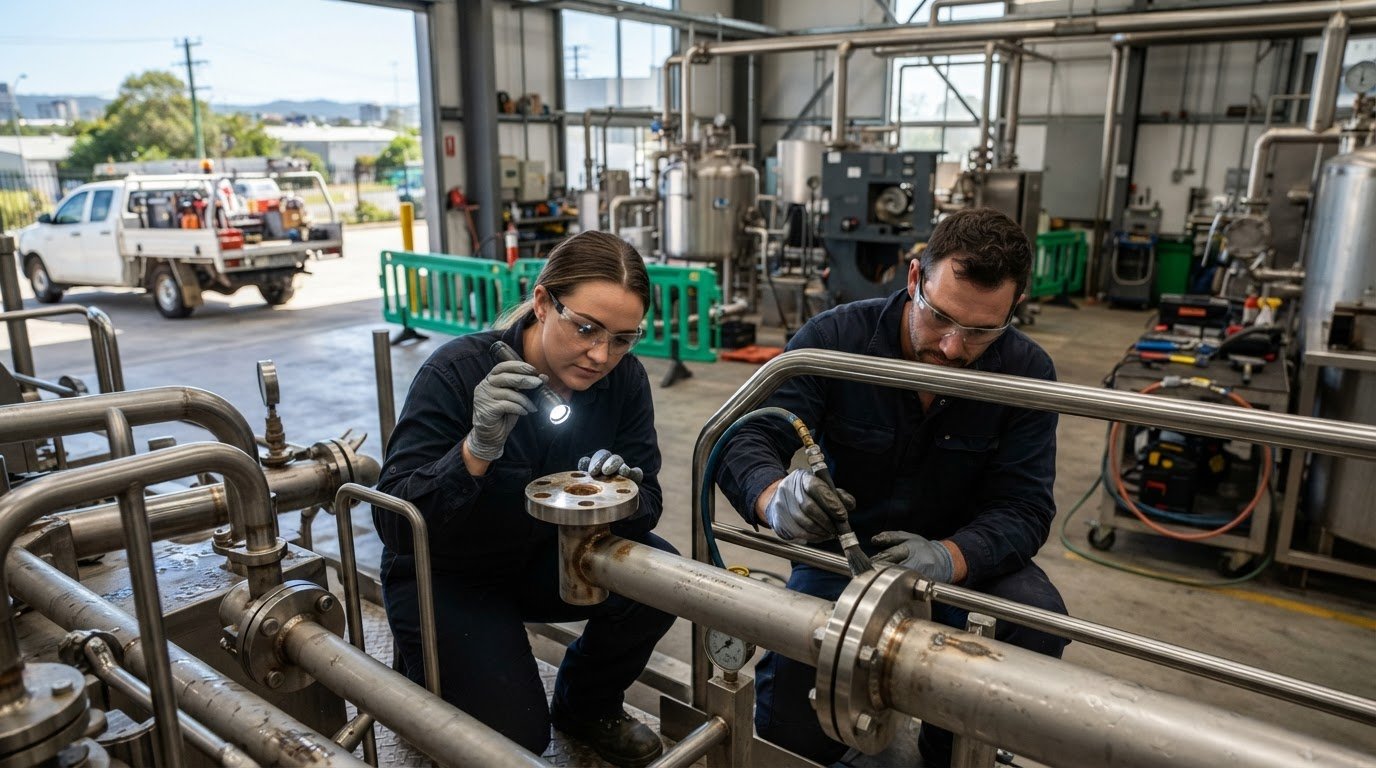
Could a brown mark on a stainless steel surface call for a simple clean, a repair or a more specialised treatment? Choosing the wrong response can waste maintenance time, while leaving the cause unaddressed may allow the problem to return. For commercial stainless steel maintenance Brisbane businesses should consider both the surface condition and the environment the asset operates in.
Protecting stainless steel assets without disrupting production, site access or routine cleaning takes a clear plan. Passivation can be relevant in some situations, but it isn’t a catch-all solution for staining, contamination or corrosion. The right next step depends on what is affecting the surface and whether cleaning, inspection, repair or surface treatment is appropriate.
This guide explains how to assess common surface issues, what passivation does and how operating conditions can shape a maintenance plan. It also covers practical ways to organise recurring care and plan on-site work around operations. Donewright Stainless supports commercial and industrial maintenance, fabrication and mobile welding across Brisbane, with a fully equipped mobile workshop for site-based work.
Key Takeaways
- Record where staining, residue or surface damage appears and whether it returns after cleaning. This makes the likely maintenance need easier to scope.
- Passivation supports the stainless steel’s protective surface layer, but it isn’t a substitute for suitable cleaning or repair.
- Choose between cleaning, inspection, fabrication or weld repair, and passivation by considering each option’s purpose and the asset’s condition.
- For commercial stainless steel maintenance Brisbane sites, document exposure and access requirements to help coordinate work around operations.
- Donewright’s industrial maintenance, pipework, mobile welding and fabrication capabilities can support site-based maintenance planning.
Commercial Stainless Steel Maintenance in Brisbane: Identify the Problem Before Choosing a Treatment
Staining, process residue, surface damage and recurring cleaning problems can all prompt a maintenance call. Appearance alone, however, doesn’t confirm whether the issue is removable contamination, physical damage or corrosion. The same mark can have different causes depending on the asset and its working conditions. Choosing a treatment before assessing the surface may result in work that doesn’t address the underlying concern.
Start by separating the likely tasks. Routine cleaning removes everyday soils and deposits. Inspection helps assess the surface and locate changes. Repair addresses physical or fabrication damage. Specialist surface treatment is considered for a defined surface-related need. Passivation is one such process, but it isn’t a general-purpose cleaner or a repair for damaged metal. For background on the term and its stainless steel applications, see Passivation (chemistry).
What can affect stainless steel in a commercial setting?
Moisture, cleaning products, process residues and physical wear can all influence how a stainless steel surface looks and performs. Their effects depend on the asset’s use, its existing finish and how often it is cleaned or exposed to deposits.
Conditions can also vary across one site. Indoor equipment may face different exposure from plant areas, while washdown zones and coastal locations can have distinct maintenance demands. Treat these as factors to record, not proof of a particular cause. A brown mark, for example, shouldn’t be diagnosed as corrosion from colour alone.
Which signs call for closer assessment?
Arrange a closer assessment if discolouration persists after suitable routine cleaning, deposits keep returning, an area feels rough, welds appear damaged or the surface changes repeatedly. These observations help identify where attention is needed, but they don’t establish whether the cause is contamination, wear, a fabrication issue or another condition.
Note whether a deposit comes away during normal cleaning and whether the surface beneath appears altered or damaged. Don’t treat suspected material or weld damage as a cleaning problem. Record the asset’s location, operating conditions, affected area and cleaning history. Photos taken from a consistent angle can help track changes over time and give maintenance planning a clearer starting point.
For commercial stainless steel maintenance Brisbane sites, the practical first step is to assess both the surface and its operating conditions. This context helps distinguish routine care from inspection, repair or specialist treatment, and supports a more focused scope of work.
How Stainless Steel Passivation Works and What It Can, and Cannot, Address
Passivation is a controlled surface-treatment process intended to remove relevant contaminants from stainless steel and support the formation of its naturally occurring protective passive layer. This layer forms when chromium at the surface reacts with oxygen. Passivation doesn’t add a permanent coating, remove every cause of corrosion or make stainless steel maintenance-free. The NASA Technical Reports Server (NTRS) on Passivation discusses the process and the importance of selecting an approach suited to the material and application.
What happens during passivation?
In general terms, passivation aims to leave a clean surface that can develop or re-establish a stable passive condition. The preparation and treatment depend on factors such as the stainless steel grade, type of contamination, existing finish and intended use of the asset. No single chemical or procedure suits every component, so the treatment should be selected for the specific work scope.
It’s important to distinguish passivation from cleaning. Cleaning removes soils and residues, but doesn’t necessarily address embedded contaminants or surface conditions that require treatment. Pickling is a more aggressive process used for issues such as weld scale and the affected surface layer beneath it. Mechanical repair addresses physical damage rather than restoring a passive layer. These processes have different purposes and aren’t interchangeable.
When may passivation be unsuitable on its own?
A damaged weld, embedded contamination or material loss may call for inspection, cleaning, fabrication or repair as part of a broader scope. Passivation won’t rebuild missing metal, correct a defective weld or remove every form of scale. It also doesn’t replace routine cleaning and ongoing inspection after treatment.
That distinction matters for commercial stainless steel maintenance Brisbane sites, where the asset’s operating environment and use inform the right decision. A surface in a washdown area, for example, has different exposure considerations from indoor equipment. Suitability depends on the material, contamination, finish and service conditions, not just the visible mark. Treatment also can’t guarantee a particular service life or prevent all future corrosion.
For site-based maintenance and repair planning, Donewright’s industrial maintenance, pipework, mobile welding and fabrication capabilities can help shape a scope around the asset and operational requirements. Explore Donewright’s industrial maintenance support as part of that planning.
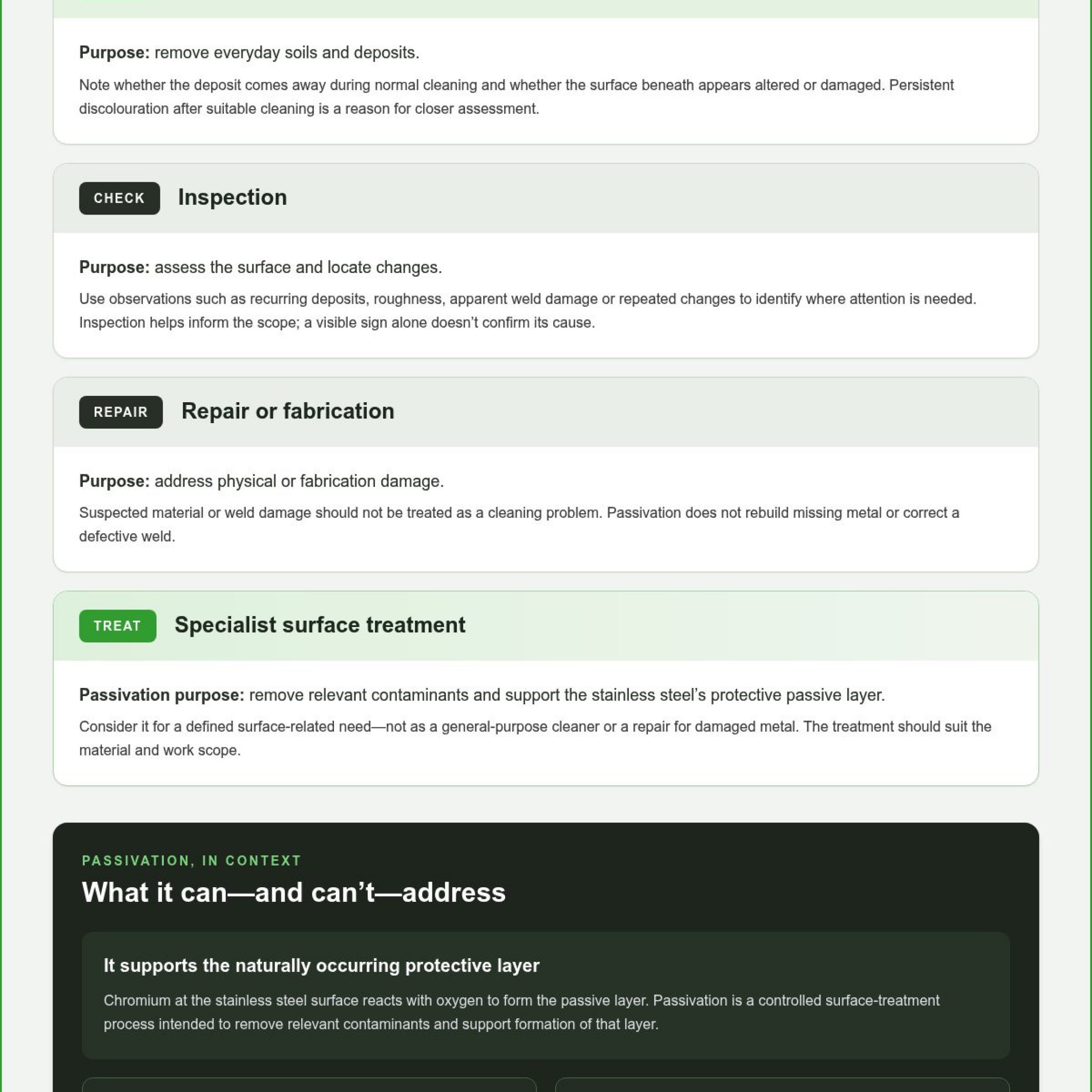
Cleaning, Repair or Passivation? Compare Commercial Stainless Steel Maintenance Options
Choosing a treatment by name can send a maintenance scope in the wrong direction. A mark on a stainless steel surface might be ordinary residue, a sign that needs closer inspection or evidence of damage. Focus on the condition that needs addressing, rather than choosing the process that sounds most specialised.
| Option | Purpose and typical trigger | Scope considerations and limitations |
|---|---|---|
| Routine cleaning | Remove ordinary soils or deposits from an intact surface. | Use cleaning guidance appropriate to the material and site. Cleaning won’t correct physical damage or confirm the cause of persistent marks. |
| Inspection | Assess recurring contamination, discolouration, rough areas or changing surface condition. | Record affected locations, exposure and cleaning history. Inspection helps inform the scope but isn’t itself a repair or treatment. |
| Fabrication or weld repair | Address physical damage or a fabrication issue where assessment supports repair. | Define the affected component and operational requirements. Repair doesn’t automatically resolve contamination elsewhere on the surface. |
| Passivation | Consider as a specialist surface treatment for suitable material and surface conditions. | Suitability depends on the contamination, finish and intended use. It doesn’t replace cleaning, repair or ongoing inspection. |
When is cleaning or inspection the practical first step?
If an equipment surface has ordinary soil and remains intact, routine cleaning is a sensible starting point. Follow guidance appropriate to the material rather than assuming a stronger product or abrasive method is better. If marks return, spread or remain after normal cleaning, record the change and arrange an assessment before selecting further work. The Specialty Steel Industry of North America (SSINA) guidance on passivation explains the passive film and the role of passivation, but it doesn’t replace assessment of a particular asset.
When might repair or passivation enter the scope?
Repair may be relevant where inspection identifies a damaged weld or another physical or fabrication issue. Passivation may be considered for an appropriate surface condition, but it won’t restore missing material or correct a damaged component. If work needs to be combined or carried out in sequence, the order should follow verified technical requirements and the asset’s use.
For example, a washdown-area bench with a recurring mark needs assessment of the residue and surface condition before treatment is specified. If the mark cleans away and the surface is intact, the scope may remain focused on routine care. If inspection identifies damage, repair may need consideration instead. For commercial stainless steel maintenance Brisbane operations, match the work to the assessed condition, then plan the scope around site requirements.
Plan Commercial Stainless Steel Maintenance in Brisbane Around Site Operations
A useful maintenance scope starts with clear information about the asset and the work area. Planning access, isolation and coordination early helps site personnel understand what needs attention and how the work may fit alongside operations. Humidity, washdown and coastal exposure are relevant where the asset is actually exposed to them, not as blanket assumptions about every Brisbane site.
What information helps define the maintenance scope?
Before work is scoped, gather details that describe both the surface and its role:
- Document the asset. Note its location, purpose, material or grade if available, and any relevant drawings or maintenance records.
- Describe the symptoms. Record where the issue appears, when it occurs, whether it returns and any changes noticed over time. Take clear photographs of the affected area.
- Record exposure and cleaning. Note washdown, moisture or coastal exposure where relevant, along with the cleaning agents and processes already used.
- Identify site requirements. Flag access constraints, isolation needs and applicable hygiene or safety requirements for project-specific review.
- Coordinate the work. Discuss access windows, work area preparation and sequencing with the personnel responsible for the asset and site operations.
Include any downtime concern or production constraint in the scope discussion. These details help distinguish a local repair from work that may need broader planning. They also provide a practical basis for understanding site access and sequencing without assuming a particular timeframe or outcome.
How can on-site work fit around operations?
On-site work needs to be coordinated around the asset, nearby activity and the site’s access and isolation arrangements. Agreeing who will prepare the work area and how the asset will be made accessible helps clarify responsibilities before work begins. Donewright’s mobile workshop and on-site maintenance and welding capabilities support site-based work, with the scope tailored to operational requirements.
For pipework issues, the existing guide to on-site industrial pipework repair in Brisbane is a related resource. If assessment points towards fabrication or replacement rather than maintenance alone, the custom stainless steel fabrication Brisbane guide can help frame that part of the scope.
For commercial stainless steel maintenance Brisbane sites, documenting the asset, symptoms and site requirements makes planning more straightforward. Discuss your site maintenance and repair requirements with Donewright to shape a scope around the work and your operations.
Brisbane Commercial Stainless Steel Maintenance: Scope the Right Work with Donewright
A practical maintenance scope follows a clear sequence: identify the surface or asset condition, understand its operating environment, then define work that addresses the issue. Staining, contamination, corrosion concerns and physical damage can call for different responses. Passivation is a technical surface-treatment decision, not a default step for every stainless steel asset. Its suitability depends on the material, condition and intended use, and it shouldn’t be assumed to resolve damage that needs repair.
Where Donewright’s commercial maintenance capabilities fit
Donewright Stainless provides industrial maintenance and pipework support, with on-site mobile welding and a fully equipped mobile workshop for site-based work. If assessment identifies a physical repair requirement, welding or fabrication may form part of the scope. Work can be planned around the asset, access conditions and operational requirements.
Donewright is based in Brisbane and serves Brisbane, the Gold Coast, Logan and Ipswich. For sites across these areas, maintenance planning can bring together the relevant details about the asset, its observed condition and any access or operating constraints. This information helps define a practical scope without assuming a particular treatment or outcome.
What to include in a maintenance enquiry
A useful enquiry gives a clear picture of what needs attention and where the work will take place. Include:
- The asset type, location and operating purpose.
- A description of the condition, including when it occurs and whether it returns after cleaning.
- Photographs or available drawings that help show the affected area or component.
- Relevant access, isolation, hygiene or safety requirements, along with any operational priorities.
These details help frame the next steps, whether the project involves industrial maintenance, pipework, on-site welding or fabrication. For commercial stainless steel maintenance Brisbane businesses can start with the condition and site requirements, then plan work that suits the asset and its role in operations.
To discuss your project and site requirements, Discuss your commercial stainless steel maintenance project with Donewright.
Plan the Next Step for Your Stainless Steel Assets
Effective commercial stainless steel maintenance Brisbane starts with understanding the surface condition and the environment it works in. Staining or recurring residue doesn’t automatically mean passivation is needed. Cleaning, inspection, repair and specialist treatment each serve a different purpose, so define the issue before choosing the work.
Good planning also accounts for access, isolation and site operations. Asset details, photographs, cleaning history and operating requirements can help shape a practical scope. Passivation is a technical treatment decision, not a substitute for repairing physical damage or maintaining equipment over time.
Donewright Stainless is a Brisbane-based specialist serving Brisbane, the Gold Coast, Logan and Ipswich. Its industrial maintenance and pipework services are supported by a fully equipped mobile workshop, with on-site mobile welding and stainless steel fabrication capabilities for projects where repair or fabrication is relevant.
Share your asset details and site requirements to start planning the work. Discuss your commercial stainless steel maintenance project with Donewright, and take a clear, considered next step for your site.
Frequently Asked Questions
What is passivation of stainless steel?
Passivation is a controlled surface-treatment process intended to remove relevant contaminants and support the protective passive layer that naturally forms on stainless steel. It doesn’t apply a permanent coating or make the material immune to corrosion. The appropriate process depends on factors such as the steel grade, surface condition, contamination and intended use, so passivation isn’t a universal treatment for every stainless steel asset.
When does commercial stainless steel need passivation?
Passivation may be considered when assessment identifies a suitable surface condition and a specific reason for treatment. Persistent staining alone doesn’t prove it’s needed, as the cause could be residue, physical damage or another surface issue. Consider the material, existing finish, contamination and operating environment before specifying work. There’s no single passivation schedule for all commercial assets; inspection findings and site requirements should guide the decision.
Does passivation remove rust or repair damaged stainless steel?
No. Passivation isn’t a repair for damaged steel, missing material or a defective weld, and it shouldn’t be assumed to remove rust or scale. Assess the surface condition to identify the appropriate work. Cleaning may address removable residue, while physical damage may call for repair. Where corrosion or deposits are present, establish the cause and suitable treatment before considering passivation.
What is the difference between cleaning, pickling and passivation?
Cleaning removes soils and residues from a surface. Pickling is a more aggressive chemical process generally used to remove weld scale and the affected surface layer beneath it. Passivation is a controlled treatment intended to remove relevant contaminants and support the stainless steel’s passive surface condition. These processes aren’t interchangeable. The correct scope depends on the material and condition, and work may need to follow a particular sequence.
How often should commercial stainless steel be maintained?
There isn’t one maintenance interval that suits every commercial stainless steel asset. Frequency depends on its operating environment, exposure to moisture or process residues, cleaning practices, use and observed surface condition. Establish a routine inspection and cleaning plan based on those factors, and review it if deposits recur or the surface changes. Follow applicable material and site guidance rather than relying on a universal timetable.
Can stainless steel maintenance be carried out on site in Brisbane?
Yes. Donewright Stainless provides on-site industrial maintenance, pipework and mobile welding, supported by a fully equipped mobile workshop. Work can be scoped around the asset, access arrangements and site operating requirements. Donewright is Brisbane-based and serves Brisbane, the Gold Coast, Logan and Ipswich. The suitable approach depends on the work required, from maintenance and repair through to relevant fabrication.
What information should I provide when requesting commercial stainless steel maintenance?
For a commercial stainless steel maintenance Brisbane enquiry, describe the asset, its location and purpose, the condition you’ve observed, and when the issue occurs or returns. Include photographs or available drawings, the cleaning processes already used, and any access, isolation, hygiene or safety requirements. Note operational priorities or downtime concerns too. These details help define the site context and shape a practical scope of work.
