
Food Truck Stainless Steel Fit-Outs for Commercial Kitchens
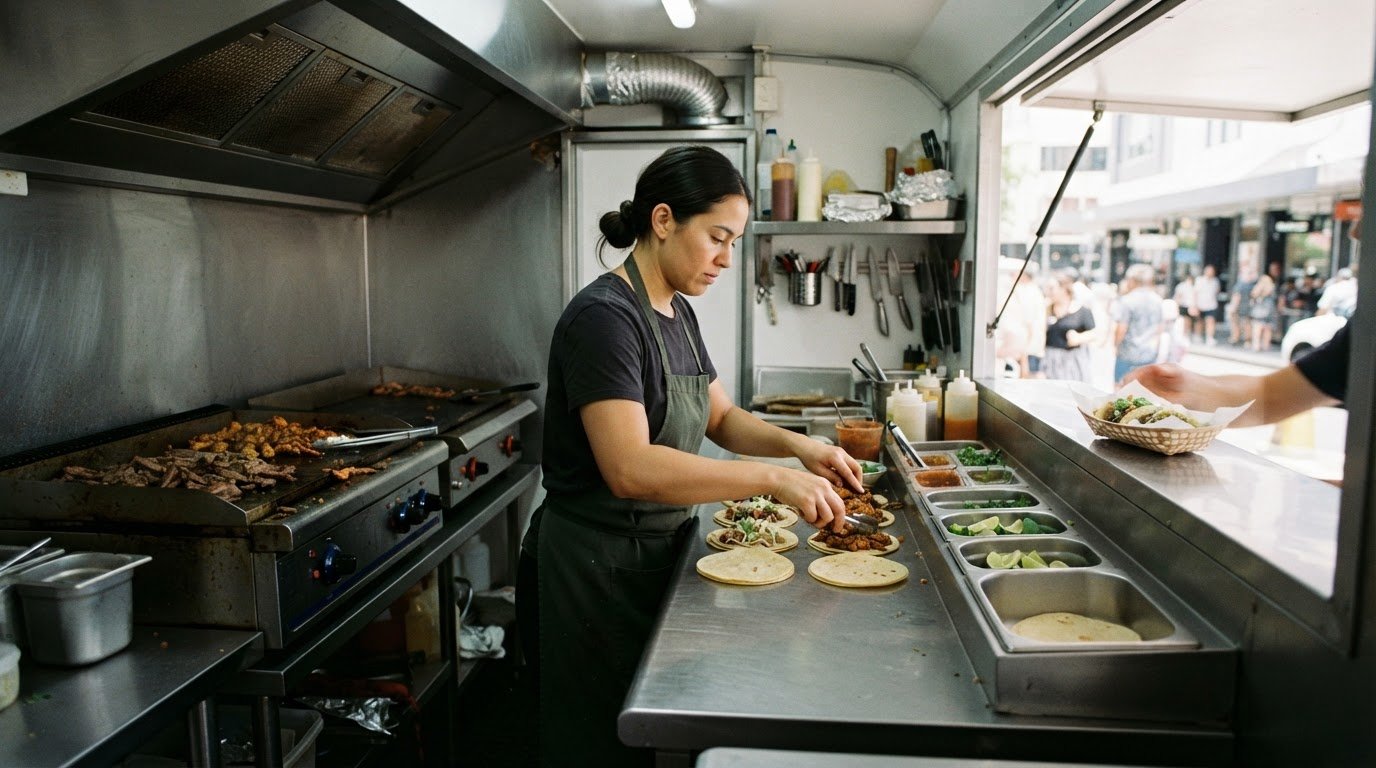
A food truck kitchen is shaped by its menu, not just by the size of the vehicle. A food truck stainless steel fit-out can include custom benches, bench tops, trolleys and other fabricated components arranged around the way food is prepared and served. According to Food Standards Australia New Zealand, food-contact surfaces in food-transport vehicle areas must be designed and constructed for effective cleaning and, if necessary, sanitising under clause 17(3).
It’s easy to focus on equipment, but the layout matters just as much. Staff need workable preparation space, and food must be practical to transport and serve. A fit-out should also support a menu that can be prepared consistently in a mobile kitchen.
This article explains which stainless-steel inclusions may suit different food truck operations, what to consider when planning the layout, and how custom fabrication can make the most of the available space and workflow. Menu choices, cleaning needs and the vehicle itself all influence fit-out decisions, so consider them together when planning a kitchen for your service.
Key Takeaways
- Match kitchen inclusions to your menu and service workflow so each item has a clear purpose in the truck.
- Plan the layout around available space, staff movement and the equipment the operation needs.
- Understand how the vehicle, materials and scope of custom work shape a fit-out’s cost.
- Custom stainless benches and fabrication can help address practical fit-out needs; handrails and safety protection serve a different purpose.
Commercial stainless-steel kitchen inclusions
A food truck kitchen needs work surfaces suited to its menu and available space. A preparation bench, bench top and mobile trolley can support separate tasks, such as chopping ingredients, assembling orders and moving stock. Position each surface near the equipment or storage used for that task. This reduces unnecessary movement in a narrow vehicle and gives each area a clear purpose.
No single stainless-steel grade suits every food truck. Selection depends on the working environment, including moisture, salt exposure, cleaning products and the surface’s intended use. A truck serving seafood near the coast faces different conditions from one preparing baked goods inland. The grade should also suit the fabrication and cleaning routine.
Compared with materials such as timber or laminate, stainless steel provides a smooth, non-porous work surface that can be cleaned readily. A stainless bench can also be fabricated to fit a vehicle’s dimensions. Other materials may suit specific components, but joints, edges and finishes still need to support cleaning and daily food preparation.
Plan plumbing around handwashing, food preparation and wastewater. A dedicated handwashing basin, accessible water supply and wastewater storage all affect the layout. The arrangement needs to suit the truck’s work and local assessment. Food Standards Australia New Zealand says food businesses must dispose of wastewater safely at a toilet or another council-approved location. Include the wastewater route in the design rather than treating disposal as an afterthought.
Maintain stainless surfaces with a consistent cleaning routine. Remove food residue promptly, wash and rinse the surface, then dry it with a clean cloth. Avoid leaving salt, acidic ingredients or cleaning residues on the bench. Check seams, corners and joins for trapped debris, especially around a sink or splashback. Smooth, accessible surfaces make routine cleaning more practical and help a food truck stainless steel fit out support safe, efficient preparation.
Food truck design and fit-out services
A practical design brings the menu, vehicle layout and equipment together in one workable kitchen. Food Standards Australia New Zealand sets a specific cleaning requirement for food-contact surfaces.
Ventilation, exhaust and fire safety
Plan ventilation around the cooking equipment, heat output and position of each appliance. A fryer, grill or hotplate creates different exhaust demands from a preparation-only bench. The ventilation and exhaust design should address heat, smoke and cooking vapours while keeping work areas accessible. Fire-safety provisions also need to suit the appliances and layout. These are key design considerations, not a substitute for assessing the truck against applicable local requirements.
Fit-out costs
The cost of a stainless-steel food truck fit-out depends on the vehicle, fabrication scope and kitchen equipment required. A simple bench layout differs from a project involving multiple work surfaces, storage, plumbing connections and exhaust integration. The vehicle’s condition and any changes needed to accommodate the design also affect the work. Donewright Stainless offers a “wright” price for any project size. Materials, fabrication, installation and overall scope shape the price.
Fit-out planning and installation
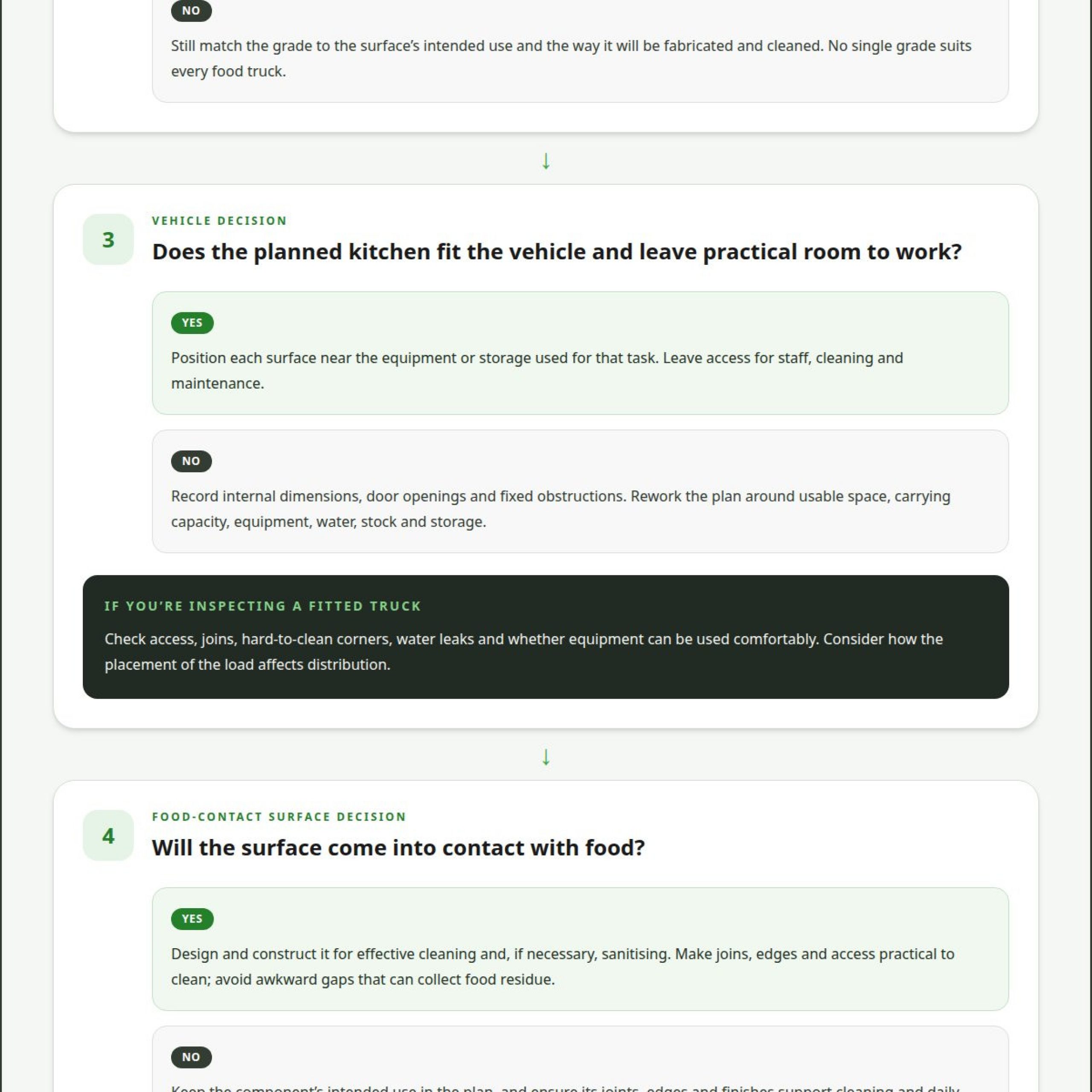
Start with the menu and map each preparation step, from receiving ingredients to serving an order. Then record the truck’s internal dimensions, door openings and fixed obstructions. Match benches and equipment to that usable space, leaving practical access for staff, cleaning and maintenance. Food Standards Australia New Zealand states under clause 17(3) that food-contact surfaces in food-transport vehicle areas must be designed and constructed for effective cleaning and, if necessary, sanitising.
Vehicle dimensions and carrying capacity shape what the kitchen can accommodate. Account for equipment, water, stock and storage together, and consider how their placement affects load distribution. Before buying a fitted truck, inspect the layout against your menu. Look for blocked access, damaged joins, hard-to-clean corners, water leaks and equipment that cannot be used comfortably. Confirm that the planned food can be transported and served with ease.
Custom food truck fit-outs
A custom layout should reflect the menu, vehicle and work sequence. Include food safety and local approval considerations in the design from the outset.
Food safety requirements
Food Standards Australia New Zealand states under clause 17(3) that food-contact surfaces in food-transport vehicle areas must be designed and constructed for effective cleaning and, if necessary, sanitising. This requirement affects the design of benches, joins and other surfaces used during food preparation.
For example, a made-to-measure bench should fit its position without creating awkward gaps that collect food residue. The layout should leave practical access to surfaces for cleaning. Account for the menu, preparation steps and how food will be handled inside the vehicle.
Approvals and inspections
Food truck operators in Australia need to deal with licences, permits and health inspections. The relevant council depends on where the business operates, so local requirements can shape how a truck is assessed and approved. Plan for these steps before finalising the fit-out, rather than treating approval as a task to handle after fabrication.
Health inspections assess whether a food truck meets sanitary requirements. A practical design makes food-preparation areas, surfaces and cleaning access straightforward to inspect. For instance, a cramped layout that prevents access around a work area can make routine cleaning harder. The fit-out should support the actual food operation and its sanitary practices.
Custom fabrication can also account for the vehicle’s individual shape, fixed features and service connections. A bench positioned around a wheel arch, for example, needs to use the available space without obstructing movement or cleaning. Details such as edge finishes, joins and mounting positions affect how the finished kitchen works day to day.
Set out the menu and preparation sequence, then map equipment and work surfaces to the truck’s usable area. Allow for doors, storage, access and existing fittings. This gives the design a clear basis before fabrication begins. The result should let staff prepare, handle and serve food inside the vehicle while supporting inspection and cleaning.
How much does a stainless steel food truck fit-out cost in Australia?
There’s no single price for a stainless-steel food truck fit-out in Australia. The total depends on the vehicle, fabrication scope and equipment included. A compact preparation kitchen with one bench has different requirements from a service layout with multiple work areas, storage and integrated equipment.
Donewright Stainless offers a “wright” price for any project size. The vehicle’s condition, the dimensions and complexity of fabricated components, installation access and any adaptations to existing equipment all shape the scope and price. A clear brief helps define the work involved.
Separate the project into practical components before setting a budget. For example, list:
- Vehicle changes needed to accommodate the kitchen layout.
- Custom benches, bench tops, storage or trolley requirements.
- Equipment and service connections included in the project.
- Installation work and any changes to existing fittings.
These details matter because each custom component must suit the truck’s usable space and intended workflow. A bench designed around a wheel arch, for instance, may involve different fabrication from a straight work surface. Existing damage or awkward access can also affect preparation and installation. The planned menu helps determine which inclusions are essential.
To compare project scopes, describe the vehicle and its current condition, then provide internal measurements and the intended kitchen arrangement. Identify which components are already available and which need fabrication. Ask for the scope to distinguish included work from excluded equipment or vehicle modifications. This makes the estimate more useful than a broad allowance without defined inclusions.
For a more focused discussion, bring together your vehicle dimensions, menu workflow and required stainless components. Discuss your stainless fabrication requirements as part of shaping a fit-out scope that suits the truck.
Fit-out planning also benefits from considering where the truck will operate. When choosing a location in Australia, consider parking where customers can enjoy the food and being available during mealtimes. These practical choices help clarify how the vehicle will be used, alongside its kitchen layout, required components and intended workflow, when shaping the fit-out scope.
Donewright Stainless: Stainless steel handrails
Donewright Stainless provides stainless steel fabrication for food trucks that need custom-fitted components. Custom stainless benches can be made to suit the vehicle’s layout and working requirements. Stainless steel handrails and safety protection address access and movement around the truck, rather than serving as kitchen work surfaces.
Turn to Donewright Stainless when your fit-out needs a fabricated bench or a handrail designed for its intended position. Details about the vehicle, available space and component purpose help define the work. The right solution depends on the fabrication your project requires.
Contact Donewright Stainless to discuss your stainless steel fabrication requirements.
Shape the next step around your truck
A useful next step is to turn your menu and vehicle layout into a clear fabrication brief. Note which components need to fit around existing features, where staff need access and how the kitchen will be used during service. This gives your food truck stainless steel fit-out a practical starting point, with decisions tied to how your business operates.
Donewright Stainless provides stainless steel fabrication, including custom stainless benches, as well as stainless steel handrails and safety protection. These offerings serve different needs: fabricated benches support kitchen layouts, while handrails and protection address access and safety around the vehicle. Start with the component your project requires.
Bring your project requirements together and contact Donewright Stainless to discuss the fabrication work. A well-defined brief can help move your food truck plans towards a workable fit-out. Your next step can be straightforward and grounded in the needs of your operation.
Frequently Asked Questions
What does a stainless steel food truck fit-out include in Australia?
A fit-out can include fabricated stainless-steel work surfaces and components selected for the truck’s menu and operation. For example, a custom bench can provide a fixed preparation area, while a trolley can help move items between work zones. The final scope depends on the vehicle and required tasks, so distinguish fabricated components from cooking equipment and other items in your project brief.
What truck dimensions and weight limits affect a food truck fit-out in Australia?
The truck’s internal dimensions, door openings and fixed obstructions determine usable space, while carrying capacity affects how much equipment, water, stock and storage it can accommodate. Consider how their placement affects load distribution.