
Tips for cleaning stainless steel benchtops and removing marks
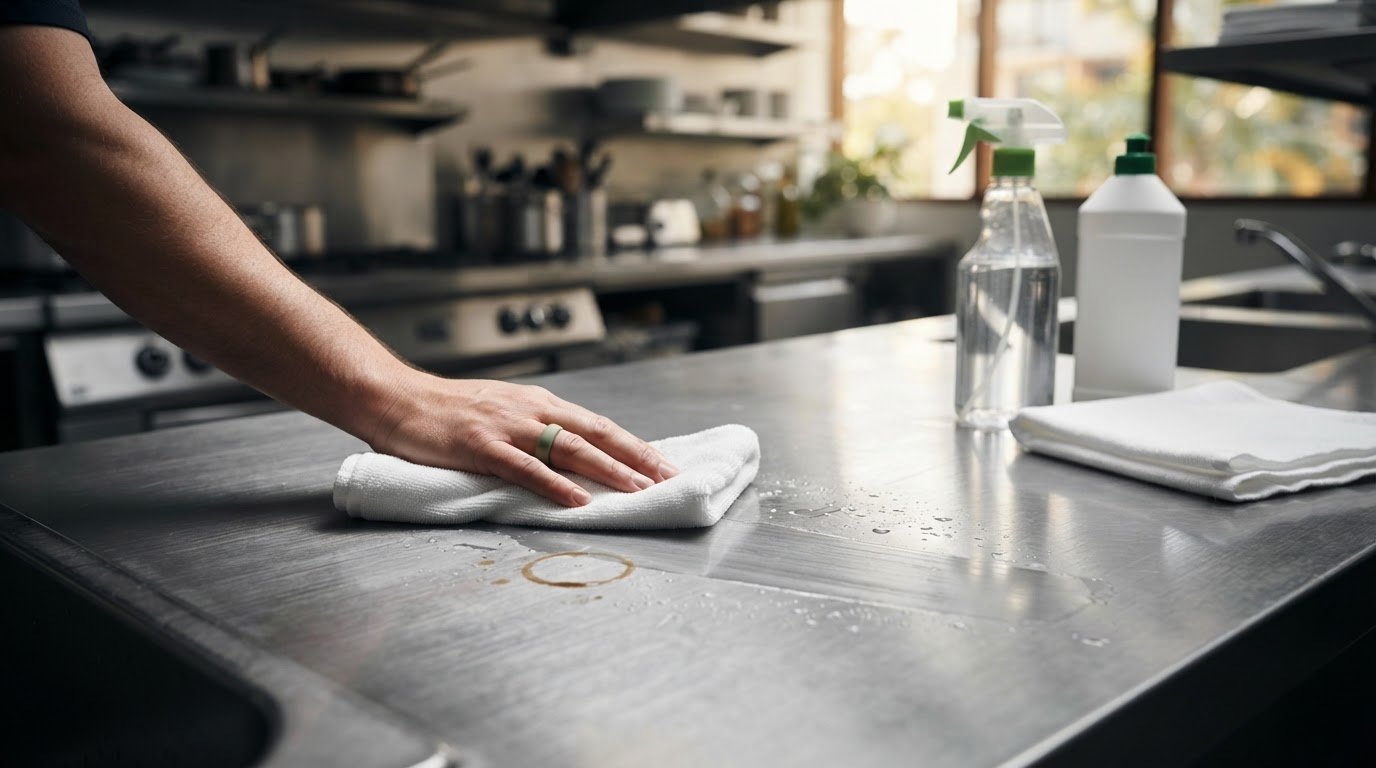
Acidic food spills can mark stainless steel if left on the surface. To understand how to maintain stainless steel benchtops, wipe them after use with a soft cloth and mild detergent diluted in warm water. Rinse and dry with a clean cloth, following the polish lines. Clean spills promptly, especially acidic ones, to help protect the finish.
A quick wipe may seem sufficient, but the cleaning method matters. Harsh abrasives, steel wool and ordinary-steel scourers can scratch the surface, while water left to dry can leave mineral spots. This guide covers practical ways to remove everyday marks, limescale, coffee deposits and adhesive residue, prevent streaks and avoid damage. It also explains when a gentle clean is enough and why prompt attention to food spills should be part of your routine.
Key Takeaways
- For older or stained surfaces, choose a stainless steel cleaner suited to the mark and test it on a small, inconspicuous area first.
- Treat limescale, coffee deposits and adhesive residue with methods suited to each mark, then rinse the surface thoroughly.
- Drying after rinsing helps prevent mineral spots and streaks from forming as water evaporates.
- Avoid steel wool, steel brushes and abrasive cleansers, which can scratch the finish and damage stainless steel’s protective surface.
- Wipe up food spills promptly, particularly acidic ones, to help prevent surface damage.
1. What are the tips to clean a stainless steel bench ?
For routine cleaning, mix a few drops of dishwashing liquid into warm water. Wipe the benchtop with a clean, soft, damp cloth or sponge. Mild detergent lifts everyday grime without harsh scrubbing. Rinse with clean water to remove soap residue, then dry with a soft, absorbent cloth. For a quick clean, use a wet microfibre cloth, followed by a dry one.
Brushed and polished finishes need the same gentle cleaning method, but wiping direction matters. On brushed stainless steel, follow the visible polish lines to reduce marks against the grain. Wipe polished stainless steel gently with a soft cloth, avoiding abrasive pads that can dull its reflective finish. If the grain is hard to see, inspect the benchtop in good light before wiping.
Warm water and a soft cloth can remove light dust and fresh splashes. For grease, wash with warm water and mild dishwashing detergent, then rinse and dry the area. Wipe fingerprints with methylated spirits on a soft cloth, followed by rinsing and drying. Keep methylated spirits away from painted surfaces, as they can dissolve paint. Dry water marks promptly to help prevent mineral spots.
Older or stained benchtops may need a stainless steel cleaner rather than routine detergent. Choose a cleaner intended for stainless steel, test it on a small, inconspicuous section, and follow the label. For surface rust, use a stainless steel cleaner containing phosphoric acid. Rinse the treated area thoroughly and dry it with a clean cloth. A commercial cream cleanser isn’t needed for regular washing.
For safe everyday cleaning in Australia, use mild detergent diluted in warm water, a soft sponge or microfibre cloth, and clean water for rinsing. A stainless steel cleaner can suit persistent marks when used as directed and tested first. On food-preparation surfaces, avoid glass cleaner and decorative stainless steel pastes or sprays because of possible chemical residue.
There’s no single best cleaner for every mark: mild detergent suits routine cleaning, while stainless steel cleaner can help with persistent stains or surface rust. Cleaner prices vary by product and retailer, so compare the label and intended use rather than assuming you need a specialist product.
After washing, a few drops of baby oil or another mineral oil on a soft cloth can add polish. Rub lightly, following the finish, then buff with a clean cloth to remove excess. Keep the routine gentle, and rinse away detergent before polishing.
2. Removing limescale, coffee deposits and adhesives
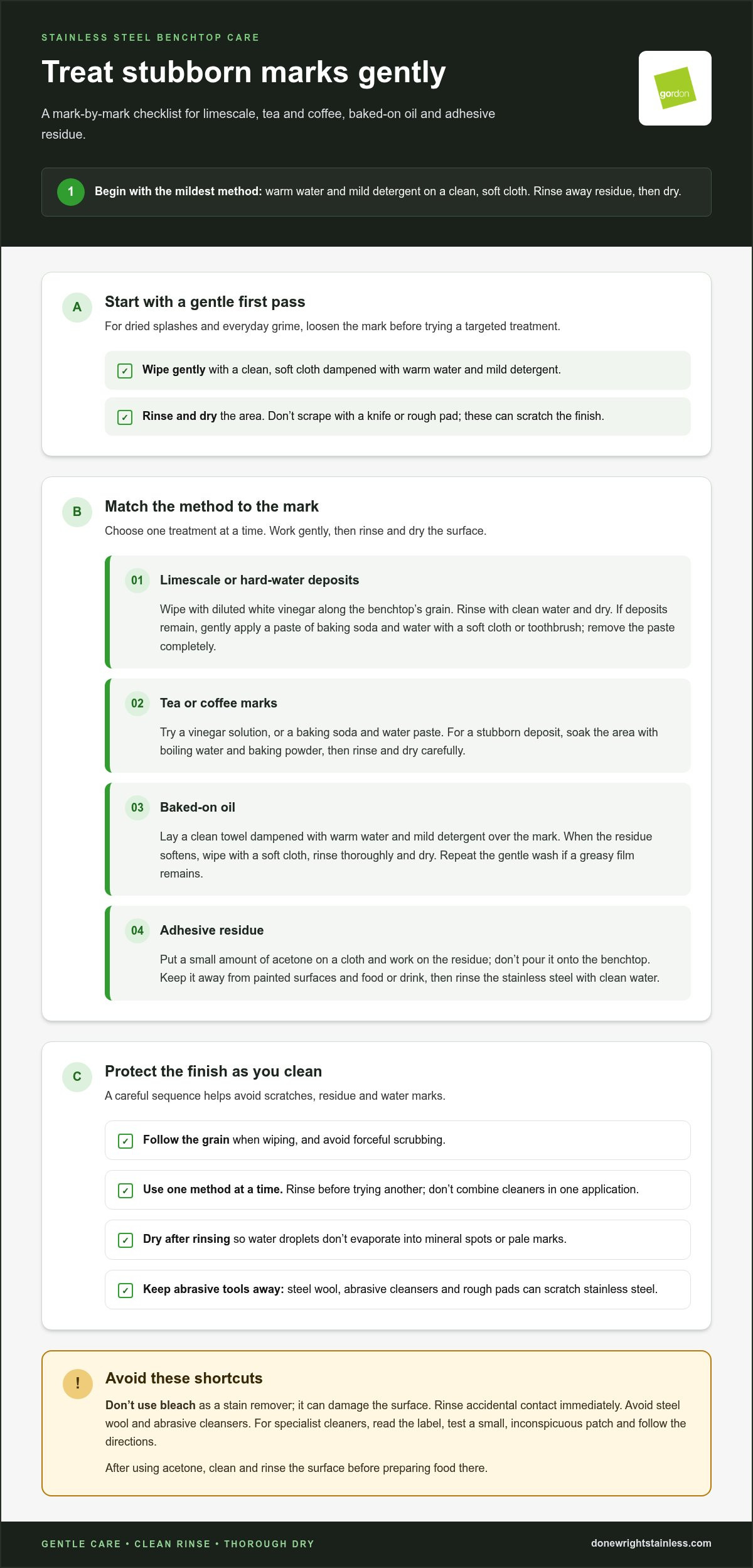
Start with warm water and mild detergent for stubborn marks. Wet a clean, soft cloth and work gently over the mark, then rinse away detergent residue. This first pass can loosen dried splashes without a stronger cleaner. Avoid scraping with a knife or rough pad, which can scratch the finish and make the mark more noticeable.
For limescale or hard-water deposits, try diluted white vinegar on a cloth. Wipe along the benchtop’s grain, then rinse with clean water and dry. If deposits remain, make a paste from baking soda and water. Apply it with a soft cloth or toothbrush, rub gently with the grain, then remove the paste completely. Don’t let water puddle around the treated area.
Tea and coffee marks respond to targeted cleaning. Apply a vinegar solution to the stain, or use baking soda mixed with water as a paste. For a stubborn deposit, soak the area with boiling water and baking powder, then rinse and dry carefully. Don’t combine cleaners in one application. Use one method at a time, and rinse before trying another.
Baked-on oil needs time to soften, not forceful scrubbing. Lay a clean towel dampened with warm water and mild detergent over the mark. Once the residue loosens, wipe it away with a soft cloth, rinse thoroughly and dry. Repeat the gentle wash if a greasy film remains. Steel wool and abrasive cleansers can scratch stainless steel, so don’t use them to speed up removal.
Adhesive residue may need a different approach from food deposits. Use a small amount of acetone on a cloth and work on the residue, rather than pouring solvent onto the benchtop. Keep acetone away from painted surfaces, and rinse the stainless steel with clean water afterwards. Don’t use this method near food or drink. Clean and rinse the surface before preparing food there.
Bleach isn’t a stain-removal shortcut for stainless steel. It can damage the surface, so rinse off accidental contact immediately. For any specialist cleaner, read the label, test a small, inconspicuous patch and follow the directions. This careful approach helps you choose a suitable treatment for the mark while limiting unnecessary exposure to stronger products.
Match the treatment to the residue instead of escalating straight away. A paste made from baking soda and water can tackle stubborn splashes and marks, including coffee deposits. A vinegar solution can treat stubborn tea or coffee stains. Alternatively, soak the area with boiling water and baking powder, then rinse and dry carefully. Choose one approach, assess the result, and rinse before trying another so cleaning products aren’t combined.
For adhesive traces, alcoholic solvents such as acetone can be used on stainless steel. Apply the solvent to a cloth and work on the residue, then rinse the surface carefully. Keep this treatment separate from food preparation and other cleaning methods.
3. Drying to prevent streaks and mineral deposits
After rinsing a stainless steel benchtop with clean water, dry it before droplets evaporate. Minerals in water can leave spots or pale marks, especially where liquid puddles around taps, joins or edges. Use a clean, soft, absorbent cloth and check those areas carefully. This final step helps maintain an even finish and makes watermarks less likely.
Work across the benchtop in manageable sections. Wipe one area with a clean cloth, turn to a dry part of the fabric, then continue until the surface feels dry. Replace the cloth if it becomes damp. A wet cloth can spread water rather than remove it, leaving streaks on polished stainless steel.
On a brushed finish, move the cloth in the direction of the polish lines. This keeps wiping marks aligned with the surface grain. On a polished finish, use light, even strokes and avoid pressing hard, which can create uneven smears. Check the surface from different angles in good light to spot remaining droplets or streaks.
Drying also helps prevent hard-water deposits from sitting on the surface. Pay attention to areas near sinks, splash zones and containers where water collects. If a mark remains after drying, clean it with a suitable mild method, rinse with clean water, then dry again. Don’t leave standing water to evaporate on the benchtop.
Regular cleaning and drying help prevent residues from lingering, but stainless steel can still develop surface rust. If rust appears, use a stainless steel cleaner intended for surface rust and follow its directions. Rinse the treated area and dry it fully. Avoid steel wool or a wire brush, which can scratch the protective surface.
Keep hot pots, pans and bowls off the benchtop. Direct heat can cause warping and damage, so place hot cookware on a suitable heat-resistant surface instead. If liquid spills around cookware, wipe it up and dry the area once it’s safe to do so. This is separate from routine drying to prevent water spots.
How do you remove scratches from stainless steel benchtops? Cleaning won’t reverse a scratch, and steel wool or abrasive cleansers can make the damage worse. Don’t rub across the finish to try to erase it. Use gentle cleaning and drying to prevent additional marks. For the next wash, keep abrasive pads away and use a soft cloth.
4. Avoiding steel wool and ordinary-steel scourers
Steel wool, steel brushes and ordinary-steel scourers can scratch a stainless steel benchtop. Abrasive cleansers can also leave permanent marks, so don’t use them on dried food or grease. Choose a soft sponge or microfibre cloth instead. If residue remains, soften it with warm water and mild detergent before wiping gently.
Check both sides of a sponge before cleaning. Use its soft side, not a rough scouring layer, and follow the polish lines on brushed stainless steel. Short, light strokes are easier to control than forceful scrubbing. Rinse the cloth or sponge as grime lifts so trapped particles don’t drag across the finish.
Don’t apply bleach or other chlorine-based cleaners to stainless steel. Household cleansers containing chlorides can damage its protective film, particularly if residue stays on the surface. If bleach splashes onto a benchtop, rinse the area immediately with clean water. Then dry it with a clean cloth rather than leaving liquid to sit.
Read the label before using a chemical cleaner. Avoid products containing chlorides, and don’t assume a product is suitable just because it’s designed for general household cleaning. Use one cleaning method at a time and follow its directions. For example, diluted vinegar can help with limescale, but rinse it away with clean water afterwards.
Scratches are more than a cosmetic concern. Steel pads and wire brushes can break or scratch the protective film, leaving the surface vulnerable to damage. Don’t try to remove a scratch by rubbing across it with an abrasive pad. Clean gently in the direction of the finish, and keep metal scourers away from the benchtop.
Hard water can also cause problems if it’s allowed to puddle or sit on stainless steel. After cleaning, rinse off detergent or chemical residue, then dry the surface. This removes lingering liquid and helps prevent mineral deposits. Pay particular attention to edges and joins, where water can collect unnoticed.
Keep dedicated soft cloths and sponges for benchtop cleaning, and replace them when worn or dirty. A cloth carrying grit can scratch the surface even without steel wool. For a stubborn mark, repeat a mild detergent wash rather than increasing pressure. These habits help protect the finish from avoidable abrasion and chemical exposure.
5. Wiping up corrosive food spills
Promptly wiping up spills is one of the most practical ways to protect stainless steel in kitchens. Citrus juice, vinegar, tomato-based sauces and other acidic foods can damage the surface if left sitting. Don’t wait until meal preparation is over. Use a clean, soft cloth to lift the spill as soon as you notice it, rather than spreading it across the benchtop.
For a small spill, fold a damp cloth so you can use a clean section with each pass. Wipe from the outside of the spill towards the centre. This contains liquid and helps stop it reaching nearby work areas. Rinse the cloth under clean water, then wipe again to remove food residue. If the spill is sticky, use mild detergent diluted in warm water.
Acidic ingredients can be present in less obvious spills, too. A dressing containing vinegar or lemon juice, a splash of fruit juice, or a smear of tomato paste can leave residue around a chopping area. Wiping only the visible spill may miss nearby droplets. Check the surrounding surface, including edges and joins, and clean splashes before they dry.
After using detergent, rinse the cleaned area with clean water. Dry it with a soft, absorbent cloth, especially where liquid might collect. This removes soap residue and helps prevent water stains as droplets evaporate. For a brushed finish, wipe in the direction of the polish lines. Keep the cloth clean so crumbs or grit don’t scratch the surface.
Don’t use bleach to tackle a food spill, even if its colour remains visible. Bleach can damage stainless steel, and accidental contact should be rinsed off immediately. Avoid steel wool and abrasive scourers as well. They can scratch the finish while you scrub, leaving the damaged area more vulnerable to further marks.
Once the surface is clean and dry, inspect it under good light for missed residue or streaks. If a food mark remains, try a gentle wash with mild detergent rather than scrubbing harder. Don’t apply olive oil or baby oil to cover a spill. These are polishing options for a clean surface, not substitutes for removing food residue.
If recurring spills have made you reconsider your kitchen work surface, discuss your benchtop requirements and the practical demands of your workspace.
Donewright Stainless: Stainless steel handrails
Donewright Stainless fabricates and installs stainless steel handrails and custom stainless benches. If routine cleaning can’t resolve damage or your workspace needs a new benchtop, a custom stainless bench may suit the project better than continued surface treatment. The right design depends on the space, intended use and practical requirements.
For a benchtop project, stainless steel fabrication can create a solution tailored to the work area and its everyday demands. Stainless steel handrails are a separate option for access and support requirements. Consider fabrication when planning a new installation or custom piece, rather than expecting cleaning advice to fix deep scratches or structural damage.
For a stainless steel benchtop or handrail project, contact Donewright Stainless to discuss your requirements.
Keep your benchtop ready for everyday use
A well-planned care routine can help keep your stainless steel benchtop suited to daily use. Knowing how to maintain stainless steel benchtops is useful, but cleaning has its limits when a surface is deeply marked or a workspace needs a different configuration. In that case, consider the next practical step instead of using stronger chemicals or harsher tools.
Donewright Stainless also provides stainless steel handrails, Stainless Steel Fabrication, and Safety Handrails and Protection. These services are separate from day-to-day benchtop care, but may be relevant when planning broader stainless steel work for a site or workspace.
For a conversation about a stainless steel project, contact Donewright Stainless. A clear description of the space and its intended use is a useful starting point, and you can move ahead with a practical plan.
Frequently Asked Questions
What are the tips to clean a stainless steel bench?
Use a gentle cleaning method and match the treatment to the mark. For example, mild detergent suits a greasy patch, while diluted vinegar may help with limescale. On brushed finishes, follow the grain to keep wiping marks aligned. Rinse away cleaning residue and dry the surface, especially around edges where water can collect. Avoid harsh scrubbing, which can leave scratches that are harder to remove.
How do you clean stainless steel benchtops daily?
Wipe the benchtop after each use, particularly after food preparation or spills. Clear loose crumbs first, then use a clean cloth with warm water; add mild detergent if grease or residue remains. Give the area a final rinse and dry it before using the surface again. Knowing how to maintain stainless steel benchtops means building this simple clean into kitchen tasks rather than waiting for grime to accumulate.
What products and tools should you avoid on stainless steel benchtops?
Avoid steel wool, steel brushes, abrasive cleansers and bleach, which can scratch or damage stainless steel. Silver polish is also unsuitable because it can corrode the surface. On food-preparation areas, don’t use glass cleaner or decorative stainless steel pastes and sprays, as chemical residue may remain. Choose a soft cloth or sponge, and keep cleaning products separate rather than combining them.
How do you prevent rust and corrosion on stainless steel benchtops?
Clean spills promptly, especially acidic foods such as tomato, citrus or vinegar-based dressings. Don’t leave hard water to puddle or dry on the surface, and avoid chloride-containing household cleaners. If surface rust appears, use a stainless steel cleaner intended for rust and follow its directions. Rinse and dry the area after treatment. Avoid steel pads and wire brushes, which can damage the protective surface.
How often should stainless steel benchtops be cleaned and maintained?
Wipe the benchtop after every use to limit grime and food residue. Clean spills as soon as you notice them, rather than waiting for the next routine wash. A deeper clean is useful when grease, mineral deposits or stubborn marks remain after everyday cleaning. Specialist cleaner isn’t needed for ordinary washing; reserve it for marks that mild detergent doesn’t remove.
Are stainless steel benchtops heat resistant, and what precautions are needed?
Don’t treat a stainless steel benchtop as a heatproof landing spot. Hot pots, pans and bowls can cause warping or damage when placed directly on the surface. Set hot cookware on a suitable heat-resistant mat or trivet instead. This matters during busy cooking, when a pan may be put down quickly beside the stove. Use a chopping board too, rather than cutting food directly on the benchtop.