
Mild Steel Welding Repairs Brisbane: Assessing Damage, Repair and Protection
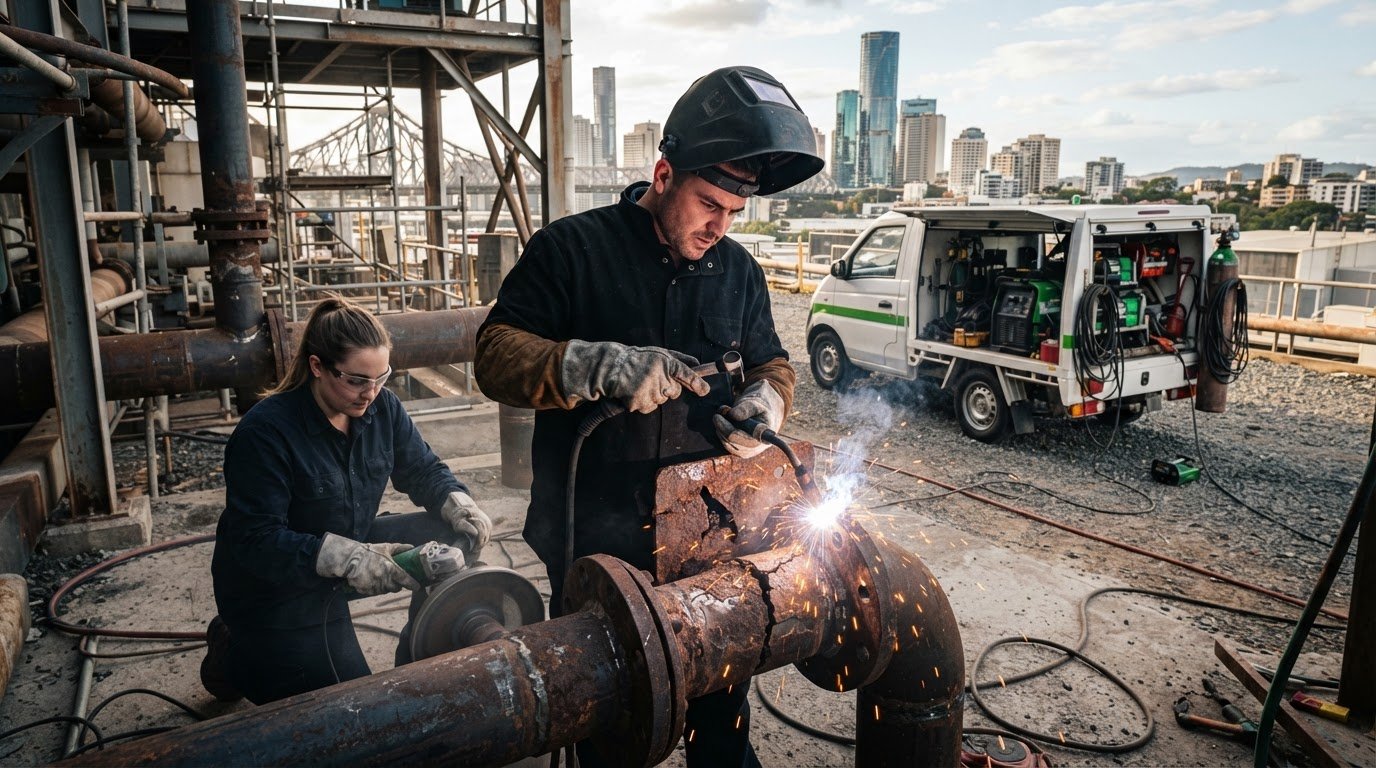
Can a cracked or rust-thinned mild steel component be repaired on site, or is replacement the sounder option? For mild steel welding repairs Brisbane businesses need, start by assessing the damage rather than simply adding weld metal. The condition of the surrounding steel, the item’s purpose and the site requirements all help determine a practical approach.
It’s reasonable to want a clear recommendation that limits disruption and addresses the cause of the damage. Donewright Stainless provides mild steel fabrication and mobile welding for industrial and commercial applications across Brisbane, with a fully equipped mobile workshop for suitable on-site work.
This article explains how repair suitability is assessed, when repair or replacement may make more sense, and how surface protection can help protect steel from exposure. You’ll also find practical considerations for planning site work, including access, equipment downtime and the condition of the steel around the damaged area.
Key Takeaways
- Look beyond the visible crack or rust: the surrounding steel helps show whether a repair is suitable.
- Understand how inspection, scope agreement, site preparation, welding and review shape an on-site repair plan.
- Compare local weld repair, replacement and repair with protective treatment against the steel’s condition and the site’s operational needs.
- Prepare for mild steel welding repairs Brisbane by organising access, identifying nearby operations and describing the damage clearly.
- Donewright Stainless’s mobile workshop supports suitable industrial and commercial work across Brisbane, the Gold Coast, Logan and Ipswich.
Mild steel welding repairs in Brisbane: what damage needs attention?
A cracked, worn or corroded mild steel item can interrupt site operations, particularly if it supports equipment, forms part of a working assembly or is difficult to remove. A mild steel welding repair restores a damaged component through suitable preparation and welding. Before choosing a repair, consider the steel’s condition and the item’s role, not just the visible defect.
Rust is a warning sign, but it doesn’t reveal the full condition of the steel. Corrosion may be limited to the surface, or it may have eaten into the material and reduced its thickness. Paint, scale, dirt or an existing coating can also conceal deterioration. Cleaning the affected area back may be needed to examine the steel and determine how far the damage extends.
Surface corrosion can affect appearance; corrosion that reduces the steel section can affect strength and function. That distinction matters when deciding whether a local repair is appropriate or broader fabrication or replacement should be considered. Welding is only one part of the decision. Welding processes and techniques vary, and the suitable approach depends on the material, joint and repair requirements.
Which signs suggest a mild steel item needs inspection?
Cracks, distorted sections, failed joins and significant material loss are all reasons to arrange an inspection. A crack near a joint or attachment point deserves particular attention if the item is under load or performs a safety-related function. Photos can help describe what’s visible, but they can’t reliably show hidden corrosion, remaining material thickness or the condition beneath a coating.
Rust that returns after previous work may point to incomplete surface preparation or continued exposure to moisture and other corrosive conditions. Superficial discolouration may be cosmetic, but deformation, loose connections or thinning steel can affect an item’s function or safety. These problems shouldn’t be treated as a paint issue alone.
What affects whether a weld repair is suitable?
Repair suitability depends on how much sound steel remains around the damaged area, how extensive the defect is and whether the welder can access the surfaces that need work. The component’s intended use matters too. A bracket carrying equipment has different demands from a non-load-bearing cover. Operating loads, nearby equipment and site requirements all help shape the work scope.
An assessment helps establish whether the defect is local, whether preparation may reveal further deterioration and whether welding can restore the component for its intended use. If the surrounding steel is too deteriorated or the damage is extensive, a local weld may not be appropriate. For suitable industrial and commercial repairs, on-site assessment and mobile welding can be practical, with the plan shaped around access and operational needs.
How a Brisbane mobile welding repair is assessed and carried out
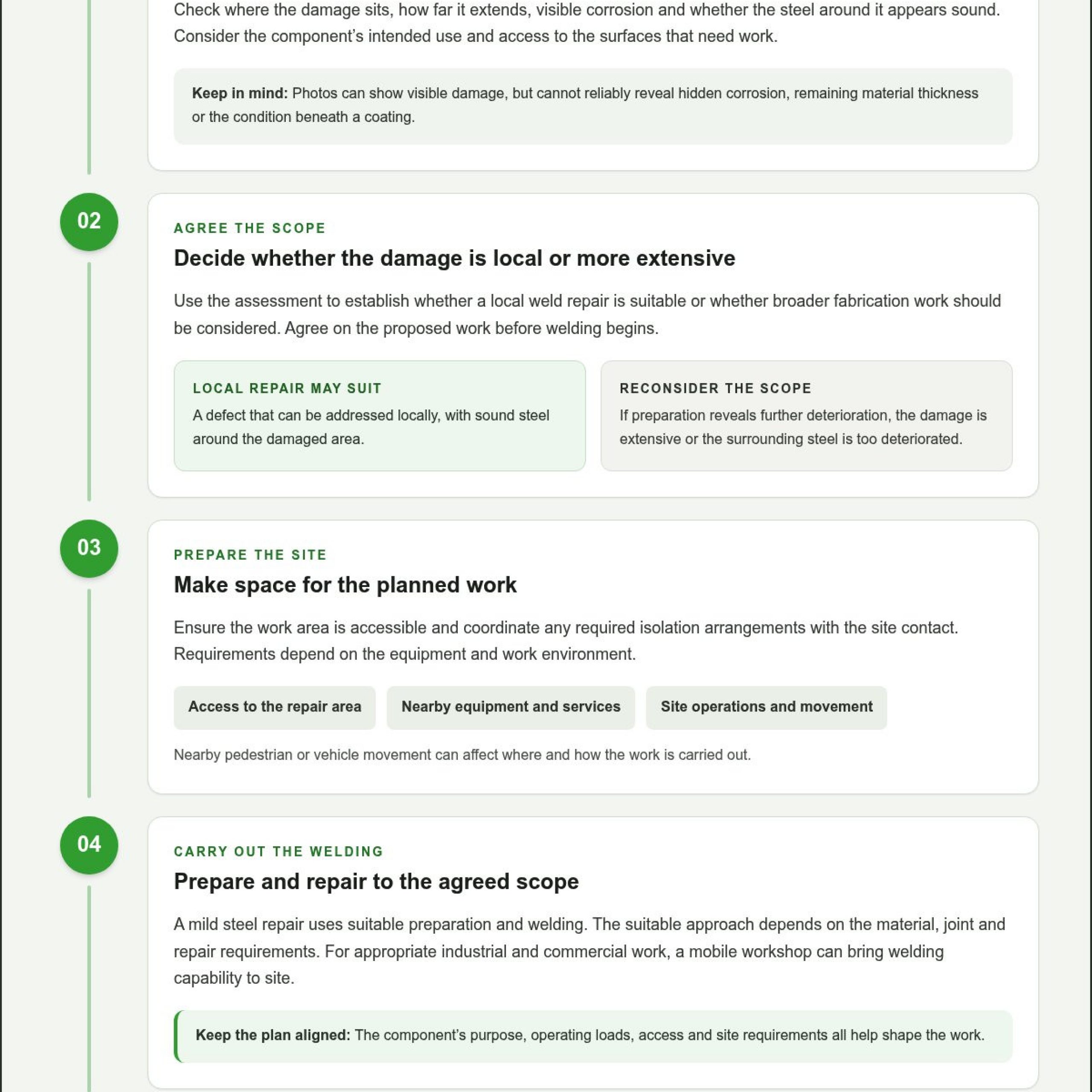
A well-planned on-site repair follows a clear sequence: inspection, scope agreement, site preparation, welding and review. Each stage informs the next. The plan needs to account for the damaged component and the conditions around it, including access, nearby equipment and site operations.
Repair planning starts with inspection because the steel and the site determine what work is suitable. A mobile workshop brings welding capability to appropriate industrial and commercial site work, so a repairable component may not need to be moved to a workshop. The work still needs a suitable area and a plan for fitting the repair around site operations.
What happens during the initial damage assessment?
During inspection, the team considers where the damage sits, how far it extends, visible corrosion and whether the surrounding steel appears sound. Access matters too. A repair beside fixed machinery, pipework or other services can require a different plan from work on an exposed, removable component. Site details help prepare for the assessment, but photographs alone can’t establish the full condition or determine the repair method.
The assessment helps establish whether the damage can be addressed locally or needs broader fabrication work. If the affected area extends beyond the visible defect, the scope may need to change. Agreeing on the proposed work before welding begins helps keep the repair aligned with the component’s purpose and the site’s needs.
How is an on-site repair planned around operations?
Before work starts, the work area needs to be accessible, and the site contact needs to coordinate any required isolation arrangements. These depend on the equipment and work environment. Nearby operations, pedestrian or vehicle movement, and services close to the repair area can all affect where and how the work is carried out.
Once the damage and site conditions are understood, the repair scope can be agreed. This gives the team and site contact a shared understanding of the work before welding starts. Donewright Stainless’s fully equipped mobile workshop supports suitable on-site mild steel welding repairs Brisbane businesses need, as well as industrial maintenance across Brisbane, the Gold Coast, Logan and Ipswich.
Planning should also account for reviewing the completed repair and deciding whether the component needs surface protection for its exposure. For related examples of mobile work in an operating industrial environment, the on-site industrial pipework repair guide explores how site requirements can shape a repair plan.
For an industrial or commercial site repair, share the component’s location, visible damage and operating context with Donewright Stainless. This information helps frame the work and the site conditions to assess.
Repair, replace or protect: comparing mild steel options
Once the damage and surrounding steel have been assessed, decide whether to repair the component, replace it or add protection after repair. The right option depends on how much sound steel remains, how far deterioration extends, whether the area is accessible and what the component needs to do. For mild steel welding repairs Brisbane projects, these factors matter more than the appearance of the damaged area alone.
| Option | May suit | Key consideration |
|---|---|---|
| Local weld repair | Localised damage with suitable steel around the affected area | Access, component function and operating conditions must support the repair. |
| Replacement | Widespread deterioration, extensive section loss or damage beyond a practical local repair | Consider how a replacement component can meet the item’s purpose and site requirements. |
| Repair followed by protective treatment | A suitable repair where the prepared steel will remain exposed to moisture or other corrosive conditions | Protection is a separate step and depends on surface preparation and exposure. |
When can a local weld repair make sense?
A local repair may be appropriate when damage is contained and the steel around it remains in suitable condition. A cracked join on an otherwise sound, accessible component is different from a section weakened by corrosion across a broad area. The item’s function still matters: assess the repair in light of the loads, movement and conditions it will experience in service.
Welding isn’t a universal fix for rusted or weakened steel. If preparation reveals more deterioration than was visible, the scope may need to change. Comparing the repair area with the surrounding material helps avoid treating a local defect as though it were the whole problem.
When should replacement or added protection be considered?
Extensive section loss or deterioration across several areas can make replacement more practical than rebuilding the component locally. If a replacement component is needed, custom mild steel fabrication may be relevant to the broader work.
Protective treatment is different from repair. A coating or rust-protection system can help shield appropriately prepared steel, but it doesn’t restore steel lost to corrosion or compensate for an unsuitable weld repair. Surface preparation matters: applying a coating over rust, residue or a poorly prepared surface can undermine the intended protection.
Consider Brisbane-area exposure when deciding on protection, rather than assuming one standard answer. Moisture, shelter, water traps and how often a component gets wet all influence what may be suitable. A sheltered indoor item and an exposed outdoor component can face different conditions. A repair or coating can’t be treated as a guarantee of a particular service life; the result depends on the steel’s condition, preparation, treatment and ongoing exposure.
Preparing a Brisbane site for mild steel welding and rust protection
Good preparation helps mobile welding work fit the site, the component and its operating environment. Before mild steel welding repairs Brisbane work begins, share enough detail for the repair area, access and nearby activities to be considered. Identifying constraints early helps the team plan before equipment and people gather around the work area.
Use this checklist to organise the key information:
- Component: Record its location, approximate dimensions and intended function.
- Damage: Describe what you can see, when it appeared and whether rust or damage has returned after earlier work.
- Access: Note restricted approaches, nearby equipment and whether the work area can be reached safely.
- Site activity: Identify nearby operations, services and relevant site-specific work controls.
- Project information: Share relevant drawings or specifications where available, particularly any requirements for a protective finish.
What site information helps plan a mobile repair?
Clear site details help the team plan an assessment and understand the working conditions. A component beside operating machinery, for instance, presents different access and coordination considerations from one in an open maintenance area. Include any known damage history, previous repairs and changes in how the item performs. Drawings or specifications can clarify dimensions, connections and project requirements, but the component still needs to be assessed at the site.
Work-area controls and isolation arrangements depend on the equipment and work environment. Coordinate access with the site contact and identify relevant site procedures before work begins. Preparation should account for nearby operations and the specific equipment involved, rather than rely on a one-size-fits-all checklist.
How should repaired mild steel be protected?
After welding, the repair area and adjacent steel may need suitable surface preparation before a protective finish is applied. Weld residue, rust, contamination or existing coatings can affect the surface, so preparation should follow the project requirements and suit the steel’s condition. A coating can protect a prepared surface, but it can’t replace steel lost to corrosion or correct an unsuitable repair.
Exposure helps guide the protection decision. Sheltered steel may face less direct weather, while an exposed component can encounter rain and moisture. Areas that are frequently washed may need consideration of repeated wetting and cleaning conditions. These factors inform coating selection, but they don’t prescribe one universal product or system.
Follow the project specification for coating type, preparation and application requirements. If there’s no specification, consider the finish against the component’s service conditions and exposure before work proceeds. The usual sequence is to prepare the steel appropriately, complete and review the repair, then apply the specified protective finish in line with its requirements. This separates the structural repair from corrosion protection and makes each part of the work clear.
For planning around access, damage details and site conditions, share the requirements for your on-site mild steel repair with Donewright Stainless.
Arrange mild steel welding repairs with Donewright Stainless
Donewright Stainless provides mild steel fabrication and mobile welding for industrial and commercial projects. Based in Brisbane, the team supports suitable on-site work across Brisbane, the Gold Coast, Logan and Ipswich with a fully equipped mobile workshop. This can be practical when a damaged component is difficult to move or the repair needs to be planned around the worksite and nearby operations.
For mild steel welding repairs Brisbane businesses are planning, start by describing the component and the conditions it works under. The item’s condition, access and operational requirements help determine whether a local repair, broader fabrication work or another scope is appropriate.
What information should a repair enquiry include?
Share a clear description of the component, its location and intended use, along with what has failed or changed. Note whether the damage has appeared before, whether the item remains in service and any restrictions on access. This context helps frame the scope and identify practical site considerations before work is planned.
- The component’s approximate dimensions and where it is installed
- Visible cracks, corrosion, distortion or failed joins, plus relevant damage history
- Site access details and nearby equipment or operations
- Relevant drawings, specifications or photographs, if available
Photographs can help communicate what’s visible, but they don’t replace assessment of the steel and work area. Sharing useful information early helps the team understand the job and plan around the site.
When does fabrication support complement a repair?
Some components can be addressed with local welding; others may be too deteriorated, extensively damaged or altered for a local repair. In those cases, custom mild steel fabrication may support a replacement component or broader work. The appropriate scope depends on the existing item’s condition, how it is used and the project requirements, including any relevant drawings or specifications.
For an industrial or commercial site, explain how the component connects to surrounding equipment and what operational constraints affect access. Donewright Stainless can consider those details alongside the fabrication or mobile welding required, keeping the proposed scope grounded in the job rather than assuming every damaged item needs the same solution.
Whether you’re dealing with a cracked component, recurring corrosion or damage that may need fabrication support, share the item’s details and site requirements with Donewright Stainless. Discuss your mild steel repair requirements with Donewright Stainless.
Take the next step towards a considered repair
It’s easier to plan a repair when an issue is raised before further deterioration complicates the work. If you’ve noticed a change in a mild steel component, record what’s happening during operation and any conditions that could affect access or protection. This context helps clarify the item’s role and the work it may need.
For mild steel welding repairs Brisbane projects, consider the damaged component and site requirements together. A clear scope can help you plan around operations and decide how the repair fits into your maintenance needs, without assuming welding is the answer for every item.
Share the component’s details, visible damage and site context with Donewright Stainless to discuss a suitable way forward. Discuss your mild steel welding repair requirements and take the next step towards a considered plan for your site.
Frequently Asked Questions
Can mild steel be repaired by welding if it has rusted?
Yes, mild steel can sometimes be welded after rust has been removed and the remaining steel is found suitable for repair. The key question is whether corrosion has left enough sound material for the component’s intended use. Surface rust on an accessible bracket, for example, is different from deep pitting around a joint. An assessment helps determine the preparation and repair scope.
When should a mild steel component be replaced instead of welded?
Replacement may be more suitable if corrosion or damage is widespread, the steel has lost too much section, or the component’s shape and function can’t be reliably restored with a local repair. A severely thinned equipment support, for instance, needs to be considered in relation to the loads it carries. The decision should account for the whole component, not just the most visible damaged spot.
Does welding repair stop rust from returning?
No. Welding joins or restores steel; it doesn’t prevent corrosion on its own. Rust can return if moisture reaches untreated steel or if the area wasn’t prepared appropriately before protection was applied. Check repaired items as part of routine maintenance, particularly around joints, edges and places where water can collect. Assessing early signs of renewed corrosion can help identify deterioration before it spreads.
What protection should be applied to mild steel after welding?
The protective finish should suit the prepared surface, the component’s environment and any project specification. A sheltered indoor support may have different exposure from an outdoor item that regularly gets wet or washed. Existing coatings and the surrounding steel’s condition also affect preparation. Follow the project requirements for the specified finish and application, rather than choosing a coating based on appearance alone.
Can mild steel welding repairs be completed on site in Brisbane?
Yes, suitable industrial and commercial repairs can be carried out on site using mobile welding. Donewright Stainless supports on-site work with a fully equipped mobile workshop across Brisbane, the Gold Coast, Logan and Ipswich. Whether the repair can be completed at the component’s location depends on its condition, access and site requirements. Details about nearby equipment and work-area constraints help with planning.
What information should I provide for a mobile welding repair enquiry?
Describe the component, where it’s located, what damage you’ve noticed and what the item does in service. Include approximate dimensions, previous repair history, access limitations and nearby operations. Photos can help show the visible issue, while relevant drawings or specifications can clarify project requirements. This information gives the team useful context for scoping the work and planning a practical site response.
How do Brisbane weather and exposure affect mild steel corrosion protection?
Weather matters through the conditions a component actually experiences, including rain, persistent moisture, shelter and frequent washing. A mild steel item under cover may face different corrosion risks from one exposed to weather or regularly cleaned with water. Consider drainage and places where moisture may sit, such as ledges or joints. These conditions help inform preparation and protection, alongside any project specifications.
