
Factory Maintenance and Welding in Logan: Practical On-Site Support
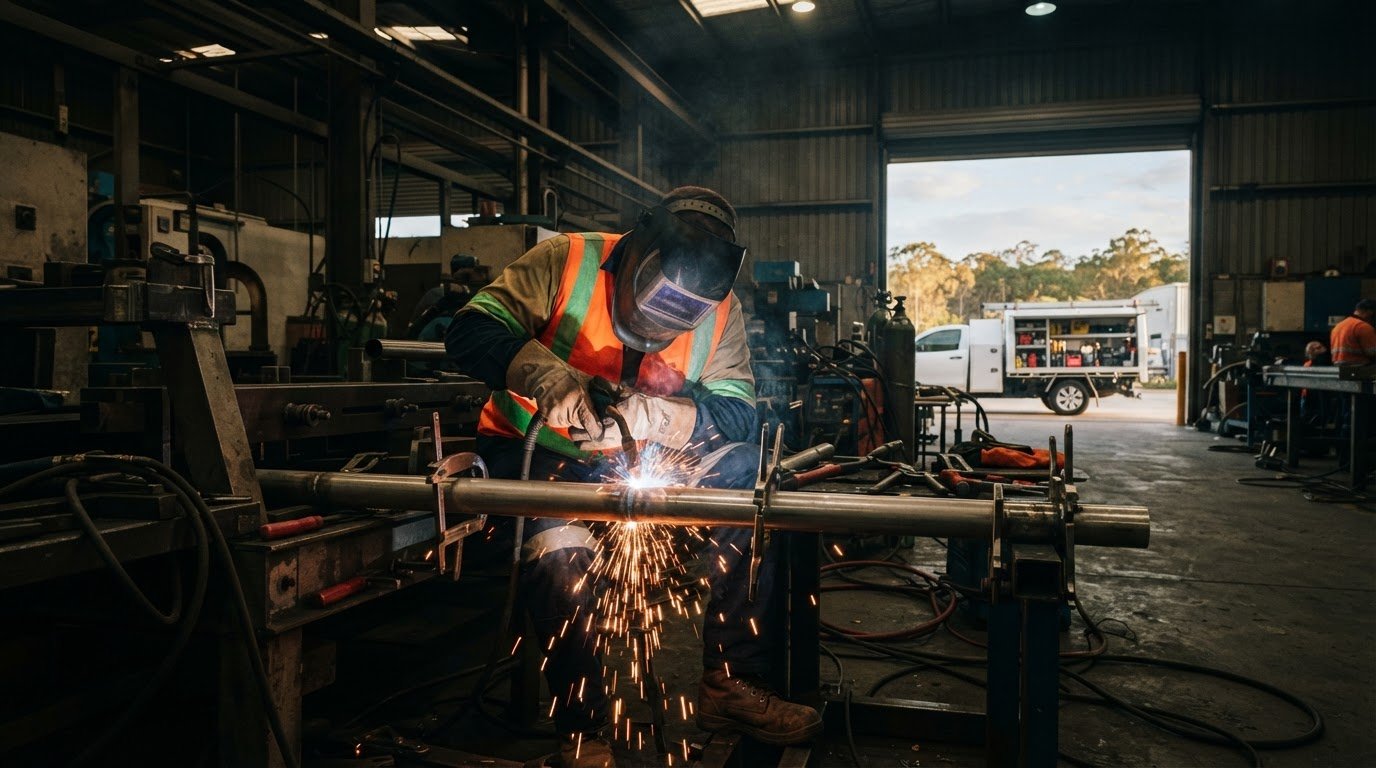
Could one local team address a factory maintenance issue and carry out suitable welding on site, without adding workshop transport and coordination? For Logan businesses, factory maintenance and welding Logan sites need should be planned around the equipment, pipework and operating conditions involved. Donewright Stainless provides industrial maintenance, pipework and mobile welding, supported by a fully equipped mobile workshop for on-site industrial and commercial projects.
When equipment faults interrupt production, a clear scope and practical plan can help manage disruption. Matching the work to site access, materials and operational requirements gives everyone a better understanding of what needs attention before work gets underway. This guide explains how on-site maintenance and mobile welding can support factory equipment and pipework, what to consider when planning a job, and how a local Logan service team can help align work with your operations.
Key Takeaways
- Recurring faults, damaged components and pipework issues can signal that factory maintenance needs attention. An early assessment helps define the work before the problem affects operations further.
- Mobile welding brings welding work to a suitable site using a mobile workshop. It can be a practical option when components are difficult to remove.
- Plan on-site work around access, operating conditions and production priorities to help manage disruption.
- When preparing a factory maintenance and welding Logan request, describe the issue, component location, material if known, site access and operational constraints.
- Donewright Stainless serves Logan with industrial maintenance, pipework and mobile welding, supported by a fully equipped mobile workshop.
Factory Maintenance and Welding in Logan: Recognising the Site Need
Recurring faults, damaged components, pipework issues and planned work can all prompt a closer look at factory equipment. Changes in condition are easy to overlook, but an early assessment gives your team a chance to describe the issue, identify the work that may be needed and consider how it fits around operations. It also gives maintenance planning a clearer starting point before a small issue becomes a more disruptive repair.
On-site industrial maintenance means assessing and repairing equipment or pipework at the facility where it operates. The work depends on the condition of the item and the site itself. Maintenance engineering also considers how equipment and procedures can be managed effectively. The Maintenance Engineering Overview provides broader context on the discipline.
Not every metalwork job is maintenance. If a component needs attention because it is worn, damaged or affecting an existing system, the request is maintenance-led. A new, separately specified item may instead be a fabrication project. Distinguishing between the two helps clarify the scope. Donewright Stainless provides industrial maintenance, pipework and mobile welding, as well as fabrication in stainless steel, mild steel and aluminium.
When does a factory need maintenance welding?
Visible damage, worn joints, changes in equipment condition or a pipework concern are good reasons to assess whether maintenance welding is suitable. The repair approach depends on the component, its material and the environment where it operates. To help scope the job, describe what has changed, where the component is and how the equipment is used. Avoid treating one visible symptom as a complete diagnosis.
Why does Logan location matter for site work?
For Logan factories, work at the premises can be useful when a component is fixed in place or removing it would add handling and coordination. Discuss site access and the work location early, as these details help shape how the mobile workshop can support the project. Donewright Stainless is a Brisbane-based specialist serving Logan and nearby South East Queensland areas.
- Identify the affected equipment or pipework and describe the issue.
- Note visible damage, worn joints or any change in condition.
- Share the component’s location, material if known, access considerations and operational priorities.
These details help distinguish a repair need from a fabrication-only request and provide a useful starting scope. For factory maintenance and welding Logan facilities need, matching the approach to the component and site conditions keeps planning focused on operational requirements.
What Factory Maintenance and Welding Can Involve on Site
Mobile welding is welding work carried out at a suitable project site using a mobile workshop. At a factory, this can make it practical to address some metalwork or pipework needs where the component is installed, rather than automatically arranging to remove and transport it. The right approach depends on the task, the component and the site conditions.
Donewright Stainless provides industrial maintenance, industrial pipework and mobile welding for industrial and commercial projects. Its fully equipped mobile workshop supports suitable work on site. Workshop fabrication can be used when a component needs to be made separately. The two approaches serve different purposes: mobile work addresses needs at an operating facility, while fabrication creates or modifies a component as a project in its own right.
How mobile workshop support fits factory work
On-site work can be useful when equipment is fixed in place, moving a component would complicate coordination, or the task relates to installed pipework. A mobile workshop brings support to the project location, where the work can be considered in context. The task still needs to suit the component and site conditions. Discussing the location, access and work required helps establish a practical plan.
For example, a maintenance request might involve a weld or metal component connected to existing equipment. Understanding what the item does and how it fits into the surrounding system helps shape the approach. Donewright’s on-site industrial pipework repair information explains how pipework repair can be considered in an industrial setting.
Where materials and pipework affect the work scope
Material is one factor in planning metalwork. Donewright’s fabrication capability includes stainless steel, mild steel and aluminium. The component’s material and condition help inform a suitable repair or fabrication approach. Share the material if you know it, along with any visible wear or damage. If you don’t know the material, a clear description and photographs can still help explain what needs assessment.
Pipework brings additional considerations. Its position, connection to nearby equipment and role in the facility all help define the scope. Repairing an existing line is different from making a new fabricated item, even when both involve metalwork. Describe the issue clearly to distinguish maintenance from fabrication and keep the discussion centred on the site need.
Welding references can also help explain trade terminology and practice. The American Welding Society’s welding resources offer general industry information, while Australian project requirements and site conditions remain central to local planning. For suitable on-site industrial projects, Donewright Stainless’ mobile workshop services provide a practical starting point for discussing maintenance, welding or pipework needs.
Will Factory Welding Disrupt Production? Planning Around Site Operations
Factory welding on site needs to fit the facility and the work involved. It may affect nearby activity or require a component to be made available, so planning should account for the production area, access and operational priorities. The aim is not to promise zero disruption. It is to understand the job and organise the work with the site team.
Site conditions shape a welding work plan because access, equipment and nearby operations affect how the task can be approached. A clear discussion before work begins helps the maintenance provider and factory team agree on the work area, relevant constraints and how the component relates to production.
What affects disruption during on-site welding?
Consider how workers and equipment can reach the work area, what activity takes place nearby and whether the component plays a direct role in production. Access around a fixed pipe or machine, for example, may differ from access to a component in an open maintenance area. The site team can explain operational priorities and relevant site controls, and the maintenance provider can use that context to plan the work.
When might on-site work be more practical?
On-site work may suit a component that is difficult to move or a task connected to pipework installed within the facility. Removing an item for workshop work can involve handling, transport and coordination. Carrying out suitable work at the premises may reduce those steps. The project and work environment determine which approach is practical.
Before deciding how to proceed, consider what the task requires and what moving the component would involve. If work can be carried out at the site, the plan still needs to reflect the available area and the factory’s operating needs. If the component is better handled away from the production floor, off-site work may be more appropriate. Discussing the options makes the trade-offs clear without assuming a particular outcome.
A useful planning conversation can cover:
- Where the component is located and how workers and equipment can reach it.
- What nearby operations could be affected by access to the work area.
- How the component supports production and when it can be made available.
- Any site constraints or priorities the work plan needs to account for.
These details give both teams a shared basis for planning the sequence and location of work. For factory maintenance and welding Logan businesses need, a site-specific discussion helps align the repair approach with operating requirements instead of treating every job as a standard workshop task.
How to Prepare a Logan Factory Maintenance and Welding Request
A clear request frames the maintenance discussion around the actual job, rather than starting with a vague description such as “something’s wrong with the line”. You don’t need to know the repair method before making contact. Describe what is happening, where it is happening and what the factory needs to prioritise. This gives the discussion a useful operational starting point.
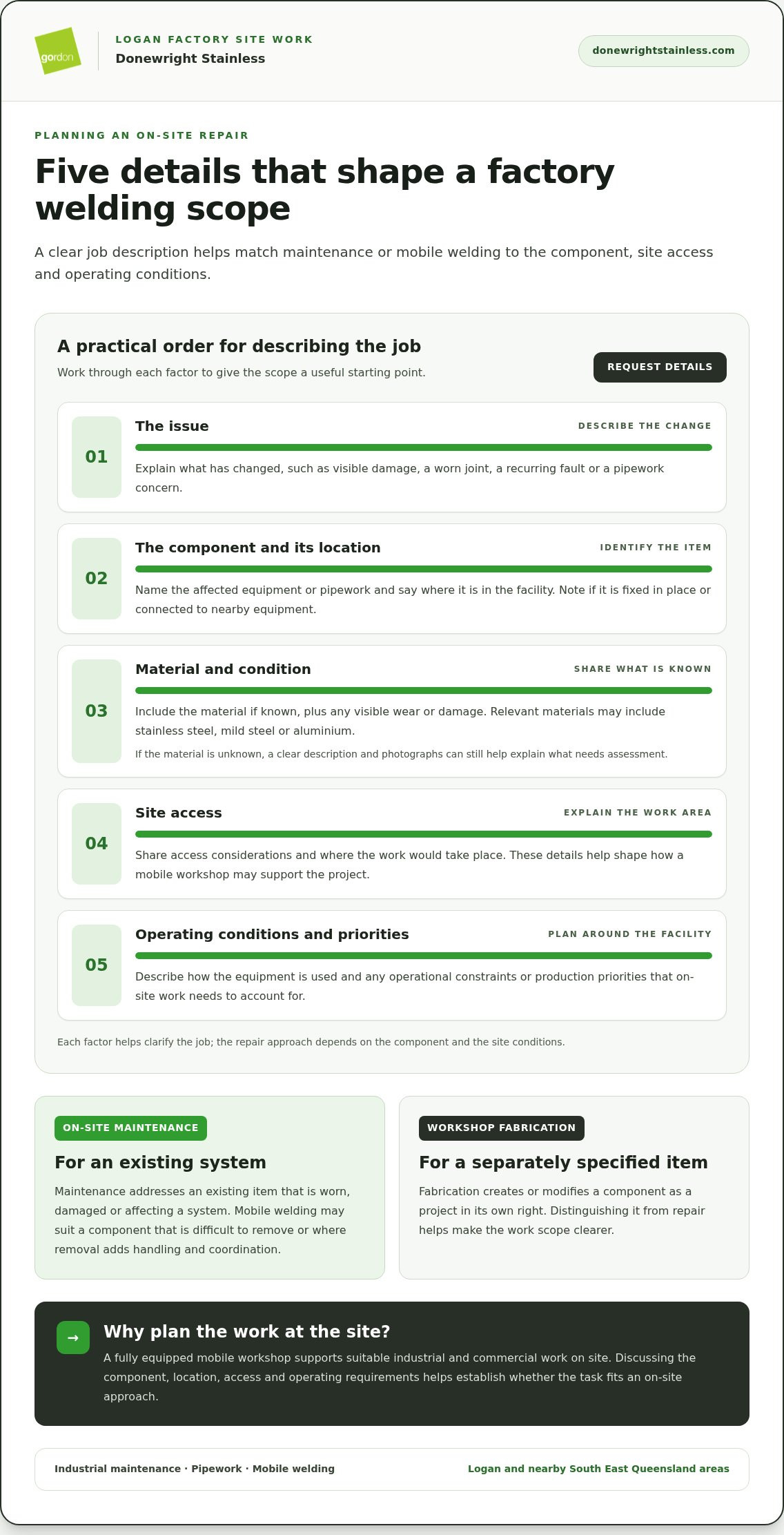
For factory maintenance and welding Logan sites need, work through these points in order:
- Describe the issue. Explain what has changed, what appears damaged or worn, and whether the concern involves equipment, pipework or another metal component.
- Identify the site and component. Note the factory location, where the affected item sits on the premises and how it connects to nearby equipment or systems.
- Share access and operating conditions. Explain any access limitations, nearby activity and operational constraints that could shape work at the site.
- Clarify priorities and discuss next steps. Say what the factory needs to keep in mind, such as the component’s role in production, then discuss how to progress the maintenance request.
What site and job details help scope the work?
Useful context includes the affected component, its location, visible condition and how workers can reach it. Include the material if known, but don’t guess if you’re unsure. Explain the factory’s operational priorities and any site coordination requirements relevant to accessing the work area. Photos or drawings can help show the location, layout or visible damage when available, but you can start the conversation without them.
How to make the first conversation productive
Be direct about whether the request concerns industrial pipework, welding, broader maintenance or a combination. Describe what the component does and what prompted the request, then outline any constraints that could affect the work location or timing. This gives the discussion a practical focus without requiring you to diagnose the fault or prescribe a repair.
For instance, a maintenance lead might describe a damaged joint on a pipe, note that it sits beside operating equipment and explain how access to the area is managed. If the concern is less clear, say what has been observed and what remains uncertain. Relevant photographs or drawings can add context, while a brief description of production priorities keeps the conversation tied to site needs. Share the details that help explain the job, without adding information unrelated to scoping it.
A concise, organised request makes it easier to discuss whether mobile welding, pipework work or broader maintenance is the right focus. Discuss your Logan factory maintenance and welding needs with Donewright Stainless, a Brisbane-based specialist serving Logan and nearby South East Queensland areas.
Donewright Stainless: Logan Factory Maintenance and Mobile Welding
Factory maintenance and welding in Logan call for a practical understanding of the repair need and the site conditions. Donewright Stainless is a Brisbane-based specialist serving Logan and nearby South East Queensland areas, with capabilities in industrial maintenance, industrial pipework and mobile welding. These services support factory teams addressing metalwork and maintenance needs at their premises.
The work starts with the site requirement. A request may concern an existing component, pipework or a broader maintenance task. Describing what needs attention, where it is located and how the factory operates helps shape a useful project conversation. The appropriate approach depends on the specific job, not a one-size-fits-all repair plan.
A local team for industrial maintenance requirements
Donewright Stainless’ fully equipped mobile workshop supports on-site industrial and commercial projects. It lets factory teams discuss work in the setting where the component or pipework is installed, with site access and operational conditions in view. The business also fabricates in stainless steel, mild steel and aluminium, which may be relevant when a project involves fabricated metalwork as well as maintenance.
These capabilities address distinct site needs. Industrial maintenance deals with existing equipment or components requiring attention; industrial pipework focuses on factory pipe systems; mobile welding brings welding work to a suitable project site. When a project calls for fabrication, the material and purpose of the item help define the scope. Keeping these requirements clear helps centre the discussion on the work the factory needs done.
For Logan operations, a local service-area connection can help when discussing work at the facility with a team that serves the area. Donewright Stainless supports sites in Logan as well as nearby areas across South East Queensland. Its services are shaped around the requirements of each industrial or commercial project, including the work location and task.
Take the next step for your Logan site
Before starting a project conversation, bring together the key details: what the issue is, which component or pipework is affected, where it is located, and what access or operational constraints matter. Include material information if known, and explain the factory’s priorities. Photos or drawings can also help illustrate the site or component when available.
These details provide a clear foundation for discussing whether the requirement centres on maintenance, pipework, mobile welding or related fabrication. They also keep the conversation focused on practical site conditions, without deciding on a work method before the job is understood.
For factory maintenance and welding Logan businesses need, Donewright Stainless offers a local point of contact for discussing the project scope and site requirements. Contact Donewright Stainless about your project to start a practical conversation about work at your Logan site.
Set Up Your Next Maintenance Conversation
Turn the issue into a clear project brief. Note what needs attention, what the factory needs to prioritise and which site conditions may influence the work. This gives the conversation a practical focus and connects the proposed approach to your operating requirements.
For Logan businesses considering factory maintenance and welding, a well-framed request can move a general concern towards a focused discussion about the work. You don’t need every technical detail resolved before starting. Share what you know, including relevant access or production constraints, and build from there.
Donewright Stainless works with industrial and commercial sites on maintenance, pipework and mobile welding requirements. Discuss your Logan factory maintenance and welding requirements and take the next step towards planning suitable support for your site.
A clear conversation is a sound place to start, guided by your operational priorities.
Frequently Asked Questions
What is the difference between planned and reactive factory maintenance?
Planned maintenance is organised before a fault interrupts operation; reactive maintenance responds after a fault or damage has occurred. Planned work may follow condition checks, known wear or an asset’s operating needs. For example, if a team repeatedly records a loose fixing during routine checks, it can assess and schedule attention rather than wait for the fixing to fail. Reactive work addresses the defect and its effect on operations.
Can a factory choose repair instead of replacing a damaged metal component?
Yes, repair may be an option, but the decision depends on the damage, the component’s function and the condition of the surrounding material. An assessment can help establish whether a local repair is practical or whether the damage affects too much of the item. Repeated faults, distortion or extensive cracking may influence the decision. The aim is to weigh the component’s condition against its role in the factory system.
What information should a factory record after maintenance welding?
Record the asset or component identification, location, date, reported issue and a clear description of the work completed. Note any known material details, checks carried out after the work and observations that may need follow-up. If the same area needs attention again, these records help the maintenance team compare its condition and history rather than rely on memory. Keep the entry factual and easy for the next person to understand.
Does every factory welding job require the same site controls?
No. Appropriate site controls depend on the task, work area, materials and surrounding operations. Welding in a separated maintenance area presents different considerations from work beside operating equipment or combustible materials. The factory’s site procedures and the specific conditions should guide planning, including how access is managed and who needs to know about the work. A consistent planning process helps teams identify job-specific requirements without assuming one control suits every situation.
How can a factory reduce repeat maintenance issues after a repair?
Use the repair record to track whether the same fault returns, and note changes in the component’s condition or operating context. For factories in Brisbane, the Gold Coast, Logan and Ipswich, this history can help maintenance teams spot recurring patterns across their equipment. Consider whether factors such as vibration, alignment or the surrounding environment may be contributing, then use those observations to inform future maintenance planning.
Is stainless steel always the right material for factory maintenance?
No. The suitable material depends on the component’s purpose, operating environment and existing design. Stainless steel may suit some applications, while mild steel or aluminium may better suit others. The existing material and any relevant specifications are useful details to provide when discussing a repair, as compatibility can affect the approach. Material choice should follow the job requirements, not a general assumption that one metal is best for every factory.
