
Lead Time for Custom Fabrication Projects: What Shapes the Schedule?
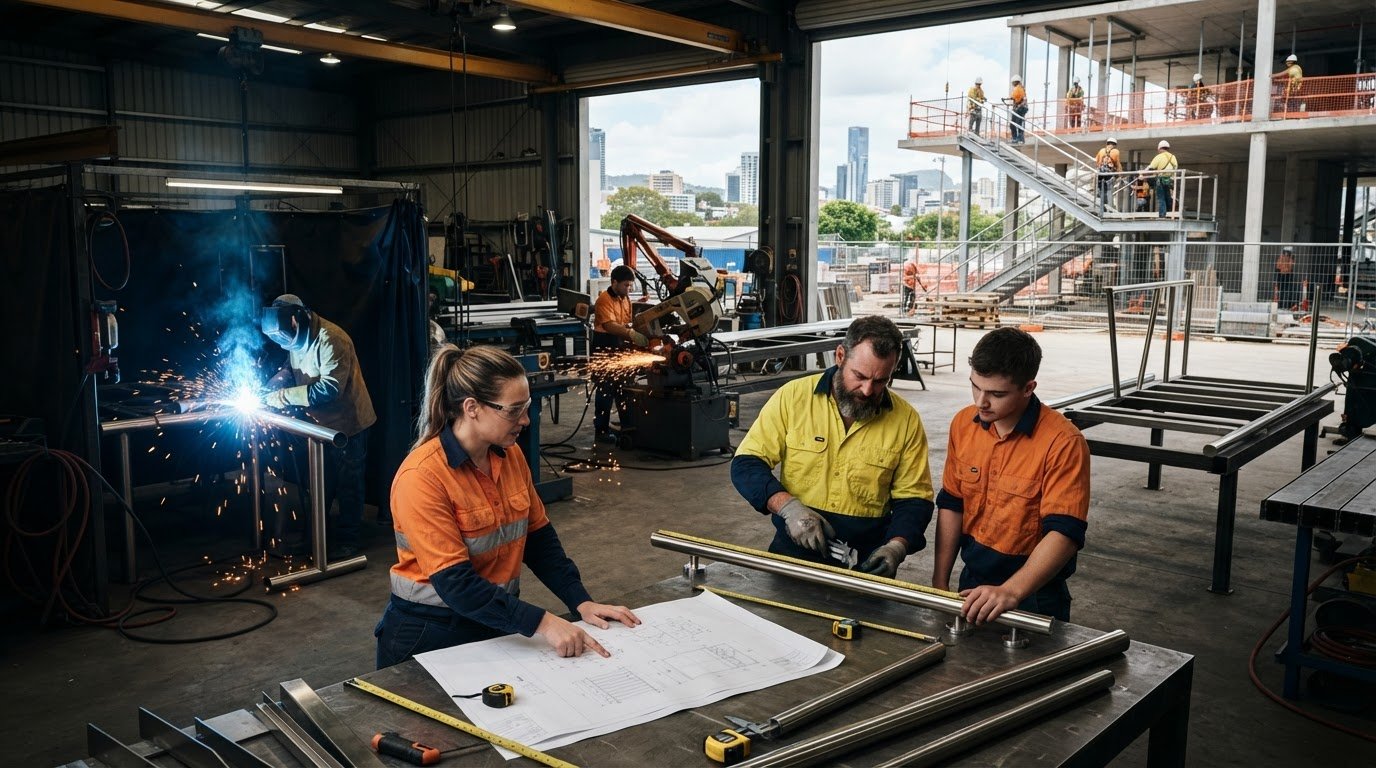
What if the workshop completion date isn’t the date your project can move ahead on site? The lead time for custom fabrication projects covers a sequence of linked stages, and a workshop estimate may not include design approvals, material preparation, finishing, delivery or installation. On commercial and industrial sites, late decisions, restricted access and trade coordination can also affect the schedule.
Before committing to site access, coordinating other trades or arranging an operational pause, make sure the timeframe covers the outcome you need. A useful schedule starts with the full project scope, from design and material selection through manufacture and on-site work, rather than one isolated workshop date.
This article explains what shapes each stage, which details to provide early and how to identify avoidable schedule risks. You’ll also learn how to clarify whether installation is included and coordinate fabrication with site requirements. For projects across Brisbane, the Gold Coast, Logan and Ipswich, Donewright Stainless provides design, manufacture and installation to support practical planning from the outset.
Key Takeaways
- The lead time for custom fabrication projects covers the agreed scope through to a defined completion point, which may include design, approvals, manufacture, finishing and installation.
- Complete drawings, confirmed dimensions and timely decisions reduce uncertainty before fabrication begins.
- Compare schedules by checking what each includes, especially whether completion means workshop-finished fabrication or installed work.
- Discuss site access, installation locations, shutdown windows and trade coordination early.
- Planning design, fabrication and installation as connected stages gives you a clearer view of the schedule and site requirements.
What does lead time for custom fabrication projects actually include?
Custom fabrication lead time is the agreed schedule from confirmed project scope to the specific completion point set for the job. That endpoint matters. It could be completion in the workshop, delivery to site or installation ready for use. These are different milestones, so the lead time for custom fabrication projects should state which one the schedule covers.
In manufacturing and supply chain management, Lead time describes the interval between starting a process and reaching its defined endpoint. For a bespoke fabrication job, the work may include design review, approvals, material preparation, workshop production, finishing and site installation. Each stage has its own tasks and dependencies. The next activity may not be ready to start until the previous one is complete.
Which project milestones belong on the fabrication schedule?
A useful schedule maps the job from scope confirmation to the agreed handover point. It shows when information or decisions are needed, as well as when fabrication, delivery and site work are planned. For example, a custom stainless bench needs confirmed dimensions and details about its location before materials can be prepared and workshop production can proceed.
Typical milestones include:
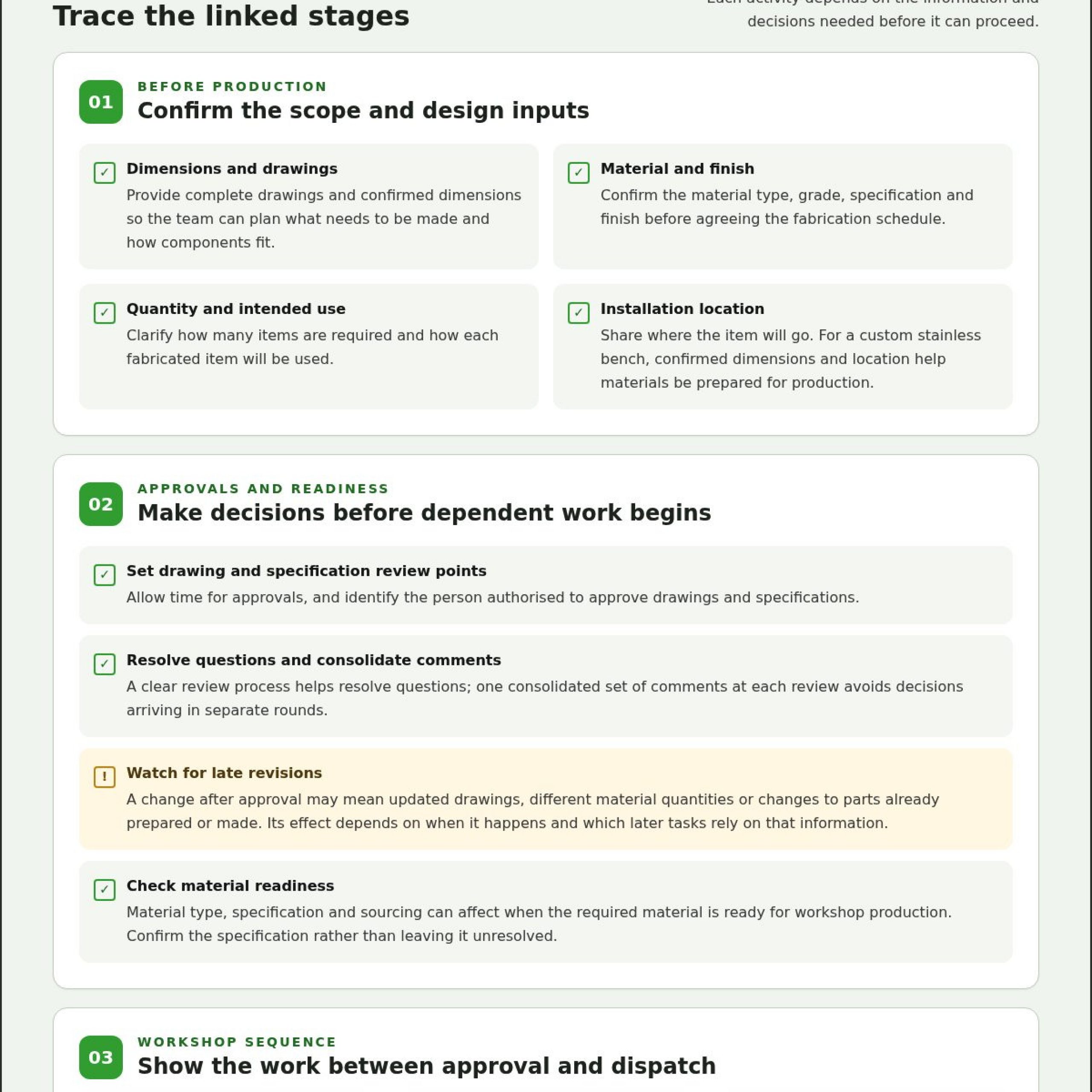
- Scope and design review: Confirm dimensions, materials, finish and how the fabricated item will be used.
- Approvals: Allow time for drawings or specifications to be reviewed. Revisions can change the design and shift dependent activities.
- Material preparation: Prepare the specified materials once the design and requirements are settled.
- Fabrication and finishing: Complete workshop production, followed by any specified finishing and checks.
- Delivery and installation: Plan transport, site access and on-site work as separate activities where required.
Separating these milestones makes it easier to see what is due next and which information could hold up progress. A workshop completion date alone doesn’t account for delivery coordination, installation access or the time needed to complete on-site work.
Why is there no single lead time for every custom job?
The schedule depends on the agreed work, not simply on the fact that an item is custom-made. Bespoke dimensions, material type and specification, quantity and finishing requirements all affect the tasks involved. A straightforward fabricated item may follow a different sequence from a multi-part assembly with components that need to fit together.
Site-specific installation adds further dependencies. The installation location, access arrangements and coordination with other trades can affect when the work can happen, particularly at an operating commercial or industrial site. A planned shutdown or restricted access window may also need to align with workshop completion and delivery.
A generic average can’t show whether a particular project is on track. The schedule should reflect the confirmed scope, approvals still required and dependencies between workshop and site activities. Define the completion point at the outset so everyone has a clear basis for planning trades, access and operational requirements.
Which factors change lead time for custom fabrication projects?
The main schedule drivers are design completeness, approval timing, material type and readiness, production quantity, fabrication complexity, finishing requirements and site conditions. These factors affect different parts of the job, so identifying them early helps make the programme more realistic. The Corporate Finance Institute’s overview of Lead Time in Supply Chain Management and Manufacturing also explains how supply and process dependencies shape lead time.
Clear drawings and confirmed dimensions give the fabrication team a sound basis for planning. They define what needs to be made, how components fit and which materials and finishes are required. If information is incomplete, details may need to be resolved before the affected work can proceed. That pause can shift later activities, even if the fabrication itself is straightforward.
How do design changes and approvals affect the programme?
Agreeing a design review process at the outset can reduce avoidable hold-ups. Name the person authorised to approve drawings and specifications, and set review points before material preparation and production. This gives the project team a clear process for resolving questions and confirming decisions.
A revision after approval may require updated drawings, a different material quantity or changes to components already prepared or made. Its effect depends on when the change occurs and which later tasks rely on the approved information. For example, changing the dimensions of a custom stainless bench after material preparation could mean reviewing the cut sizes and sequence of work. Where possible, provide one consolidated set of comments at each review rather than sending decisions in separate rounds.
How do materials, finishes and site conditions affect timing?
Settle material selection before the fabrication schedule is agreed. Type, grade, specification and sourcing can all influence when the required material is ready for workshop production. A substitute material may not meet the design or intended use, so confirm the specification early rather than leaving it unresolved once production is planned.
Workshop tasks vary too. One job may need basic fabrication, while another requires multiple components, assembly and a specified finish. Each requirement adds work that needs to appear in the sequence. Quantity matters as well: producing several matching items involves a different workload from making a single bespoke piece, even when the design is similar.
For commercial and industrial projects in Brisbane, the Gold Coast, Logan and Ipswich, site conditions can shape installation planning. Restricted access, operating hours, the installation location and coordination with other trades may determine when on-site work can take place. Document these requirements early to align workshop readiness with the site’s practical constraints.
Before agreeing milestones, bring together the latest drawings, material and finish specifications, approval responsibilities and site requirements. Discussing the full scope with a custom fabrication and installation team helps connect workshop planning with the work required on site.
How should you compare fabrication schedules and estimates?
A schedule is useful only if it describes the same scope and endpoint you need. Two estimates can appear to offer different lead times while measuring different things: one may end when the item is complete in the workshop, while another may include delivery and on-site installation. Compare the milestones and assumptions behind each programme, not just its headline timeframe.
Use this checklist to review what a schedule makes clear:
| Schedule item | What to compare | Why it matters |
|---|---|---|
| Scope | Items, quantities, materials, finish and specified work | Different inclusions mean the programmes cover different jobs. |
| Design approvals | Drawing reviews, approval points and who provides decisions | Production may depend on approved information. |
| Material assumptions | Specified material and any stated sourcing or preparation dependencies | Material readiness can affect when workshop work begins. |
| Workshop completion | Fabrication, finishing and any required assembly milestones | Workshop completion may not mean the item is ready for use on site. |
| Installation | Delivery coordination, access, on-site work and handover | These steps may sit outside a workshop-only programme. |
What should a useful project schedule make clear?
Look for a defined starting point, such as confirmation of the scope or approval of drawings, and a stated completion point. The schedule should show the sequence of approvals, material preparation, fabrication and finishing, as well as how installation connects with workshop work. It should also identify who is responsible for decisions and site preparation, and explain how a change to the agreed scope may affect dependent milestones.
For the lead time for custom fabrication projects, dependencies matter as much as the listed activities. If drawing approval must happen before material preparation, that relationship should be visible. If site access needs to be arranged before installation, record it as a project requirement rather than assuming it will fall into place.
How can you compare workshop completion with installed completion?
Check whether the programme includes transport to site, installation and handover, or ends with a fabricated item ready for collection or delivery. On-site work can depend on access arrangements, operating requirements and coordination with other trades. A schedule that includes installation should show how those site activities fit alongside workshop milestones.
For example, a fabricated stainless item may be finished in the workshop but still need to be transported, positioned and installed before it is ready for use. The agreed endpoint should reflect what your project actually needs. This distinction is relevant to custom stainless steel fabrication in Brisbane, where planning through to site installation helps clarify the scope and handover.
Before comparing estimates, align the scope, start point, completion definition, approval responsibilities and site assumptions. This gives you a practical basis for coordinating trades and access, and prevents a shorter headline estimate from obscuring work that remains to be done.
How can you keep a custom fabrication project on schedule?
Preparation makes a custom fabrication programme easier to plan and can prevent avoidable pauses. It won’t remove every dependency, such as material readiness or access constraints, but it gives the project team a clearer basis for decisions from design through installation. Use this sequence to get the planning started:
- Define the scope: Describe what needs to be fabricated, how it will be used and what completion means for the project.
- Supply drawings and dimensions: Include the latest plans and measurements, then flag details that still need review.
- Confirm requirements: Set out material, finish, quantity and installation needs before workshop planning progresses.
- Agree approval milestones: Identify who reviews drawings and specifications, and when decisions are needed to keep dependent tasks moving.
- Prepare the site: Plan access, the installation location and coordination with other trades or operating requirements.
For the lead time for custom fabrication projects, prompt, consolidated decisions help avoid preventable approval delays. Naming one point of contact for comments and approvals can reduce conflicting instructions. If a change becomes necessary, communicate it as soon as possible so its effect on drawings, materials and scheduled work can be assessed.
What information should you prepare before requesting a schedule?
Bring together the information that defines both the item and the conditions it needs to fit. Useful project details include:
- Dimensions, drawings and photographs of the intended location.
- The item’s purpose and practical requirements that affect its design.
- Material, finish and quantity requirements.
- Site constraints, including access arrangements and the installation area.
- Target dates, operational windows and any planned shutdown periods.
A marked-up drawing or site photograph can help explain a constraint that’s difficult to describe in writing. Make clear which information is final and which details remain open. This gives the team a more useful starting point for discussing the scope and sequence of work.
How can site readiness and sequencing prevent hold-ups?
Before installation, confirm that the work area and access route are ready for the planned activity. Identify restrictions on moving equipment or materials through the site, and coordinate the installation window with other trades and site operations. If another task must be completed first, show that dependency in the programme rather than leaving it until the workshop work is finished.
For maintenance work, on-site industrial pipework repair in Brisbane illustrates why the work location and operational requirements matter alongside the fabrication or repair task. Donewright Stainless provides mobile workshop support for on-site welding and industrial maintenance. Access and timing still need to suit the specific operation, so include those requirements in the plan.
Good preparation reduces uncertainty; it doesn’t make every project dependency disappear. Discussing the scope, milestones and site requirements with a custom fabrication and installation team helps connect workshop planning to site conditions.
How Donewright Stainless plans custom fabrication from workshop to site
A workable fabrication schedule accounts for more than workshop production. Donewright Stainless provides design, fabrication and on-site installation as connected parts of project planning, so the agreed scope can be considered alongside the site work required to complete it. For commercial and industrial projects across Brisbane, the Gold Coast, Logan and Ipswich, this gives the team a practical basis for setting relevant milestones without relying on a standard turnaround.
How does a project discussion support a practical schedule?
The intended use, dimensions, material requirements and installation location help define what needs to happen and in what order. Discussing the full scope can identify which information is ready, what decisions remain and how workshop tasks connect with site work. Agreeing installation needs early also makes the schedule’s completion point meaningful, whether the project requires fabrication alone or installation as well.
To support that planning, bring together details such as:
- The item’s function, dimensions and available drawings or photographs.
- Required material, finish and quantity.
- The installation location, access arrangements and site constraints.
- Target dates, operational requirements and any shutdown windows.
- Other trades or activities that must be coordinated with the work.
With this information, milestones can be discussed in the context of the actual job, from design review through manufacture and site installation. The lead time for custom fabrication projects depends on those project-specific requirements, so the schedule should reflect the agreed scope and relevant dependencies rather than imply a fixed timeframe.
When is on-site fabrication or maintenance part of the solution?
Some work needs to be planned around conditions at the site. Donewright Stainless’s fully equipped mobile workshop supports on-site welding and industrial maintenance, including work where access, operating conditions and the work area influence the sequence. Discussing these factors early helps align the work with site operations and plan around disruption, while recognising that each task has its own requirements.
For industrial pipework or maintenance, clarify where the task will take place, how the team can access the area and which operational constraints affect the work window. These details inform coordination between the site, workshop and other trades involved. They also help distinguish on-site work from fabrication completed in the workshop.
Donewright Stainless provides custom fabrication, mobile welding and maintenance services for projects across Brisbane, the Gold Coast, Logan and Ipswich. Discuss your custom fabrication project to plan the work from design through to the site requirements, with timing shaped around the job.
Set your project up for a confident start
Turn your target completion date into a planning conversation. Consider what the date needs to support, such as a production changeover, a fit-out milestone or the return of equipment to service. That context helps shape a schedule around the outcome your site needs, rather than treating fabrication as a standalone workshop task.
The lead time for custom fabrication projects is most useful when it gives everyone a shared basis for coordinating decisions and on-site work. Keep the schedule visible to the people responsible for approvals, access and related trades, and revisit it if the scope or site conditions change. Clear communication won’t remove every dependency, but it helps the team respond to changes with a better understanding of what comes next.
Donewright Stainless works with commercial and industrial projects from initial requirements through to site work. Discuss your custom fabrication project with Donewright Stainless to talk through the scope and scheduling needs. Start with a clear project brief and plan the next steps with the team.
Frequently Asked Questions
How much contingency should I allow for a custom fabrication project?
There’s no single contingency allowance that suits every job. Base it on the uncertainties in your project, such as unresolved design details, access constraints or dependencies on other site work. For the lead time for custom fabrication projects, identify which milestones carry the most uncertainty and discuss how changes there could affect later activities. Keep contingency visible in your programme rather than treating it as unallocated time that can be used without review.
Can a custom fabrication job be expedited?
An accelerated programme depends on the project scope, material readiness, approvals and production capacity. It shouldn’t rely on skipping design reviews or necessary finishing and inspection steps. If a target date is firm, raise it while the scope is being planned and identify which decisions or site arrangements need to happen early. A practical schedule can then show how the requested date fits with the work and its dependencies.
Does a fabrication lead time include delivery and installation?
Only if the agreed schedule includes those activities. A programme may end when fabrication is complete in the workshop, while your project may need delivery, positioning, installation and handover before the item is usable. Check the stated endpoint and make sure it matches your operational need. For example, distinguish “ready for dispatch” from “installed at the nominated site” in project records and coordination plans.
What can delay a custom fabrication project after work has started?
Changes to approved drawings, newly identified site constraints or a shift in access arrangements can affect work already under way. A revised dimension may alter a component that has been prepared, while a postponed shutdown could move the installation window even if workshop production is complete. If a change arises, record what has changed, who approved it and which upcoming milestones may be affected. This gives the team a clear basis for updating the programme.
What information should I provide to get a useful fabrication schedule?
Provide the latest drawing or sketch, confirm the measurement units and identify which document version is current. Add photographs that show the item’s location and nearby obstacles, not just a close-up of the workpiece. Include the intended use, quantities, material preferences, target date and site restrictions. If a detail is still being decided, label it as provisional so the schedule can distinguish confirmed requirements from open decisions.
Can fabrication and installation be planned around an industrial shutdown?
Yes. Use the shutdown window as a planning constraint for sequencing workshop and site activities. Share the available work window, access conditions, operational limits and any tasks that must happen before or after installation. This allows the schedule to work backwards from the site opportunity and identify decisions or preparation needed beforehand. For industrial projects in Brisbane, the Gold Coast, Logan and Ipswich, early coordination helps align fabrication with site operations.
