
Custom Stainless Steel Laboratory Furniture for Chemical Use
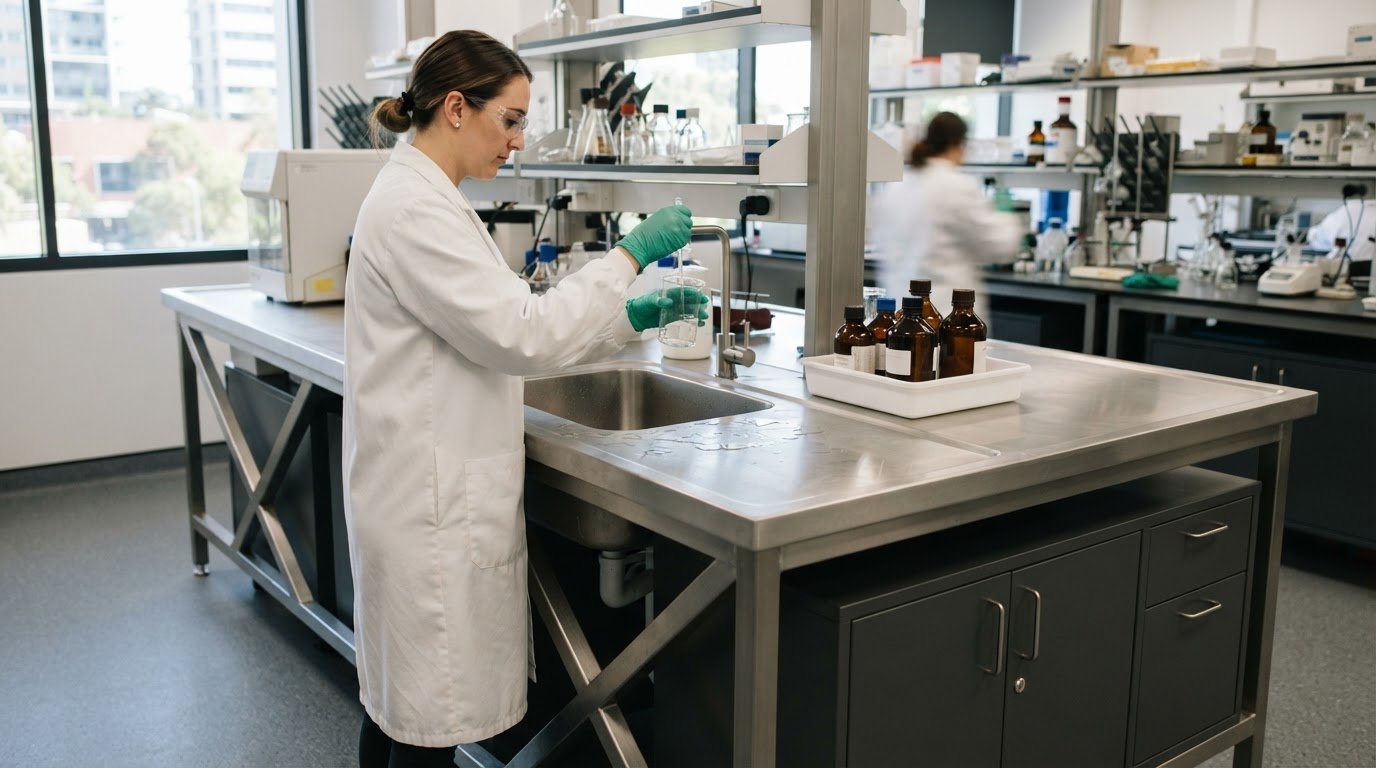
A stainless steel finish alone doesn’t make a workstation suitable for chemical use. Custom stainless steel laboratory furniture needs to be specified for the chemicals, cleaning agents and working conditions in the space, as well as the equipment it must support. A well-planned design brings these requirements together across work surfaces, storage and sink areas.
Laboratory furniture should be durable and straightforward to clean, but material choice and construction details matter too. A surface that suits one process may not suit another, so base the specification on the intended use and cleaning routine.
This article explains how to assess chemical suitability, plan countertops, casework and sinks, and account for equipment, access and layout in a custom design. It also covers the information that helps a fabrication team develop a practical solution for an Australian laboratory.
Key Takeaways
- Match the material and surface finish to the laboratory’s chemicals, cleaning agents and working conditions.
- Plan work surfaces, storage and sink areas as a coordinated layout around the tasks they need to support.
- Bring equipment dimensions, load requirements, access needs and utility connections into the design discussion early.
- Use a room plan, rough sketch or equipment list to help shape a practical furniture specification.
Chemical and cleaning-agent suitability
Stainless steel is not automatically suitable for every chemical process. The alloy, surface treatment and furniture construction need to suit the substances used, cleaning agents applied and working conditions in the laboratory. A bench exposed to occasional splashes has different requirements from one used for regular chemical handling.
Start with the work itself. Identify the chemicals used at each station, how they might contact the furniture and the cleaning routine that follows. Include routine wipe-downs as well as spill response, since repeated cleaning can affect surfaces and joints over time. Treat the facility’s cleaning procedure as part of the specification, not an afterthought.
Surface design affects cleaning too. Smooth surfaces and practical construction can support routine wipe-down procedures in cleanroom environments. Consider seams, edges and joins alongside the worktop, because residue can collect where surfaces meet or equipment sits. These details help align the furniture with the actual cleaning process.
- List the chemicals and cleaning agents used at each workstation.
- Describe contact patterns, such as splashes during preparation or repeated wiping after each task.
- Include the cleaning method and frequency in the design discussion.
- Match the surface treatment and construction to those working conditions.
Quality management is another consideration, but it does not establish chemical compatibility by itself. ISO 9001 is an international quality management standard published by the International Organization for Standardization. It relates to quality management systems, while the furniture specification still needs to address the laboratory’s chemicals, cleaning agents and use conditions directly.
For a custom specification, provide the intended use and cleaning requirements together. This gives the design team a practical basis for reviewing material suitability and shaping surfaces, joins and work areas around the laboratory’s processes. It also helps distinguish chemical exposure zones from areas used mainly for equipment, storage or general preparation.
Laboratory countertops, casework and sinks
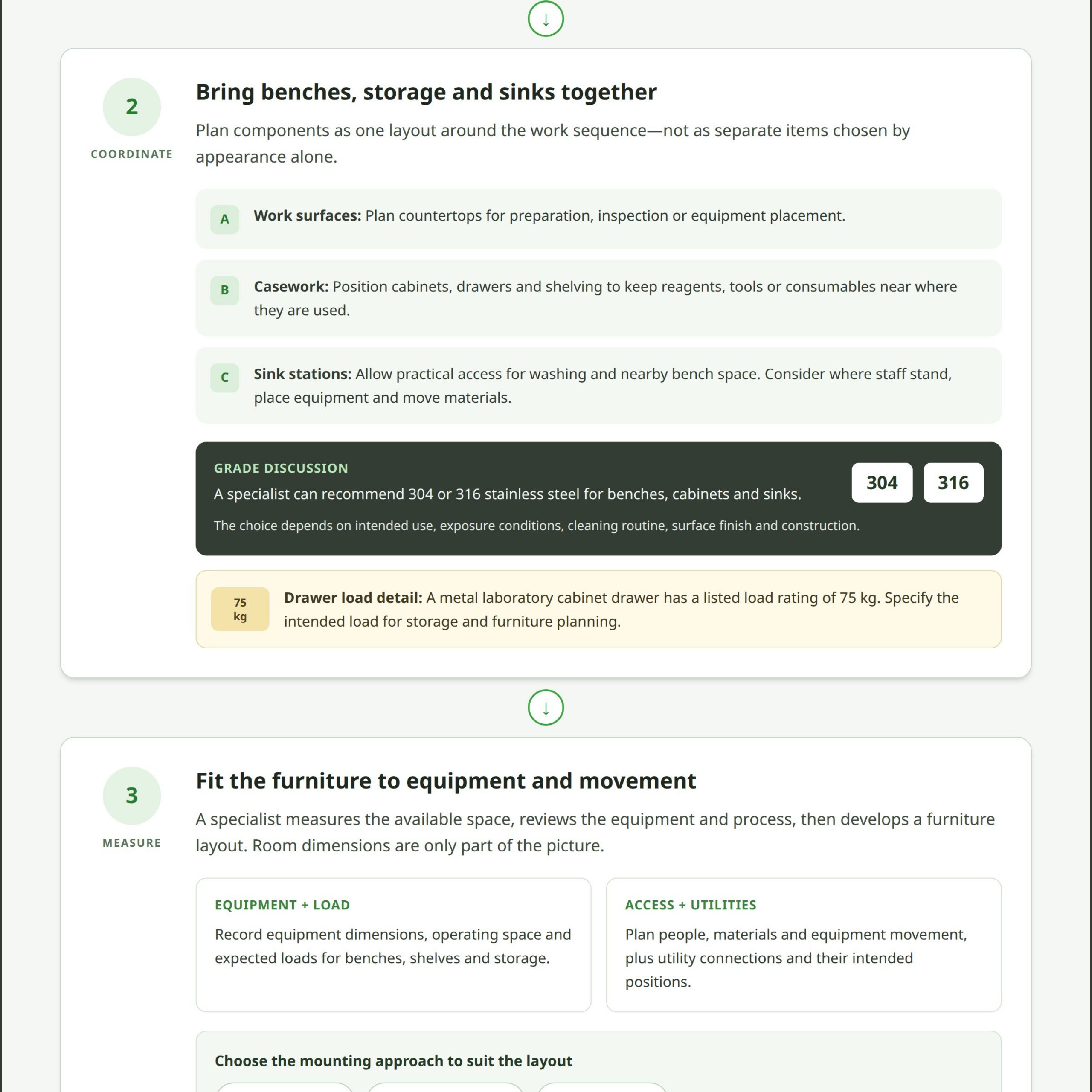
A specialist can recommend 304 or 316 stainless steel for laboratory benches, cabinets and sinks. The choice depends on intended use, exposure conditions and how each item fits the work sequence.
Laboratory Bench, Cabinet and Sink Options
A coordinated layout can bring work tables, storage cabinets, shelving and sink units together. Countertops support preparation, inspection or equipment placement, while casework keeps supplies near where they are used. Sink stations should suit washing tasks and allow practical access to nearby bench space. Consider where staff stand, place equipment and move materials between work areas.
How a Specialist Selects Stainless Steel Grades
Choose a grade by considering the substances handled at each location and the cleaning routine applied there. A preparation bench may face different conditions from a frequently used sink or a cabinet storing laboratory items. The fabricator should consider intended use alongside surface finish and construction, matching the proposed grade to operating conditions rather than appearance alone.
Storage design should reflect what the facility needs close at hand. Shelving, cabinets and drawers can organise reagents, tools or consumables near the worktop. A metal laboratory cabinet drawer has a listed load rating of 75 kg, which makes the intended load an important specification detail.
Coordinate countertop dimensions, sink position and cabinet depth with equipment footprints and movement paths. This helps avoid placing a wash station where it interrupts preparation or storage where open drawers obstruct access. Plan these components together before fabrication.
Stainless bench tops and custom stainless benches can be planned around the laboratory’s working arrangement. Discussing the work surface, storage and sink requirements together helps shape a connected layout. A custom stainless bench can be tailored to the available work area and its intended tasks.
A United States cosmetics R&D laboratory used fingerprint-resistant brushed stainless steel furniture. Cleanroom stainless steel furniture is used in laboratories and research facilities for benches, shelving and sink stations that support lab processes and equipment placement.
Custom equipment design consultations
A specialist measures the available space, reviews the equipment and process, then develops a furniture layout. Fabrication and installation follow the agreed design, including dimensions, load expectations, fixing details and utility connections.
A room layout drawing gives the selection process a useful starting point. If you don’t have one, a rough sketch, reference photo or list of required furniture can communicate the proposed arrangement. These details help the specialist understand equipment footprints, access needs and how staff move through the facility.
Design decisions should account for practical use, not just the room’s overall dimensions. A bench beside equipment may need clear access for loading or maintenance. A trolley may suit a process that needs mobile equipment, while fixed furniture can support a settled workstation. Wall-mounted options can also be considered where the layout calls for them.
During consultation, the specialist can work through key requirements with the laboratory team:
- Record equipment dimensions and the space needed to operate it.
- Identify expected loads for benches, shelves and storage.
- Plan access for people, materials and equipment movement.
- Note required utility connections and their intended positions.
- Decide whether each item should be fixed, mobile on castors or wall-mounted.
These decisions shape the drawings and final specification. Before ordering, confirm expected loads, fixing or castor details, and utility connections in the final quotation. This links the proposed furniture to the equipment and room requirements, rather than treating each item as a standalone purchase.
Installation depends on the agreed layout and site conditions. The design should show where each unit sits and how it relates to nearby equipment and services. This gives the installation team a clear reference for positioning the furniture and aligning it with planned connections.
For a custom stainless steel laboratory furniture project, early consultation helps resolve layout questions before fabrication begins. A clear equipment list and room plan make the design discussion more specific and useful.
Custom stainless steel laboratory furniture
Material, layout and construction should reflect the laboratory’s processes, equipment and working conditions. Compare each option against the same practical requirements before settling on a specification.
Comparing Laboratory Furniture Materials
Stainless steel is a fabricated metal option for benches, cabinets and sinks. Epoxy resin has a resin-based surface, while laminate has a layered surface over a substrate. Suitability depends on the work, chemical exposure, cleaning routine and expected wear. Compare the complete furniture item, not just its top: casework construction and joints also affect how it fits the facility’s cleaning practices.
For each material, consider the task it will support. A bench used for equipment placement has different demands from a surface regularly exposed to chemicals or cleaning agents. Make the selection according to intended use and surface requirements.
Standards and Regulations for Laboratory Furniture
Australian laboratory projects may refer to AS/NZS 2982, described as an Australian and New Zealand standard for laboratory facility design and construction. AS/NZS 2243 is also identified among standards associated with metal cabinets. These references inform design discussions, but they don’t by themselves establish every requirement for a particular installation.
When assessing Australian manufacturers, look at how clearly they connect the room layout, intended use, materials and equipment requirements to the proposed design. A useful specification explains the furniture, expected loads, fixing or castor details and utility connections. It should also explain how the design relates to the laboratory’s applicable standards and installation conditions.
Safety, Ergonomics and Load Capacity
Load and access are practical safety considerations. The design should account for what each bench, shelf or cabinet will hold, including equipment and stored items. Position work areas so users can reach equipment and move materials without obstructed access. For mobile furniture, include castor details in the specification.
Ergonomics also depends on how the workstation relates to its tasks. Equipment placement, working position and clear movement paths should inform the layout. Consultation can bring these factors together before fabrication.
For a laboratory layout that needs tailored stainless steel fabrication, discuss your furniture project.
Donewright Stainless
Donewright Stainless provides custom stainless steel fabrication for practical laboratory work surfaces. Its custom stainless benches are an option when a standard work surface doesn’t suit the room, equipment or workflow. A project discussion can cover intended use, layout, material choice and the details needed for a useful specification.
Bring a room plan, equipment list or rough sketch to explain the space and tasks. These details help focus the conversation on your laboratory’s needs and the stainless steel work involved. For projects requiring broader fabrication, discuss how individual items fit the overall layout.
Contact Donewright Stainless to discuss your laboratory furniture requirements.
Shape a specification around the work ahead
A laboratory fit-out is an opportunity to make furniture work with the way the facility operates, rather than forcing processes around standard dimensions. A clear project brief gives the design discussion a practical starting point and connects the room’s needs with the fabrication work involved.
Donewright Stainless provides Stainless Steel Fabrication, stainless steel handrails, and Safety Handrails and Protection. These capabilities can be relevant when a laboratory project includes stainless steel work beyond its benches. Keep the intended use and project priorities at the centre of the discussion to define the right scope.
If you’re planning custom stainless steel laboratory furniture, take the next step with a conversation about your project. Contact Donewright Stainless to discuss your lab and move towards a specification that supports your work.
Frequently Asked Questions
What types of custom stainless steel laboratory furniture are available in Australia?
Australian laboratories can use stainless steel benches, work tables, shelving, cabinets, trolleys, sinks and wash stations. The right combination depends on the work and how equipment and supplies move through the room. For example, a laboratory handling samples may need dedicated bench space beside storage, while a facility moving equipment between rooms may benefit from a mobile trolley.
How can a specialist specify stainless steel laboratory furniture for chemical, medical or food laboratories?
A specialist bases the specification on the laboratory’s processes, exposure conditions and cleaning procedures. For chemical work, describe the substances and contact patterns; for medical or food settings, explain the handling tasks and cleaning routines. A sample-preparation bench, for instance, may need a different arrangement from a wash area. These details help shape material selection, surfaces, storage and equipment placement.
What cleaning and maintenance practices prevent corrosion and contamination on stainless steel lab furniture?
Follow the facility’s approved cleaning procedure, remove chemical or process residues promptly, and dry surfaces after cleaning where the procedure allows. Use cleaning materials suitable for the specified finish, and avoid transferring residue between work zones. Include regular visual checks of joins, edges and damaged areas in routine maintenance. Recording cleaning agents and observed changes can help identify recurring problems and guide upkeep.
What are the differences between stainless steel, epoxy resin and laminate laboratory furniture?
Stainless steel is a fabricated metal, epoxy resin has a resin-based surface, and laminate has a layered surface over a substrate. Suitability depends on the work, chemical exposure, cleaning routine and expected wear, including the construction and joints of the complete furniture item.