
Stainless Steel Work in Hospitals: Finishes, Hygiene and Fabrication
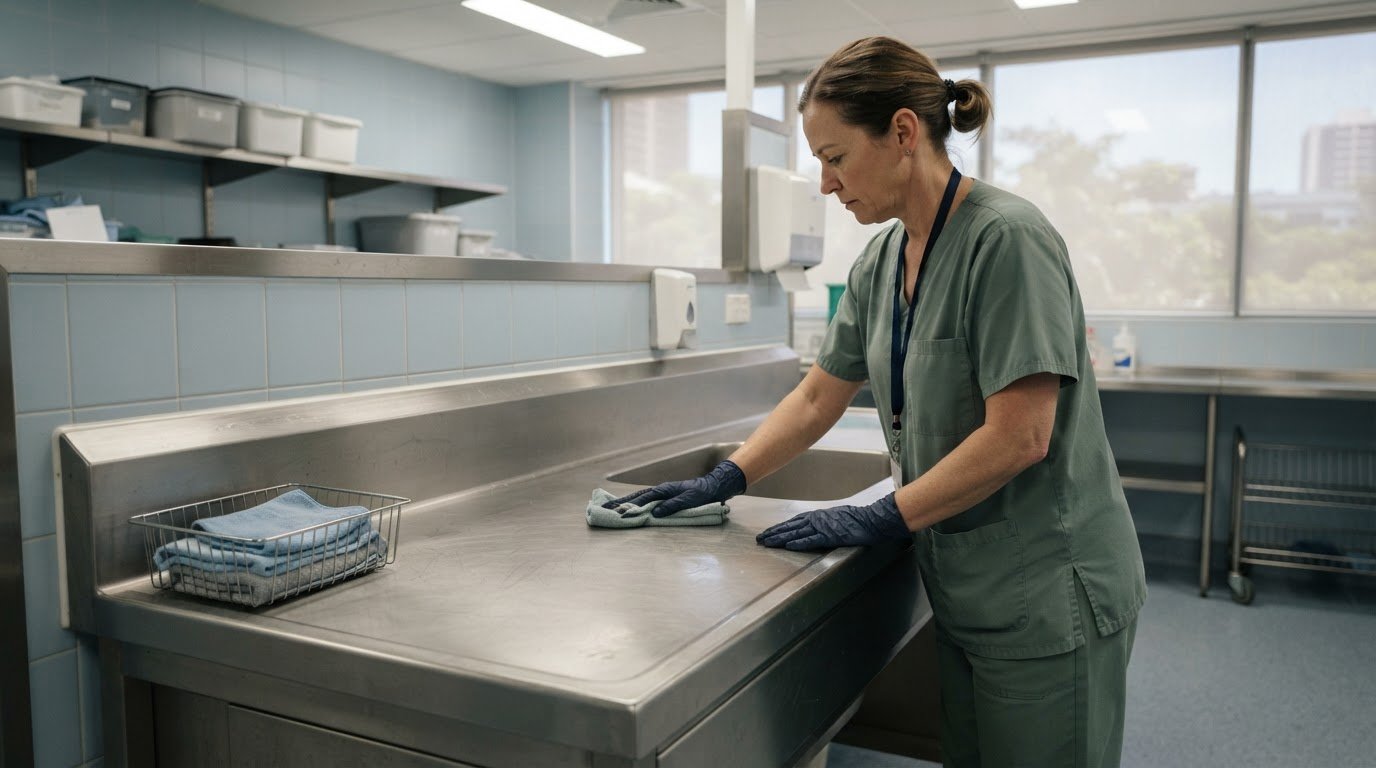
A polished finish alone does not make stainless steel suitable for hospital use. For stainless steel work in hospitals, smooth, non-porous surfaces support cleaning and disinfection, while thoughtful fabrication helps avoid joins and edges that are difficult to clean.
Healthcare teams need surfaces and equipment that fit into routine cleaning. Choosing a finish is only one part of the decision: the item’s purpose, construction and cleaning method all matter.
This article explains how stainless steel finishes and fabrication details affect cleanability in healthcare settings. It also covers trolley design, including practical features for moving and using equipment, and key considerations when planning custom stainless steel work for a hospital or health facility.
Key Takeaways
- Choose a smooth, non-porous finish that suits the surface’s use and cleaning routine, supporting thorough cleaning and disinfection.
- Consider how benching, cabinets, sinks and equipment stands are joined and arranged so their surfaces remain practical to clean.
- Factor movement, handling and the working environment into trolley design; details such as shelf rails and castors affect everyday use.
- Understand how Australian healthcare requirements relate to equipment and storage systems, then consider how custom fabrication or mobile workshop services can support the project.
Why Is Stainless Steel Used In Kitchens And Hospitals?
Stainless steel is used for hospital and kitchen fixtures because it can be thoroughly cleaned, including through autoclave sterilisation. When planning stainless steel work in hospitals, let the fixture’s purpose and daily cleaning routine guide its design.
Custom Benching, Cabinetry and Sink Modules
Custom benches, cabinetry, sink modules and equipment stands can be designed around a room’s work, storage and equipment needs. For example, a laboratory bench can be planned with a sink and nearby cabinets to organise the work area without restricting access.
For stainless steel work in hospitals, layout and construction matter as much as material choice. Carefully considered joins, edges and corners make surfaces easier to reach during routine cleaning. Custom medical fixtures and instrument trays can also be designed for their specific tasks instead of adapting a general-purpose item that may not fit.
Hospital Trolleys and Furniture
Custom hospital trolleys and furniture are designed for specific transport, storage and work tasks. Instrument carts, mobile tables and equipment stands can be arranged around what staff need to carry and access.
Side and back rails help keep items on trolley shelves and can double as handles. An adjustable Mayo trolley lets staff change its height for different tasks. These features support practical movement and use, while the design should suit the intended load and route.
Stainless steel contains a minimum of 10% chromium in its alloy, helping it resist corrosion. This property suits fixtures exposed to regular cleaning, while the particular cleaning products and work environment still inform material selection.
A typical project moves from defining the fixture’s purpose and layout to design, fabrication and installation. Lead times depend on the custom design, materials, fabrication requirements and site conditions. A standalone equipment stand has a different scope from a coordinated set of benches and sink modules.
How does a fabricator select surface finishes that meet healthcare requirements?
A fabricator selects the surface finish to suit the equipment’s use, cleaning routine and location. The choice affects both cleanability and movement across hospital floors.
Surface Finishes and Cleanability
A stainless steel finish describes the surface texture, which affects how easily it can be cleaned. Smooth, non-porous surfaces are easier to clean and disinfect than surfaces with irregularities that are difficult to reach.
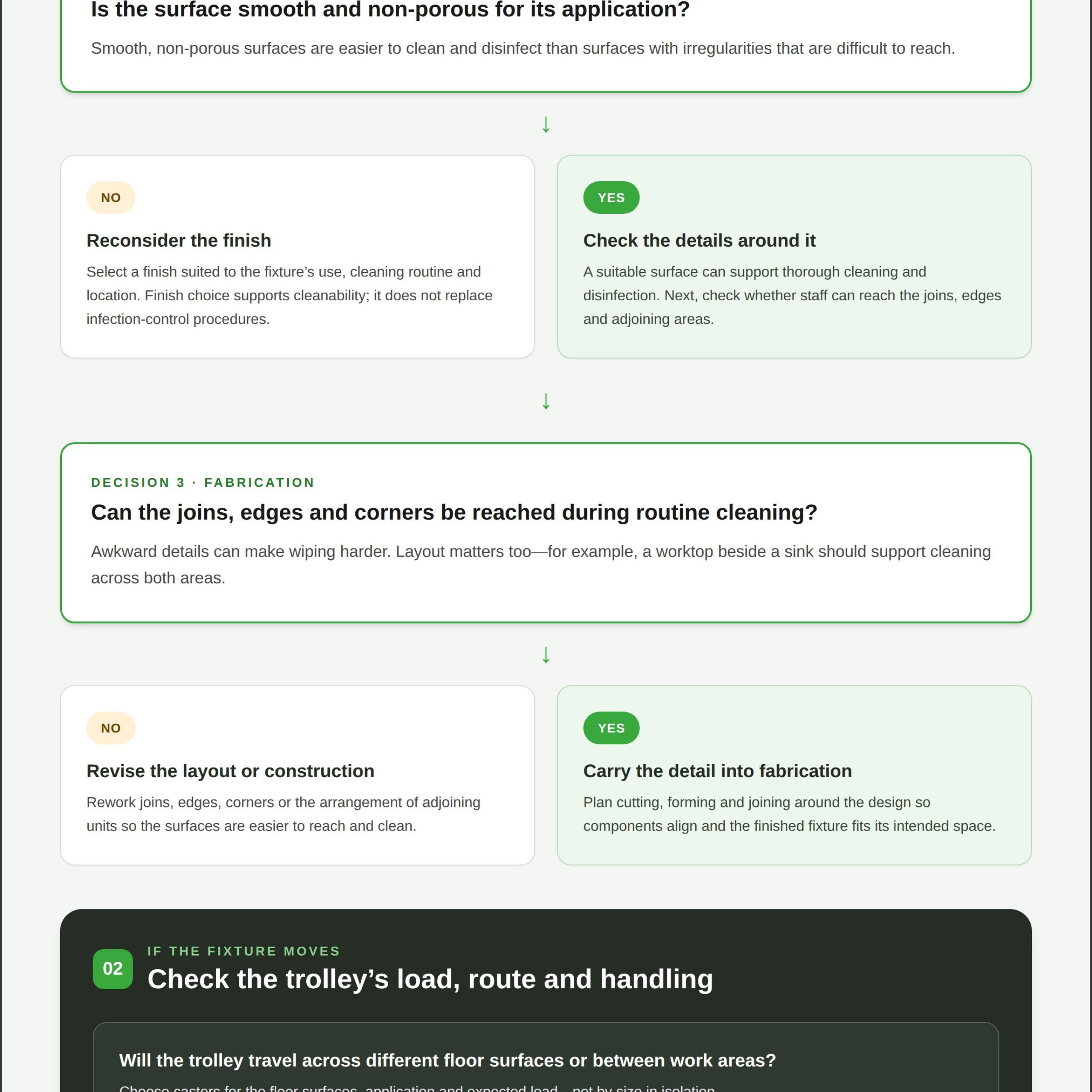
For a laboratory bench, the fabricator considers the work it will support and the cleaning routine. The design should account for joins and edges, since awkward details can make wiping harder. The aim is a surface suited to its application and routine cleaning.
Cross-Contamination and Infection Control
Stainless steel work surfaces in hospital laboratories and canteens are easy to clean and can help prevent cross-contamination. Their contribution depends on how they fit into the room and its cleaning practices.
For example, a worktop beside a sink should be laid out to support cleaning across both areas. Fabrication details, including how adjoining surfaces meet, affect access during cleaning. Smooth surfaces support disinfection, but do not replace the facility’s infection-control procedures.
Castors are another design choice: size should suit floor surfaces, applications and expected loads. Castors of 100 mm or greater are recommended for varied floor surfaces, applications and load requirements. A trolley travelling between different areas needs castors selected for those conditions, rather than size chosen in isolation. This helps align mobility with the equipment’s intended use.
Australian Standards and Regulations
Australian healthcare requirements include infection-control considerations for storage and transport systems. NSQHS Standard 3 addresses preventing and controlling healthcare-associated infections, including in systems for sterile devices, waste and linen.
For a fabrication project, this makes the intended use and cleaning access important design considerations. The Australian Stainless Steel Development Association’s 2016 healthcare equipment recommendations provide an industry reference. Together, these considerations help inform finish, fabrication and equipment choices, without treating one surface finish as a complete infection-control measure.
Stainless steel fabrication for hospitals and health facilities
Hospital fabrication turns operational requirements into fixtures designed for specific rooms and tasks. A laboratory bench, instrument stand and mobile trolley each have different requirements for dimensions, access and load. Custom design connects those details to how staff use the space, rather than treating every fixture as interchangeable.
The fabricator begins by understanding the item’s purpose, location and relationship to nearby equipment. For a laboratory bench, this means considering the work surface, sink placement and access around adjoining units. A trolley design focuses instead on what it carries, where staff push it and how it moves between work areas. These decisions shape the fabrication plan.
Construction details matter as much as the overall shape. Carefully formed edges and joins help create surfaces that staff can clean, while a poorly planned corner can make access difficult. For a cabinet or equipment stand, the layout also needs to account for doors, shelves and stored items. Good coordination supports practical daily use.
During fabrication, cutting, forming and joining shape stainless steel into the required fixture. These processes are planned around the design so components align and the finished item fits its intended space. For a custom bench, that includes coordinating the top with its supports and adjoining sections. Each connection affects stability and cleanability.
Installation places the fabricated item in its working environment. A bench should fit the room layout, while a trolley should suit the routes staff use. These practical considerations help the fixture serve its intended purpose without obstructing nearby equipment or access. Fabrication and installation are connected parts of the project.
Durability is another consideration. Stainless steel furniture may need replacing less often than alternatives made from other materials, which can matter in health facilities where equipment is used and cleaned repeatedly. While custom metalwork handles specialised clinical spaces, broader institutional areas often pair these installations with Division 10 products from suppliers like Jaraco to equip heavy-use staff amenities and changerooms with durable partitions and lockers. Specify each fixture for its actual task, room and cleaning routine, then carry those requirements through design, fabrication and installation.
What Australian standards and regulations apply to stainless steel fabrication and installation in hospitals?
Two Australian references help frame healthcare equipment decisions: NSQHS Standard 3 and Australian Stainless Steel Development Association recommendations. Their relevance depends on the equipment’s purpose, location and role in infection control.
NSQHS Standard 3 addresses preventing and controlling healthcare-associated infections. It relates to storage and transport systems for sterile devices, waste and linen. For example, a trolley used to transport sterile devices has a different function from a general-purpose bench. Its design and placement should support the facility’s infection-control procedures and intended use.
The Australian Stainless Steel Development Association’s 2016 reference gives recommendations for healthcare equipment. It provides context for considering stainless steel equipment in a health setting. Fabrication decisions still need to relate to the item being made, its cleaning routine and its working environment. A mobile trolley, laboratory bench and fixed cabinet each serve distinct roles.
For a hospital project, distinguish material and fabrication choices from operational requirements. Identify whether the item will store or transport sterile devices, waste or linen. Then consider its position, cleaning access and how staff will use it. These details help align the finish and construction with the facility’s infection-control needs.
Installation also needs to fit the room’s intended use. A fixed bench must work with nearby equipment and cleaning access, while a trolley needs to suit its transport task. NSQHS Standard 3 is a relevant consideration for storage and transport systems, but it does not replace project-specific design decisions. Clear requirements help keep fabrication focused on the equipment’s role.
For a project involving hospital fixtures, discuss stainless steel fabrication requirements in relation to the equipment’s purpose, location and cleaning needs.
Donewright Stainless: Mobile Workshop Services
Donewright Stainless provides custom Stainless Steel Fabrication for hospitals and health facilities. Its Mobile Workshop Services support on-site projects, including work carried out at the facility. This can suit projects involving stainless steel handrails or Safety Handrails and Protection, particularly when the installation setting shapes the work.
For custom stainless steel fixtures, start by outlining the item’s purpose, location and key design requirements. This helps define the fabrication work and whether on-site services are relevant. Donewright Stainless can discuss stainless steel fabrication and mobile workshop services for your project.
Contact Donewright Stainless to discuss your hospital stainless steel project.
Plan the next step for your facility
Before commissioning stainless steel work in hospitals, clarify the operational brief. Identify who will use the fixture, where it will be placed and how it needs to fit the facility’s workflows. Clear priorities turn a broad requirement into a practical fabrication discussion and give the project a stronger starting point.
Consider the site as well as the item. Access, surrounding equipment and installation timing can all shape the work plan. Sharing these details early keeps the fabrication discussion grounded in the actual setting, rather than assumptions about the room or how it is used.
Donewright Stainless can discuss a hospital project and the fabrication or site work it involves. Set out the intended use, location and key requirements, then contact Donewright Stainless about hospital stainless steel to discuss a suitable next step. A clear brief is a practical way to begin.
Frequently Asked Questions
What types of stainless steel work are used in Australian hospitals?
Australian hospitals use stainless steel for work surfaces, sinks, cabinets, equipment stands, instrument trays and mobile trolleys. Fixtures vary by task: a treatment room may need a compact bench, while a service area may require storage and a sink module. Facilities in Brisbane, the Gold Coast, Logan and Ipswich can tailor fabricated items to their room layouts and operational needs.
Which stainless steel grades are suitable for hospital kitchens, operating theatres and sterile processing areas?
No single stainless steel grade suits every hospital area. Selection depends on the item’s location, expected cleaning products, moisture exposure and use. A kitchen worktop, operating-theatre trolley and sterile-processing fixture may face different conditions, so the material specification should match each application. Identify those conditions in the design brief before selecting material and planning construction.
What hygiene and infection-control requirements apply to stainless steel surfaces in Australian healthcare facilities?
Australian healthcare facilities need equipment designs that support their infection-control procedures. NSQHS Standard 3 addresses preventing and controlling healthcare-associated infections, including storage and transport systems for sterile devices, waste and linen. In practice, specify the surface’s intended use and how staff will access it for cleaning. A fixture’s design supports hygiene procedures but does not replace them.
How should a professional fabricator design and fabricate hospital stainless steel benches, sinks and equipment?
A professional fabricator bases the design on the equipment’s function, room layout and cleaning access. For a bench beside a sink, this means coordinating the worktop, sink position, supports and adjoining surfaces as one usable arrangement. Cutting, forming and joining are then planned to suit the design. Installation should place the finished unit where staff can use and maintain it effectively.
What are the corrosion, chemical-resistance and durability risks for stainless steel in hospitals?
Stainless steel resists corrosion, but it is not immune to damage. Suitability depends partly on the alloy and exposure to cleaning products, moisture and wear. Its chromium-rich surface helps protect the metal, but unsuitable chemicals or surface damage can affect performance. Match cleaning products to the equipment’s material requirements and consider the facility’s cleaning routine when specifying fixtures.
How does stainless steel compare with other materials for hospital fixtures and work surfaces?
Stainless steel is a durable, cleanable option for fixtures exposed to frequent use and cleaning. It may need replacing less often than alternatives, although the right choice depends on the item’s function, cleaning routine and working conditions. For a heavily used sink module, assess cleanability and corrosion resistance; for a mobile fixture, consider strength, weight and handling together.