
Custom machinery guards for legacy equipment in Logan
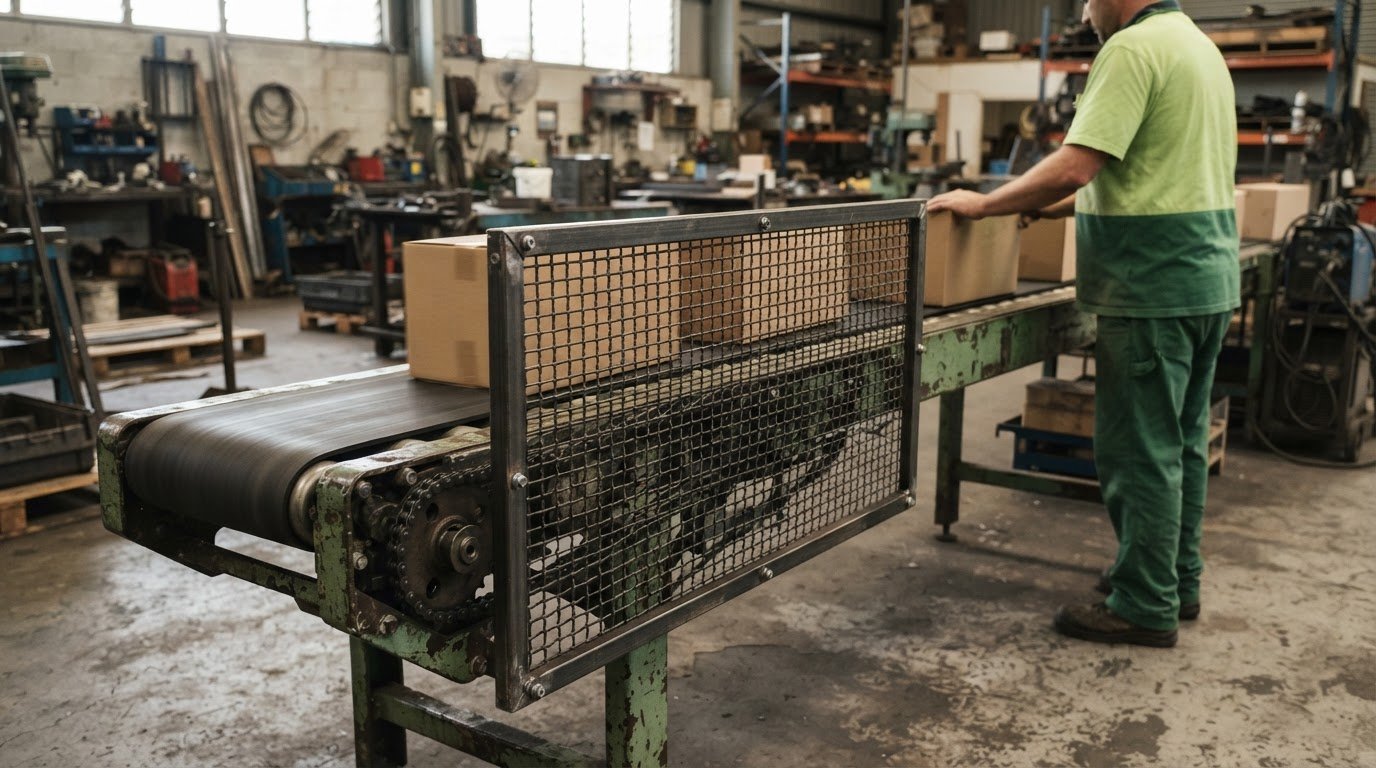
Legacy machinery can be fitted with guards designed around its existing layout. Custom machinery guards in Logan can include fixed or interlocked designs, as well as retrofit options for equipment that doesn’t suit an off-the-shelf fit. AS/NZS 4024 is the primary Australian Standard for machinery safety and covers the design, construction and placement of physical guards.
It’s understandable to want better protection without disrupting equipment or making operation and maintenance impractical. Where eliminating a machine hazard isn’t possible, SafeWork NSW says its risks must be controlled or safeguarded so far as is reasonably practicable. This article explains how guard types differ, what to consider when adapting a guard to older machinery, and how fabrication and installation can account for workers, equipment and restricted areas. It also covers the project details that help shape a suitable solution, from machine configuration to required access.
Key Takeaways
- Guarding for legacy machinery can be designed around the equipment’s layout, with fixed or interlocked options suited to different access needs.
- Shape, dimensions, access points and finish all influence how a custom guard fits and works alongside the machine.
- Retrofit planning considers the existing machine and any changes that may affect guard placement or future access.
- Custom metal fabrication and safety protection can help address guarding needs where standard options don’t suit the equipment.
Protection for workers, equipment and restricted areas
Custom machinery guards in Logan should reflect the machine’s hazards, layout and work area. AS/NZS 4024 covers the design, construction and placement of physical guards.
Worker and Equipment Protection
A guard separates people from hazardous parts and can define restricted areas around operating equipment. For example, a fixed barrier around a stationary press can mark its working zone and separate it from nearby walkways. Similar considerations apply across specialised industrial production setups, such as the injection moulding and blow moulding environments seen at centplasticmfg.com, where moving mechanical platens require clear physical boundaries. Assess the machine’s operating cycle, loading points and maintenance access. These details help determine where the guard should go and which areas need protection.
Risks of Poorly Designed Guards
Poorly positioned guards can leave hazardous parts accessible or obstruct routine loading and servicing. Workers may be tempted to bypass them, while inadequate coverage can expose equipment to impacts or material build-up. In Queensland manufacturing environments, assess how the guard fits the actual task, not just the machine’s outline. Where eliminating a hazard isn’t possible, SafeWork NSW says risks must be controlled or safeguarded so far as is reasonably practicable.
Compare suppliers by examining documented design alignment with AS/NZS 4024, relevant machinery experience and written warranty terms. For custom machinery guards in Logan, documentation should relate to the proposed guard and its intended use. Review what the warranty covers, its duration and any conditions.
Site inspection, installation and maintenance are distinct project elements. Define the scope by noting whether a site visit is included, who will install the guard and what maintenance support is provided. For equipment in Logan, plan around access to the machine and nearby restricted areas.
For stationary equipment, assess its position, the operator’s approach and the access needed for cleaning or maintenance. A guard around a motor, for example, should prevent unintended access without blocking servicing. Record the equipment layout and work tasks so the guard’s placement and construction suit the site.
Custom shapes, sizes, access points and finishes
Custom fabrication can follow a machine’s shape, mounting points and operating layout. A guard around an angled conveyor transfer, for example, may need a shaped panel that follows the frame without obstructing nearby movement. Dimensions and clearances should reflect the equipment as installed, not just a drawing of its original configuration.
Access points need to suit the task. A panel that opens for maintenance serves a different purpose from a section that stays fixed during production. The design should account for where operators load material, where components move and how maintenance staff reach parts. These details help define openings, removable sections and the position of handles or hinges.
For an initial discussion, provide the machine make and model if available, photos, key dimensions and a description of how the equipment operates. Include the locations of moving parts, operator access, existing mounting points and tasks that require access. A marked-up photo can show where the guard must meet a frame or avoid an adjacent conveyor.
Finish selection also depends on the work area. Moisture, cleaning routines and visibility can influence the suitable surface treatment and colour. Describe how the equipment is cleaned and whether the guard sits indoors or in an exposed area. These conditions help the fabricator account for the environment as well as fit and appearance.
During fabrication, drawings or site measurements can clarify the shape, fixing locations and access requirements before manufacture begins. If the machine sits close to a wall or another unit, include that surrounding layout too. This helps prevent a well-sized guard from creating a new obstruction during installation or routine operation.
For a custom-fit component, metal fabrication for equipment can translate machine dimensions and access needs into a practical design.
Retrofit guards for existing machinery
A retrofit guard has to suit the machine as it stands, including older frames, added components and surrounding equipment. Start by assessing the existing layout, locating access points and identifying where a guard can be mounted. For example, a conveyor extension may change the available fixing points or create a newly exposed section.
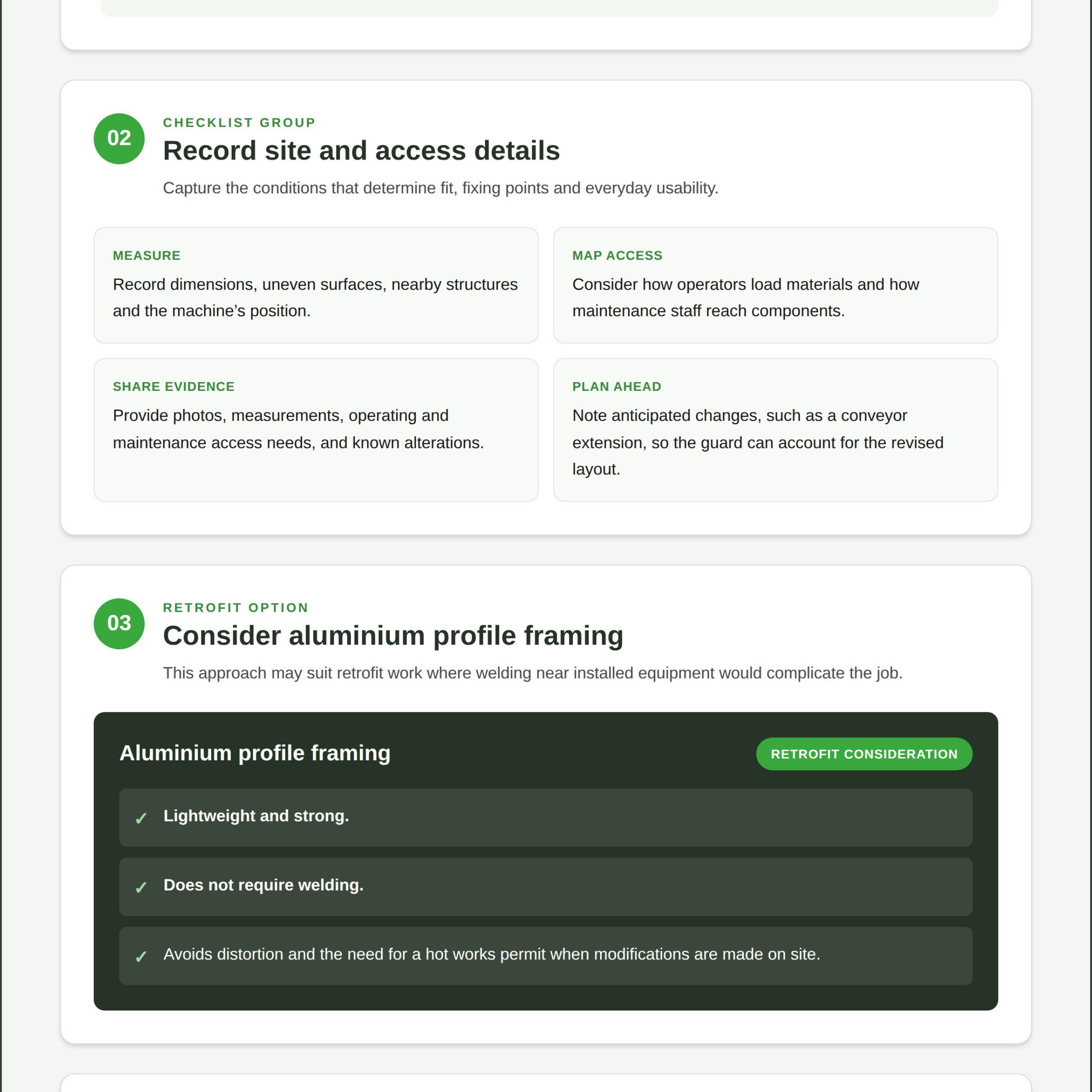
Site measurements help account for uneven surfaces, nearby structures and the machine’s current position. Consider how operators load materials and how maintenance staff reach components. A guard based on the original machine drawing may not suit equipment altered over time, so the installed configuration should guide the design.
Aluminium profile framing can be useful for retrofit work. It is lightweight and strong, and it does not require welding. That avoids distortion and the need for a hot works permit when modifications are made on site. The approach can suit a machine where welding near installed equipment would complicate the work.
When planning a retrofit, consider whether the guard may need to be adapted if machinery or a conveyor is extended. The design should account for the revised machine configuration and the areas requiring protection, rather than treating the original guard layout as permanent.
A retrofit project typically moves from assessing the installed equipment to recording dimensions, selecting fixing points and fabricating panels to suit. Installation then checks how the assembled guard fits the machine and its operating space. For a legacy press beside a conveyor, for instance, the guard’s position must account for both layouts.
Accurate machine details make this process more practical. Photos, measurements, operating and maintenance access requirements, and known alterations help define the retrofit scope. They also clarify whether the guard needs to accommodate anticipated changes, such as a conveyor extension, rather than only the current arrangement.
Custom fixed and interlocked machine guards
Fixed and interlocked guards suit different access patterns in industrial settings. The machine’s tasks and operating layout help determine which approach is appropriate.
Fixed and Interlocked Guard Options
A fixed guard forms a barrier around an area that doesn’t need routine access during operation. An interlocked guard is designed for an access point that opens as part of a task, such as a machine door used for clearing or servicing. The choice depends on how often access is needed, what the task involves and how the guard relates to machine operation.
For example, a fixed panel may suit a permanently enclosed drive, while a frequently accessed section may need an interlocked design. A guarding fabricator assesses the machine layout and access requirements, then coordinates fabrication and installation. In Logan, look for a provider able to explain the design basis, relevant experience, installation scope and warranty terms clearly.
Fabrication and Installation Timing
There isn’t one standard timeframe for custom guard work. The programme depends on the number and shape of guard sections, the accuracy of available measurements, material selection, and the machine’s access and mounting arrangements. Interlocked designs can involve additional coordination with the machine’s operating system.
Fabrication and installation planning also accounts for site access, work sequencing and the time needed to fit the guard to the equipment. Clear machine details and a defined scope help establish the required stages. A simple panel and a multi-section guard with access points involve different fabrication and installation tasks.
The practical takeaway is to match the guard type to access frequency and task, then define the scope around the installed machine. This gives fabrication and installation a clear basis without assuming every industrial machine needs the same solution.
Donewright Stainless
Donewright Stainless provides custom steel fabrication and safety protection for businesses planning guarding around existing or new machinery. Turn to the team when a standard layout doesn’t suit the machine’s configuration, access points or surrounding work area. The design should reflect how the equipment operates and how staff access it for production and maintenance.
To start a discussion, provide the machine’s location, photos, available dimensions and a description of the access needed. These details help shape a practical conversation about guard layout, material and installation requirements. Donewright Stainless also fabricates stainless steel handrails and safety protection, supporting projects where machinery guarding is part of wider workplace protection.
For a discussion about a machinery guarding project, contact Donewright Stainless.
Plan the next step for your machinery
For custom machinery guards in Logan, turn the machine’s actual layout and access needs into a clear project scope. Include relevant photos, dimensions and details of how operators and maintenance staff use the equipment. A precise starting point helps keep design decisions grounded in how the machinery works.
Donewright Stainless combines steel fabrication with handrails and safety protection work. This can be relevant when machinery guarding forms part of a broader workplace protection project or existing equipment needs a tailored metal solution. The right approach depends on the machine, its surroundings and the access required.
Contact Donewright Stainless about your guards to discuss your machinery and the protection it needs. A considered scope is a practical first step towards a guard that fits the worksite.
Frequently Asked Questions
Can you design guarding for older, legacy machinery?
Yes, guarding can be designed around a legacy machine’s current configuration. A machine that has been moved or modified may have different mounting points from those shown on its original drawings. Photos, dimensions and details of added equipment help establish the actual layout. For example, an older production line with a replacement motor may need a guard shaped around the motor’s present position and nearby components.
What does AS/NZS 4024 compliance mean for machine guarding?
AS/NZS 4024 covers the design, construction and placement of physical machine guards. In practice, the guard’s position and construction should be considered alongside the machinery and the hazards it presents. The standard is a reference for machinery safety, not a substitute for assessing the specific equipment and work tasks. Keep design documentation with machinery records to support future maintenance or modifications.
What types of custom machine guards are available in Logan?
Options include fixed guards, interlocked access guards and retrofit guards for existing equipment. A fixed guard can suit a part that doesn’t need routine access, while an interlocked guard may suit an access point used during operation or servicing. Retrofit designs account for existing machinery layouts. The choice depends on access frequency, machine configuration and whether the guard must accommodate later changes.
Which materials and safety standards apply to custom machine guards in Australia?
Material and finish depend on the machine, its surroundings and how the guard will be used. AS/NZS 4024 addresses physical guarding for machinery safety. Other standards apply to specific coated wire or coating systems, including AS/NZS 4534-2006 for zinc and zinc-aluminium alloy coatings on steel wire, and AS/NZS 4506-2005 for thermoset powder coatings. These aren’t universal specifications for every guard.
What Australian WHS rules require guarding for industrial machinery?
For a Queensland workplace, consider the applicable WHS duties alongside the hazards created by the machinery and the controls needed to address them. AS/NZS 4024 is the primary Australian Standard for machinery safety and covers physical guards. It helps inform guarding design, but choosing a suitable guard also depends on the equipment, its operation and the risks at the worksite.